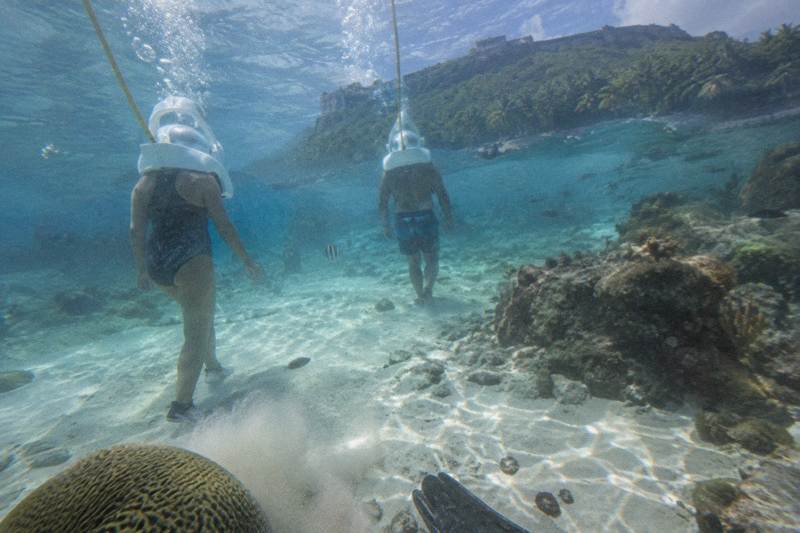
What To Wear And Bring To A Helmet Dive In The Caribbean
Helmet diving asks almost nothing of your wardrobe: your head and face stay dry, glasses stay on, and no swimming is needed. What actually deserves planning is sun protection, what the tour already includes, and the small cash questions of the day.
Short answer
Wear what you would wear to a beach: swimwear under light clothing, reef safe sunscreen, and nothing on your feet you cannot walk in. The manufacturer says the helmet keeps your head and face dry and glasses can stay on. The tour includes private transportation and excludes gratuities, so bring a little cash for tips.
If you are weighing formats before you pack, start with the beginner underwater tours overview, which gathers the helmet walk, SNUBA and the beginner scuba options in one place. What follows settles the smaller question that tends to arrive right before booking or the night before: what to wear, what to bring, and what you can safely leave behind.
| Fact | Detail |
|---|---|
| Total experience length | 1 hour 30 minutes, with about 10 minutes of briefing and about 25 minutes underwater |
| Minimum age | 8 |
| Swimming needed | No, the tour is a guided walk on the seabed |
| Glasses | Can stay on inside the helmet, per the manufacturer |
| Head and face | Stay dry, per the manufacturer |
| Pickup | Included from hotels in the north of the island only |
| Included | Private transportation |
| Not included | Gratuities |
What To Wear For Helmet Diving In Warm Caribbean Water
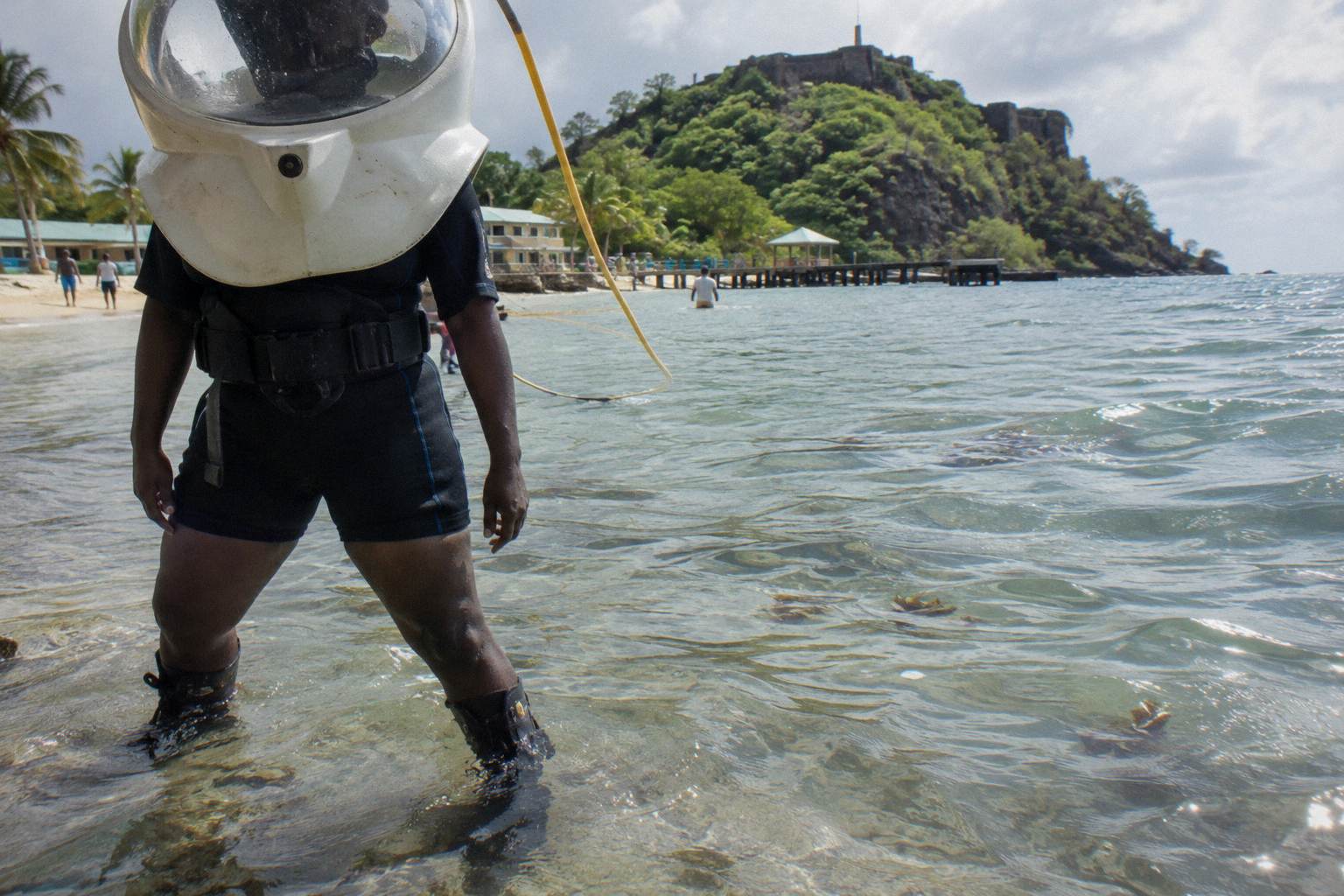
The short clothing answer is ordinary beachwear: a swimsuit under light clothes, something to shield your shoulders and neck from the sun, and simple footwear you can slip off or walk in. No operator rule dictates a kit, and none is needed, because the helmet does the specialized work. Your body from the neck down gets wet, your head and face do not.
Sea temperatures in St Lucia sit between 26 and 29 C (79 to 84 F) all year, and average air temperatures run from 23 to 31 C, so the climate never demands a wetsuit for a walk that lasts about 25 minutes underwater. The Tourism Authority's snorkeling guidance notes that mornings tend to bring the calmest water and clearest conditions, which is worth knowing when you pick a date, though sea state on any given day is decided by weather and the operator, never guaranteed. Because the water sits in that warm band every month of the year, there is no season in which the clothing answer changes, only seasons in which the island gets busier or wetter.
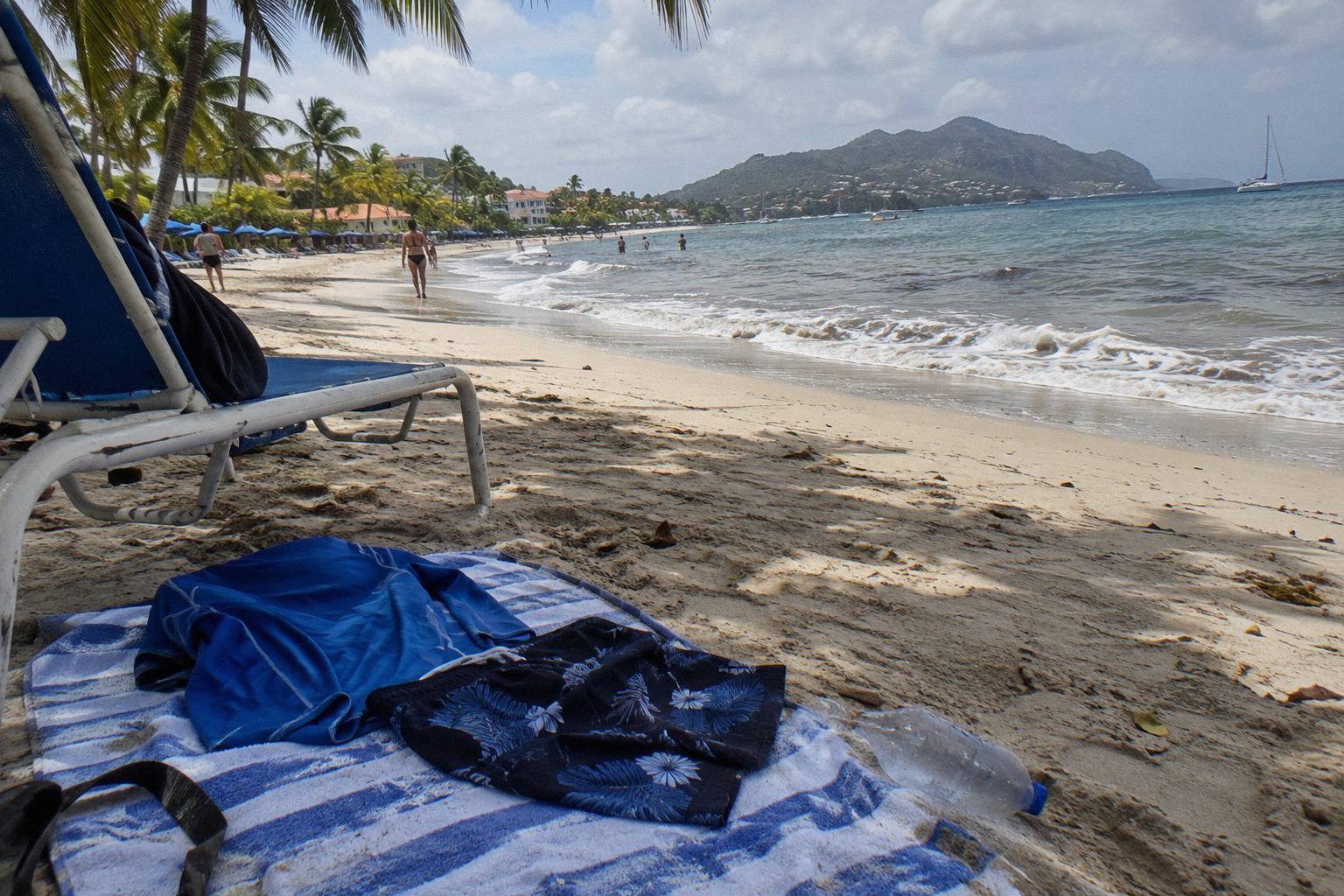
Think in layers around the water rather than in the water. You will be on a beach at Pigeon Island before and after the walk, in full tropical sun for part of that time, so a loose shirt, a hat for the periods when the helmet is off, and sunglasses for the briefing all earn their place in the bag. A dry change of clothes for afterwards is a small comfort on the ride back, and a towel is obvious. Because you walk rather than swim, there is no need for fins, masks or any personal water gear of your own; the equipment that matters is supplied.
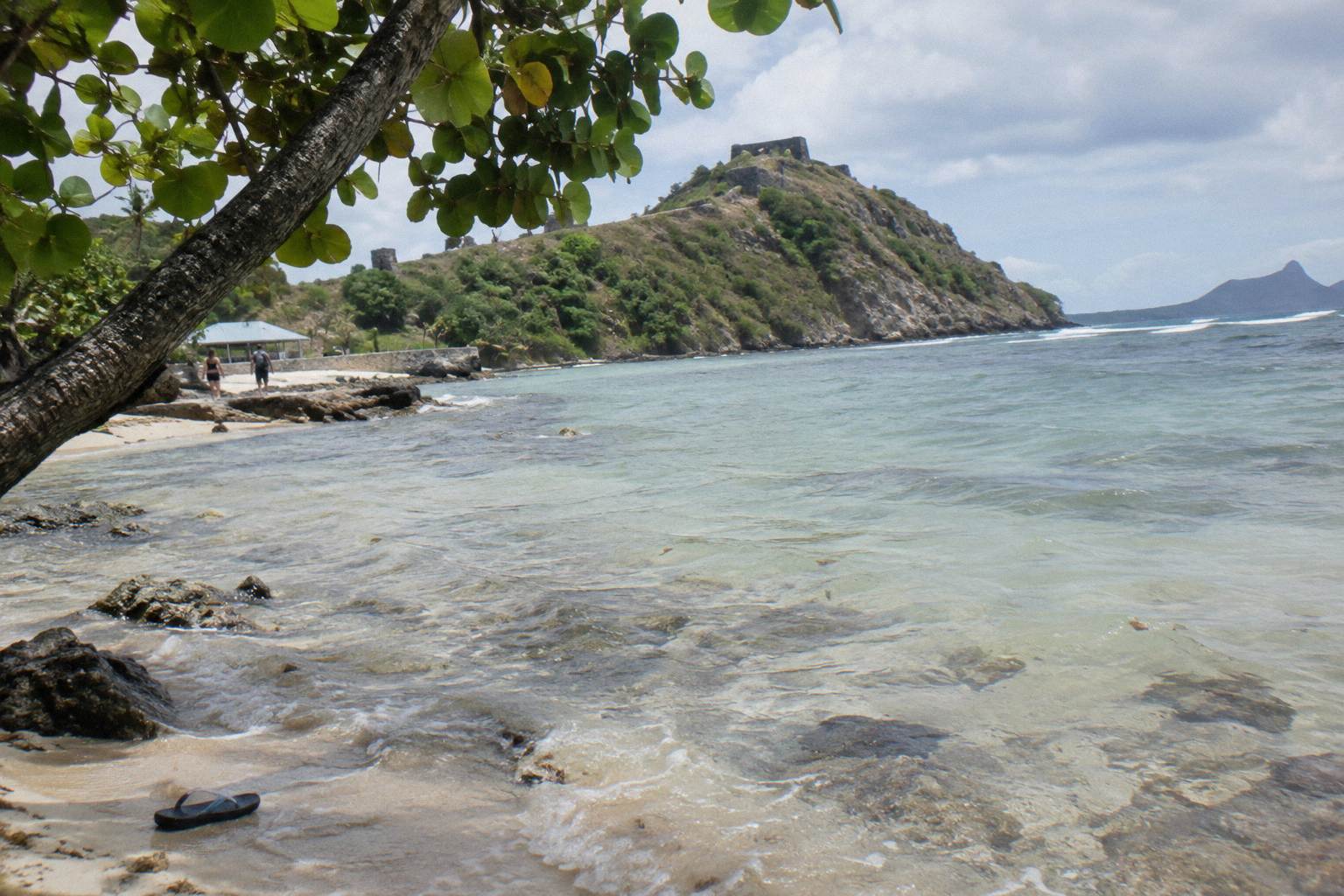
Footwear deserves one sentence more than people give it. You walk into the water and along the seabed, so anything that stays on your feet comfortably, reef walkers, old sandals or swim shoes, works, while flip flops that float away at ankle depth do not. That is general beach logic rather than an operator instruction, and if you want a view of the whole format before packing around it, the guide on how helmet diving works, air hose and helmet explained covers the mechanics.
One more thought on the shirt you choose: something with a collar or a modest neckline protects the strip of skin at the top of the helmet's seal line, which is the one place a swimmer in a mask never thinks about and a helmet walker should. Dark colors absorb tropical sun, light colors reflect it, and quick drying fabric means the ride home is comfortable whether you change or not. None of this is specialized kit, which is rather the point of the format, and it is why people who arrive worried about equipment leave having carried nothing but a beach bag.
Why Your Head Stays Dry And Why That Changes The Packing
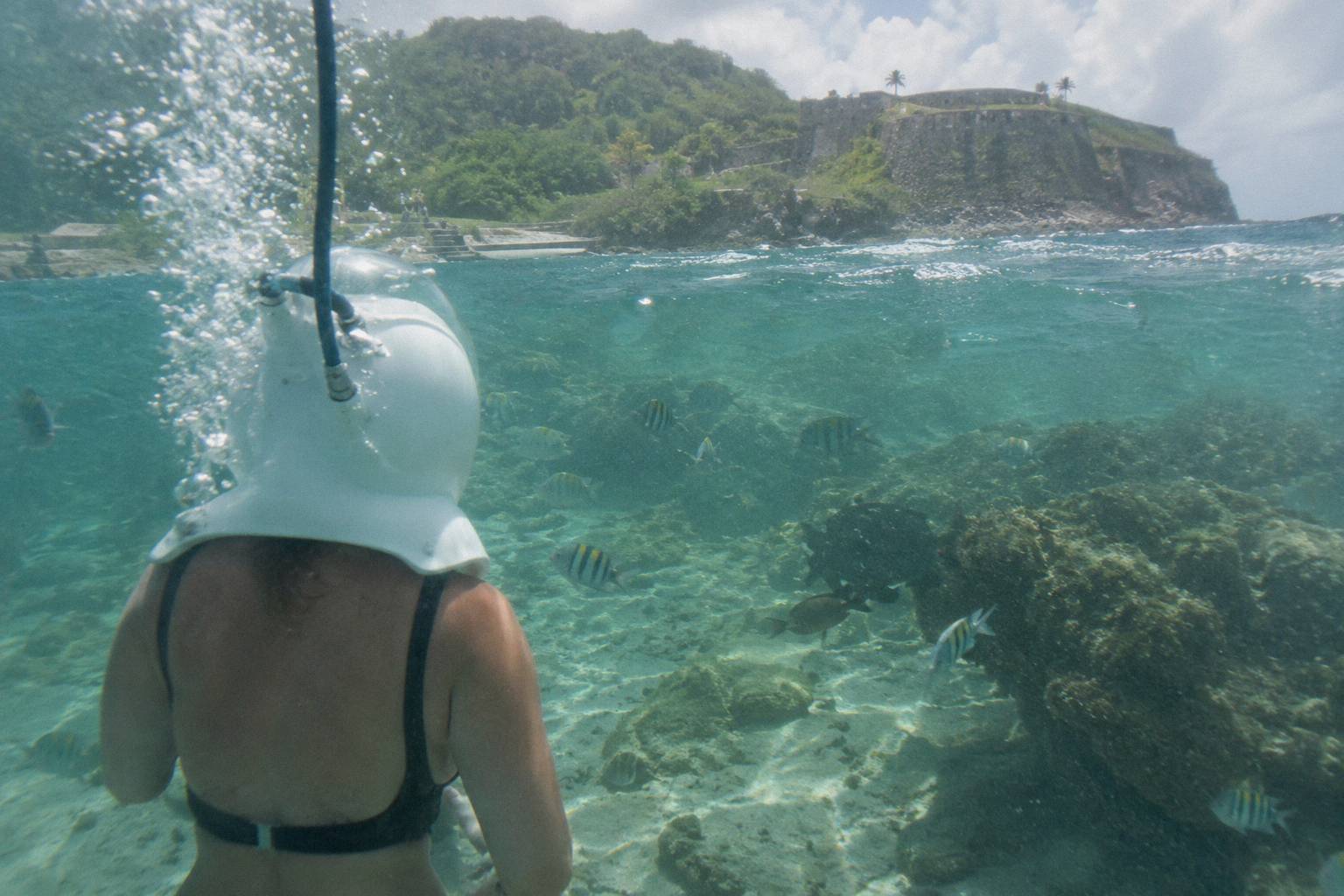
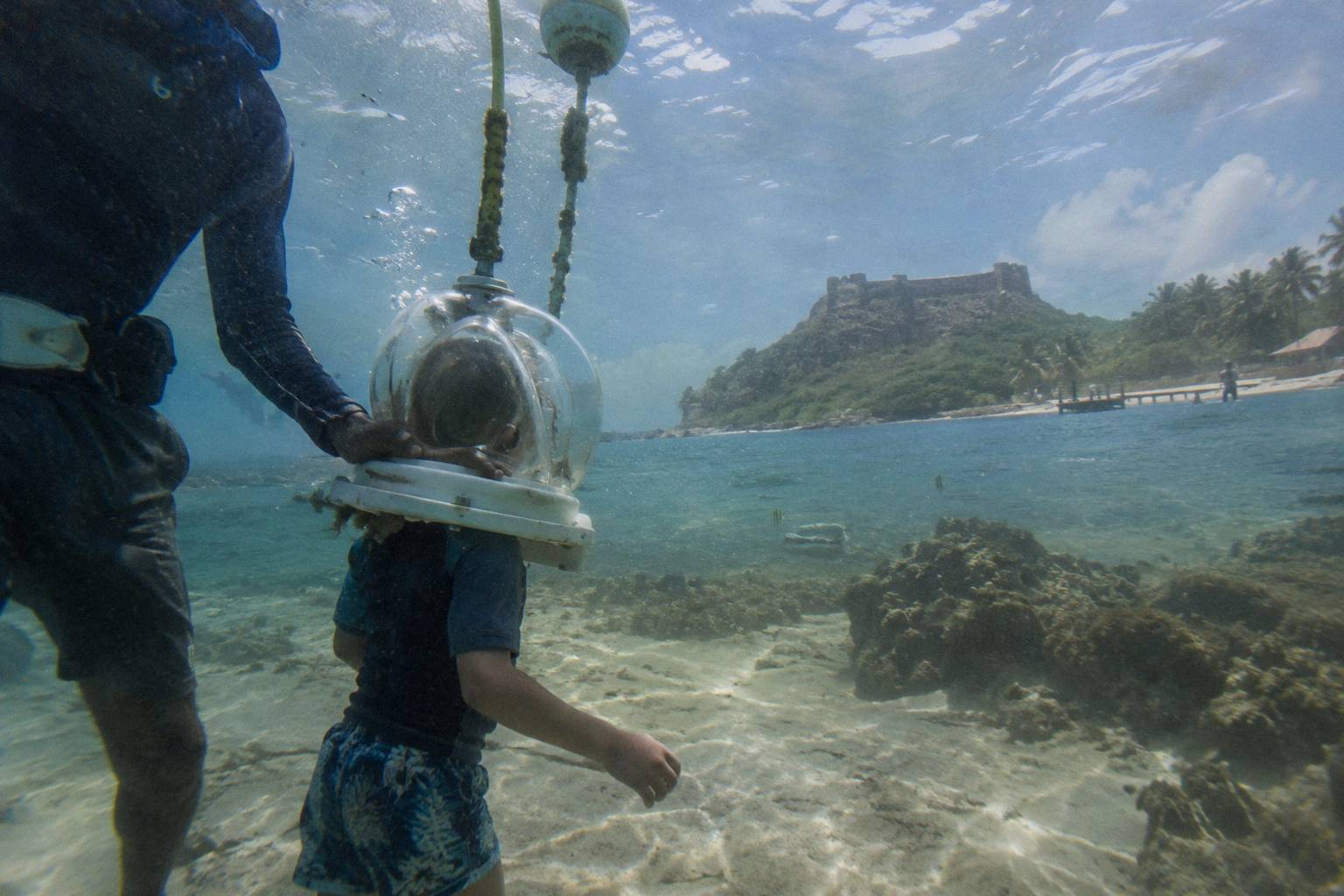
The helmet, in the manufacturer's words, works similar to an inverted glass: as long as it is not turned over, the air stays inside, and a constant flow of cooled, dried and filtered air arrives by hose from the surface. That is why glasses can stay on, why hair stays dry, and why swimming skill is irrelevant. Almost nothing in a conventional swimming kit is required.
The manufacturer's SeaTrek page describes the helmet as polycarbonate and marine grade with a panoramic acrylic lens, resting on your shoulders rather than clamped to your head. Air comes from an electrically powered air center on the surface through the hose, keeping a fresh turnover inside. The result, in the operator Sealife Paradise's own description, is that you "just walk and breath", with no swimming needed from age 8 up, guided by trained and certified guides.
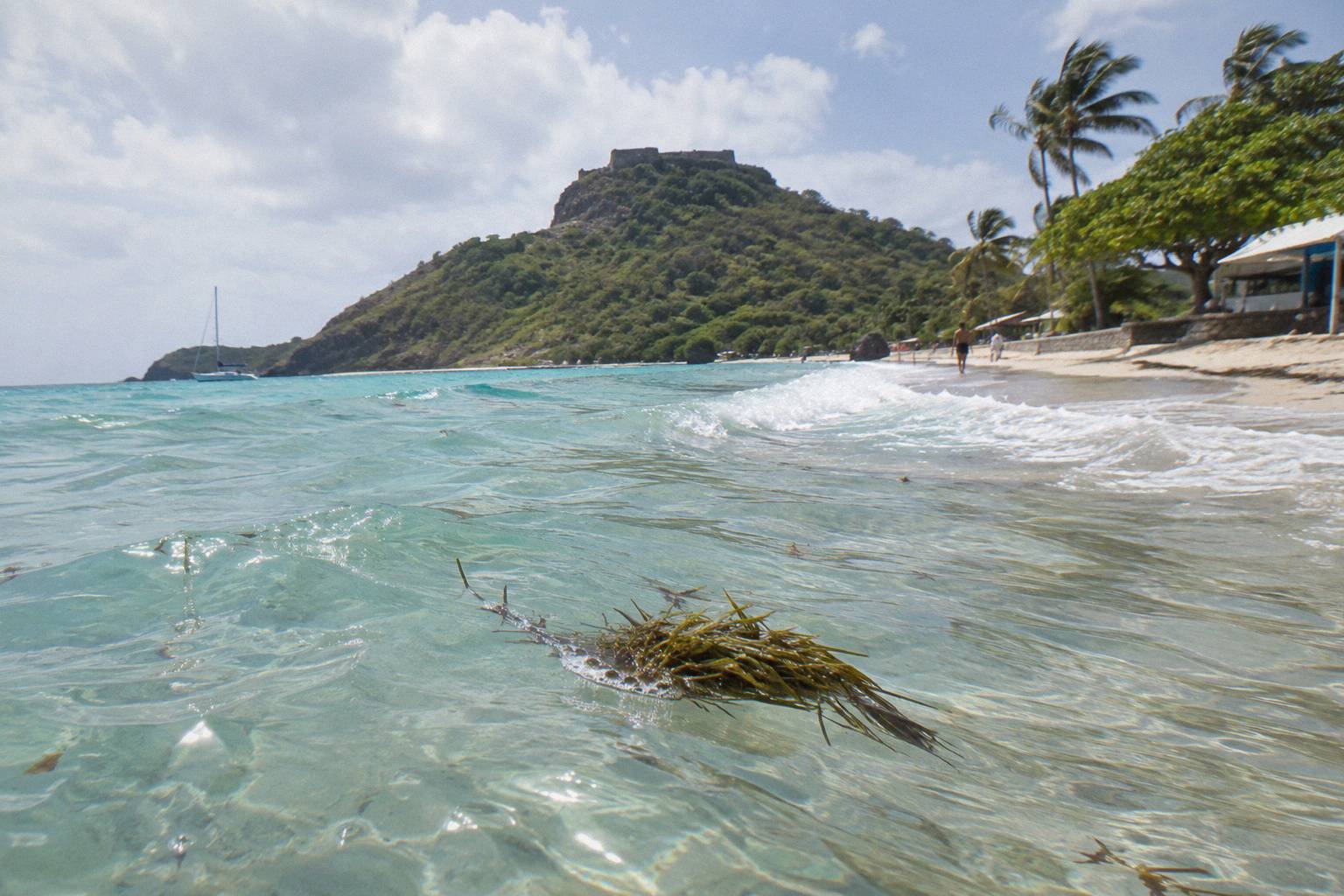
This dry head changes two packing habits. First, leave contact lens cases and spares out of your worries if you wear glasses: the manufacturer says plainly that glasses are no problem inside the helmet, so your normal pair comes along for the walk. Second, skip waterproof bags for phones and wallets; they stay on shore with your dry clothes. If you want to think through the eyewear question in more depth, helmet diving with glasses or contact lenses is the dedicated page. Whether photos are possible is a separate question with its own guide on taking photos on a helmet dive.
For anyone whose comfort in the water is the real anxiety, the same dry head principle is why the format suits non swimmers at all; the longer treatment is in what to expect as a non swimmer. Packing for a helmet walk is, in the end, packing for a beach morning with a walk attached, not packing for a dive. The distinction matters because almost every instinct a nervous swimmer has about water kit, the tight goggles, the nose clip, the waterproof pouch, answers a problem this format removes rather than creates.
It also changes what you do with valuables on the beach. With no mask to fog and no camera housing to wrestle, the only items that genuinely need guarding are the ones you would guard on any beach: phone, wallet, room key. A simple bag that closes, left with a non diving companion or in whatever arrangement the operator's beach base allows, covers it, and anything you would mourn losing is better left at the hotel in the first place.
What Each Underwater Tour Includes And What You Carry Yourself
On the helmet walk itself, private transportation is included and gratuities are not, so the only cash question of the day is the tip. Across the wider selection of tours on this site, equipment and drinking water are named as included on several lines, while extras like lunch or fees appear on others. The packing list shrinks or grows with the format you actually book.
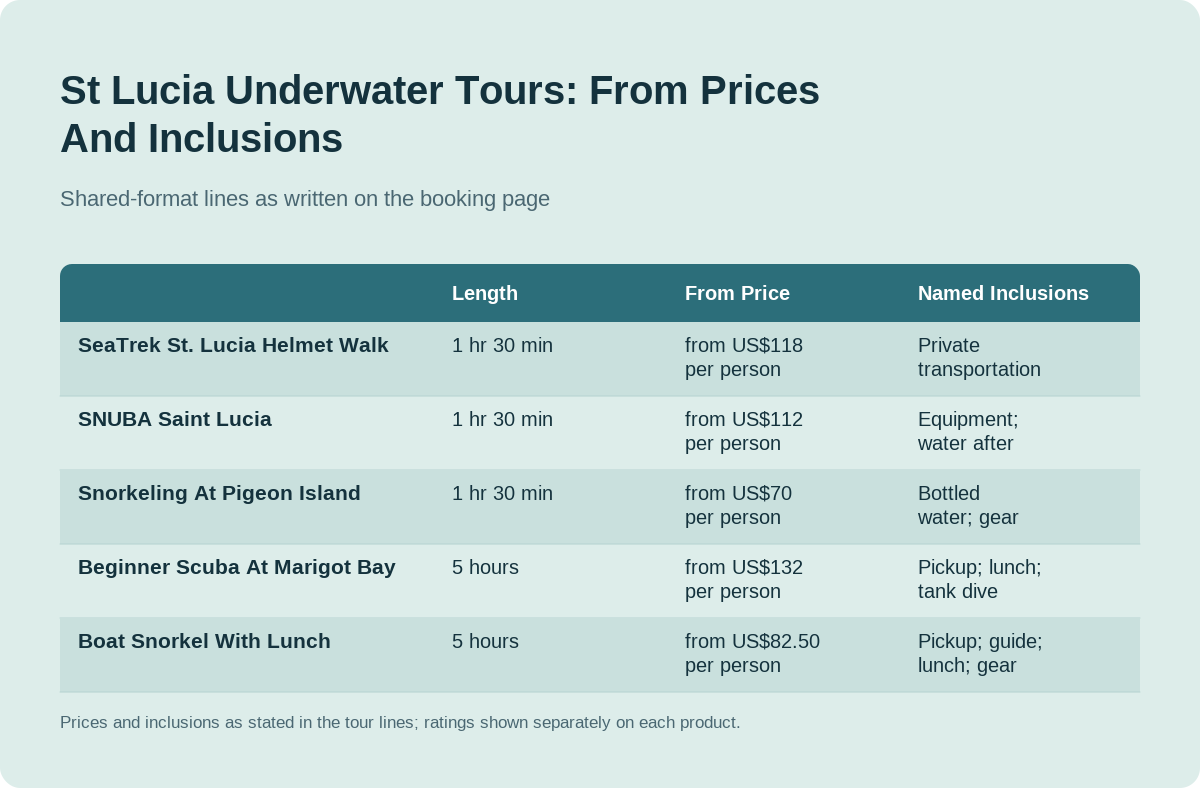
The tours on this site state their own inclusions, and it is worth reading them side by side because they differ sharply. The helmet walk at Pigeon Island includes private transportation from northern hotels. The SNUBA session, run by the same operator, includes use of all equipment and water afterwards. The beach snorkel includes bottled water and snorkeling gear. The boat trips run longer and fold in lunch, drinks or pickup from northern and western locations, with the snorkeling boat tour carrying a 10 percent government VAT payable at check-in on top of its listed price.
| Product | Format | Length | From price | Named inclusions |
|---|---|---|---|---|
| SeaTrek St. Lucia helmet walk | Shared | 1 hr 30 min | from US$118 per person | Private transportation |
| SNUBA Saint Lucia | Shared | 1 hr 30 min | from US$112 per person | All equipment; water after |
| Snorkeling at Pigeon Island | Shared | 1 hr 30 min | from US$70 per person | Bottled water; snorkeling equipment |
| Beginner scuba at Marigot Bay | Shared | 5 hours | from US$132 per person | Pickup north and west; lunch; tank dive; instruction |
| Boat snorkel with lunch | Shared | 5 hours | from US$83 per person | Pickup; guide; lunch; equipment |
All amounts are US dollars, prices vary by date and group, and the booking page shows the price for the date you choose. Ratings sit beside them on each product: the helmet walk carries 4.8 from 231 reviews, SNUBA 4.7 from 166, and the beach snorkel 4.4 from 16. What no line carries is a what to bring instruction, so anything you read about packing here is planning context, not an operator rule; if you want certainty on a specific item, ask the operator.
If your date is flexible enough to compare formats rather than just pack for one, SNUBA at Pigeon Island and how it compares works through that choice. SNUBA needs no certification either, but it does put your face in the water through a regulator fed from a floating raft, so it borrows a little from snorkeling kit logic: it is a swim mask format, where the helmet is not. The operator describes it as a cross between snorkeling and scuba diving, with no tank and no training. SNUBA also caps its groups at 14 travelers, a figure the helmet line does not carry, so party size questions belong on the booking page too.
The duration split matters for packing more than it first appears. A 1 hour 30 minute experience with roughly 10 minutes of briefing and 25 minutes underwater leaves the balance for gearing up, walking out and unwinding on the beach, and every one of those minutes happens in the sun or the shallows rather than aboard a shaded boat. The 5 hour boat formats invert that ratio: more time under a canopy, less standing on hot sand, which is why the boat bag holds a book and the beach bag holds a hat.
Sunscreen, Sun Protection And Reef Rules
Sun protection is the one category where your choices affect more than yourself: the Tourism Authority asks snorkelers and swimmers to use reef safe sunscreen and never to touch coral or marine life. For clothing, that means a rash guard or sun shirt does double duty, blocking sun without relying on lotion alone near the reef.
The Tourism Authority's beach guidance adds a few habits that belong in any packed mindset: many beaches have no lifeguards, the west coast generally offers calmer water, you should never snorkel alone, and boat traffic deserves attention. None of this demands equipment, only awareness. A hat, a shirt and shade breaks cover the tropical middle of the day better than any single application of lotion, and the about 10 minutes of briefing plus about 25 minutes underwater on the helmet line still leaves real beach time in a 1 hour 30 minute experience.
The operator's own medical advisory, printed on its booking pages for both the helmet walk and SNUBA, is that the experiences are not recommended for pregnant travelers, travelers with poor cardiovascular health or travelers with spinal injuries. That is the operator's caution, not a general verdict; anyone with a relevant condition should ask the operator or a doctor before booking. There is more on this in medical conditions and pregnancy on a helmet dive.
Reef rules also touch what you wear in the water more than people expect. Anything loose that dangles, long scarves, dangling straps, can brush coral when you are walking near it, so snug and simple beats flowing. The instruction to never touch coral or marine life is the Tourism Authority's, and it is the strongest single rule to pack in your head, since a guide controls the route but your hands control the contact. If a wider safety picture would help you commit, read whether helmet diving is safe, and who should skip it.
Money, Gratuities And Tipping On The Day
Bring a small amount of cash or a card plan for a tip: gratuities are named as excluded on the helmet walk, and the Saint Lucia tourism body's general guidance is that tipping runs about 10 to 12 percent of bills and is not added automatically. US dollars are widely accepted, with the Eastern Caribbean dollar pegged at EC$2.70 to US$1.
That tipping range is general island context for meals and services, not a formula any tour operator states for its own guides, so treat it as background rather than an invoice. What is firm is the tour line here: gratuities are not included in the helmet walk price. Everything else money related sits in the from price, from US$118 per person on the helmet line, and prices vary by date and group, so check the live price for your date rather than budgeting from a rounded memory of it. The full index of guides sits on St Lucia Helmet Dive.
| Money question | Sourced answer |
|---|---|
| Currency | US dollars widely accepted; EC$2.70 to US$1 peg |
| Tipping on island | About 10 to 12 percent of bills, not automatic, general tourism guidance |
| Helmet walk gratuities | Not included, per the product's own line |
| VAT on boat snorkel line | 10 percent government VAT payable at check-in |
| Lunch on the private boat line | Excluded, from about US$15 per person |
| Cancellation | Free up to 24 hours before start, across all the tours on this site |
A practical note on cash versus card: the day involves a beach, a boat or shoreline base and a ride, so small notes are more useful than anywhere a card reader lives. Change often comes in Eastern Caribbean dollars even when you pay in US, which is fine, since the peg is fixed. The tourism body's travel tips also note a 10 percent VAT and a 10 percent service charge appearing on hotel and restaurant bills, which explains why visitors sometimes double tip without noticing, a habit worth remembering when you settle your own bill at the beach bar afterwards. For anyone pairing the helmet walk with a longer boat day, remember the tour lines that exclude lunch or carry a check in VAT: the cost comparison against snorkeling works those figures through.
What A Cruise Day Changes About Your Packing
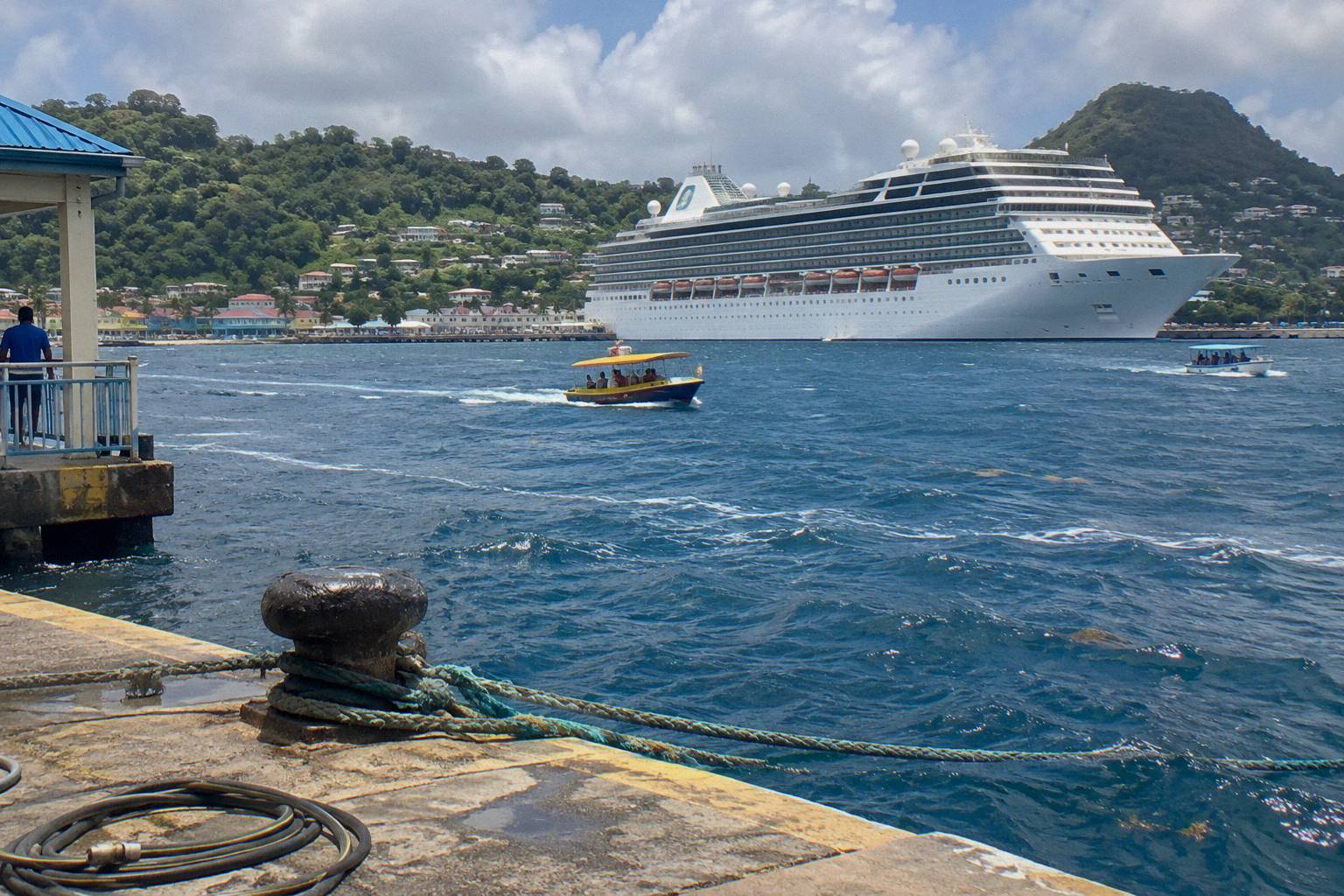
Cruise passengers should pack light and pack dry: the helmet walk's pickup covers hotels in the north of the island only, the experience totals 1 hour 30 minutes, and everything you cannot carry onto a beach yourself stays on the ship. The main cruise season runs October to April, with up to five ships calling at Castries on a single day.
Those port figures come from the Saint Lucia ports authority, which describes Pointe Seraphine's dedicated cruise berths and the water taxi link to La Place Carenage across the bay. Whether cruise passengers can be picked up at the port for the helmet walk is a question to ask the operator directly, since the tour listing names hotel pickup in the north only. The dedicated page on fitting an underwater excursion into a cruise day covers the timing logic in full.
What changes materially is the bag, not the outfit. A ship day favors one small dry bag: swimsuit already worn or rolled tight, reef safe sunscreen, a hat, ship key card, a little cash and a towel from the ship. Anything with a plug, a lens or a hard case stays aboard, which conveniently also answers the camera question on a walk where your head stays dry but your hands are busy walking. The getting to Pigeon Island page handles the geography; the packing principle is simply that a short shared experience rewards a light bag.
| Cruise day element | Sourced figure |
|---|---|
| Cruise season | October to April, the main season |
| Peak port day | Up to five ships calling at Castries in one day |
| Cruise berths | Pointe Seraphine berths P/S 1 and P/S 2 |
| Port link | Water taxis between Pointe Seraphine and La Place Carenage |
| Helmet walk length | 1 hour 30 minutes total |
| Helmet walk pickup | Hotels in the north of the island only |
The season table matters because a cruise day in the busy months stacks a full port against a short experience, and the packing consequence is crowds rather than clothing. Everything in the beach kit stays the same whether you share Pigeon Island's sands with two ships' worth of fellow passengers or nearly none; what changes is how early you want to be ashore and how much patience you pack alongside the sunscreen. A five ship day also means busier roads and busier check in desks everywhere on the island, which is an argument for booking your slot ahead rather than walking up hopeful.
What To Settle With The Operator Before You Go
A short pre booking message answers everything the tour descriptions cannot: whether port pickup is possible for your situation, what the meeting point is on the day, and any personal item you are unsure about. The exact meeting point comes on the booking confirmation, and the operator is the authority on everything the product lines do not spell out.
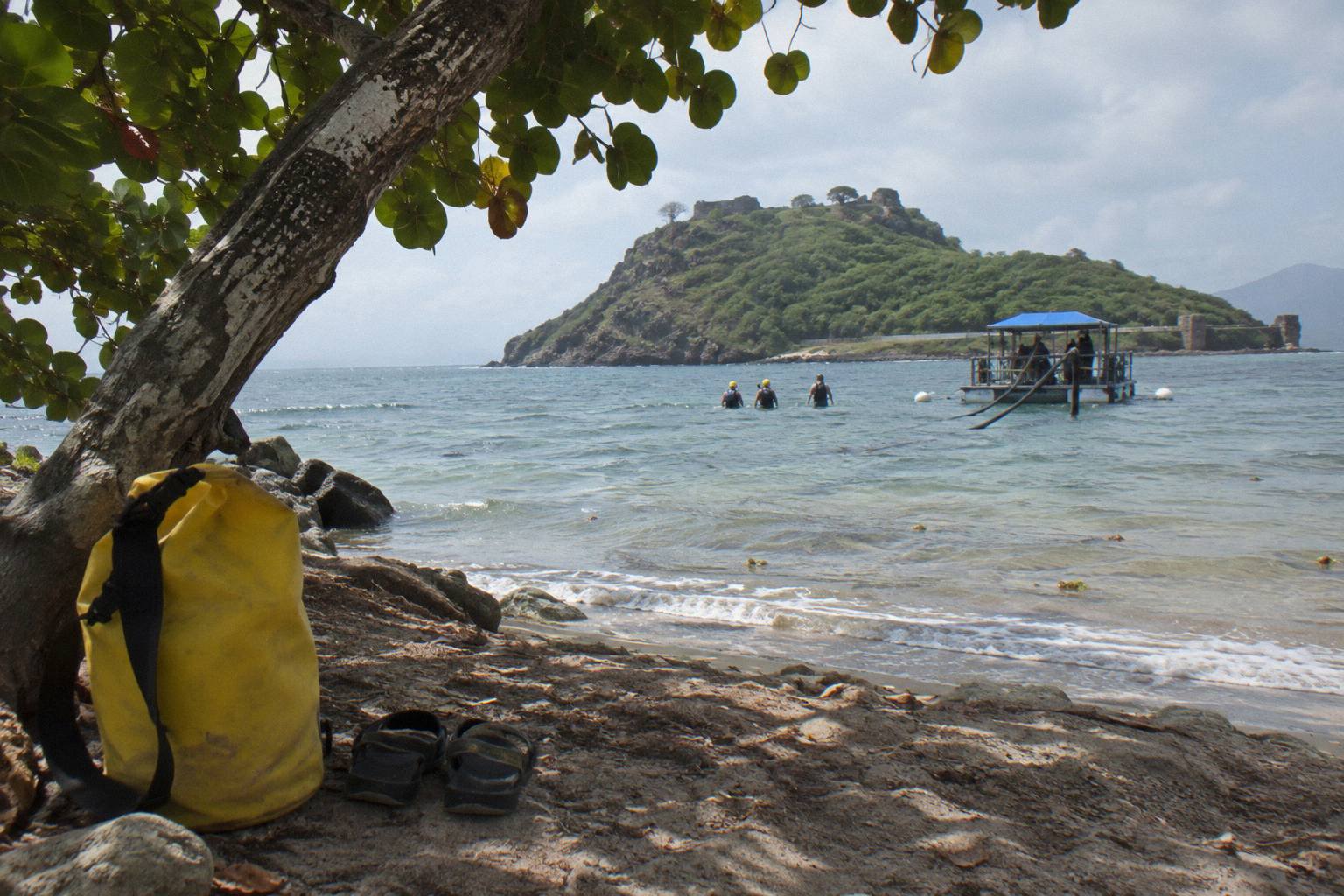
Ask the operator once, in one message, rather than guessing: pickup specifics for your hotel, whether an item you care about causes any issue, and anything medical worth flagging beyond the operator's printed advisory. The booking calendar holds the start choices and the live price for your date, so questions about either resolve there rather than in planning. Free cancellation up to 24 hours before start applies across the tours on this site, which removes most of the risk of booking early and asking questions after.
Two questions come up often enough to answer here. Season barely changes the kit: sea temperature stays within its 26 to 29 C band, the dry season December to April is simply the busiest, and the rainy season June to December brings showers that are usually brief, so the best time of year page is about crowds and weather, not clothing. And age does not change packing either: the minimum is 8, and the kids and age limits guide covers family planning, but an eight year old wears the same beach kit an adult does.
A third question deserves the same treatment: what happens to your bag while you are underwater. The operator's base sits on Pigeon Island beach, and the sensible arrangement is whatever the staff on the day suggest, since no published rule covers it. Packing as though nothing will be watched is the reliable policy: leave the passport on the ship or in the hotel safe, carry only what the day needs, and treat the walk itself as the part of the day that requires nothing in your pockets at all. Guests who apply that rule end up with one light bag and no anxieties, which is the whole spirit of the format.
If you are still choosing between a boat snorkel and the helmet walk, the half day boat option from Marigot Bay includes pickup, lunch and equipment, which shifts the day from beach bag to boat bag; see dates and the live price for your day before deciding which packing list applies.
Booking the helmet walk itself is a single decision at heart: check the SeaTrek St. Lucia helmet walk page for dates, or check availability directly. Pickup from northern hotels is included, swimming is not required, and cancellation is free up to 24 hours out.
What Trips People Up Before You Book
Three assumptions cause most of the trouble: overpacking for a dive that is really a walk, assuming every tour includes water and food when inclusions differ line by line, and assuming port or southern pickup where none is offered. Each is avoided by reading the product line you are actually booking and asking the operator one direct question.
The first trap is dive logic. People arrive with masks, fins and waterproof everything for an experience whose manufacturer promise is a dry face and whose only real requirements are comfortable walking and normal breathing. The second is inclusion drift: the helmet line includes private transportation and excludes gratuities, the SNUBA line includes all equipment and water after, the beach snorkel includes bottled water and gear, and the longer boat lines fold in lunch and pickup from northern and western areas only, never the south. Assuming one line's inclusions apply to another is how a lunchless afternoon happens.
The third trap is geography. Pickup for the helmet walk covers hotels in the north of the island, and the scuba and boat lines exclude southern pickup explicitly, naming Soufriere, Vieux Fort, Micoud and Dennery as not covered. Staying in the south means arranging your own way north or asking the operator before booking. The final trap is the calendar: start choices live on the booking calendar, prices vary by date, and the 24 hour free cancellation window rewards deciding early over deciding late. For the wider choice between formats, SeaTrek versus SNUBA, scuba and snorkeling is the fair starting point.
Common Questions About Packing For A Helmet Walk
Do I Need A Swimsuit For Helmet Diving?
Your body from the neck down gets wet and your head and face stay dry, per the manufacturer, so a swimsuit under light clothing is the practical choice. No operator clothing rule exists; beachwear you can walk in covers it.
Can I Wear My Glasses Inside The Helmet?
Yes. The manufacturer states glasses can stay on and the helmet keeps your head and face dry, so contact lenses are not required for the walk.
Do I Need To Bring My Own Snorkel Or Dive Gear?
No. The helmet itself is the equipment for the seabed walk, supplied on the day. If you book the beach snorkel instead, snorkeling equipment is named as included on that line.
What Sunscreen Should I Bring?
The Tourism Authority asks visitors to use reef safe sunscreen and never touch coral or marine life. A sun shirt or rash guard reduces how much lotion you need near the reef.
Is Food Or Drink Included On The Helmet Walk?
The tour named for the helmet walk lists private transportation as included and gratuities as not included. Water and meals are named on other tours on this site, such as the SNUBA session and the boat tours, but not on that one.
How Much Money Should I Carry On The Day?
Gratuities are excluded, and general island tipping guidance is about 10 to 12 percent of bills, not added automatically. US dollars are widely accepted, with the Eastern Caribbean dollar pegged at EC$2.70 to US$1.