Can You Take Photos On A Helmet Dive? Cameras, Phones And Packages
The photo question comes down to one sourced fact: photos are not among the included items on the SeaTrek St. Lucia line. Everything else worth knowing is how to plan around that, and what a 90-minute session leaves time for.
Short answer
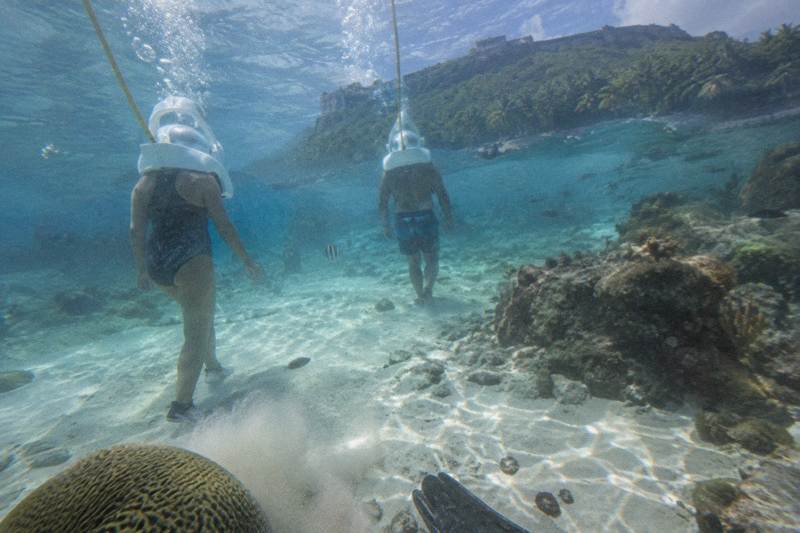
Photos are not among the included items on the SeaTrek St. Lucia tour, from US$118 per person, and no camera or photo package rule is confirmed anywhere. The helmet itself has a panoramic acrylic lens and keeps head and face dry. Ask the operator at booking about cameras or a photo option, and plan shore shots around the 1 hour 30 minute session.
If you are weighing an underwater experience in St Lucia and photography is part of the decision, start with the beginner underwater tours overview for the helmet, SNUBA and beginner scuba formats side by side. The photo question cuts across all of them, and the plain starting point is narrow: one of the tours on this site carries a photo flag, and everything else is planning around it.
| Fact | Detail |
|---|---|
| Main experience | SeaTrek St. Lucia, Seabed Helmet Walk, No Swimming |
| Photo inclusion | Photos are not among the included items listed for the tour |
| Camera or package policy | Ask the operator at booking |
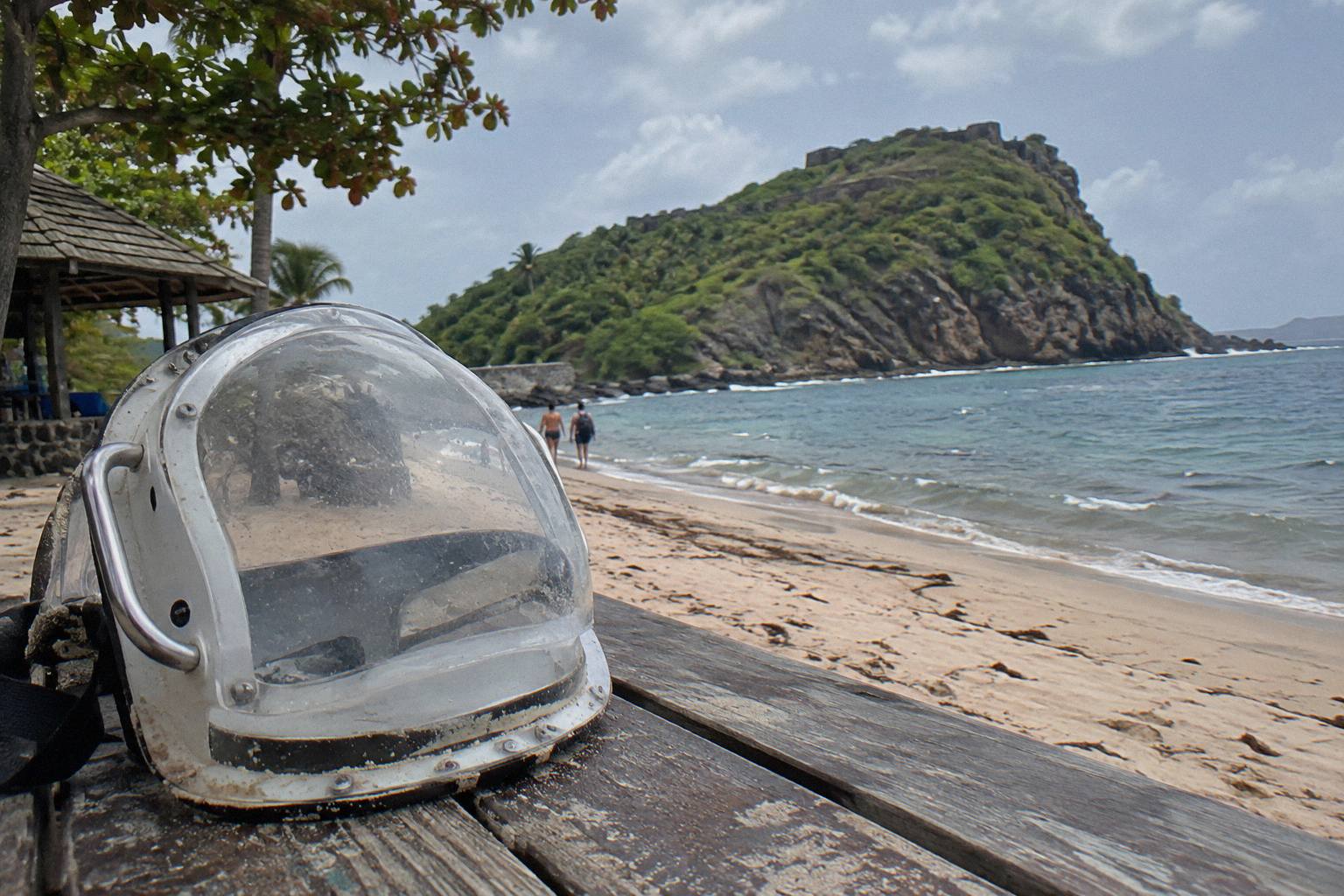
| Helmet lens | Panoramic acrylic lens, per the manufacturer |
| Head and face | Stay dry, per the manufacturer's description |
| Total duration | 1 hour 30 minutes |
| Underwater portion | About 25 minutes, after about 10 minutes of briefing |
| Price | From US$118 per person, US dollars |
What Is Actually Sourced About Photos On The Helmet Dive?
The photo facts are brief: photos are not among the included items on the SeaTrek St. Lucia tour line. No camera rule, no phone rule, no photo package and no vendor imagery offer appears in any covered material. That makes the operator the only source that can settle the question, so the move is to ask at booking, before any camera or phone gets packed for the wrong purpose.
That answer feels thin, and it is, but it is the whole truth available. Everything a searcher usually wants to know after it, whether a GoPro works under a helmet, whether the crew sells a photo package, whether phones survive the walk, has no sourced answer here, and printing a guess would just be invention dressed as advice.
What the manufacturer does say, and it matters for photography in an indirect way, is that the helmet is built from polycarbonate and marine-grade components with a panoramic acrylic lens, and that it keeps head and face dry, in the manufacturer's own description. The lens shape frames what a walker sees. The dry head matters if any eyewear is part of the plan: prescription glasses can stay on, again in the manufacturer's words.
For anyone deciding between formats partly on photo grounds, the practical split is this. The helmet walk is a guided, shared, shore-based experience with about 25 minutes underwater. SNUBA, "a cross between snorkeling and scuba diving" in the operator's words, breathes through a regulator fed from a floating raft, with no tank and no certification. Beach snorkeling from the same stretch of coast needs swimming ability and holds the surface. Each format gives a photographer a different situation, and none of the tours here lists photos as an included item.
The related experience, SeaTrek St. Lucia, the seabed helmet walk, carries the details that shape a photo plan: 1 hour 30 minutes total, minimum age 8, swimming not required, private transportation included, gratuities excluded, and free cancellation up to 24 hours before the start. Those facts, not camera speculation, are what a booking decision can stand on. Prices vary by date and group, and the booking page shows the price for your date.
Which Underwater Format Gives A Photographer The Most To Work With?
A photographer comparing the tour lines here is comparing time in the water, position relative to the surface, and what each tour names as included. The helmet walk gives about 25 minutes underwater on a shared, guided walk. SNUBA gives a regulator on a hose from a raft with a group maximum of 14. The boat and private formats run hours, but they are surface experiences that need swimming ability, which changes both the gear and the shooting position entirely.
The from-prices frame the choice: SeaTrek St. Lucia from US$118 per person, SNUBA Saint Lucia from US$112, beach snorkeling at Pigeon Island from US$70, the boat snorkel with lunch from US$83, the beginner scuba try from US$132, the certified scuba from US$116, the private boat to Soufriere from US$200, and the full-day snorkel excursion from US$250. Amounts are US dollars, per person as the tours on this site give them, and each line's inclusions are its own.
| Experience | Format | Duration | Minimum Age | Swimming | Photos Named As Included |
|---|---|---|---|---|---|
| SeaTrek St. Lucia | Shared helmet walk | 1 hour 30 minutes | 8 | Not required | No |
| SNUBA Saint Lucia | Shared, raft-fed regulator | 1 hour 30 minutes | 8 | Not named | No |
| Snorkeling at Pigeon Island | Shared beach snorkel | 1 hour 30 minutes | 6 | Needed | No |
| St Lucia Snorkeling Tour with Lunch | Shared boat snorkel | 5 hours | 4 | Needed | No |
| St Lucia Beginner Scuba Diving Tour | Shared try dive | 5 hours | 12 | Not named | No |
Two columns of that table do real decision work. Duration spans from 90 minutes to five hours, and a longer day simply holds more photo opportunities on deck and between stops. The swimming column divides the tours on this site cleanly: the helmet line states swimming is not required, the manufacturer's own words are "Can't swim? No worries!", while the snorkel and boat lines state swimming ability is needed. For a non-swimming traveller whose main goal is imagery, that flag, not any camera policy, decides the shortlist. The deeper planning question of how a helmet dive works with a non-swimmer's nerves covers the same ground from the confidence side.
The longer surface formats earn their from-price differences in other ways. The boat snorkel with lunch names a spacious dive boat with restrooms, water and juices, lunch, and hotel or port pickup from northern to western locations, with a 10% per person government VAT payable at check-in on top of the listed price. The private boat names snorkel gear, beverages including beer and local rum, and pickup from hotels with docks or from the Castries, Marigot Bay or Rodney Bay docks, with lunch from about US$15 per person and a fuel surcharge excluded. Neither names photos, so imagery on those days is a matter of whatever camera the guest manages.
Between the helmet and SNUBA specifically, the photo-relevant contrast is the vantage. The helmet walker is upright, walking the seabed, with the air supply arriving by hose from an electrically powered surface air center that feeds cooled, dried and filtered air, per the manufacturer's Q&A material. A SNUBA diver breathes through a regulator on a longer tether from a floating raft, which permits a more conventional head-down, underwater shooting posture. Neither is better in the abstract; they simply frame differently, and the direct comparison of SNUBA and the helmet walk works through the rest of the differences.
How Much Of The Session Is Actually Available For Photos?
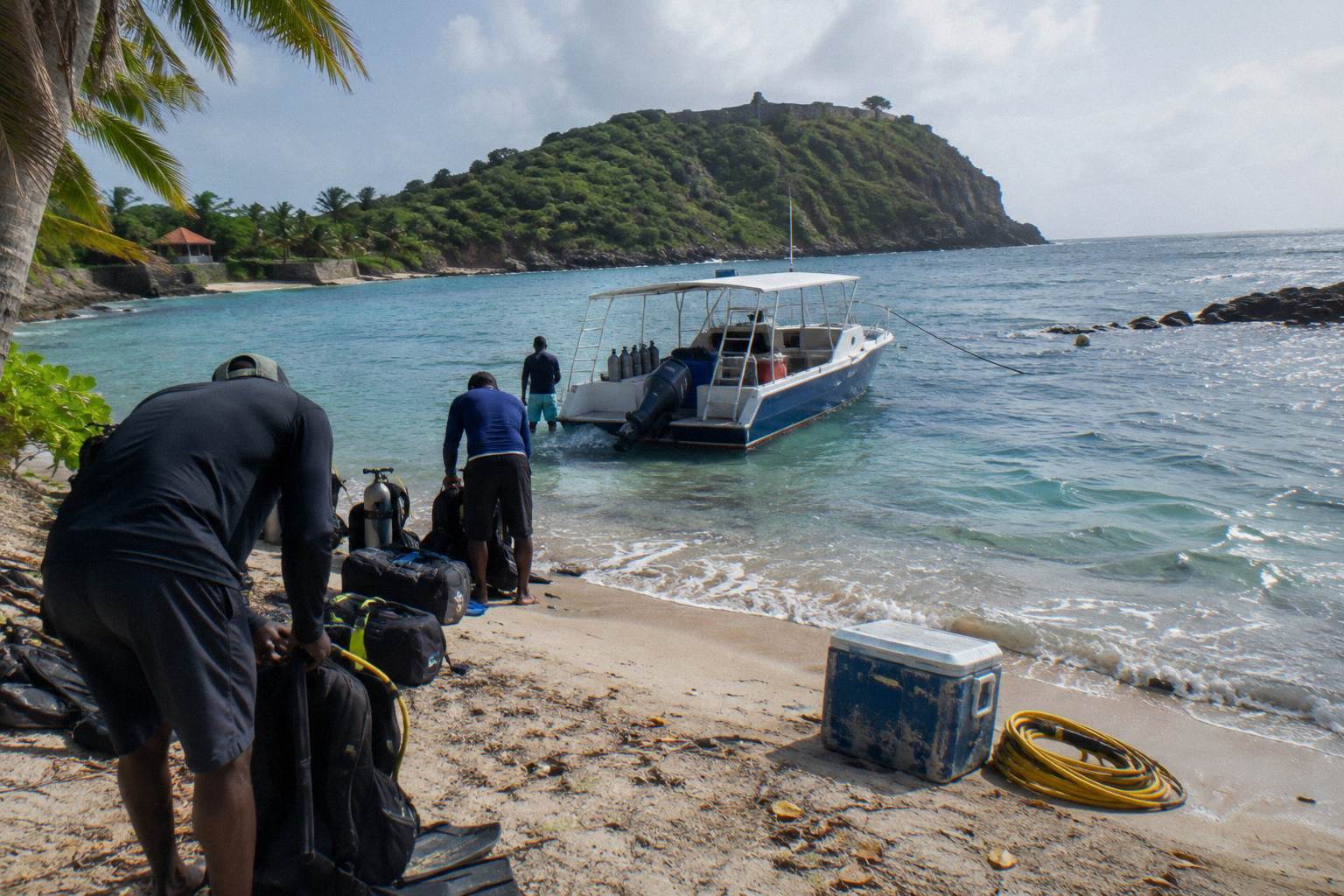
The arithmetic comes from the tour details: 1 hour 30 minutes total, of which about 10 minutes is briefing and about 25 minutes is the underwater walk. The balance is surface time on and around the beach at Pigeon Island, and that surface time is the part a photographer fully controls. No clock times are set, since the start is chosen on the booking calendar, so the plan should be built in blocks, not hours.
Twenty-five minutes underwater is not long for a camera session, and that is worth accepting up front rather than fighting. A walker who spends the whole underwater block managing a camera risks missing the walk itself; one who treats the camera as secondary and banks the shore time before and after tends to come away with more usable frames. The manufacturer's description of the experience, "just walk and breath", is a decent proxy for the intended pace.
The briefing block matters for a different reason. Those ten minutes are when the guide covers the walk, and they are also the natural moment to raise a camera question directly, if the booking conversation has not already settled it. Since no photo package or camera rule is sourced, the guide on the day is the authority on what is workable on that walk, in that group, on that shore.
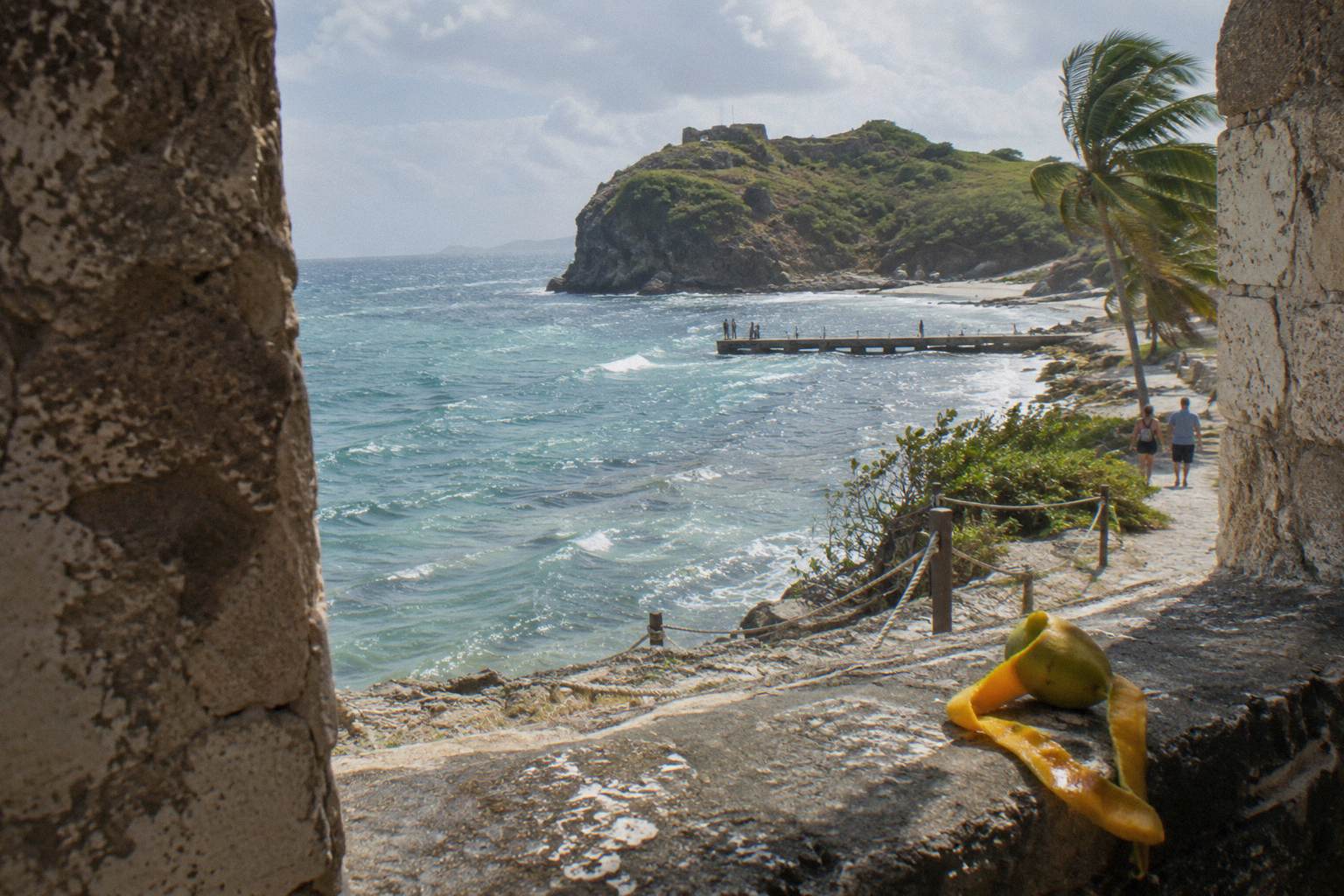
What surrounds the session is generous in a way the underwater block is not. Pigeon Island is a 44-acre National Landmark, reached by a causeway built in the early 1970s, with the water taxi and beach stretch of the operator's base on the shore. Sea temperatures in St Lucia stay between 26 and 29 C (79 to 84 F) all year, per the Tourism Authority, with morning generally the calmest and clearest water, which makes a morning start the sensible photo choice wherever the calendar allows one.
| Session Block | Duration | Photo Relevance |
|---|---|---|
| Briefing | About 10 minutes | The moment to raise camera questions with the guide |
| Underwater walk | About 25 minutes | The only underwater window, camera plan must be settled before |
| Remainder of the 90 minutes | The balance | Surface and shore shooting, fully guest-controlled |
| Before and after | Guest's own time | Fort Rodney, Signal Peak, the beach, views over Rodney Bay |
The wider question of how deep and how long a helmet dive lasts carries the same timings in more depth. For photo planning, the one number to anchor on is 25: minutes underwater. Everything else is daylight, shoreline and patience.
What Can You Photograph Around Pigeon Island Itself?
Pigeon Island National Landmark supplies more photographable subjects above the water than the helmet session does below it: Fort Rodney, an 18th-century British fort with views over Rodney Bay, Signal Peak at the highest point, a National Trust museum, Two-Gun Battery and military ruins, and Pigeon Island Beach itself. The Tourism Authority describes the beach as calm, sheltered water in a setting that photographs well at either end of the day.
The fort and the peak are the two subjects most worth the walk. Fort Rodney's ruins and its outlook over Rodney Bay give the classic frame of the bay and the marina beyond, and Signal Peak is a short hike to the highest point on the island, with the whole causeway and the northern coastline in view. The National Trust museum and the Two-Gun Battery round out the military history side, and none of it needs a ticket beyond the landmark's own entry, which is US$10 for a non-resident adult 13 and over, US$3 for a child 5 to 12, and free under 5, the National Trust's figures, and fees can change. Everything else covered here is indexed on St Lucia Helmet Dive.
| Landmark Subject | What It Is | Photographic Interest |
|---|---|---|
| Fort Rodney | 18th-century British fort | Ruins with views over Rodney Bay |
| Signal Peak | Highest point, short hike | Causeway and northern coastline in view |
| Two-Gun Battery | Military fortification | Period hardware among the ruins |
| National Trust museum | Landmark history exhibits | Interior and artefact detail work |
| Pigeon Island Beach | Calm, sheltered water per the Tourism Authority | Shore and shallow-water frames |
The Tourism Authority's own Pigeon Island page covers the fort, Signal Peak, the beach and the landmark's distance from Hewanorra International Airport, about 1 hour 40 minutes, on the Saint Lucia tourism Pigeon Island page. The National Trust's page carries the landmark's hours, 9:30 am to 5:00 pm daily with last entry 4:15 pm and a closure on December 25, on the National Trust's Pigeon Island National Landmark page. Neither page says anything about cameras on tours, which is consistent with the rest of the picture.
For a visitor staying in the north, the landmark is close and repeatable. For one arriving from Hewanorra, the drive to the Gros Islet area runs about 1 hour 30 minutes per the tourism authority's Gros Islet page, so a photo plan that includes the fort is best kept for the day of the experience itself rather than a second trip. The guide on getting to Pigeon Island from Rodney Bay, Castries and the cruise ports handles the routes.
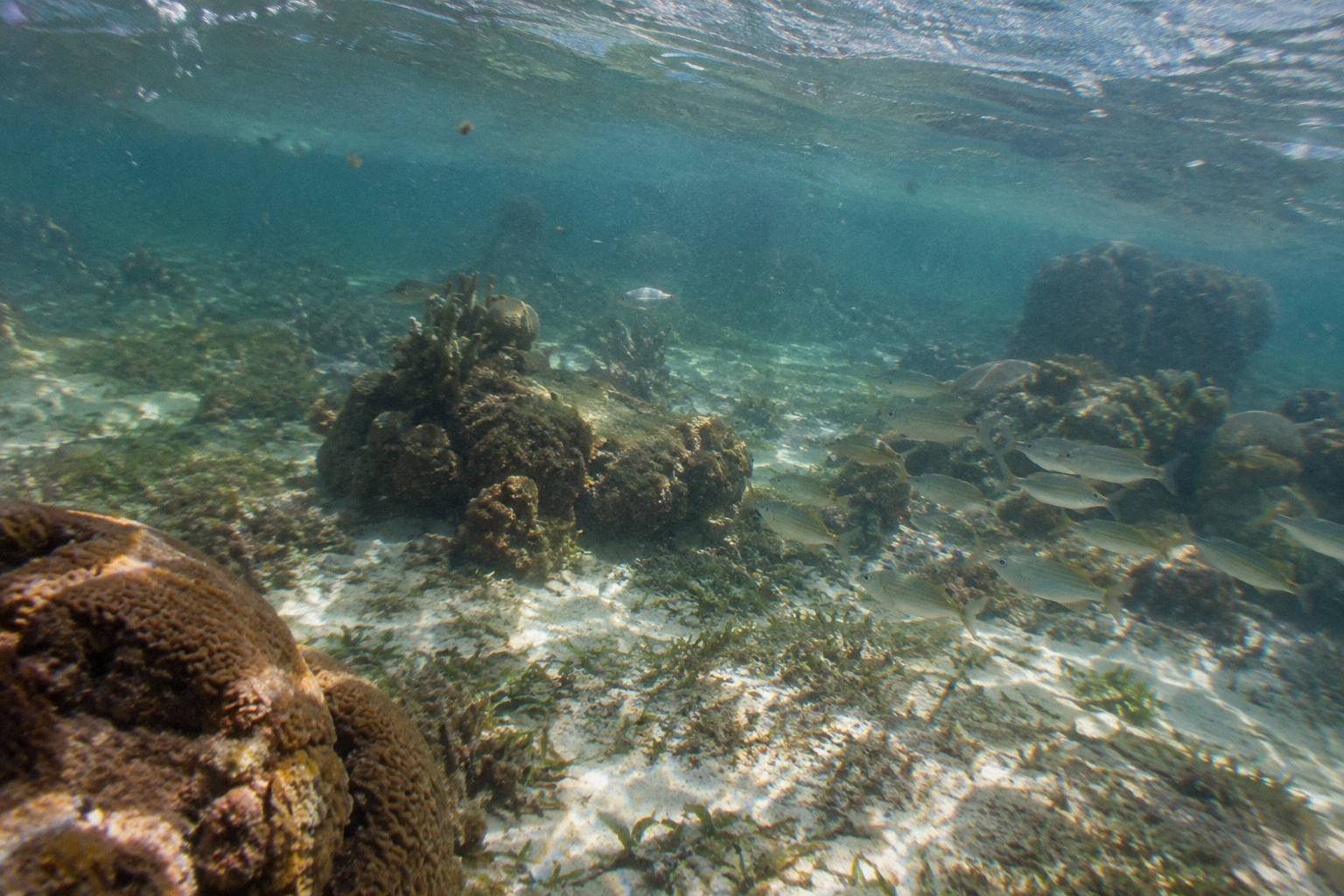
One caveat belongs here: no claim is made about what the water will show on any given day, and no visibility figure applies to the helmet walk specifically. The Tourism Authority describes the surrounding rocky coastline as attracting a variety of fish and marine life, and the beach as calm, sheltered water, but weather, tide and boat traffic decide conditions on the day. Photography planning can fix position, light and timing; it cannot fix the sea.
Which Questions Should You Ask The Operator Before Booking?
Three questions cover the whole gap: whether a photo option exists for the helmet walk, what camera or phone arrangements are workable on the day, and where pickup happens for your hotel. The first two have no sourced answer, so the operator's own response is the only one that counts. The third is settled but narrow: pickup is included from hotels in the north of the island only, and the exact meeting point comes on the booking confirmation.
Asking at booking, rather than on the beach, protects the 25-minute underwater block. A question raised in advance gets a considered answer and possibly an option added to the reservation; the same question raised at the water's edge gets answered in the noise of a shared session with a group already in helmets. Booking is also when the cancellation terms matter most: free cancellation up to 24 hours before the start, per the tour details, which gives a full day to reconsider.
The medical advisory belongs in the same conversation. The operator's booking page advises that the experience is not recommended for pregnant travelers, travelers with poor cardiovascular health or travelers with spinal injuries, and anyone in those groups should ask the operator or a doctor before booking, not after. That advisory covers the helmet walk and SNUBA alike.
For the SNUBA line specifically, the question set is slightly different, since the tours on this site carry more: a group maximum of 14, minimum age 8, use of all needed equipment included, and water provided after the experience, from US$112 per person, with the same 24-hour free cancellation and the same northern-hotels-only pickup. A group of photographers who want to compare notes afterwards has a known ceiling of 14 on that line. The trade-offs between that and the helmet are set out in the sea trek versus snuba versus scuba versus snorkeling comparison.
The simplest formats reward the simplest photo plans. Beach snorkeling at Pigeon Island runs 1 hour 30 minutes from US$70 per person, minimum age 6, swimming ability needed, bottled water and snorkel equipment included, pickup not included, from the operator's own beach stretch. For a photographer travelling light, that line is the cheapest entry into the same water, with the whole shoreline available as a backdrop before and after. The guide to snorkeling at Pigeon Island covers the beach itself.
What Trips People Up Before You Book
The traps are all versions of assuming: that photos are included when the tour line does not name them, that a camera or phone rule exists when none is published, that the full 90 minutes is underwater when the walk is about 25 minutes, and that southern-hotel pickup applies when pickup covers the north of the island only. Each assumption fails the same way, against a published line that says otherwise.
The first trap is the expensive one. A traveller who books expecting a photo package, and finds none named anywhere, has no recourse on the day; the time to ask was at booking. The second trap, the imagined camera rule, cuts both ways: some travellers assume phones are banned and pack nothing, others assume crew will handle cameras and hand over expensive gear unasked. Both guesses come from the same gap, and both are settled by one question to the operator in advance.
The gratuity line catches people too: gratuities are excluded on the helmet line, and the tourism authority's travel tips put tipping at about 10 to 12% of bills in St Lucia generally, not added automatically, a useful benchmark if a guide has gone out of their way on the day. The Eastern Caribbean dollar is pegged at EC$2.70 to US$1 and US dollars are widely accepted, with change often given in EC$, so cash tips are easy either way.
Season planning is the last quiet trap. The dry season runs December to April and is the busiest; the rainy season June to December, with showers usually brief; the Atlantic hurricane season runs June 1 to November 30, per the US National Hurricane Center's climatology. A photographer chasing clear morning water in July is gambling against 200 mm or more of monthly rainfall on the climate record, while the same plan in March sits in the driest stretch of the year. The trade-off is crowds, since December to April is peak.
Beach safety lines from the Tourism Authority apply to any shore photography that turns into a swim: many beaches have no lifeguards, never snorkel alone, mind boat traffic, use reef-safe sunscreen and never touch coral or marine life. The west coast generally offers calmer water, which is one reason the north-west corner of the island concentrates these experiences. None of it is a photo tip on its face, but a photographer who wanders into the water for an angle is a snorkeler, and the same rules bite.
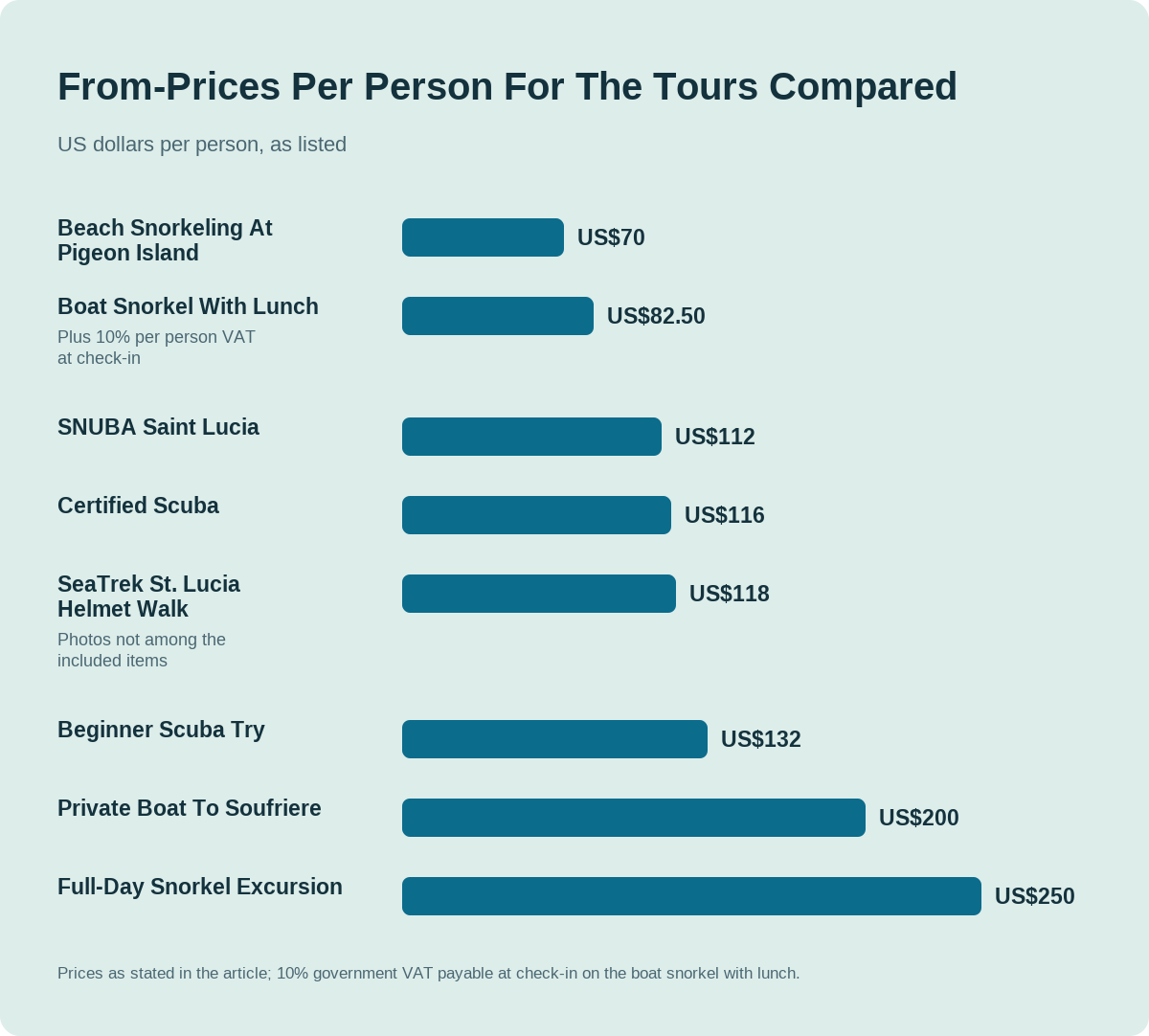
The from-prices give the final reality check. The helmet walk from US$118 per person sits between SNUBA from US$112 and beginner scuba from US$132, while beach snorkeling from US$70 is the cheapest way into the same water and the full-day excursion from US$250 is the most complete day. A photo-led decision can reasonably trade a more expensive format for a cheaper one plus time at the fort, and the cost comparison against snorkeling runs those numbers properly.
Common Questions About Photography On A Helmet Dive
Can You Take Photos On A Helmet Dive?
Photos are not among the included items on the SeaTrek St. Lucia tour line, and no camera, phone or photo-package rule is published. Ask the operator at booking whether a photo option or a personal camera arrangement exists for your session.
Does The Helmet Have A Lens You Can Shoot Through?
The helmet is built from polycarbonate and marine-grade components with a panoramic acrylic lens, per the manufacturer, and it keeps head and face dry. Whether any camera arrangement is workable on the walk is a question for the operator, since no rule is sourced.
How Long Is The Underwater Part Of The Session?
The session runs 1 hour 30 minutes in total, with about 10 minutes of briefing and about 25 minutes underwater, per the tour's description. The balance is surface and shore time, which a photographer controls fully.
Where Else Can You Take Photos On The Day?
Pigeon Island National Landmark holds Fort Rodney, Signal Peak, a National Trust museum, Two-Gun Battery, military ruins and the beach, with views over Rodney Bay. Entry is US$10 for a non-resident adult, US$3 for a child 5 to 12, under 5 free, the National Trust's figures, and fees can change.
Do Any Of The Tours Here Include Photos?
No tour lists photos among its included items. The helmet tour lists private transportation as included and gratuities as excluded; SNUBA names equipment and water; the snorkel tours name gear, water, and on the longer formats, lunch.
When Is The Best Light For A Photo-Led Visit?
Morning generally offers the calmest water and the clearest conditions, per the Tourism Authority, and sea temperatures stay between 26 and 29 C (79 to 84 F) all year. The dry season December to April is the busiest but driest stretch; the hurricane season runs June 1 to November 30.
Is Pickup Included With The Helmet Experience?
Pickup is included from hotels in the north of the island only, and the exact meeting point comes on the booking confirmation. Free cancellation applies up to 24 hours before the start.
A last note on the core of this decision: the manufacturer's helmet design, the panoramic lens, the dry head and the guided walk are all sourced, and the timings, ages, inclusions and from-prices of the tours on this site are all sourced. The one fact that answers the camera question directly, that photos are not among the included items, is also sourced, and it points to a single next step. Ask the operator at booking, plan the shore hours around a 25-minute underwater window, and let the fort, the peak and the beach carry the rest of the day's frames.