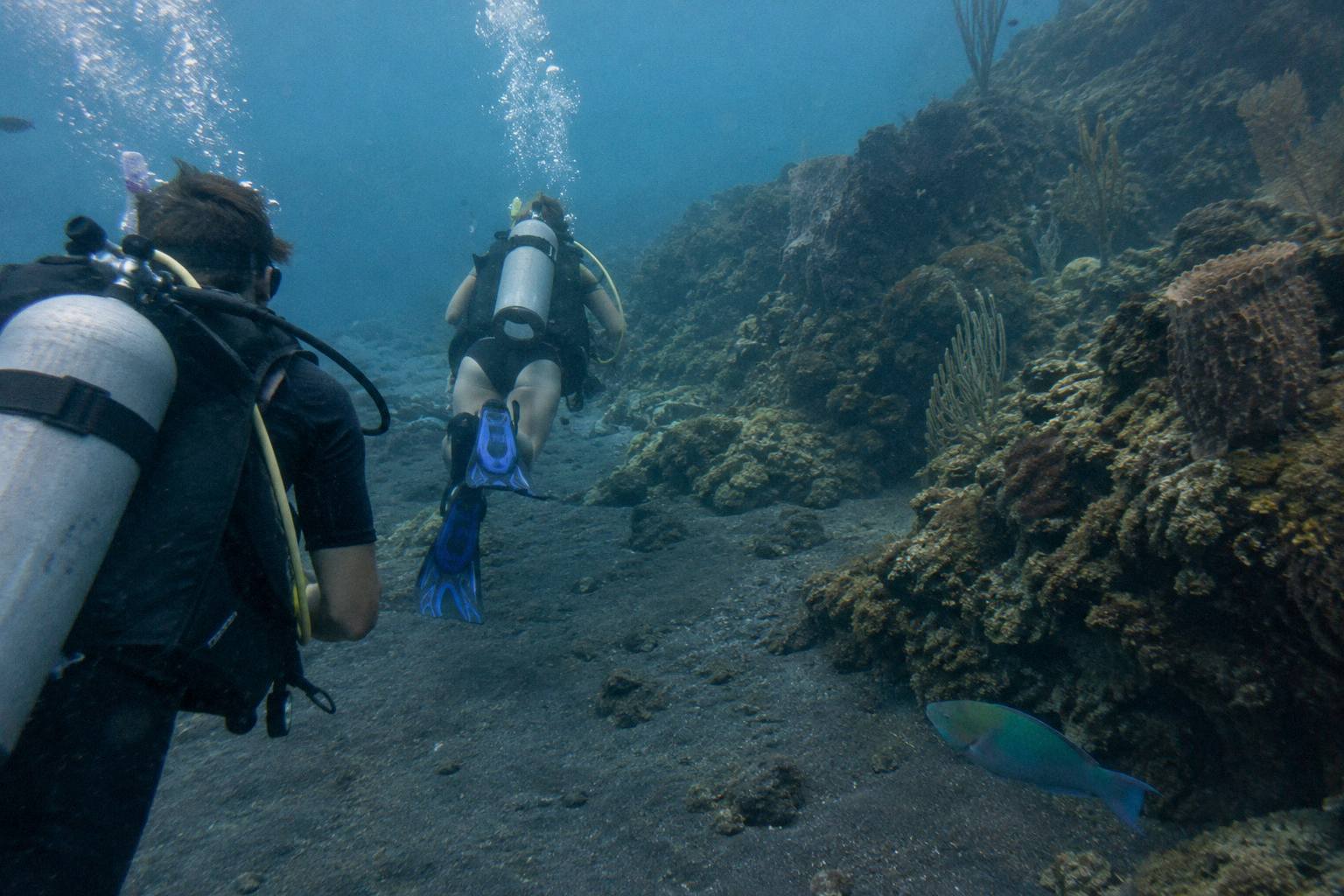
Beginner Scuba Try Dive In St Lucia: What It Involves
A beginner scuba try dive in St Lucia is a five-hour boat day out of Marigot Bay with training before the dive, one tank, lunch and hotel pickup from northern to western island locations. Here is what the tour includes, what it costs, and how it compares with the helmet dive.
Short answer
The St Lucia Beginner Scuba Diving Tour runs 5 hours from Marigot Bay, from US$132 per person, minimum age 12, with an instructor for training before a 1 tank dive, tanks and weights, water and juices, lunch and marine fees included. Pickup covers northern to western island locations only, not the south.
Planning time in the water but not sure which format suits a first dive? The beginner underwater tours hub at this link covers every no-certification option on the island, from the seabed helmet walk to SNUBA and first-time scuba. A try dive is the biggest step of the three, and it rewards a little comparison before anyone books.
| Fact | Detail |
|---|---|
| Product | St Lucia Beginner Scuba Diving Tour |
| Operator | Dive Fair Helen |
| Departs from | Marigot Bay, west coast |
| Duration | 5 hours |
| Price | From US$132 per person |
| Minimum age | 12 |
| Rating | 4.7 from 57 reviews |
| Certification needed | None, training given before the dive |
| Cancellation | Free up to 24 hours before start |
What A Beginner Scuba Try Dive In St Lucia Actually Involves
A try dive is a full five-hour boat day, not a ten-minute pool session. The St Lucia Beginner Scuba Diving Tour pairs you with an instructor for training before the dive, then takes you down on a 1 tank dive with tanks and weights provided. Lunch, water and juices, and marine fees are all named as included, so the day is self-contained from pickup onward.
The tour is built for people who have never dived. The beginner tour includes an instructor for training before the dive, which is the defining difference between a try dive and a certified dive: the training happens on the day, in the operator's hands, rather than in a multi-day certification course. Tanks and weights are included too, so there is nothing to rent for the dive itself. The whole experience runs 5 hours and departs from Marigot Bay on the west coast.
Dive Fair Helen, the operator, also runs the certified version of the day, and the two share a boat-and-lunch structure. The beginner tour costs from US$132 per person against from US$116 per person for the certified tour, an difference that reflects who the day is built around rather than what is on the menu. Both carry free cancellation up to 24 hours before start, which matters for a trip where weather or a cruise schedule can shift. Prices vary by date and group, and the booking page shows the price for the date you choose; all amounts are in US dollars.
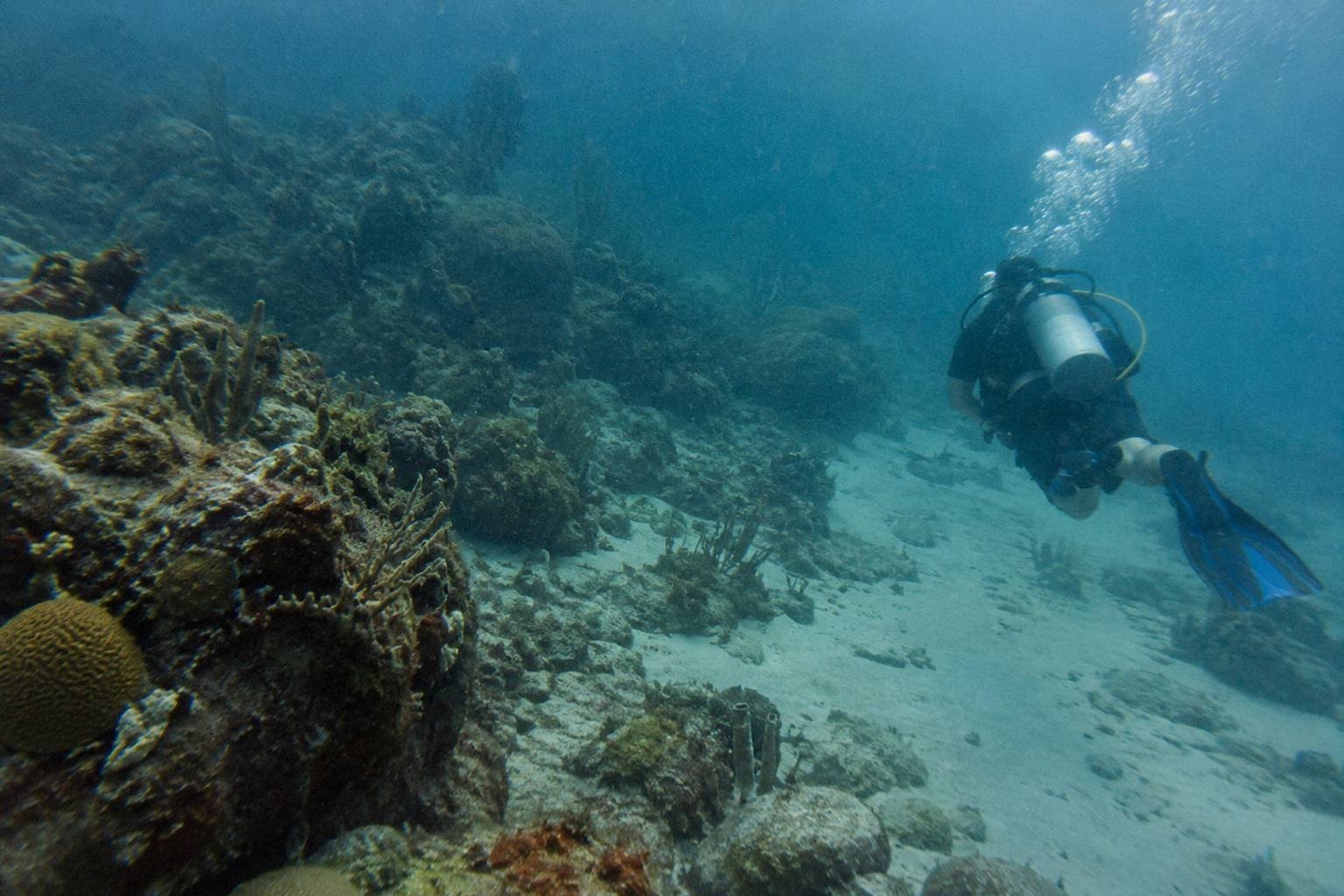
For context on what the island's diving looks like, the Saint Lucia tourism diving page describes the scuba site at the base of Pigeon Island as starting about 15 ft over sand and coral and reaching a maximum of 60 ft, with eagle rays, moray eels, lobsters and great barracuda seen regularly on that dive. That is a description of the site itself, not of this tour, and no depth or species is promised for any specific day on any product. It simply sketches what west-coast diving around the island tends to look like.
Beginner Versus Certified Scuba: Which Dive Fair Helen Tour Fits
Pick the beginner tour if you have no certification at all, and the certified tour only if you already hold one. Both run 5 hours from Marigot Bay with lunch and a maximum age floor of 12. The beginner day costs from US$132 per person and builds training in; the certified day costs from US$116 per person and brings a dive master and local guide instead.
The split is straightforward. The beginner tour is the one to choose without a certification, because its included list covers an instructor for training before the dive and a 1 tank dive. The certified tour assumes you arrive qualified, and its included list covers a dive master and local guide, all fees and taxes, tanks and weights, and a spacious dive boat with a restroom. Equipment on the certified day is excluded if the option is not selected, and a wet suit is an additional cost if available, so certified divers should read their options before booking.
| Line item | Beginner Scuba Diving Tour | Certified Scuba Diving Tour |
|---|---|---|
| From price | US$132 per person | US$116 per person |
| Duration | 5 hours | 5 hours |
| Rating | 4.7 from 57 reviews | 4.6 from 71 reviews |
| Minimum age | 12 | 12 |
| Guidance | Instructor for training before dive | Dive master and local guide |
| Tanks and weights | Included | Included |
| Meals and drinks | Lunch, water and juices | Lunch, water and juices |
| Equipment | Not named as excluded | Excluded if option not selected; wet suit extra |
| Pickup | Northern to western locations | Northern to western locations |
| Cancellation | Free up to 24 hours before | Free up to 24 hours before |
Both products share the same departure point at Marigot Bay and the same pickup rule: hotel and port pickup and drop-off from northern to western island locations only, with pickup from the southern locations of Soufriere, Vieux Fort, Micoud and Dennery explicitly not included. Anyone staying in the south should plan their own route to the west coast or pick a product that departs closer to them. Check the live price for your date before deciding between the two, since both carry date-dependent pricing.
What The Day Costs And What Is Included
From US$132 per person buys the whole five-hour structure: training, the 1 tank dive, tanks and weights, water and juices, lunch, marine fees, and hotel or port pickup and drop-off from northern to western island locations. Gratuities are the notable extra on other products in this family, and equipment options are worth confirming at booking.
The beginner tour's included list is unusually complete. Marine fees are named as included, which removes one of the small surprises that often appears at check-in on island activities. Lunch is included, along with water and juices, which matters on a five-hour day in the sun. The tours on this site do not name a photo package or rental gear line for the beginner tour, so if either matters to you, ask the operator before you book rather than assuming.
It helps to set the price against the rest of the island's underwater options. The SeaTrek St. Lucia helmet walk, the seabed walk that needs no swimming at all, runs from US$118 per person for 1 hour 30 minutes. The SNUBA Saint Lucia tour, the surface-raft hose format, runs from US$112 per person for the same 1 hour 30 minutes. Snorkeling at Pigeon Island starts from US$70 per person. The beginner scuba day costs more because it is longer, includes a meal, and includes a training element none of the others carry.
| Product | Format | From price per person | Duration |
|---|---|---|---|
| St Lucia Beginner Scuba Diving Tour | Boat try dive with training | US$132 | 5 hours |
| St Lucia Certified Scuba Diving Tour | Boat dives for certified divers | US$116 | 5 hours |
| SeaTrek St. Lucia | Seabed helmet walk | US$118 | 1 hour 30 minutes |
| SNUBA Saint Lucia | Surface raft air hose | US$112 | 1 hour 30 minutes |
| Snorkeling at Pigeon Island | Beach snorkel | US$70 | 1 hour 30 minutes |
One money note for the wider trip: the Eastern Caribbean dollar is pegged at EC$2.70 to US$1, and US dollars are widely accepted, with change often given in EC$. The Saint Lucia tourism travel tips page also notes a 10% VAT and 10% service charge on hotel and restaurant bills, with tipping around 10 to 12% not added automatically. None of that touches the tour price, but it shapes the cash you carry on the day.
Scuba Versus The Helmet Dive For A First Timer
The helmet dive asks for no swimming at all and keeps head and face dry, while the try dive asks you to breathe from a regulator underwater for around five hours of boat-based day. The helmet walk runs 1 hour 30 minutes from US$118 per person, age 8 and up, from Pigeon Island; the try dive runs 5 hours from US$132 per person, age 12 and up, from Marigot Bay.
These are the two products a nervous first-timer usually weighs, and they answer different fears. The helmet walk, SeaTrek St. Lucia, is built around walking on the seabed with the helmet resting on your shoulders: the manufacturer says the helmet works similar to an inverted glass, with air staying inside as long as the helmet is not turned over, supplied by hose from a surface air center as a constant flow of cooled, dried and filtered air. Head and face stay dry, in the manufacturer's description, prescription glasses can stay on, and no swimming skill is required. Ages 8 and up can take part, and the total session runs 1 hour 30 minutes with about 10 minutes of briefing and about 25 minutes underwater.
The try dive asks for more from you and gives a different reward. You learn to breathe from a regulator, descend under an instructor's supervision, and spend a five-hour day on the water with a meal. It is the first rung of the scuba ladder rather than a one-off walk, and it suits travelers who already feel comfortable in water and want to know whether diving is for them. The helmet walk suits travelers who want to stand on the seabed without any of that, including non-swimmers and children as young as 8. The helmet walk has a tour page with the full breakdown if that direction appeals.
| Line item | Beginner Scuba Try Dive | SeaTrek St. Lucia Helmet Walk |
|---|---|---|
| From price | US$132 per person | US$118 per person |
| Duration | 5 hours | 1 hour 30 minutes |
| Minimum age | 12 | 8 |
| Swimming needed | Expected for scuba | Not required |
| Head and face | In the water | Dry, per the manufacturer |
| Time underwater | 1 tank dive | About 25 minutes |
| Training | Instructor training before dive | About 10 minutes of briefing |
| Departs from | Marigot Bay | Pigeon Island, Gros Islet |
| Rating | 4.7 from 57 reviews | 4.8 from 231 reviews |
| Cancellation | Free up to 24 hours before | Free up to 24 hours before |
If the deciding factor is nerves rather than curiosity, the how helmet diving works with the air hose explained guide covers the mechanics in detail, and the sea trek versus SNUBA versus scuba comparison walks the same decision across all four formats. The short version: the helmet walk removes the water from the equation, and the try dive makes the water the point.
Pickup, Marigot Bay And Getting There On A Cruise Day
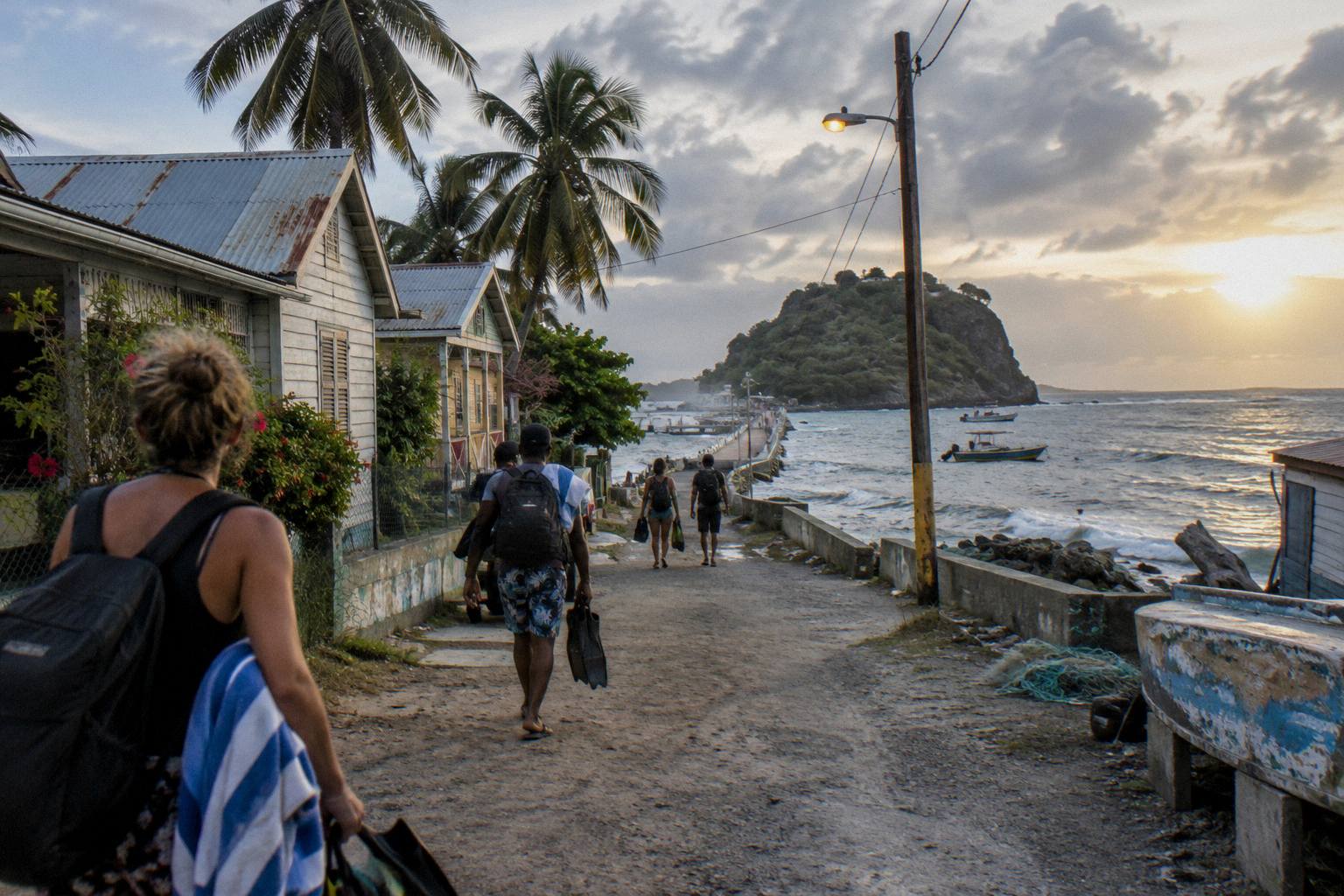
Both Dive Fair Helen tours include hotel and port pickup and drop-off from northern to western island locations only, and exclude Soufriere, Vieux Fort, Micoud and Dennery. The boats leave from Marigot Bay on the west coast. Cruise passengers should confirm terminal pickup with the operator before booking, since the tours on this site do not list it for the scuba tours.
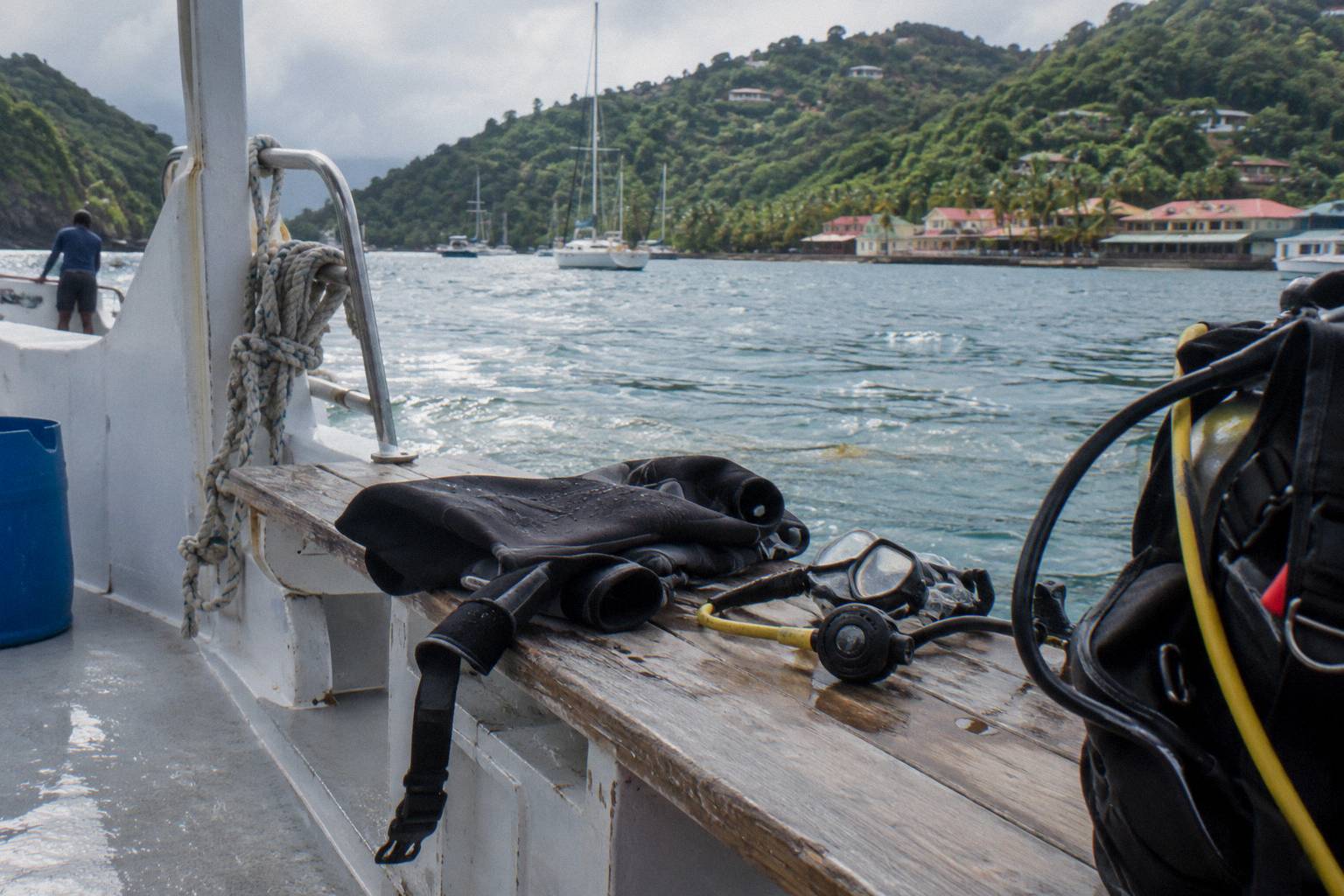
Marigot Bay is one of the island's best-known west-coast anchorages, a hurricane hole historically used by sailing ships, and today a working marina village between Castries and Soufriere. The certified tour's boat is described as spacious with a restroom, which on a five-hour day is worth knowing. The west coast generally offers calmer waters than the Atlantic side, per the Tourism Authority's beach safety guidance, which is also why nearly all of the island's beginner underwater products cluster there.
The geography matters for two groups. Travelers staying in the Gros Islet and Rodney Bay area in the north are inside the pickup zone, as are those in Castries and down the west coast. The tourism authority puts Hewanorra to Gros Islet at about 1 hour 30 minutes and Hewanorra to Pigeon Island at about 1 hour 40 minutes, so airport-arrival-day diving is a stretch for anyone landing in the south. Cruise passengers face a separate question: Castries has two duty-free terminals, Pointe Seraphine and La Place Carenage, linked by water taxis, with the main cruise season running October to April and up to five ships in port on one day. The scuba tours on this site say hotel and port pickup without naming a cruise terminal, so ask the operator directly if you are coming off a ship. The fitting an underwater excursion into a cruise day guide works through that timing in full.
Ages, Health And Flying After The Dive
The minimum age is 12 for both scuba tours, against 8 for the helmet walk and SNUBA. Health screening is a conversation with the operator before booking, not a formality at the dock. Flying guidance from DAN says wait 12 hours after a single no-decompression dive and 18 hours after multiple dives or multiple days, and that is scuba guidance specifically.
The age gap between the formats is one of the most practical filters for families. A party with a 9-year-old and a 14-year-old cannot do a scuba try dive together, but they can do the helmet walk together, since it takes ages 8 and up. The scuba tours both set the floor at 12. For medical questions, the operator's own advisory on the sealife products, not recommended for pregnant travelers, travelers with poor cardiovascular health or spinal injuries, shows the kind of screening that applies to pressurized and underwater activities generally; for the Dive Fair Helen tours, raise any heart, lung, ear or sinus history with the operator or a doctor before booking.
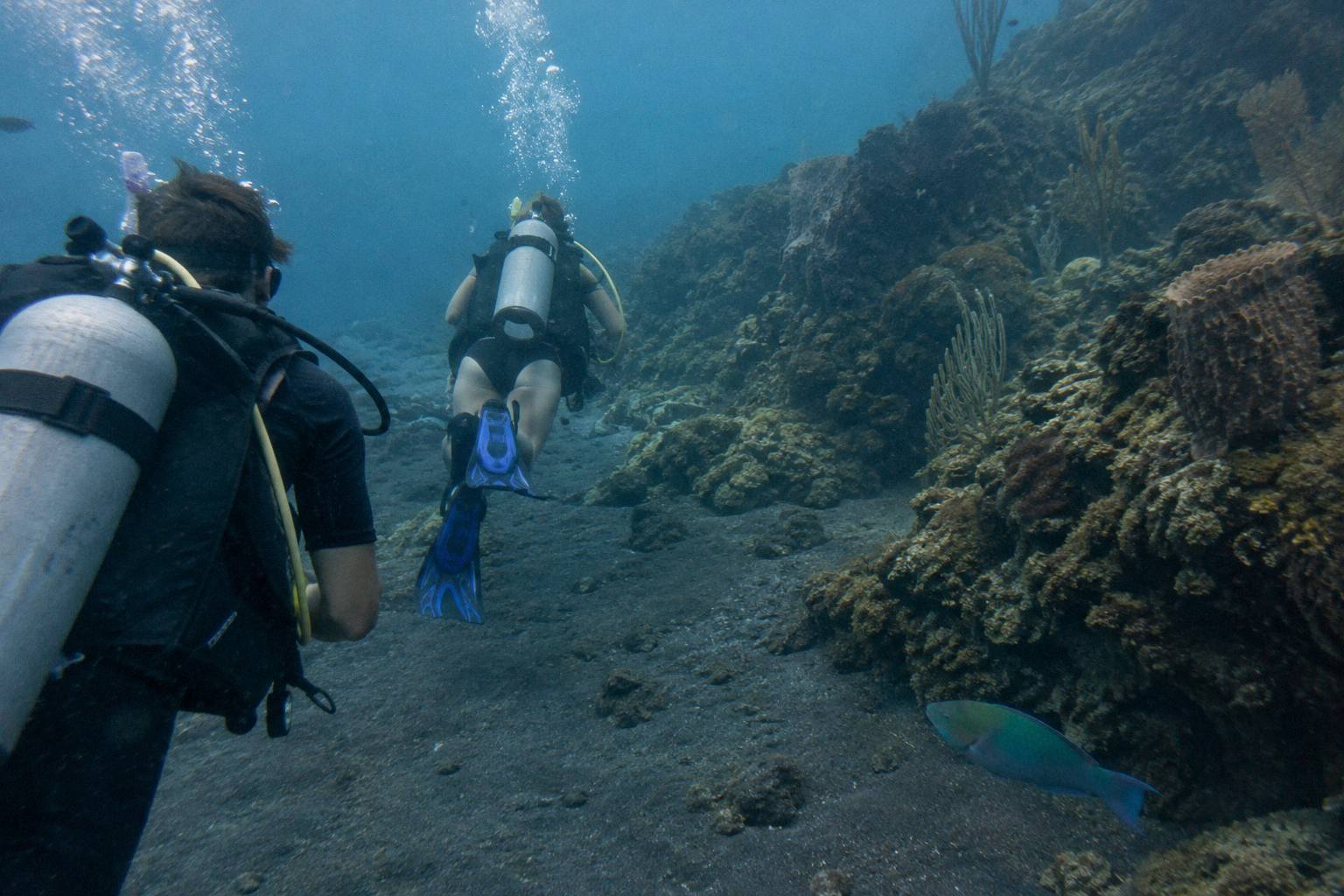
The flying question comes up on every island dive day. Divers Alert Network, the diving medicine body, gives a minimum preflight surface interval of 12 hours after a single no-decompression dive, and 18 hours after multiple dives in a day or multiple days of diving, noting that commercial cabin altitude runs around 6,000 to 8,000 ft. Those intervals are stated for scuba. For the helmet walk and SNUBA, DAN publishes no interval, so ask the operator rather than assuming. A single-tank beginner dive ending mid-afternoon usually clears a next-midday flight comfortably under the 12-hour figure, but the arithmetic is yours to run against your own departure. The can you SNUBA before flying home post covers the same question for the raft-hose format.
How The Try Dive Fits The Island's Season And Sea
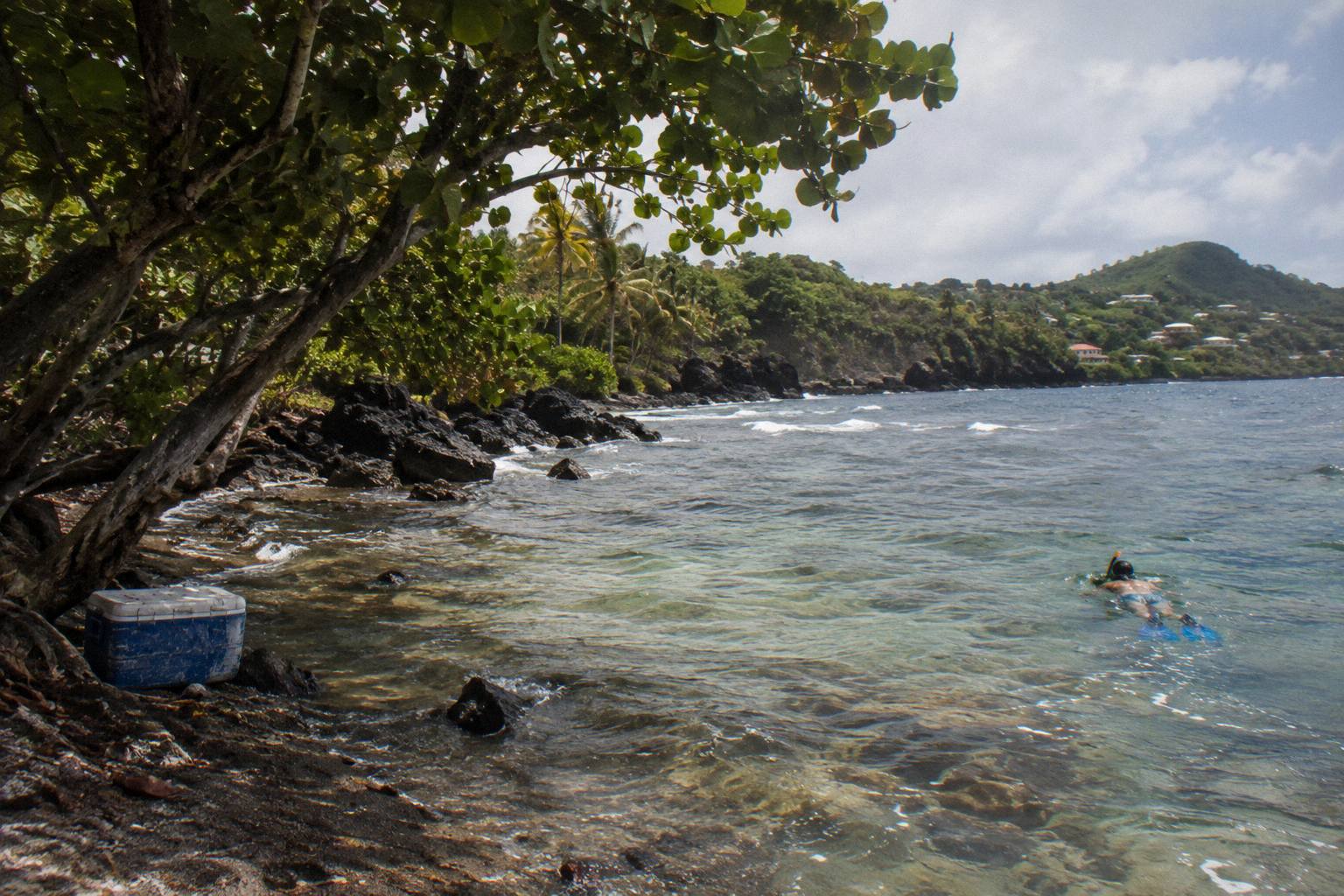
Sea temperatures in St Lucia hold between 26 and 29 C, that is 79 to 84 F, all year, so the water itself is never the barrier. The busy dry season runs December to April, the rainy season June to December, and the Atlantic hurricane season June 1 to November 30. Mornings bring the calmest water and clearest conditions on the snorkelling page's advice.
What this means for a try-dive booking is mostly about crowds and weather risk rather than temperature. December to April is the busiest stretch and coincides with the October-to-April cruise season, so west-coast operators are at their fullest. Rainy-season showers are usually brief, but the season overlaps the hurricane season, which runs June 1 to November 30 per the US National Hurricane Center's climatology. Every product here carries free cancellation up to 24 hours before start, which is the practical hedge: book the day you want, and keep the cancellation window in mind if a system is moving through.
| Season | Months | What It Means For A Dive Day |
|---|---|---|
| Dry season | December to April | Busiest stretch, coincides with the October to April cruise season |
| Rainy season | June to December | Showers usually brief, per the tourism seasons page |
| Hurricane season | June 1 to November 30 | Overlaps the rainy season; free cancellation up to 24 hours before start hedges the risk |
| Sea temperature | All year | Holds between 26 and 29 C, 79 to 84 F |
The day's shape is worth thinking about too. A five-hour tour with training, a dive and lunch eats most of a day, which is exactly why it suits resort-based travelers better than a tight cruise call. The 1 hour 30 minute formats, the helmet walk and SNUBA, slot into smaller windows. If your dates are flexible, the tourism authority's advice that mornings offer the calmest water and clearest visibility argues for booking whatever start slot the operator offers nearer the morning, but the weather and the operator decide what runs on any given day, and no product here promises conditions. The best time of year for underwater tours guide has the month-by-month picture.
What Trips People Up Before You Book
Most avoidable problems come from four places: expecting southern pickup that the scuba tours do not offer, booking the certified tour without a certification, ignoring the 12-year age floor, and flying too soon after the dive. Each has a one-line fix: check the pickup zone, book the beginner product, count the birthdays, and count the hours before your flight.
The pickup zone is the biggest one. Both Dive Fair Helen tours exclude Soufriere, Vieux Fort, Micoud and Dennery, and travelers staying around Soufriere, which is where many of the island's resorts sit, sometimes discover this only at confirmation. If you are based in the south, either plan your own drive to Marigot Bay or choose a product closer to you, and confirm the meeting detail when the booking confirmation arrives.
The second is product confusion. The certified tour is cheaper, from US$116 per person against US$132, which tempts people who hold a certification from years ago and have not dived since. The tours on this site are plainly distinct: the beginner tour includes an instructor and training before the dive, and the certified tour includes a dive master and local guide for qualified divers. Read your own logbook before choosing. Third, the age floor of 12 rules out younger siblings, where the helmet walk at 8 and up and beach snorkeling at 6 and up keep the family together. Fourth, the DAN surface intervals are scuba guidance, and a same-evening flight after a morning dive is the classic error; the 12-hour single-dive figure is the one to plan around, with a longer interval if anything about the day involves multiple dives.
Finally, two small ones. Gratuities are not included on some products in this family, so carry cash for the crew. And do not assume gear: on the certified tour equipment is excluded unless the option is selected and a wet suit costs extra if available, so pick your options deliberately at booking rather than at the dock.
For anyone whose real hesitation is the water itself rather than the logistics, whether helmet diving is safe and who should skip it addresses the same nerves for the walk format, and the beginner scuba try dive compared with snorkeling cost guide runs the value question across formats. Whatever the choice, a site like St Lucia Helmet Dive exists because the island's no-certification options genuinely differ, and the right one depends on who is in your party.
Common Questions About Your First Scuba Dive In St Lucia
Do I Need A Certification For The St Lucia Beginner Scuba Diving Tour?
No. The tour includes an instructor for training before the dive, which is the whole point of a try dive. The certified tour is the one that assumes a qualification, with a dive master and local guide instead of same-day training.
How Long Does A Beginner Scuba Tour In St Lucia Take?
Both Dive Fair Helen scuba tours run 5 hours from Marigot Bay, including training, a 1 tank dive on the beginner version, and lunch. By contrast the helmet walk and SNUBA sessions run 1 hour 30 minutes each.
What Is The Minimum Age For A Scuba Try Dive In St Lucia?
The beginner and certified scuba tours both set the minimum age at 12. The SeaTrek helmet walk and SNUBA take ages 8 and up, and beach snorkeling at Pigeon Island takes ages 6 and up, so families with younger children have alternatives on the same stretch of coast.
Is Lunch Included On The Beginner Scuba Tour?
Yes. Lunch, water and juices are named as included, along with tanks and weights, marine fees, and hotel or port pickup and drop-off from northern to western island locations. Gratuities are a separate matter on tours in this family, so carry cash for the crew.
Can I Be Picked Up From Soufriere For The Scuba Tours?
No. Pickup is from northern to western island locations only, and the tours on this site explicitly exclude Soufriere, Vieux Fort, Micoud and Dennery. If you are staying in the south, plan your own transport to Marigot Bay or choose an activity based closer to you.
How Soon Can I Fly After A Beginner Scuba Dive?
Divers Alert Network advises a minimum preflight surface interval of 12 hours after a single no-decompression dive, and 18 hours after multiple dives in a day or multiple days. That is scuba guidance; for the helmet walk and SNUBA, ask the operator, since DAN publishes no interval for those formats.