Sea Trek Vs SNUBA Vs Scuba Vs Snorkeling: Which Fits You
A four-way comparison of St Lucia's beginner underwater products: helmet walking, SNUBA, beginner scuba and snorkeling, with prices, ages, durations and who each format suits.
Short answer
Sea Trek needs no swimming and keeps your head dry on a 1 hour 30 minute walk from US$118. SNUBA from US$112 needs no certification but you swim with a raft-fed regulator. Snorkeling from US$70 needs swimming. Beginner scuba from US$132 runs 5 hours with training and lunch. Pick by swimming comfort, age and time.
Choosing between underwater activities comes down to how each one gets air to your face and how much swimming it demands. The tours on this site cover the exact beginner formats bookable on the island, from the beginner underwater tours hub through to beach snorkeling, and they settle the snuba vs scuba question along the way.
| Fact | Detail |
|---|---|
| Helmet walk (Sea Trek) | From US$118 per person, 1 hour 30 minutes, minimum age 8, no swimming needed, head and face stay dry |
| SNUBA | From US$112 per person, 1 hour 30 minutes, minimum age 8, up to 14 travelers, no certification needed |
| Beginner scuba | From US$132 per person, 5 hours, minimum age 12, training and lunch included |
| Beach snorkeling | From US$70 per person, 1 hour 30 minutes, minimum age 6, swimming ability needed |
| Where the helmet walk and SNUBA depart | Pigeon Island, Gros Islet, in the north of the island |
| Where the scuba products depart | Marigot Bay, on the west coast |
| Sea temperature | Between 26 and 29 C (79 to 84 F) all year |
| Cancellation on the products compared | Free cancellation up to 24 hours before start |
All amounts are in US dollars, per person as each product prices it, and prices vary by date and group: the booking page shows the price for the date you choose.
Sea Trek Vs SNUBA Vs Scuba Vs Snorkeling: The Short Answer
Choose the helmet walk if you cannot swim or want to stay dry, SNUBA if you swim comfortably and want to go deeper without a certification, beginner scuba if you want the full first-dive experience with training, and snorkeling if you want the cheapest, lightest hour at the surface. The helmet walk and SNUBA both run 1 hour 30 minutes at Pigeon Island from US$118 and US$112. Scuba is a 5 hour commitment from US$132. Snorkeling starts at US$70.
That is the whole decision compressed into one paragraph, and for many readers it is enough. The helmet product is the "Seabed Helmet Walk, No Swimming" experience from Sealife Paradise, which carries a 4.8 rating from 231 reviews. The SNUBA alternative from the same operator carries 4.7 from 166 reviews. Both leave from Pigeon Island in the north, include pickup from hotels in the north of the island only, and allow free cancellation up to 24 hours before start.
The two scuba products sit at the other end of the commitment scale. "St Lucia Beginner Scuba Diving Tour" from Dive Fair Helen runs 5 hours from US$132 and includes lunch, water and juices, tanks and weights, marine fees and instructor training before the dive, with a minimum age of 12. The certified version runs the same shape of day from US$116 for divers who already hold a card.
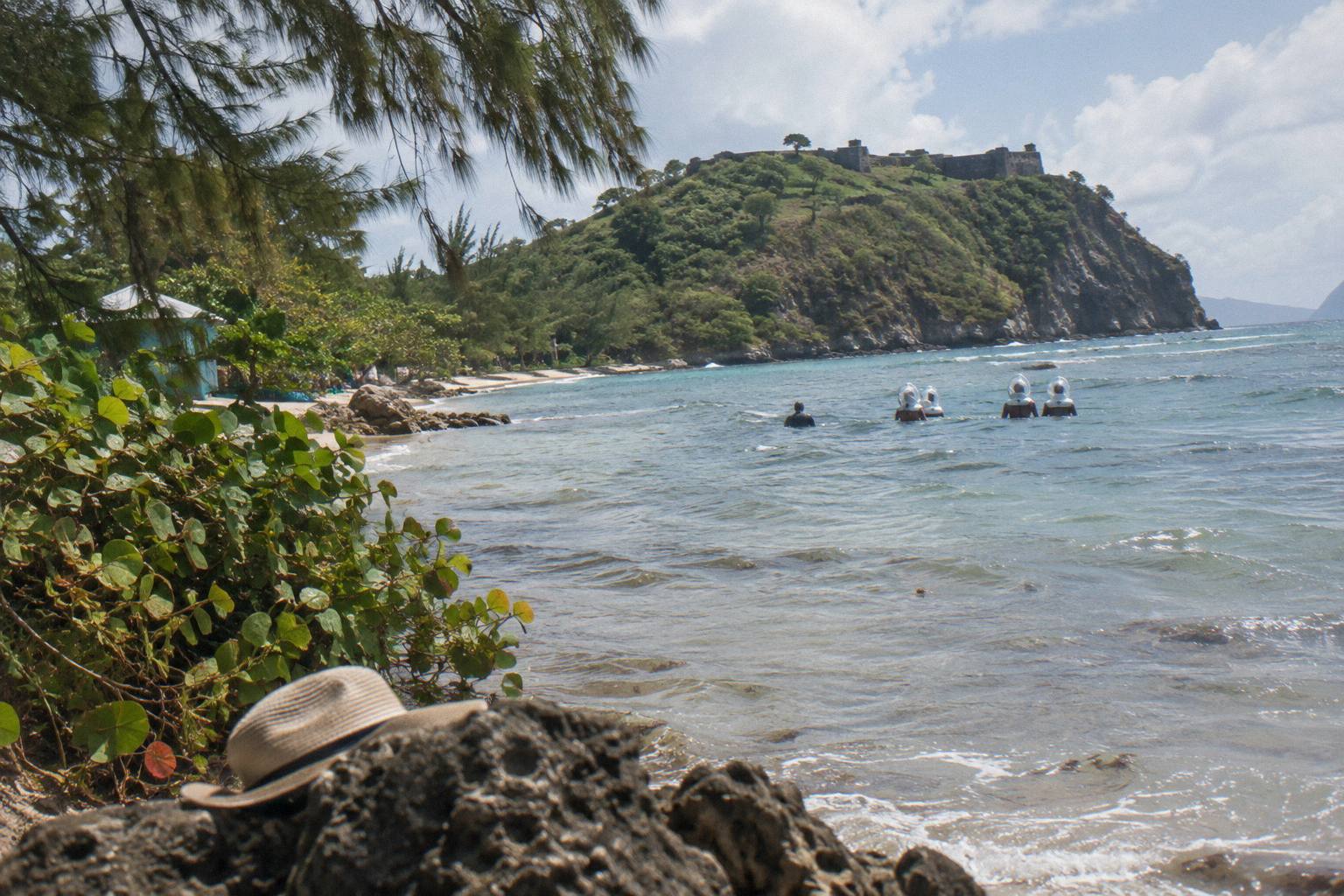
Snorkeling splits into a beach version and a boat version. The beach session at Pigeon Island from Sealife Paradise is the lightest product compared here at US$70 for 1 hour 30 minutes, minimum age 6, with bottled water and snorkelling equipment included and swimming ability needed. If none of that settles it, the sections below compare the formats on the things that actually change the decision.
How Each Format Gets You Air And Water
The helmet walk feeds you surface air through a hose into a shoulder-resting helmet, SNUBA feeds a regulator from a floating raft above you, scuba puts a tank on your back, and snorkeling uses a simple tube at the surface. That single difference drives everything else worth comparing: how deep each format goes, whether your face gets wet, whether you need to swim, and how much training is required before you are allowed in the water at all.
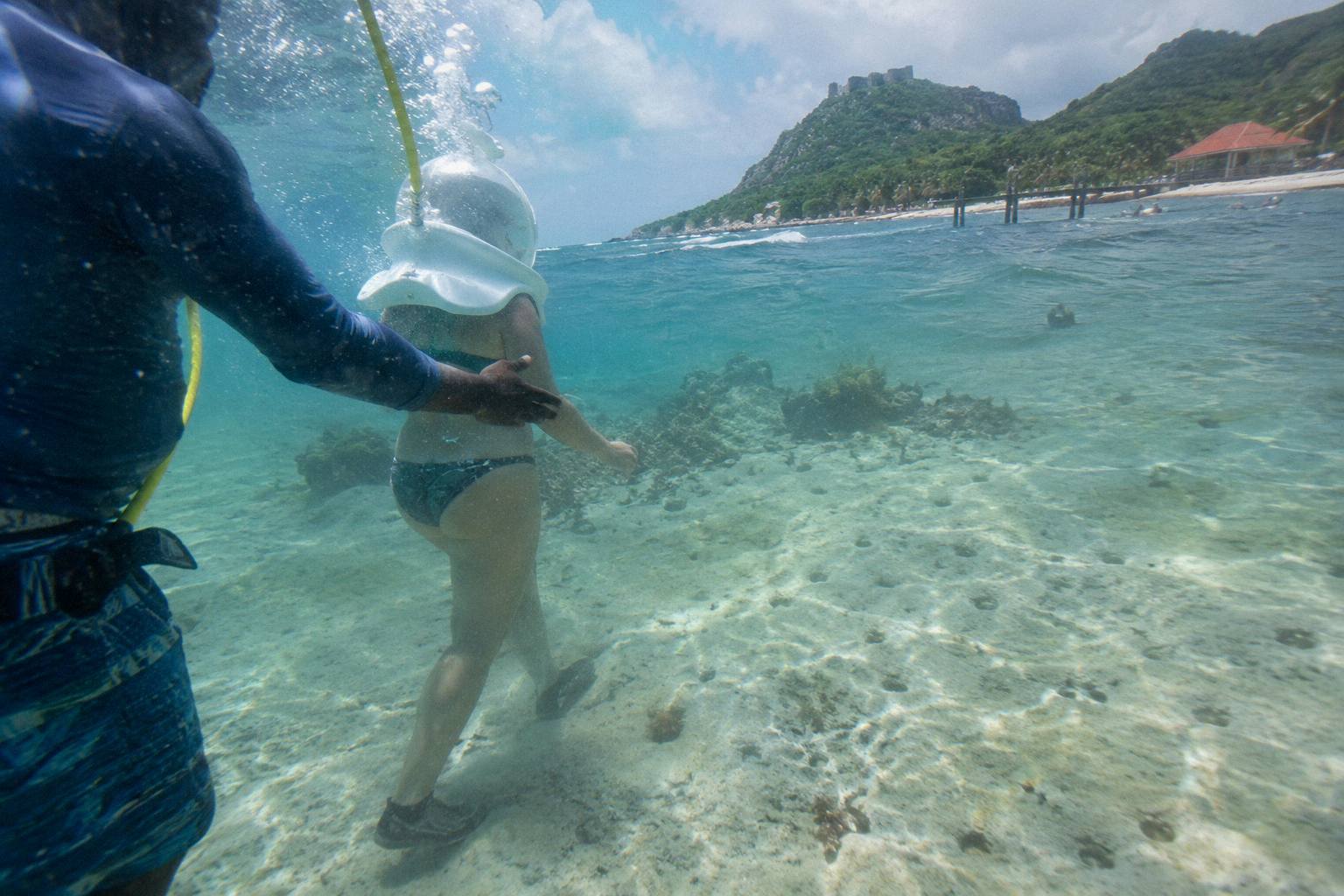
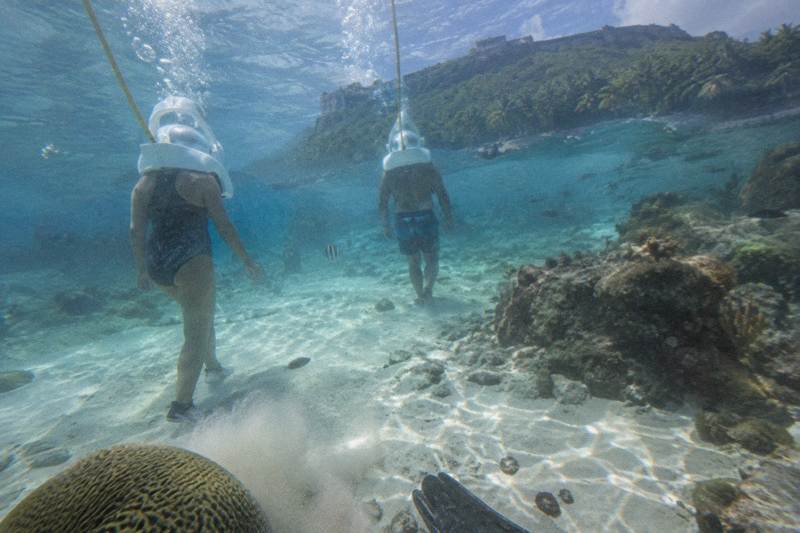
The helmet works, in the manufacturer's words, "similar to an inverted glass": air stays inside as long as the helmet is not turned over, and a constant flow of cooled, dried and filtered air from the surface keeps it fresh. Air arrives by hose from an electrically powered air center, the helmet rests on your shoulders, and your head and face stay dry. The manufacturer says prescription glasses can stay on and no swimming skills are needed, with trained and certified guides on every tour. The manufacturer's SeaTrek page describes the system in full.
SNUBA, as the operator describes it, is "a cross between snorkeling and scuba diving": no tank on your back, no training course, and you breathe through a regulator connected to a floating raft on the surface. No certification is needed, the minimum age is 8, and the tour runs with a maximum of 14 travelers. The operator's own tours page lists both the SEA Trek and SNUBA sessions side by side on the Sealife Paradise tours page.
Scuba in the beginner version means an hour or more of instructor training before a 1 tank dive, with the tank on your back and a certified instructor alongside. Snorkeling is the simplest of the four: a mask, a tube and fins, breathing through the tube with your face in the water. The Tourism Authority describes Pigeon Island Beach as having "calm sheltered waters perfect for beginner snorkelers" on the Saint Lucia snorkeling beaches page, though conditions on any given day are decided by weather and sea, never by the format.
| Format | Air source | Swimming needed | Minimum age | Duration |
|---|---|---|---|---|
| Helmet walk (Sea Trek) | Hose from a surface air center | No | 8 | 1 hour 30 minutes |
| SNUBA | Regulator fed from a floating raft | Yes | 8 | 1 hour 30 minutes |
| Beginner scuba | Tank on your back | Yes | 12 | 5 hours |
| Certified scuba | Tank on your back | Yes | 12 | 5 hours |
| Beach snorkeling | Snorkel tube at the surface | Yes | 6 | 1 hour 30 minutes |
| Boat snorkeling | Snorkel tube at the surface | Yes | 4 | 5 hours |
Snuba Vs Scuba: Which One Suits A First-Time Diver?
For a first-time diver, SNUBA is the easier, cheaper, training-free way to try breathing underwater, while beginner scuba offers a fuller first-dive day with formal instruction, a tank dive and a meal, and only scuba opens a pathway toward certification. If you want a quick taste with minimal commitment, choose SNUBA; if you want the complete experience, choose scuba. SNUBA runs 1 hour 30 minutes from US$112 with no certification needed and a cap of 14 travelers per group. The beginner scuba tour runs 5 hours from US$132, and it includes instructor training before the dive, one tank dive, lunch, water and juices, tanks, weights and marine fees.
The snuba vs scuba question usually comes from a swimmer who wants to go below the surface without signing up for a course. SNUBA answers that directly: a regulator in your mouth, air supplied from a raft floating above you, and a guide in the water with the group. You are swimming the whole time, face in the water, breathing through the regulator. The operator's booking page carries a medical advisory for both SNUBA and the helmet walk, not recommended for pregnant travelers, travelers with poor cardiovascular health or spinal injuries; ask the operator or a doctor if any of those apply.
Beginner scuba trades speed for depth of experience. The 5 hour format exists because instruction takes time: the Dive Fair Helen product includes an instructor for training before the dive, then one tank dive from the boat at Marigot Bay. Pickup runs from northern to western island locations only, not from Soufriere, Vieux Fort, Micoud or Dennery, and the excluded items are named plainly on the product line. For the science behind dive safety intervals, the DAN flying after diving page gives the scuba guidance: a minimum 12 hour preflight surface interval after a single no-decompression dive, 18 hours after multiple dives or multiple days.
There is a third path worth naming: the certified scuba tour from the same operator at Marigot Bay, from US$116 for 5 hours, 4.6 from 71 reviews, aimed at divers who already hold certification. If you are deciding between SNUBA now and scuba later, SNUBA needs no card and no course, while the certified tour presumes you have one. The beginner scuba try dive guide walks through the first-dive format in more depth.
Helmet Diving Vs Scuba And Snorkeling: The Comfort Question
Helmet diving is the only format of the four that requires no swimming at all and keeps your head and face dry, which makes it the default for nervous non-swimmers, glasses wearers and younger kids, while scuba and snorkeling both put your face in the water and demand real swimming comfort. The manufacturer's phrase is blunt: "just walk and breath". Ages 8 and up are welcome on the helmet walk, against 12 for both scuba products.
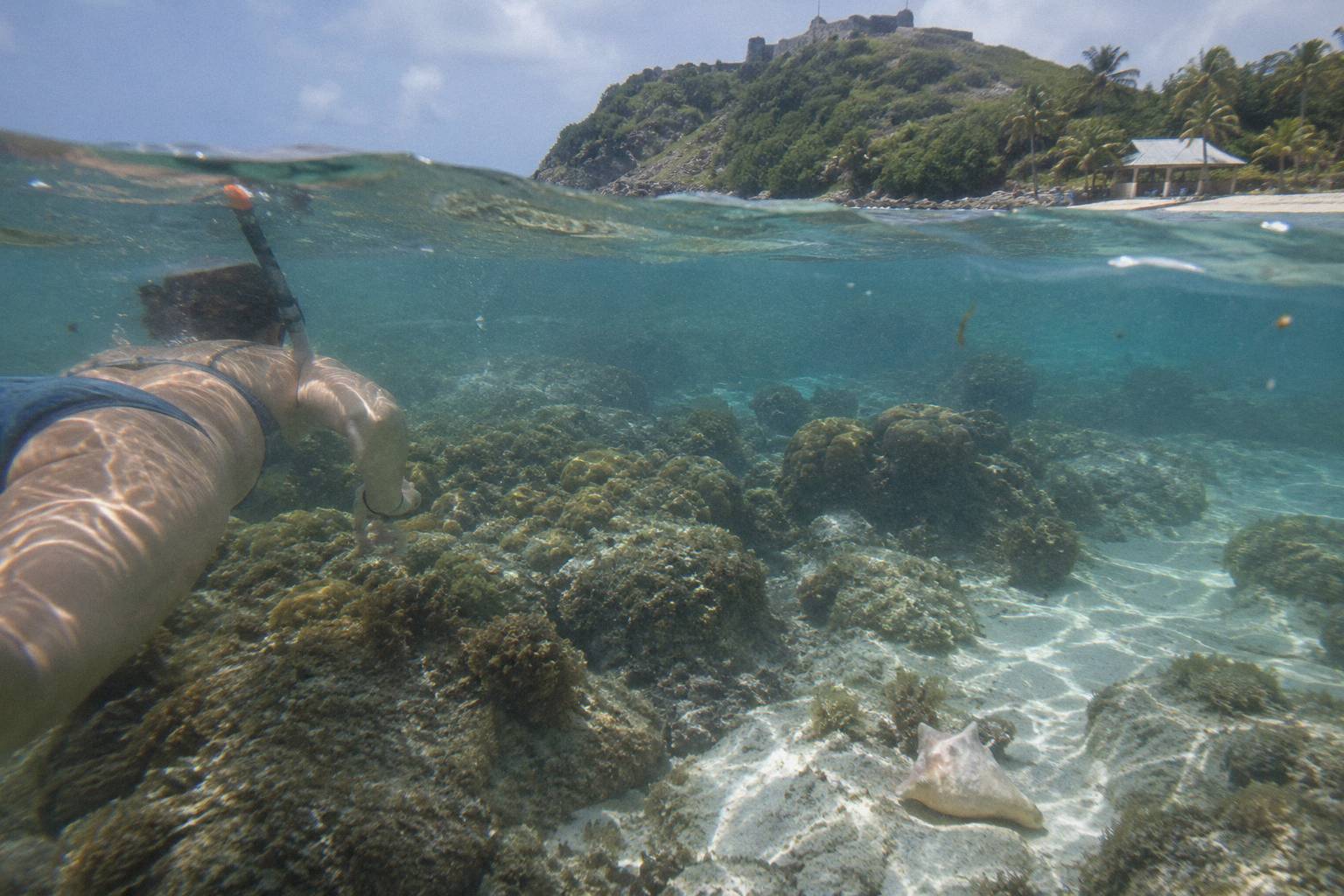
The comparison with snorkeling is mostly about the face. A snorkeler breathes through a tube with the face submerged, and every snorkeling line compared here carries the flag that swimming ability is needed. The helmet walker walks on the seabed with air delivered from above, glasses on, hair dry. The manufacturer gives the helmet at about 15 lb underwater, its own figure for the equipment, and the session runs about 10 minutes of briefing and about 25 minutes underwater inside a 1 hour 30 minute product. How the helmet achieves this is covered in the helmet diving for non-swimmers guide.
Against scuba the contrast is even sharper. Scuba asks you to be comfortable breathing from a regulator underwater, to manage buoyancy, and on the beginner tour to sit through training first. Helmet diving asks you to walk. The trade goes both ways: scuba dives deeper and longer, and the scuba site at the base of Pigeon Island, as the Tourism Authority's diving page describes, starts about 15 ft over sand and coral and reaches a maximum of 60 ft, a different product from the helmet dive. Sightings of any kind are never promised on any product: what lives on the reef and what you cross paths with on the day are different things.
For readers weighing the money side as well as the comfort side, the helmet diving cost comparison guide works through the price question against snorkeling directly. The age question, swimming question and format question are all answered in one place on St Lucia Helmet Dive, where each product also has its own page with the full line of inclusions and flags.
What Each Product Costs And Includes
From-prices across the comparable products run from US$70 for beach snorkeling to US$250 for the full-day boat excursion, with the helmet walk at US$118, SNUBA at US$112, beginner scuba at US$132 and certified scuba at US$116, and each line's inclusions differ enough that price alone misleads. The two cheapest products share a departure point but not a format, and the scuba prices include a meal the shorter products do not.
| Product | From price per person | Rating | Duration |
|---|---|---|---|
| Snorkeling at Pigeon Island | US$70 | 4.4 from 16 reviews | 1 hour 30 minutes |
| St Lucia Snorkeling Tour with Lunch | US$83 | 4.5 from 126 reviews | 5 hours |
| Certified scuba, Marigot Bay | US$116 | 4.6 from 71 reviews | 5 hours |
| SNUBA, Pigeon Island | US$112 | 4.7 from 166 reviews | 1 hour 30 minutes |
| Beginner scuba, Marigot Bay | US$132 | 4.7 from 57 reviews | 1 hour 30 minutes |
| Sea Trek helmet walk | US$118 | 4.8 from 231 reviews | 1 hour 30 minutes |
Ratings sit beside their review counts deliberately: a 4.4 from 16 reviews and a 4.8 from 231 reviews are different kinds of number, and no ranking between products is implied here. Check the live price for your date before comparing, since from-prices move with season and group.
Inclusions are where the products separate. The helmet walk includes private transportation from northern hotels, gratuities not included, photos not among the included items. SNUBA includes use of all equipment and water after the experience. Beginner scuba includes lunch, water and juices, one tank dive, tanks and weights, marine fees and pre-dive training. The boat snorkeling tour with lunch includes pickup from northern to western locations, a local guide, water, juices, lunch, a spacious dive boat with restrooms and snorkelling equipment, with a 10% per person government VAT payable at check-in on top of the listed price, plus gratuities excluded.
| Product | Pickup | Notable inclusions | Named exclusions |
|---|---|---|---|
| Helmet walk | Northern hotels only | Private transportation | Gratuities |
| SNUBA | Northern hotels only | All equipment, water after | None named |
| Beginner scuba | Northern to western locations | Lunch, juices, tank dive, training, marine fees | Southern pickup |
| Certified scuba | Northern to western locations | Lunch, juices, guide, tanks, boat with restroom | Equipment unless option selected, wetsuit, southern pickup |
| Beach snorkeling | Not included | Bottled water, snorkelling equipment | None named |
| Boat snorkel with lunch | Northern to western locations | Lunch, guide, boat, equipment | 10% VAT at check-in, gratuities, southern pickup |
The two private and full-day options sit at the top of the range. The private boat snorkeling product from Captain Cliff Adventure Tours runs 4 to 6 hours from US$200 per person, includes snorkel gear, beverages and dock or port pickup, excludes lunch (from about US$15 per person), gratuities and a fuel surcharge. The full-day excursion from Solomon Water Taxi & Tours runs 5 hours from US$250, 5.0 from 69 reviews, includes a local lunch, beer, rum punch, non-alcoholic drinks, a guide who snorkels with you, and excludes fees and taxes. Whether a private boat is worth it is its own question; see the best snorkeling spots for beginners guide for where those trips actually go.
A few practical notes on comparing these numbers directly. The two 1 hour 30 minute products, the helmet walk and SNUBA, both run at Pigeon Island, so their from-prices of US$118 and US$112 are close enough that format, not cost, should decide between them. The three 5 hour products, both scuba options and the boat snorkeling tour with lunch, all include a meal, which partly explains why their from-prices cluster between US$83 and US$132 while the short sessions do not.
Budget for the extras that sit outside the listed price. The boat snorkeling tour with lunch adds a 10% per person government VAT at check-in, the private boat adds a fuel surcharge, the full-day excursion excludes fees and taxes, and gratuities are excluded from the helmet walk, the boat snorkel with lunch and the private boat. Certified divers should also check whether their option includes equipment and a wetsuit before assuming the US$116 from-price is all-in, and anyone staying in the south should factor in the southern pickup exclusion on the scuba and boat tours.
Choosing By Traveller Type: Ages, Non-Swimmers And Cruise Days
A family with a 6 year old and a confident swimmer can split between beach snorkeling and the helmet walk, both at Pigeon Island; a non-swimming adult should book the helmet walk; a certified diver should book the certified scuba tour; and a cruise passenger short on hours should stick to the 1 hour 30 minute northern products with pickup included. Minimum ages and pickup areas, not prices, decide most of these cases.
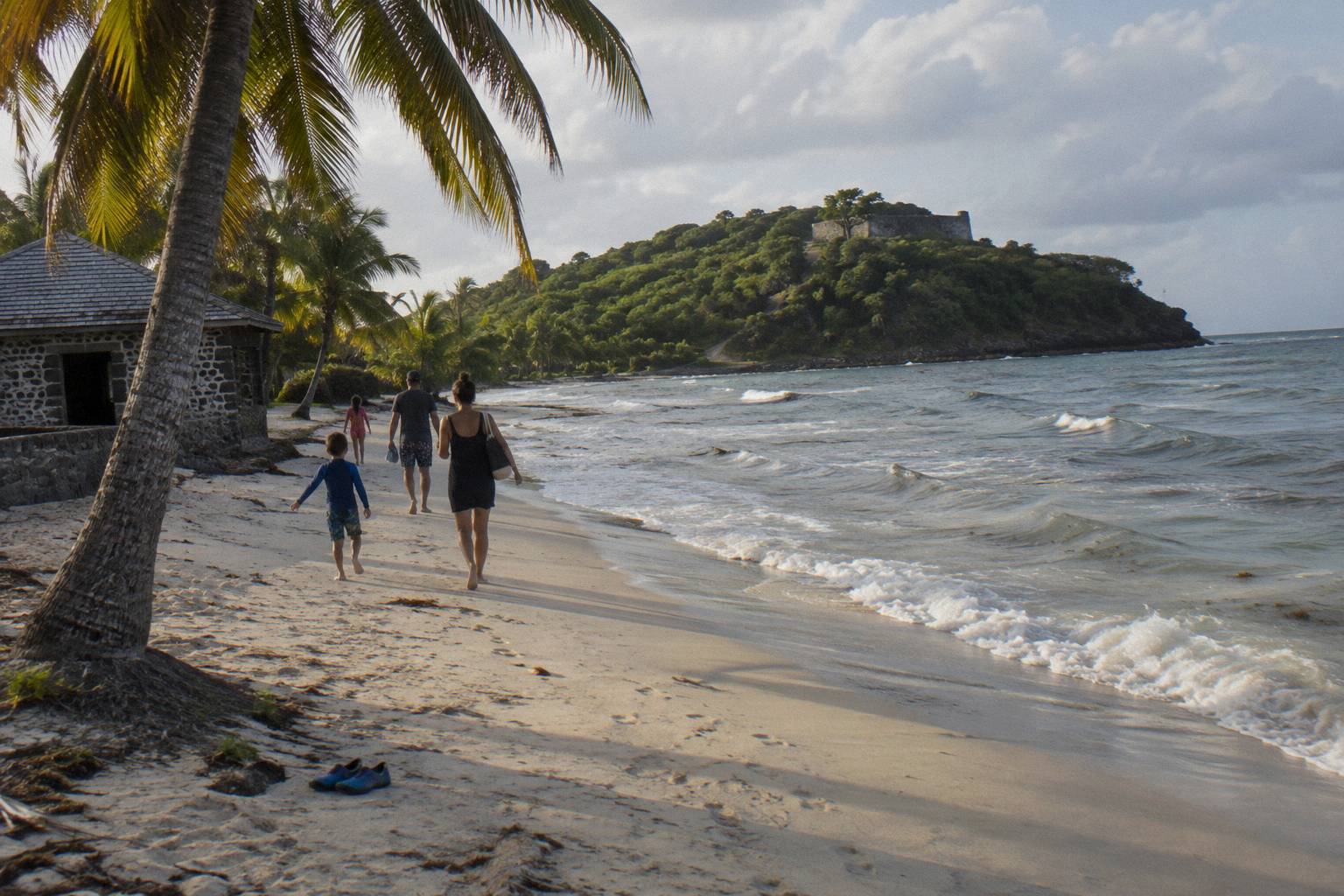
On ages: the boat snorkeling tour with lunch takes children from 4, beach snorkeling from 6, the helmet walk and SNUBA from 8, and both scuba products from 12. A family spanning those ages cannot book one product for everyone, but the Pigeon Island products depart from the same spot, which makes a split morning practical. The island itself is a 44-acre National Landmark, a National Park in 1979 and a National Landmark in 1992, joined to the mainland by a causeway built in the early 1970s, with Fort Rodney, Signal Peak, a museum and the beach. Entry for non-residents is US$10 for adults 13 and over and US$3 for children 5 to 12, under 5 free, the National Trust's figures, and fees can change. Whether any tour covers that entry is a question to ask the operator.
On swimming: only the helmet walk carries the no-swimming flag. Every other product in this comparison requires swimming ability. The manufacturer's line for the helmet is "Can't swim? No worries!", and the operator's is "No Swimming needed, From ages 8+". For nervous swimmers weighing SNUBA, the SNUBA safety questions for beginners piece works through the format's specifics.
On cruise days: the short northern products fit a port day, and the cruise port at Castries runs its main season October to April with up to five ships in a day. Cruise-passenger pickup at the terminal for the helmet walk is not something to assume: pickup is listed from hotels in the north of the island only, and the exact meeting point comes on the booking confirmation. The cruise ship day planning guide covers the timing logic in full.
What Trips People Up Before You Book
The mistakes that cost money here are booking scuba for a 10 year old, expecting southern-hotel pickup on the Marigot Bay products, assuming photos are included on the helmet walk, and forgetting the VAT and fuel extras that sit outside the listed prices. Each of those is written on the product lines, and each one regularly surprises a reader who compared only prices.
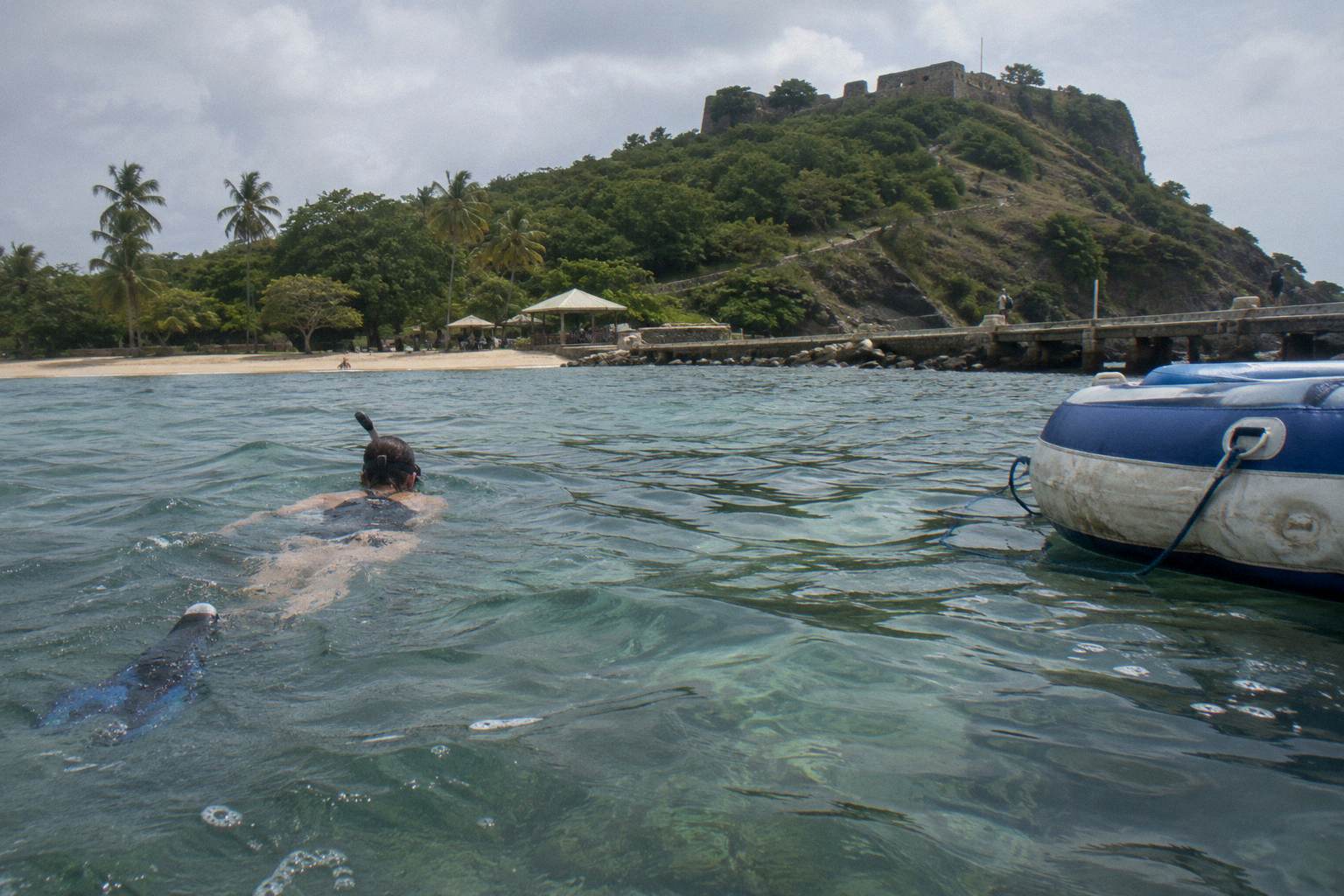
The age gaps are the hard edges. Both scuba products sit at a minimum age of 12, and no operator discretion is printed anywhere that would soften that for a younger sibling. The helmet walk and SNUBA take 8 year olds, beach snorkeling takes 6 and the boat snorkel takes 4, so a mixed-age family should check ages against lines before anything else.
Pickup geography is the second trap. The Marigot Bay scuba and boat-snorkel products pick up from northern to western island locations only and explicitly exclude Soufriere, Vieux Fort, Micoud and Dennery. The Pigeon Island products include pickup from hotels in the north of the island only. Anyone staying in the south, or arriving at Hewanorra (about 1 hour 40 minutes from Pigeon Island by road, per the tourism authority), should plan self-drive or ask the operator before booking. The getting to Pigeon Island guide covers routes and ports.
Extras are the third. Gratuities are not included on the helmet walk or the boat snorkel. Photos are not among the helmet walk's included items. The boat snorkel carries a 10% per person government VAT payable at check-in. The private boat excludes lunch, fuel surcharge and gratuities. None of these are hidden, but none are in the from-price either, so budget for the line you actually choose. Medical advisories matter too: the operator's booking page does not recommend the helmet walk or SNUBA for pregnant travelers, travelers with poor cardiovascular health or spinal injuries. Ask the operator or a doctor if that touches you.
Common Questions About Choosing An Underwater Tour
Is SNUBA Or Scuba Better For A Complete Beginner?
For a first taste of breathing underwater with no certification and a 1 hour 30 minute commitment, SNUBA from US$112 fits most beginners. For a full training-and-dive day with lunch and an instructor-led tank dive, the beginner scuba tour from US$132 over 5 hours goes further. Neither requires you to already hold a certification.
Can You Do The Helmet Walk If You Cannot Swim?
Yes. The helmet product carries a no-swimming-required flag, the manufacturer says "Can't swim? No worries!", and you walk on the seabed with air supplied by hose from the surface while your head and face stay dry. Minimum age is 8 and guides are trained and certified.
What Is The Cheapest Underwater Activity In St Lucia?
Of the products compared here, beach snorkeling at Pigeon Island at US$70 per person for 1 hour 30 minutes, equipment and bottled water included, swimming ability needed, minimum age 6. Prices vary by date and group and the booking page shows the price for your date.
Which Products Include Hotel Pickup?
The helmet walk and SNUBA include pickup from hotels in the north of the island only, with the exact meeting point on the booking confirmation. The Marigot Bay scuba and boat-snorkel products pick up from northern to western locations only, not the south. Beach snorkeling has no pickup, and the full-day excursion includes pickup.
How Long Does Each Activity Take?
The helmet walk, SNUBA and beach snorkeling each run 1 hour 30 minutes. Beginner scuba, certified scuba and the boat snorkel with lunch run 5 hours. The private boat runs 4 to 6 hours. The helmet walk spends about 10 minutes on briefing and about 25 minutes underwater.
Can Children Do All Four Activities?
No single product takes every age. The boat snorkel takes 4 and up, beach snorkeling 6 and up, the helmet walk and SNUBA 8 and up, and both scuba products 12 and up. A family with children under 12 cannot book the scuba products for them.