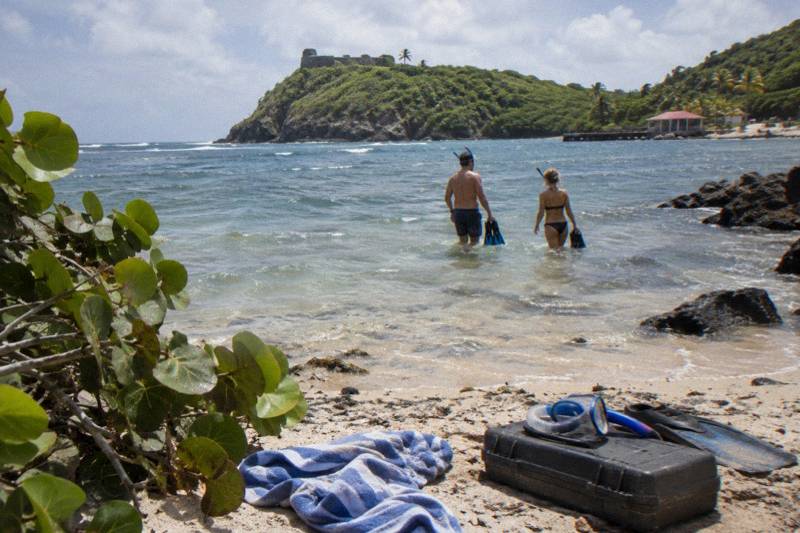
Cruise Ship Day In St Lucia: Fitting In An Underwater Excursion
A day in port is short, and St Lucia's underwater tours range from a 90-minute helmet walk to a six-hour private boat run. Here is how the durations, pickup zones and port geography line up, and what to confirm before you commit.
Short answer
The shortest underwater options, the helmet walk and SNUBA at Pigeon Island and the beach snorkel, each run 1 hour 30 minutes from US$70 to US$118 per person. The scuba and boat snorkel trips run 5 hours. Pickup is included only in defined zones, so where your ship docks and where you sleep the night before both decide what fits.
Cruise days compress every decision, and underwater tours are where the compression bites hardest: a helmet walk that finishes in 90 minutes and a scuba day that eats five hours sit on the same island. The full spread of beginner-friendly formats, from the seabed helmet walk through SNUBA to boat snorkeling, is gathered in the beginner underwater tours hub, which works through the planning question a cruise passenger actually faces: which one fits between docking and all-aboard.
| Fact | Detail |
|---|---|
| Main cruise season | October to April |
| Cruise port | Castries: Pointe Seraphine (berths P/S 1 and P/S 2) and La Place Carenage |
| Ships in Castries in one day | Up to five |
| Shortest underwater tours | Helmet walk, SNUBA and beach snorkel, each 1 hour 30 minutes |
| Longest options | Scuba and boat snorkel at 5 hours; private boat 4 to 6 hours |
| Cancellation on every tour compared | Free up to 24 hours before start |
| Currency | Eastern Caribbean dollar pegged at EC$2.70 per US$1; US dollars widely accepted |
How Much Port Time Does An Underwater Excursion Take?
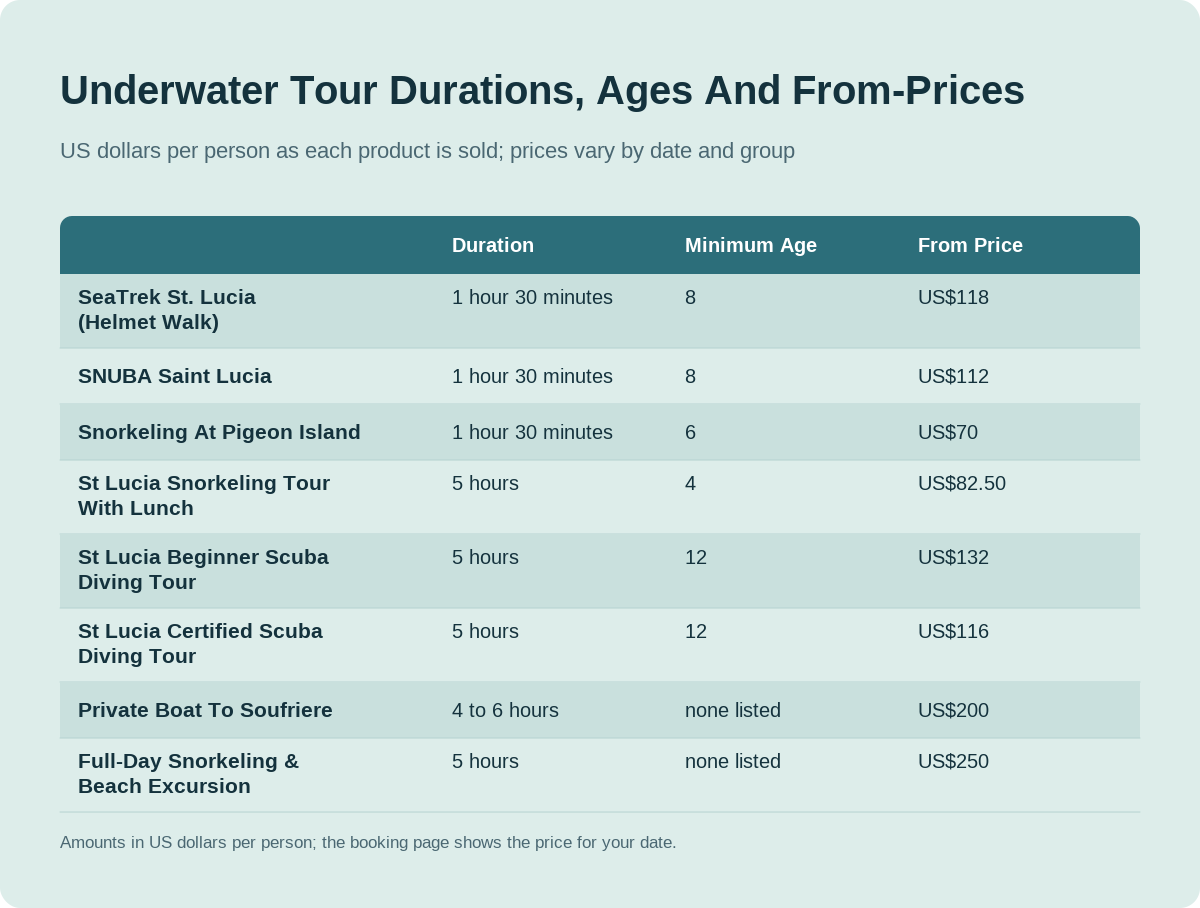
The commitment splits into three clear bands. The helmet walk, SNUBA and the beach snorkel each take 1 hour 30 minutes, the shortest block on offer. The scuba tours and the boat snorkel with lunch take 5 hours. The private boat run spans 4 to 6 hours, and the full-day snorkel excursion takes 5 hours, so anything beyond the 90-minute options consumes most of a standard port day.
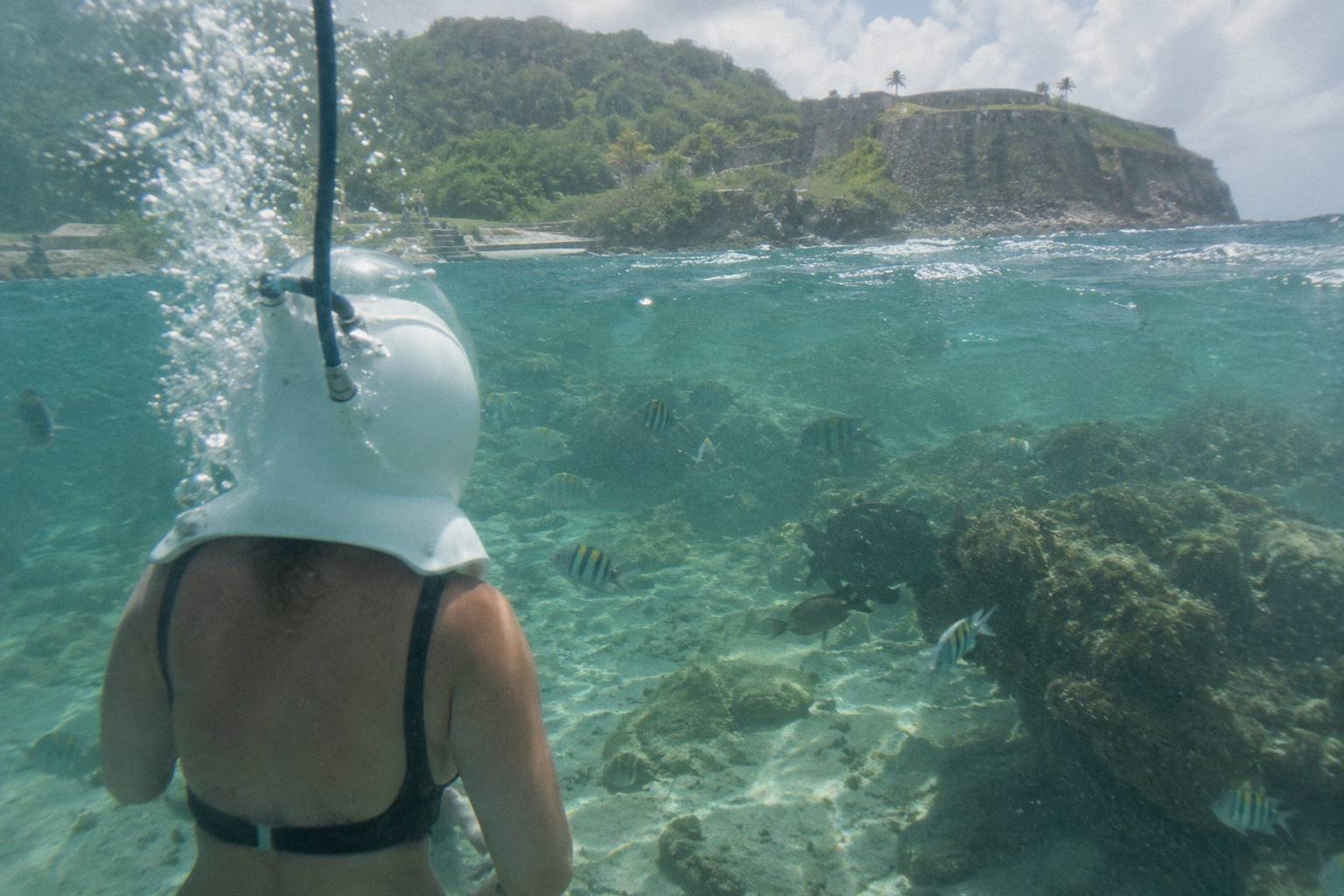
Durations are total experience times as each product is sold, not just the minutes underwater. On the helmet walk, the manufacturer-backed program runs about 10 minutes of briefing and about 25 minutes on the seabed inside a 1 hour 30 minute slot, with the remainder given to gearing up, the water time transition and the walk back. A 5-hour scuba day, by contrast, includes training before the dive on the beginner line, lunch, and the boat time out and back along the west coast.
The practical read for a cruise passenger: the 90-minute formats leave room for a fort walk, a beach hour or duty-free shopping in Castries afterwards, while the 5-hour formats are the day. Neither is the wrong choice, but booking a 5-hour trip on a short port call is how days go wrong, and no operator can refund a missed ship because a tour ran into the afternoon. When in doubt, the shorter block plus a second activity is easier to steer than one long commitment.
| Product | Duration | Minimum age | From price per person |
|---|---|---|---|
| SeaTrek St. Lucia (helmet walk) | 1 hour 30 minutes | 8 | US$118 |
| SNUBA Saint Lucia | 1 hour 30 minutes | 8 | US$112 |
| Snorkeling at Pigeon Island | 1 hour 30 minutes | 6 | US$70 |
| St Lucia Snorkeling Tour with Lunch | 5 hours | 4 | US$83 |
| St Lucia Beginner Scuba Diving Tour | 5 hours | 12 | US$132 |
| St Lucia Certified Scuba Diving Tour | 5 hours | 12 | US$116 |
| Private Boat to Soufriere | 4 to 6 hours | None listed | US$200 |
| Full-Day Snorkeling & Beach Excursion | 5 hours | None listed | US$250 |
Amounts are US dollars, per person as each product is sold, and prices vary by date and group; the booking page shows the price for the date you choose. The age column matters on a family cruise day: the beach snorkel takes children from 6, the helmet walk and SNUBA from 8, and the scuba lines from 12, so a mixed-age group may find the 90-minute beach formats the only ones that include everyone.
Which Underwater Tours Actually Work From A Ship?
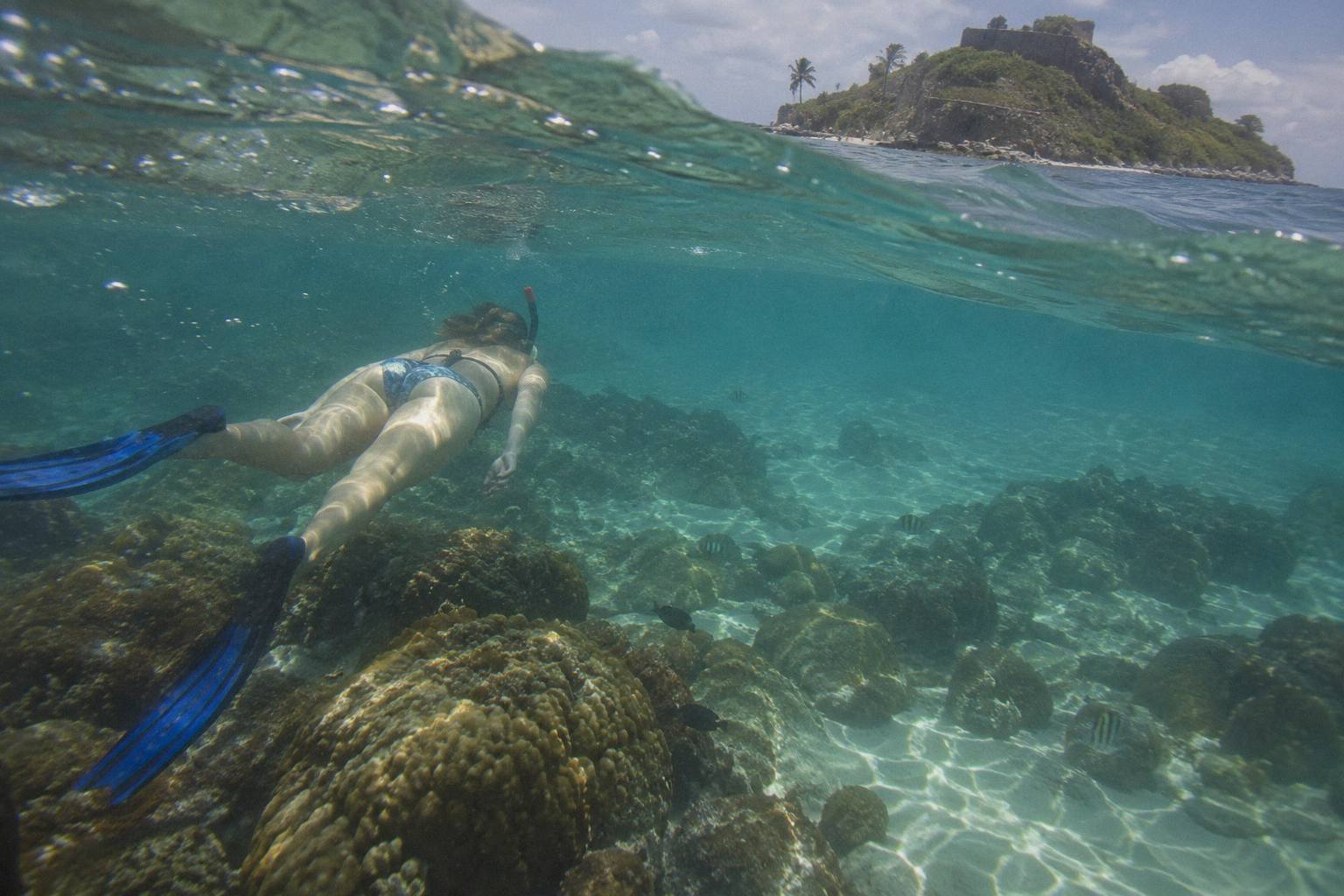
The 90-minute Pigeon Island formats are the natural cruise-day picks because they combine short duration with north-of-island pickup, closest to where most passengers need to be. The private boat tour lists port pickup at Castries, Marigot Bay or Rodney Bay, which removes the transfer question entirely. The scuba and boat snorkel days work only on a long call, and only from northern to western pickup points.
Start with the featured option. The SeaTrek St. Lucia helmet walk runs 1 hour 30 minutes from US$118 per person, rated 4.8 from 231 reviews, with pickup included from hotels in the north of the island and free cancellation up to 24 hours before start. It needs no swimming ability, takes ages 8 and up, and the manufacturer says glasses can stay on, which makes it the least demanding way to get a face-level look at the reef on a clock. Gratuities are not included, and photos are not among the included items on that line.
SNUBA Saint Lucia covers similar ground for a similar commitment: 1 hour 30 minutes from US$112 per person, rated 4.7 from 166 reviews, minimum age 8, group maximum 14, with equipment and post-tour water included. The operator describes SNUBA as a cross between snorkeling and scuba diving, breathing through a regulator fed from a floating raft, with no tank and no certification. For a passenger who wants to try breathing underwater without the training day, it is the middle path, and check availability shows dates and the live price.
The private boat tour is the one product whose line explicitly lists terminal pickup: Castries, Marigot Bay or Rodney Bay, plus hotels and villas with docks. It runs 4 to 6 hours from US$200 per person, rated 4.9 from 184 reviews, with snorkel gear, beverages and bottled water, beer and local rum included, lunch from about US$15 per person and a fuel surcharge extra. On a sea day where the ship docks late or the all-aboard slips, a tour that starts at the pier is the version of a long day that still fits.
For passengers weighing format against format rather than day against day, the SeaTrek vs SNUBA vs scuba vs snorkeling comparison breaks down who each format suits, and the deeper mechanics of the helmet itself are in the guide to how helmet diving works. The short version for cruise purposes: the helmet walk and SNUBA demand the least time and the least skill, and everything else among the tours here costs you most of the day.
Where Your Ship Docks, And Why It Matters
Cruise ships berth at Castries, split between Pointe Seraphine with its dedicated berths and the La Place Carenage side, with water taxis linking the two. Up to five ships can call in one day during the October to April season. None of the tours on this site states cruise-terminal pickup for the helmet walk or SNUBA, so the transfer from the pier to the meeting point is a question to settle with the operator before booking.
The port itself is compact. The ports authority's cruise and ferry page describes Pointe Seraphine's berths P/S 1 and P/S 2 and the duty-free shopping at both terminals, with water taxis running between them, so a passenger walking off either side of the port is minutes from the other. What the port facts do not tell you is how you get to Pigeon Island, and no sourced drive time exists between the cruise terminal and the national landmark; the guide to getting to Pigeon Island covers the routes without guessing minutes.
The pickup flags for the tours on this site are the operative facts. The helmet walk and SNUBA include pickup from hotels in the north of the island only, with the exact meeting point confirmed on booking. The scuba lines and the boat snorkel with lunch include hotel and port pickup from northern to western locations, explicitly not the south. The private boat line, as above, lists the three named docks. If your ship calls at Castries and you are staying aboard, the northern-only pickup on the 90-minute tours means the meeting-point question comes first, before the price question.
| Port fact | Detail |
|---|---|
| Cruise terminals | Pointe Seraphine (berths P/S 1 and P/S 2, duty-free) and La Place Carenage |
| Link between terminals | Water taxis |
| Peak day | Up to five ships in Castries |
| Main season | October to April |
| Dry, busiest season | December to April |
| Rainy season | June to December |
The same pickup flags, side by side, make the contrast sharper than prose can:
| Product | Pickup as the tours describe it |
|---|---|
| SeaTrek St. Lucia (helmet walk) | Included from hotels in the north of the island only |
| SNUBA Saint Lucia | Included from hotels in the north of the island only |
| Snorkeling at Pigeon Island | Not included |
| St Lucia Beginner Scuba Diving Tour | Northern to western island locations, not the south |
| St Lucia Certified Scuba Diving Tour | Northern to western island locations, not the south |
| St Lucia Snorkeling Tour with Lunch | Northern to western island locations, not the south |
| Private Boat to Soufriere | Castries, Marigot Bay or Rodney Bay docks, and hotels with docks |
| Full-Day Snorkeling & Beach Excursion | Included |
Read that second table as a cruise-passenger decision grid. Three lines take you aboard only if you start in a defined zone, one leaves the transfer entirely to you, and one collects from the terminals by name. That single column, more than any rating or price, decides which product survives contact with a port day.
A word on timing within the day, without inventing clock times. The tours on this site carry no start times for any product: the start is chosen on the booking calendar for every line. On a cruise day, that means the booking calendar is the tool that aligns the tour with the ship, and the two things to cross-check are the calendar slot on offer and the all-aboard time your ship publishes, which no tour line carries. Morning slots tend to pair best with port days, and the Tourism Authority notes mornings generally bring the calmest water and clearest visibility, which is a bonus rather than a promise.
Matching Tour Length To The Shape Of Your Day
Work backwards from the ship, not forwards from the tour. Take the hours between docking and all-aboard, subtract a buffer for getting off the ship and back to the pier, and what remains is the true tour window. A five-hour window kills every 5-hour product stone dead no matter how good it looks; a seven-hour window makes even the private boat viable if pickup starts at a dock you can reach.
This is planning logic, not arithmetic anyone can do for you, because port calls vary. But the bands are fixed. The helmet walk and SNUBA both add northern hotel pickup, which helps only if the meeting point works for a passenger coming off a ship. Everything else covered here is indexed on St Lucia Helmet Dive.
If the window is four to five hours, the private boat tour's 4-to-6-hour span is possible only at the short end and only with dock pickup, so confirm the actual running time for your date with the operator. Six hours or more opens the 5-hour products: the boat snorkel with lunch from US$83 per person, rated 4.5 from 126 reviews, ages 4 and up, with hotel or port pickup from northern to western locations and a 10% per person government VAT payable at check-in on top of the listed price. The beginner scuba tour from US$132 per person, rated 4.7 from 57 reviews, ages 12 and up, sits in the same band with training before the dive, lunch, tanks and weights included.
One structural point in the private boat's favour on ship days: it is the only line whose inclusions name the cruise terminals directly, and its exclusions are explicit too, lunch from about US$15 per person, gratuities and a fuel surcharge. Everything else compared here is sold as a shared experience with pickup defined by zone, which on a cruise day means the zone is the decision, not the tour. Passengers docking at Castries with a full day and a taste for independence may prefer the full range of St Lucia snorkeling tours over the beginner formats.
What To Confirm With The Ship And The Operator
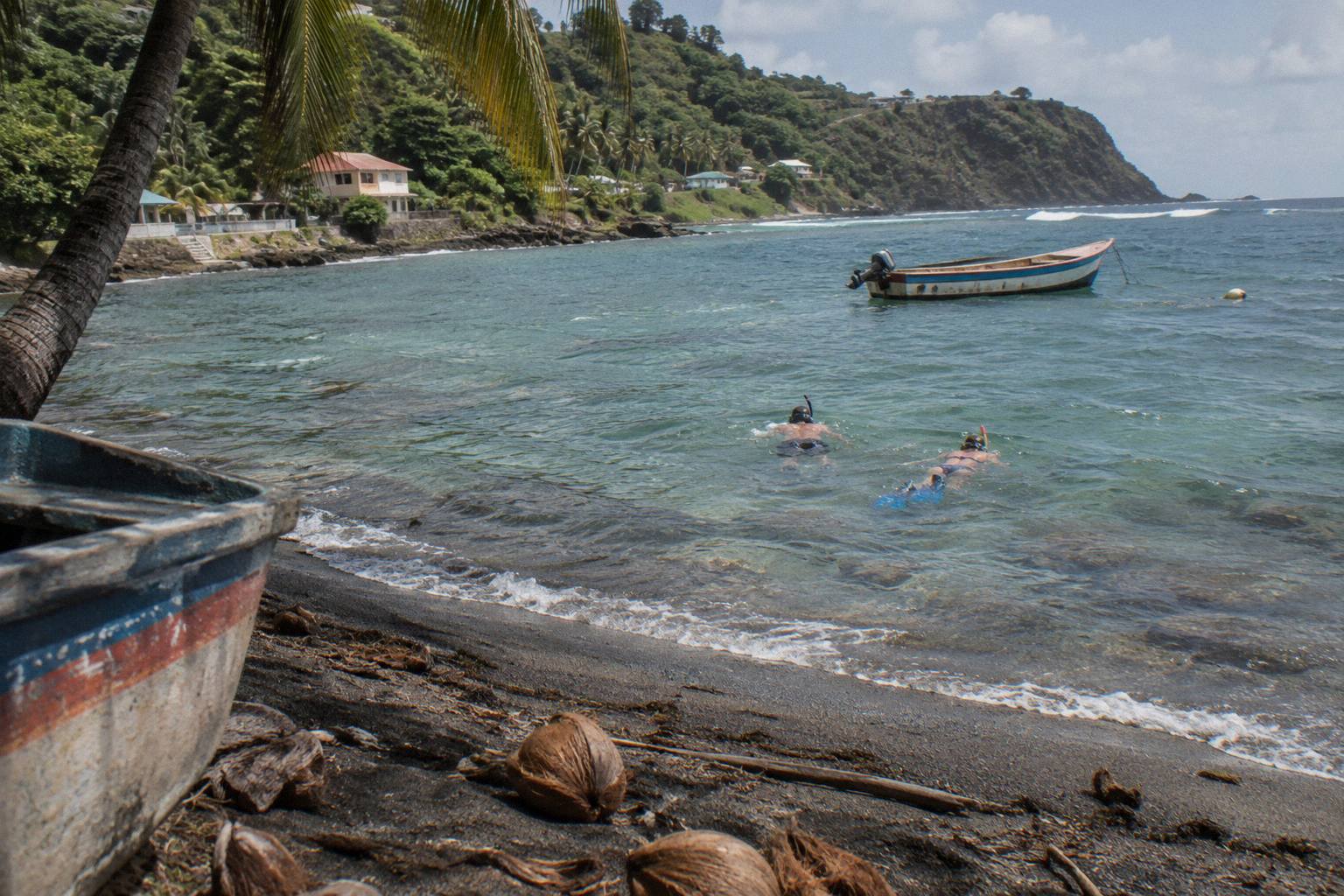
Four questions settle it: whether the booking calendar's start slot clears your all-aboard time with buffer, where the exact meeting point is and how you reach it from the terminal, what the cancellation window means for a delayed or skipped port call, and whether everyone in your party clears the minimum age and the operator's medical advisory. Ask the operator the first two, ask the ship the third, and check the fourth against the tours on this site before you book.
The cancellation line is uniform across the tours on this site: free cancellation up to 24 hours before start on every product. That is a genuine safety net for cruise passengers, but note the mechanics: a ship that arrives late, or a port call skipped for weather, can blow through a 24-hour window without anyone being at fault. Passengers booking independent excursions rather than ship-sold ones carry that risk themselves, and the Tourism Authority's travel seasons page is the place to check how the calendar shapes the year: dry season December to April, the busiest stretch, rainy season June to December, and hurricane season June 1 to November 30 overlapping it.
The medical advisory matters more on water tours than on bus tours. The operator's own caution, as stated on the booking pages for the helmet walk and SNUBA, is that they are not recommended for pregnant travelers, travelers with poor cardiovascular health or travelers with spinal injuries; ask the operator or a doctor about your own case. The manufacturer says guides are trained and certified on every tour, and no swimming skill is needed for the helmet walk, but a medical question is a medical question, and routing it to the operator or a physician is the correct move, not a web page.
Practical confirmations worth one email each: whether the tour's photos option exists on your date for the helmet walk, since photos are not among its included items; whether the private boat's fuel surcharge is quoted before you commit; and for the boat snorkel, that you have budgeted the 10% VAT payable at check-in. None of these is a reason to skip a tour, and each is a reason to open the booking page rather than assume. The best seasonal context for the month you sail is in the guide to the best time of year for underwater tours.
Season, Weather And The Cruise Calendar
The main cruise season, October to April, overlaps the dry December-to-April stretch and the wet June-to-December half of the year, so shoulder-month calls can see brief showers rather than all-day rain. Hurricane season runs June 1 to November 30. Sea temperatures hold between 26 and 29 C year round, which means the underwater choice is about time and pickup, not about warmth.
The seasonal detail comes from the Tourism Authority and the US National Hurricane Center's published season bounds, not from any tour operator, and it maps onto the cruise calendar neatly: October and November calls sit inside both the rainy season and the cruise season, December-through-April calls sit in the driest and busiest window, and showers in the wet months are usually brief. The Tourism Authority adds that mornings generally offer the calmest water and clearest visibility, a fact that pairs naturally with the short 90-minute tours, which are easy to place in a morning slot.
Weather never guarantees anything, and no sourced text promises calm water or any sighting on a given day; boat traffic, wind and the operator's judgement decide what runs. The Tourism Authority's own beach-safety guidance is the right frame: the west coast generally offers calmer waters, many beaches have no lifeguards, never snorkel alone, mind boat traffic, use reef-safe sunscreen and never touch coral or marine life. On a cruise day with a fixed departure, the buffer you subtract from your window is also the hedge against weather slowing a boat or a transfer.
Money on the day is simple: the Eastern Caribbean dollar is pegged at EC$2.70 per US$1, US dollars are widely accepted, and change often comes in EC$. Tour prices are quoted in US dollars, per person as each line is sold, and the booking page shows the live price for your date. The Tourism Authority's travel tips page covers tipping at about 10 to 12% of bills, useful to know since gratuities are excluded on several of the tours on this site, including the helmet walk.
What Trips People Up Before You Book
The recurring mistakes are assuming the 90-minute label means 90 minutes from the pier, assuming pickup covers the cruise terminal because a tour runs nearby, booking a 5-hour product on a short call, and reading a from-price as the final price where a line carries a VAT or surcharge. Each is avoidable with one check of the booking calendar and one question to the operator about the meeting point.
The first mistake is the duration trap. A 1 hour 30 minute tour is 90 minutes of experience, not 90 minutes door to door from your ship; the transfer to the meeting point, check-in and the walk to the water all sit outside that number, and on the helmet walk the tours on this site split it as about 10 minutes of briefing and about 25 minutes underwater. Budget the block, not the headline. The second is pickup geography: the helmet walk and SNUBA include northern-hotel pickup, and no listing for those products mentions cruise-terminal pickup, so a passenger assuming pier collection can end up with a self-arranged transfer and no time for it.
The third is the price trap, and it has two faces. The boat snorkel with lunch excludes a 10% per person government VAT payable at check-in, and the private boat adds a fuel surcharge plus lunch from about US$15 per person; both lines state this, and both belong in the budget before booking. The fourth is age: 6 for the beach snorkel, 8 for the helmet walk and SNUBA, 12 for the scuba lines, and a family that books first and counts birthdays second has a refund conversation. The fifth, softer, is photos: not included on the helmet walk line, so ask the operator what the option is on your date rather than arriving expecting a package.
Common Questions About A Cruise Day Underwater Tour
Can I Do A Helmet Dive On A Cruise Ship Day In St Lucia?
Time-wise, yes: the SeaTrek St. Lucia helmet walk runs 1 hour 30 minutes, the shortest underwater commitment among the tours on this site, with free cancellation up to 24 hours before start. Pickup is included from hotels in the north of the island only, and no cruise-terminal pickup is published for it, so confirm the meeting point and your transfer with the operator before booking against your all-aboard time.
How Long Do Underwater Tours In St Lucia Take?
The helmet walk, SNUBA and beach snorkel each take 1 hour 30 minutes. The beginner and certified scuba tours and the boat snorkel with lunch each take 5 hours, the private boat runs 4 to 6 hours, and the full-day snorkeling excursion takes 5 hours. Within the helmet walk, the program is about 10 minutes of briefing and about 25 minutes on the seabed.
Do St Lucia Underwater Tours Pick Up From The Cruise Port?
The private boat tour lists port pickup at Castries, Marigot Bay or Rodney Bay, and the scuba and boat-snorkel lines include pickup from northern to western island locations. The helmet walk and SNUBA include pickup from northern hotels only, and the beach snorkel lists no pickup. No cruise-terminal pickup is stated for the helmet walk, so ask the operator about the meeting point.
What Happens If My Ship Is Late Or Skips The Port?
Every tour compared carries free cancellation up to 24 hours before start. A late arrival or a skipped call inside that window is the passenger's risk on an independently booked tour, which is why the booking calendar slot, the all-aboard time and the meeting point are the three things to confirm before paying. Ask the operator directly how they handle delayed ships.
Which Underwater Tour Is Best With Kids On A Cruise Day?
By minimum age: the beach snorkel takes 6 and up, the helmet walk and SNUBA take 8 and up, the boat snorkel with lunch takes 4 and up, and the scuba lines take 12 and up. The three 90-minute formats suit short port days, and the helmet walk and SNUBA need no swimming ability; the beach snorkel does. SNUBA groups run to a maximum of 14 travelers.
When Is The Best Time Of Year For An Underwater Excursion In St Lucia?
The main cruise season runs October to April, overlapping the December-to-April dry season, the busiest stretch. Sea temperatures stay between 26 and 29 C all year, and mornings generally bring the calmest water and clearest visibility. Hurricane season runs June 1 to November 30; weather, boat traffic and the operator decide what runs on any given day.
A final framing thought. The underwater tours that fit a cruise day best are the ones whose length you can verify and whose meeting point you can reach, and both facts live on the booking page and with the operator rather than in any general guide. Check dates, check the live price, and give the ship's schedule the last word.