Best Time Of Year For Snorkeling And Helmet Diving In St Lucia: Month By Month
Sea temperatures in St Lucia hold between 26 and 29 C all year, so the best time for an underwater tour depends less on warmth and more on rain, hurricane season, cruise crowds and how calm the water is on the morning you go.
Short answer
Sea temperature stays between 26 and 29 C (79 to 84 F) all year, and mornings offer the calmest water and clearest conditions. The dry season from December to April is the busiest and driest window. Hurricane season runs June 1 to November 30, overlapping the rainy season from June to December, and the cruise season runs October to April.
Timing is the first decision on any underwater plan, and the beginner underwater tours hub gathers the helmet walk, SNUBA and beginner scuba options that this timing advice applies to. St Lucia is unusual among snorkel destinations in that the sea never really goes cold, so the question is not whether the water is warm enough, it is which months give you the calmest mornings and the fewest schedule risks.
| Fact | Detail |
|---|---|
| Sea temperature, all year | 26 to 29 C (79 to 84 F) |
| Calmest, clearest water | Mornings |
| Dry season | December to April, the busiest period |
| Rainy season | June to December, showers usually brief |
| Hurricane season | June 1 to November 30 |
| Cruise season | October to April, up to five ships a day in Castries |
| Average air temperature | 23 to 31 C |
| Operator cancellation | Free cancellation up to 24 hours before start |
Which Months Suit A Helmet Dive Or Snorkel Best?
The strongest window is December to April, when the dry season coincides with flatter seas and the lowest chance of a rain-soaked morning. Outside those months the sea is just as warm, but June through November stacks the rainy season against hurricane season, which raises the odds of a postponed departure. Mornings beat afternoons at any time of year.
Sea temperature never drops out of the 26 to 29 C (79 to 84 F) band, a figure the Saint Lucia tourism snorkeling pages give as an annual range rather than a monthly one, so warmth is not the variable that separates a good month from a tricky one. What changes through the year is rainfall, wind and how many cruise passengers are sharing the water. The tourism authority notes that morning offers the calmest water and clearest visibility, which matters more for a helmet walk or a first snorkel than the month on the calendar does.
That makes the practical answer simple. Pick a dry season month if you can, book a morning slot whatever month you pick, and keep a little flexibility in your itinerary if you travel between June and November. The St Lucia Helmet Dive planning pages exist because the helmet walk, SNUBA and the snorkel products all run from the same calm corner of the island, and that corner behaves differently in February than in October.
It also helps to match the product to the season. A ninety minute helmet walk or beach snorkel is easier to reschedule around a wet morning than a five hour boat day, and the best time of year thinking applies to every underwater format on the island in slightly different ways.
How The Dry Season Shapes December To April Conditions?
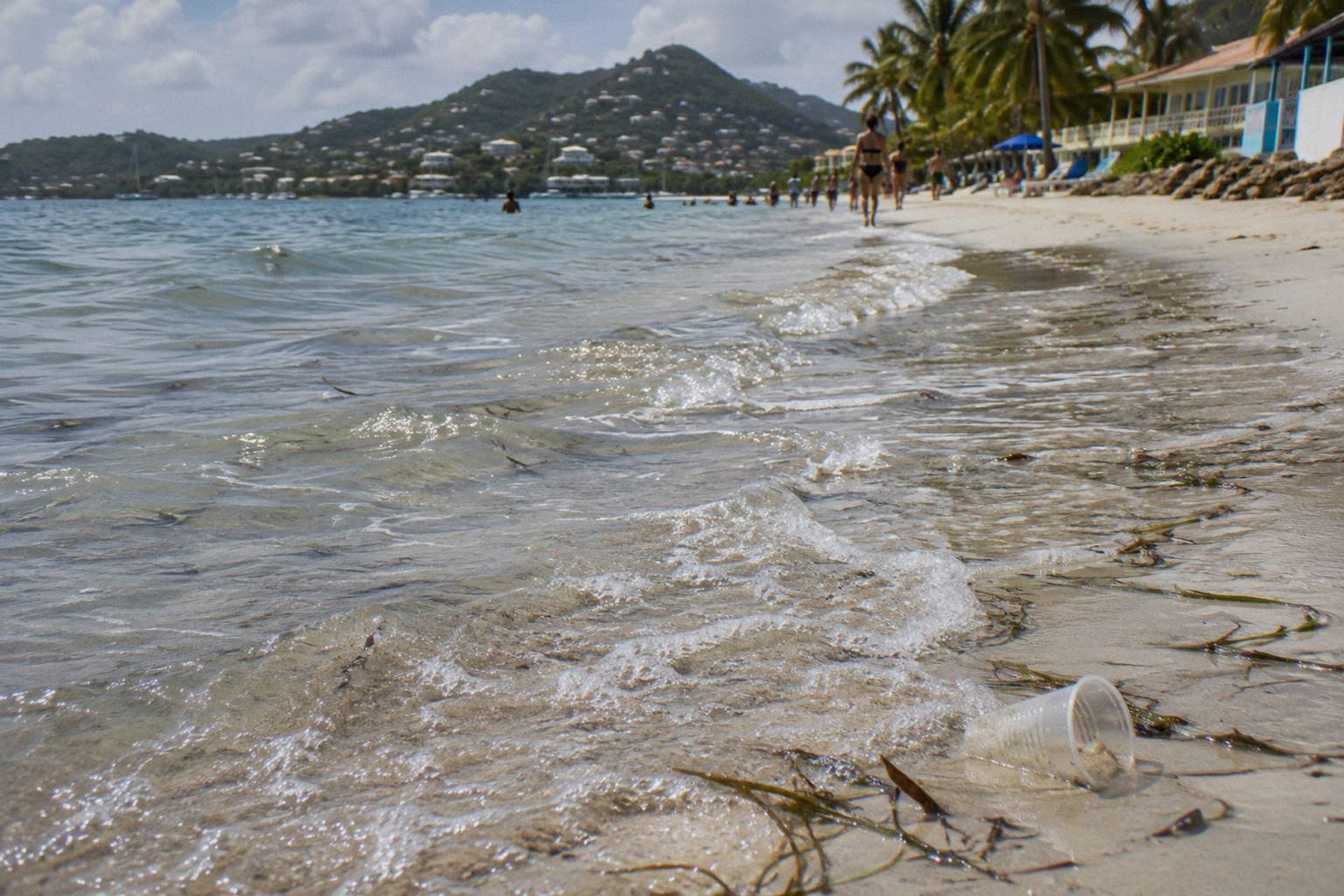
December to April is the driest and busiest stretch of the year, with average rainfall falling to between 65 and 130 mm per month and air temperatures sitting in the high twenties. Seas are typically at their most settled and the tourism authority calls this the busiest period, so book morning slots and tour dates ahead rather than expecting same day space.
The dry season numbers come from the monthly climate record. January averages 26 C and 105 mm of rain, February 26 C and 70 mm, March 26.5 C and 65 mm, April 27.4 C and 85 mm, then December closes the loop at 26.6 C and 130 mm. March is the driest month on that record and October the wettest at 250 mm. Showers in the rainy season are usually brief, but in the dry season even those brief showers become less frequent, and the Saint Lucia travel seasons page describes December to April as the driest and busiest time on the island.
Busy has a concrete meaning for underwater tours. The cruise season runs October to April, so the winter months bring the full weight of ship traffic, up to five vessels in Castries on a single day per the ports authority, and the popular north coast sites absorb a good share of those passengers. A helmet walk or a beach snorkel at Pigeon Island still runs to its own schedule, but the beach, the parking and the landmark itself are livelier in February than in September.
The trade off is straightforward. You get the most dependable weather of the year and you share it with the most people. Booking ahead is the standard move: the SeaTrek St. Lucia helmet walk, 1 hour 30 minutes total, from US$118 per person with a 4.8 rating across 231 reviews, and the beach snorkel from US$70 per person both show their date specific price and availability on their booking calendars.
One dry season nuance is worth a sentence: December sits on the boundary. Early December can still carry November's rainfall pattern, since the rainy season technically runs June to December, while late December behaves like peak season. If you are choosing between an early December and a March week for a first underwater tour, March has the drier record of the two.
What Do Rainy Season And Hurricane Season Mean For An Underwater Tour?
The rainy season runs June to December and hurricane season runs June 1 to November 30, so they overlap almost completely, yet sea temperature stays in the same 26 to 29 C band as February. Rain arrives mostly as brief showers rather than all day events. A hurricane directly affecting a trip is the exception, not the expectation, and trips can be rescheduled.
The monthly rainfall record shows the shape of it: June 155 mm, July 200 mm, August 220 mm, September 205 mm, October 250 mm, November 235 mm. Air temperatures across those same months hover between 28 and 28.2 C, so the water never loses its warmth and the island never loses its heat. What the wet months add is variability. A morning can be glass calm and an afternoon squally, which is one reason the tourism authority's line about mornings being calmest matters more in October than in March.
The US National Hurricane Center climatology page fixes the Atlantic season at June 1 to November 30, and Saint Lucia's tourism body offers what it calls a Holiday Guarantee, allowing a trip to be cancelled or rescheduled in the event of a hurricane. That is a destination level policy, and every product on the island carries its own free cancellation up to 24 hours before start, so a storm on the horizon does not lock you into a date you cannot use.
None of this makes the wet months a bad choice. Fewer visitors share the water, the sea is just as warm, and brief showers often clear within the hour. The planning move is to build in a spare morning: if Tuesday turns grey, Wednesday is still there. That spare morning matters most for the shorter products, because a 1 hour 30 minute helmet walk is easy to slide to another day, while a five hour boat excursion such as the St Lucia Beginner Scuba Diving Tour, from US$132 per person, 4.7 from 57 reviews, is a bigger block to rearrange.
For a middle ground between formats, the SNUBA Saint Lucia session from Pigeon Island runs 1 hour 30 minutes from US$112 per person, 4.7 from 166 reviews, with a group maximum of 14. It shares the helmet walk's morning flexibility, which is exactly what you want in a month where the rainfall record reads 200 mm.
What Does St Lucia Weather By Month Actually Look Like?
Every month stays between 26 and 28.2 C on average air temperature, and the real monthly difference is rainfall, which swings from 65 mm in March to 250 mm in October. The table below gives each month's mean air temperature and rainfall with its season label, so you can see the dry and wet halves of the year at a glance.
The numbers come from a monthly climate record for the island and are long term means, not a forecast for your week. St Lucia sits far enough south that its air temperature barely moves across the year: the coldest monthly mean is 26 C and the warmest 28.2 C, a range of barely two degrees. Rainfall does the moving instead, roughly quadrupling from the March low to the October high.
| Month | Mean Air Temperature | Mean Rainfall | Season |
|---|---|---|---|
| January | 26 C | 105 mm | Dry season |
| February | 26 C | 70 mm | Dry season |
| March | 26.5 C | 65 mm | Dry season |
| April | 27.4 C | 85 mm | Dry season |
| May | 28.1 C | 105 mm | Transition |
| June | 28 C | 155 mm | Rainy season begins |
| July | 28 C | 200 mm | Rainy and hurricane season |
| August | 28.1 C | 220 mm | Rainy and hurricane season |
| September | 28.2 C | 205 mm | Rainy and hurricane season |
| October | 27.8 C | 250 mm | Rainy and hurricane season, cruise season begins |
| November | 27.4 C | 235 mm | Rainy and hurricane season, cruise season |
| December | 26.6 C | 130 mm | Rainy season ends, dry season begins |
Read the table as risk, not as a verdict. A July week can be dry and an April week can shower, because these are averages across many years. What the record does tell you is the order of the months: February and March are the safest bet for a full week of calm mornings, October and November carry the most rain per month, and May is a genuine transition month that often gets overlooked precisely because it sits between the two peaks.
May deserves its own word in a timing discussion. At 28.1 C and 105 mm it looks like January on paper, but it arrives before the June ramp in rainfall and after the dry season crowds have gone home. For travellers flexible enough to avoid school holidays, it is one of the quieter value windows for a helmet walk or a snorkel morning.
How Warm Is The Sea, And Why Do Mornings Matter So Much?
The sea holds between 26 and 29 C (79 to 84 F) in every month of the year, so no wetsuit calendar is needed for snorkeling or a helmet walk. The tourism authority's guidance is that morning brings the calmest water and the clearest conditions, which makes an early slot the single most reliable upgrade available at any time of year.
That annual band, not a monthly figure, is what the island's official snorkeling pages state, and it is the reason St Lucia reads differently from destinations where sea temperature swings through the year. The water in February and the water in September sit inside the same few degrees. A rider who books the helmet walk in the wet season is not trading warmth for price, they are trading scheduling certainty.
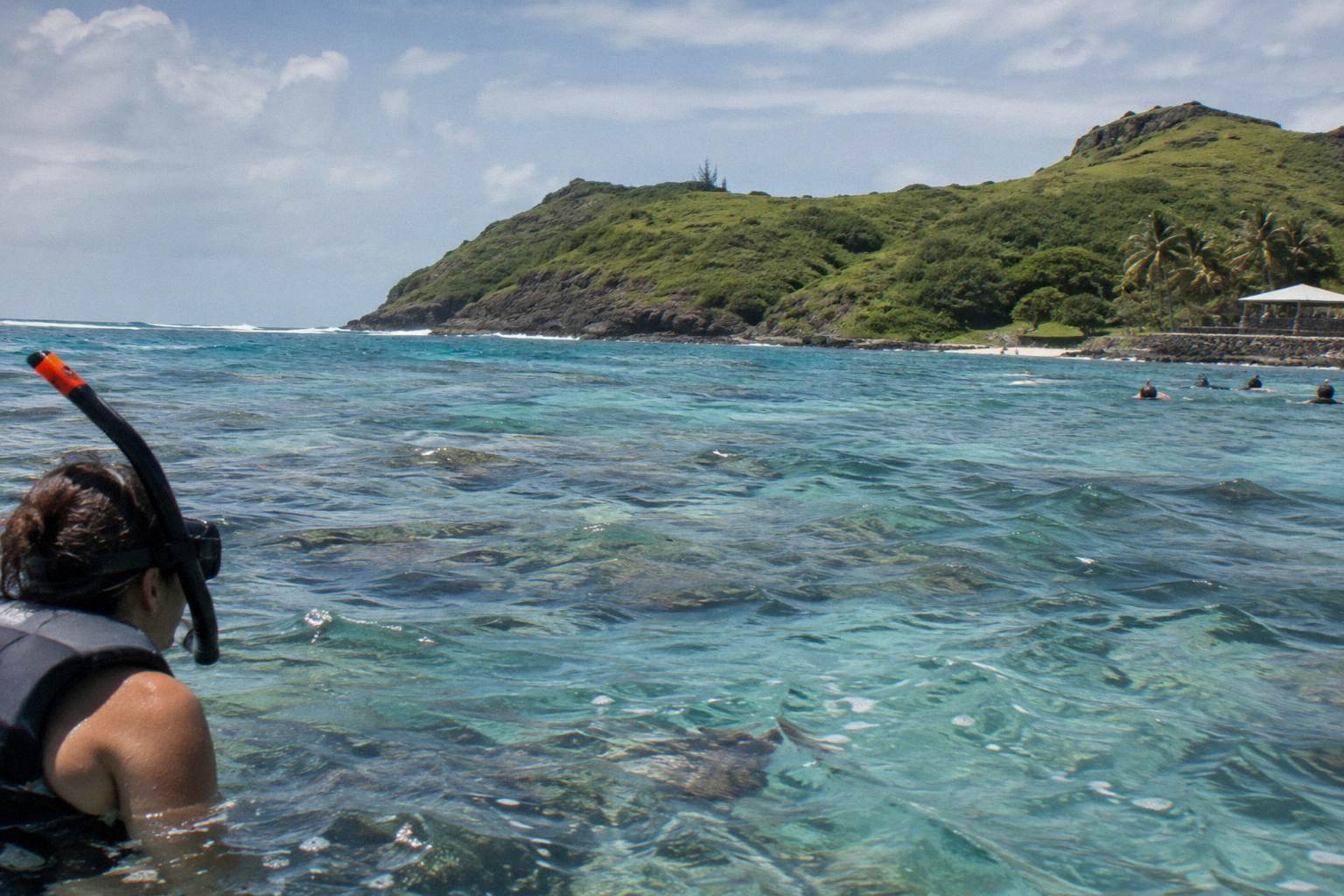
Mornings matter because wind and boat wake build through the day. The west coast, where Pigeon Island, Rodney Bay and Marigot Bay all sit, generally offers calmer waters than the Atlantic side, and the Saint Lucia snorkeling beaches page describes Pigeon Island Beach as calm, sheltered water suited to beginner snorkelers. An early start stacks that natural shelter on top of the day's calmest hours.
| Season | Months | Rainfall Character | What It Means For A Tour |
|---|---|---|---|
| Dry season | December to April | 65 to 130 mm per month | Most dependable mornings, book ahead |
| Transition | May | 105 mm, like January | Quiet value window between peaks |
| Rainy season | June to December | 155 to 250 mm per month, brief showers | Same warm sea, keep a spare morning |
| Hurricane season | June 1 to November 30 | Overlaps the rainy season | Holiday Guarantee allows rescheduling |
| Cruise season | October to April | Ships up to five a day in Castries | Busier beaches, morning slots help |
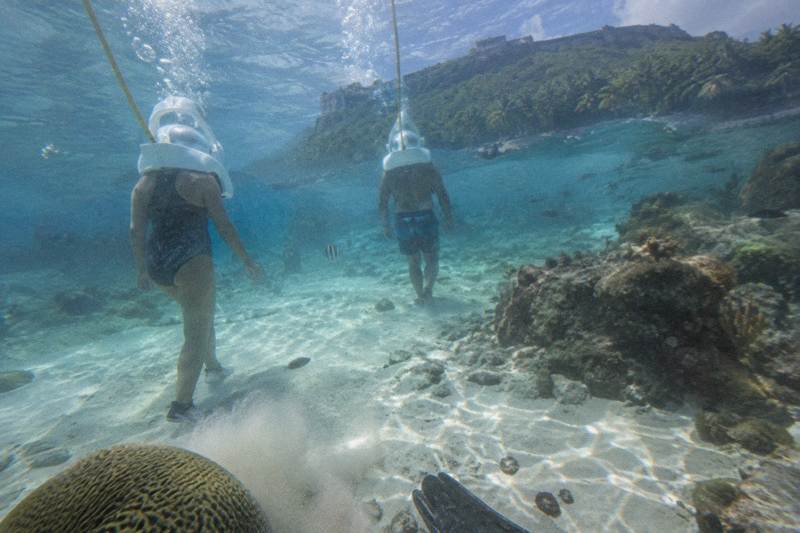
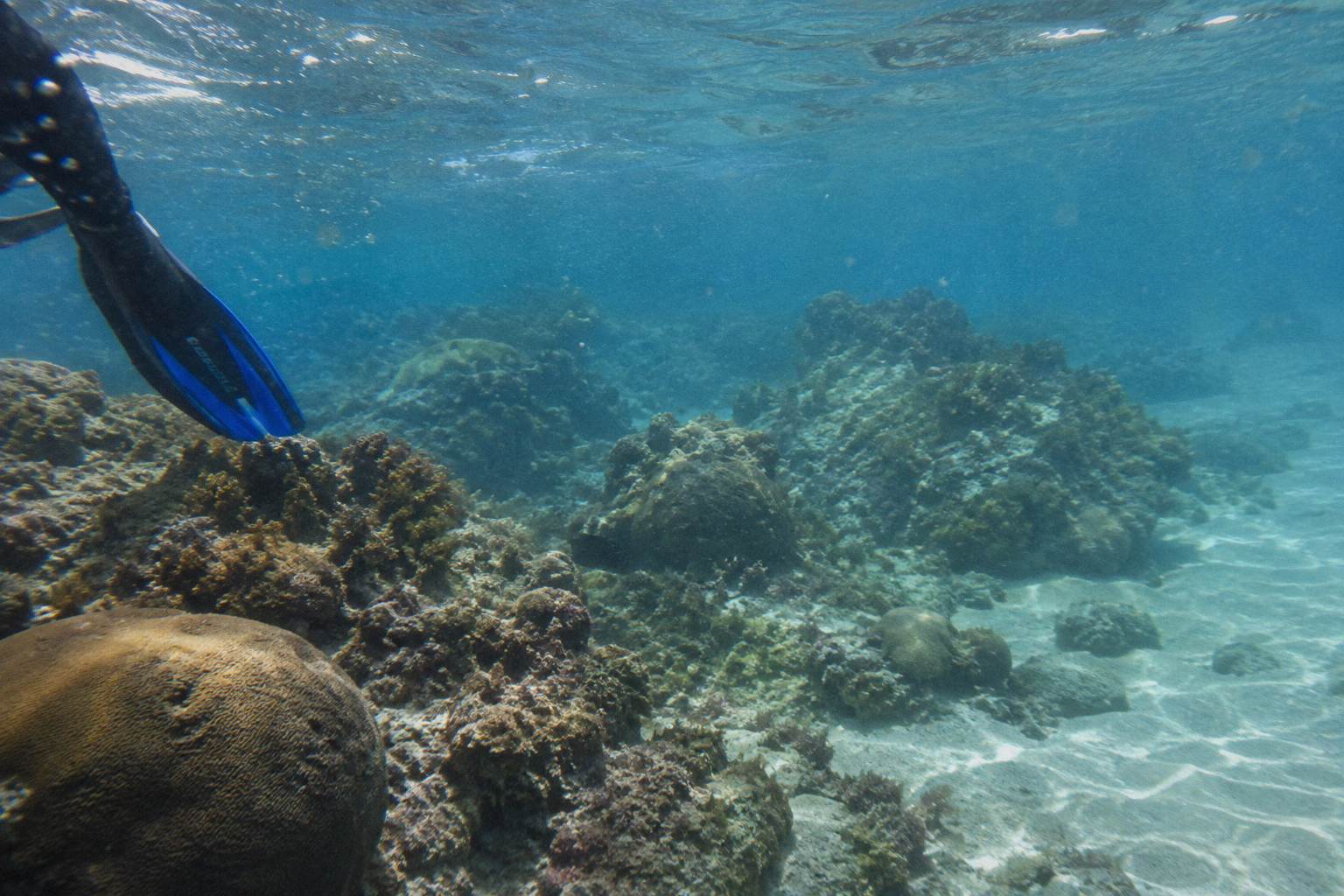
The helmet format adds a timing wrinkle of its own. The manufacturer says the helmet works similar to an inverted glass, with air supplied by hose from a surface air center delivering a constant flow of cooled, dried and filtered air, so the experience does not depend on swimming skill or sea state in the way a snorkel does. Calmer water still makes the whole session more pleasant, which is another argument for the morning calendar slots.
How Does Cruise Season Change The Crowds On An Underwater Tour?
The cruise season runs October to April, with up to five ships in Castries on a single day, so the busiest weather months and the busiest ship months overlap through late autumn and winter. Crowds concentrate on the accessible north coast sites. Booking a morning slot ahead of your week is the standard counter, and midweek days run lighter than port heavy days.
The Saint Lucia ports authority cruise page lists Pointe Seraphine's dedicated berths and notes the October to April season. Passengers from those ships fan out toward Pigeon Island, Rodney Bay and the west coast beaches, and the island's tourism pages themselves flag the December to April window as the busiest period for stays as well as day visits.
For an underwater tour, the crowd effect is mostly about the beach and the water, not the tour itself. The helmet walk and the SNUBA session run to their own schedules with their own pickup logistics from hotels in the north, so a busy day changes who is standing on the sand beside you rather than whether your session runs. The full-day alternatives feel it more: the Best Of Full-Day Snorkeling & Beach Excursion, from US$250 per person, 5.0 from 69 reviews, and the Lucia Private Boat to Soufriere, from US$200 per person, 4.9 from 184 reviews, both spend hours moving through the same waters the ship excursions use.
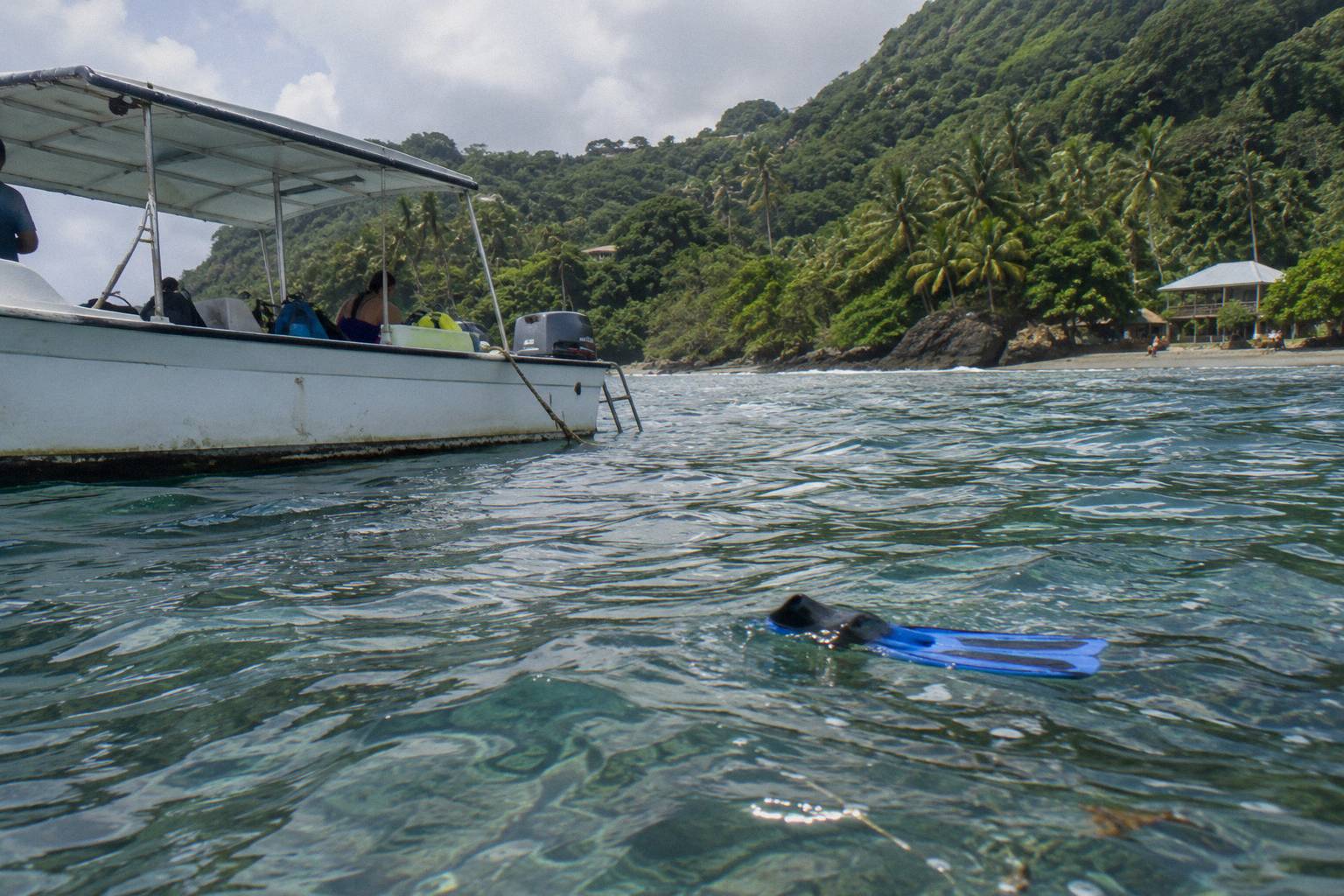
The quiet months are the mirror image. From roughly May through September, ship calls thin out, the rainfall record climbs, and travellers who take the wet season in exchange for emptier beaches get long stretches of the north coast nearly to themselves. It is a legitimate trade, provided you hold a spare morning in reserve and check the booking calendar for the date you actually want, since availability shifts with the season in both directions.
A practical note on arrival logistics belongs here too. Hewanorra International Airport sits in the south, and the tourism authority gives about 1 hour 40 minutes of driving to Pigeon Island and about 1 hour 30 minutes to Gros Islet. A cruise arrival or a northern hotel removes that drive from the equation entirely, which is one reason the north coast products dominate first timer itineraries in every season.
Which Tour Format Fits Which Season Best?
Short fixed site products fit the wet season better, because a 1 hour 30 minute helmet walk or beach snorkel slides easily to a spare morning, while five hour boat days reward the dry season's dependability. Snorkeling needs swimming ability, the helmet walk does not, and SNUBA splits the difference with a surface raft air hose. Age minimums run from 8 on the helmet and SNUBA formats.
The fit is about rescheduling risk more than comfort. In February, when rainfall averages 85 mm and mornings settle reliably, committing to a five hour St Lucia Snorkeling Tour with Lunch from US$83 per person, 4.5 from 126 reviews, with pickup from northern and western hotels, is a low risk plan. In October, at 250 mm, the same tour is still bookable, but a cancellation or a bumpy crossing is more likely, and the 10% per person government VAT payable at check-in is worth remembering at budgeting time.
| Product | Format And Duration | From Price | Season Fit |
|---|---|---|---|
| SeaTrek St. Lucia | Helmet walk, 1 hour 30 minutes | US$118 per person | Any season, morning slot |
| SNUBA Saint Lucia | Surface raft air hose, 1 hour 30 minutes | US$112 per person | Any season, maximum 14 per group |
| Snorkeling at Pigeon Island | Beach snorkel, 1 hour 30 minutes | US$70 per person | Calm mornings, any season |
| St Lucia Snorkeling Tour with Lunch | Boat day, 5 hours | US$83 per person | Dry season dependability |
| St Lucia Beginner Scuba Diving Tour | Try dive with training, 5 hours | US$132 per person | Dry season dependability |
| Best Of Full-Day Snorkeling & Beach Excursion | Full day with lunch and drinks | US$250 per person | Dry season, book well ahead |
Amounts are in US dollars, per person, and prices vary by date and group, with the booking page showing the price for the date you choose. The two north coast short formats carry the strongest review pools of the tours on this site, 4.8 from 231 reviews for the helmet walk and 4.7 from 166 for SNUBA, and both include pickup from hotels in the north of the island only, with the exact meeting point on the booking confirmation.
If you are weighing the helmet walk against the snorkel specifically, the comparison of helmet diving cost against snorkeling breaks down price and experience, and the helmet walk versus SNUBA, scuba and snorkeling guide covers format. Season wise, the deciding line is simple: the helmet walk needs no swimming at all, while the tourism authority and every snorkel product page ask for swimming ability, which matters more on a day when the sea has some movement in it.
What Trips People Up Before You Book?
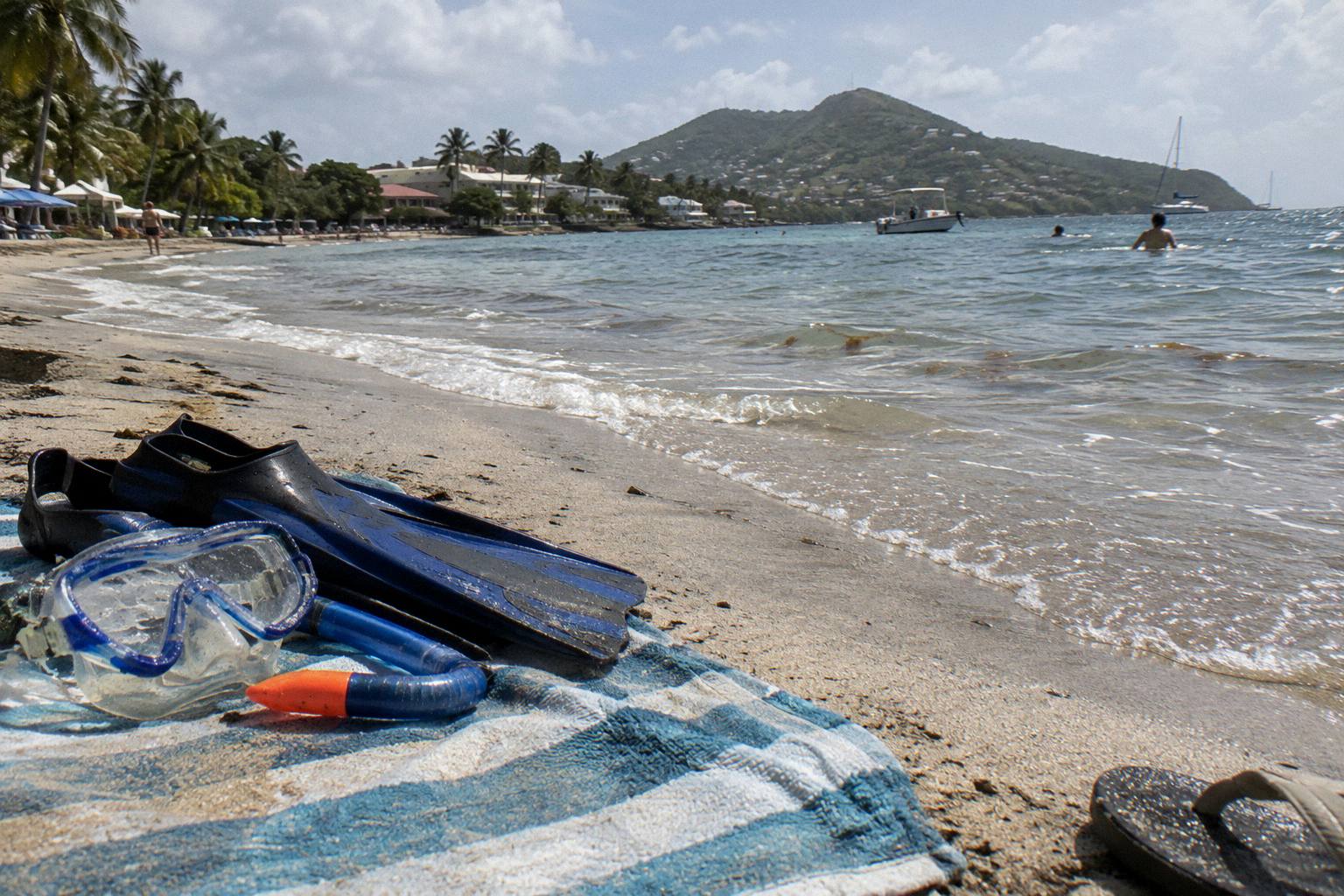
Three timing mistakes repeat: booking an afternoon slot in the wet season, when mornings are reliably calmer; assuming the sea is cold outside the dry season, when it never leaves 26 to 29 C; and scheduling an underwater tour for the last morning of a trip, leaving no room to reschedule. Each one is avoidable with a calendar and an early booking.
The afternoon mistake is the most common. Travellers book a relaxed midday slot, then find the wind has picked up by the time they walk down to the beach. The tourism authority's own line, that morning offers the calmest water and clearest visibility, is the cheapest upgrade available: pick the early calendar slot and the same product, at the same price, runs in better conditions.
The cold water assumption wastes good months. Some visitors rule out June through November believing the sea turns cool, when the official annual range is 26 to 29 C with no cold month in it. The genuine trade in those months is rainfall and hurricane season risk, both manageable with a spare morning and the free cancellation up to 24 hours before start that every tour compared here carries.
The last morning mistake bites hardest on cruises and short stays. If the tour is on your final day and weather moves it, there is no tomorrow. Put the underwater day in the middle of the trip, keep the morning slot, and hold the afternoon for the beach. For cruise passengers, the fitting an underwater excursion into a cruise day guide covers the port logistics, and it is worth asking the operator about cruise day pickup when you book.
A fourth mistake is quieter: forgetting the Pigeon Island National Landmark itself. The helmet walk and the beach snorkel depart from Pigeon Island, a 44 acre National Trust site open 9:30 am to 5:00 pm with last entry at 4:15 pm, closed December 25, and non resident entry is US$10 for adults 13 and over, US$3 for children 5 to 12, under 5 free, figures from the National Trust that can change. The site's hours, the fort hike and the museum make it a half day destination in its own right, so time the tour and the landmark visit together rather than racing one against the other.
Common Questions About Timing Underwater Tours In St Lucia
What Is The Best Month For Snorkeling In St Lucia?
March has the driest record, 65 mm of rainfall on average against October's 250 mm, and it sits inside the December to April dry season when mornings are most reliably calm. February and April sit close behind. The sea stays between 26 and 29 C in every month, so warmth is not a differentiator.
Is Hurricane Season A Reason To Avoid St Lucia?
Hurricane season runs June 1 to November 30 and overlaps the June to December rainy season. The tourism authority offers a Holiday Guarantee allowing a trip to be cancelled or rescheduled in the event of a hurricane, and every tour carries free cancellation up to 24 hours before start. Many travellers visit in those months without disruption.
Is The Sea Cold In St Lucia At Any Time Of Year?
No. The official annual range is 26 to 29 C (79 to 84 F), with no cold month. Air temperature averages sit between 23 and 31 C, with monthly means inside a two degree band from 26 to 28.2 C.
When Is St Lucia Most Crowded For Underwater Tours?
December to April is both the dry season and the busiest period, and the cruise season runs October to April with up to five ships in Castries on a single day. Morning slots and advance booking are the standard counter. May through September runs noticeably quieter.
Morning Or Afternoon For A Helmet Dive?
Morning. The tourism authority notes that morning offers the calmest water and clearest visibility, and wind and boat traffic build through the day. The SeaTrek St. Lucia helmet walk runs 1 hour 30 minutes in total, about 10 minutes of briefing and about 25 minutes underwater, so an early slot still leaves the whole afternoon free.
Do Tours Get Cancelled For Rain?
Brief showers are typical of the rainy season rather than all day rain, and short sessions often wait them out. If a departure is moved, free cancellation applies up to 24 hours before start and dates can be rebooked on the calendar. Booking mid trip rather than on your last morning leaves room to reschedule.