Can You SNUBA Before Flying Home?
No SNUBA flying rule exists from DAN or PADI. Here is what the diving guidance says, how a 90-minute SNUBA session differs from a scuba day, and how to plan your last day in St Lucia.
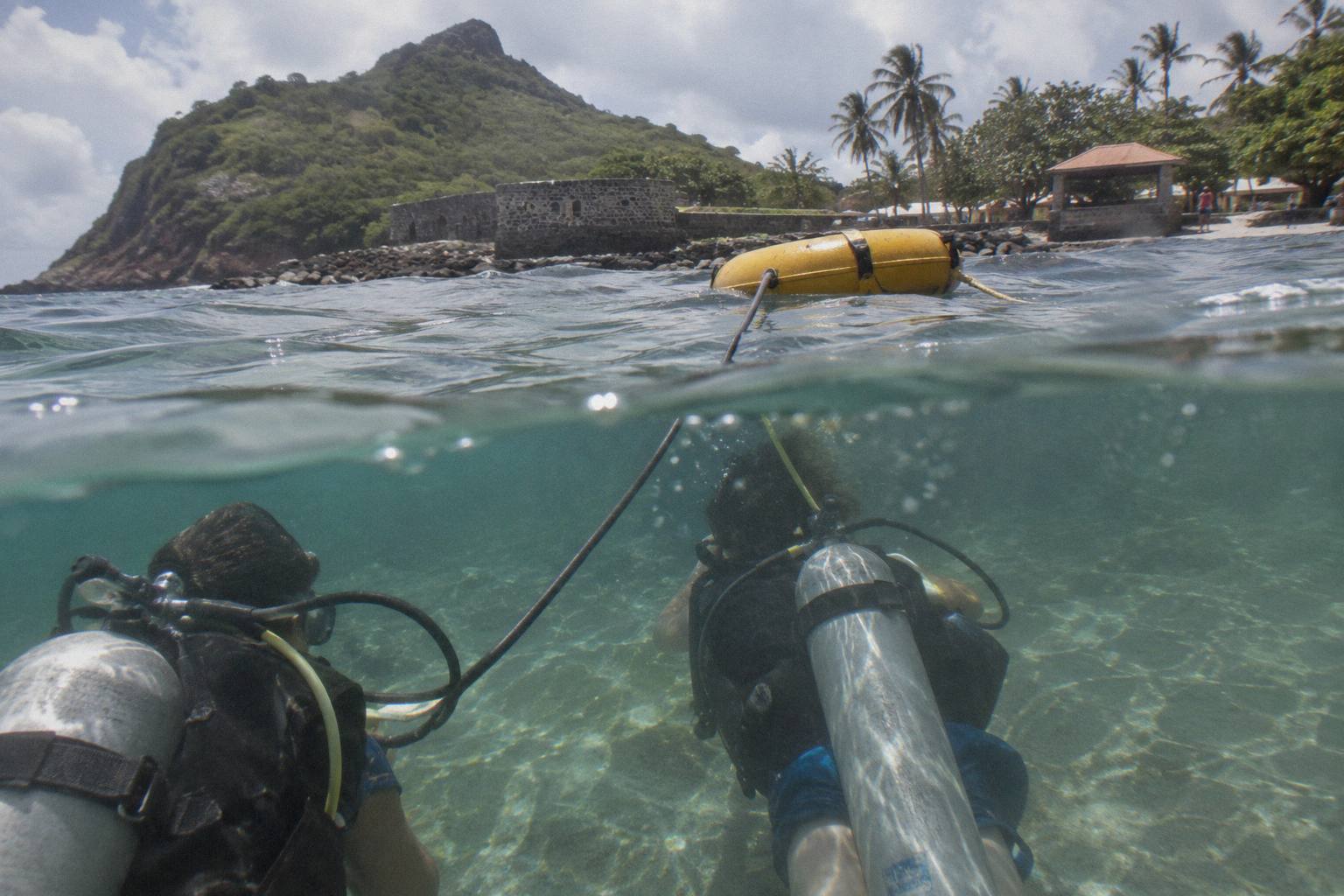
SNUBA sits in a strange corner of the underwater world: it borrows a regulator from scuba, a raft from the surface, and the freedom of snorkeling, and it leaves certification at the door. If your flight home is booked for the evening or the next morning, start with the beginner underwater tours in St Lucia hub to see how the formats compare, then work out the timing question, which is the part nobody agrees on at the breakfast table.
| Fact | Detail |
|---|---|
| SNUBA flying rule from DAN or PADI | None exists, so ask the operator |
| DAN scuba guidance, single no-decompression dive | 12 hours minimum before flying |
| DAN scuba guidance, multiple dives or multiple days | 18 hours minimum before flying |
| SNUBA Saint Lucia duration | 1 hour 30 minutes |
| Beginner and certified scuba tour duration | 5 hours each |
| Cancellation on all products here | Free up to 24 hours before start |
| Hewanorra airport to Pigeon Island | About 1 hour 40 minutes |
Yes, in the practical sense that people do it and no rule forbids it: DAN, PADI and the SNUBA organisations publish no SNUBA-specific preflight interval at all. The published numbers belong to scuba, where DAN advises waiting 12 hours after a single no-decompression dive and 18 hours after multiple dives or multiple days. For SNUBA, the one reliable instruction is to ask the operator when you book.
The framing is simpler than the internet makes it. Divers Alert Network, the diving medicine body whose guidance recreational diving runs on, built its flying-after-diving rules from chamber studies on scuba divers breathing compressed air at depth. SNUBA is a different animal: you breathe through a regulator, yes, but the air comes from a floating raft on the surface, and the format is described by the operator as a cross between snorkeling and scuba diving, with no tank and no training. Nobody has written a rule for it because nobody has run the studies. That absence is not a green light and not a red one, it is a gap you close by asking the people running the session.
A note on how the day actually stacks up. The SNUBA session at Pigeon Island runs 1 hour 30 minutes in total, and the manufacturer's parallel format, the helmet walk, spends about 10 minutes on briefing and about 25 minutes underwater inside a similar window. This is not a five-hour dive day. The scuba products on the island are: both the beginner and certified tours out of Marigot Bay run 5 hours, with lunch, a boat and a training session for first-timers. If you are weighing a last-morning underwater activity against a departure time, the duration column matters as much as any medical guidance.
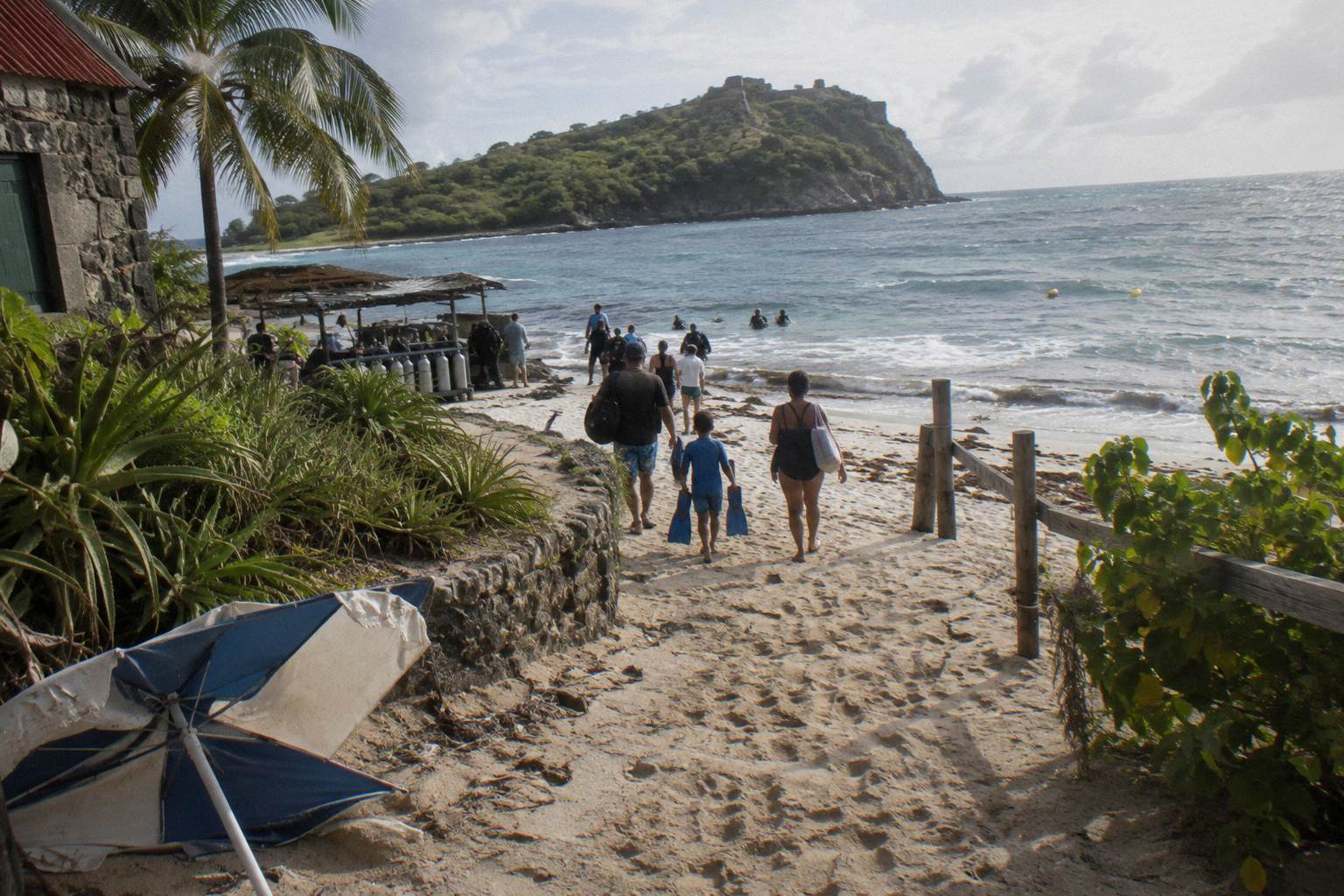
The St Lucia product to have in mind is SNUBA Saint Lucia, operated by Sealife Paradise from Pigeon Island in Gros Islet. It rates 4.7 from 166 reviews, from US$112 per person, with a group maximum of 14, a minimum age of 8, equipment and post-session water included, and free cancellation up to 24 hours before start. The SNUBA at Pigeon Island page carries the full detail, and the booking calendar shows the price for your date.
What DAN Says About Flying After Diving
DAN's published guidance covers recreational scuba on air: wait at least 12 hours before flying after a single no-decompression dive, and at least 18 hours after multiple dives in a day or multiple days of diving, with substantially longer intervals after dives requiring decompression stops. Commercial cabins generally sit at 6,000 to 8,000 ft, and the guidance exists because lower pressure aloft can bring on decompression sickness.
The numbers come from DAN's flying-after-diving research, summarised after a consensus workshop on recreational no-decompression air dives at typical commercial cabin altitudes. Two things DAN itself says about its own rules are worth carrying into any decision. First, the guidelines reduce risk but do not guarantee zero risk, and longer intervals reduce it further, they are not a substitute for medical advice. Second, the trials used dry, resting volunteers in chambers, so DAN notes that longer intervals may be prudent for divers who were immersed and exercising, which describes every real diver and every real SNUBA participant.
| Diving before the flight | DAN minimum preflight surface interval |
|---|---|
| Single no-decompression dive | 12 hours |
| Multiple dives in one day, or multiple days of diving | 18 hours |
| Dives requiring decompression stops | Substantially longer than 18 hours |
| SNUBA | No published interval, ask the operator |
| Helmet diving | No published interval, ask the operator |
The full text sits on the DAN flying after diving page, which is the primary source for every number above. PADI aligns with the same 12 and 18 hour minimums, so there is no conflict between the two bodies to arbitrate. What neither body offers is a line that mentions surface-supplied breathing, rafts, hoses or helmets, and the deeper comparison of whether SNUBA is safer than scuba for beginners runs into the same wall of missing research.
That wall is why the operator question matters. Sealife Paradise runs both SNUBA and the SeaTrek helmet walk daily at Pigeon Island and will have a house position on same-day flights, built from experience rather than a chamber study. Ask when booking, and if the answer matters to your connection, the free cancellation up to 24 hours before start gives you room to move the session a day earlier without losing the payment.
Why There Is No SNUBA Flying Rule
Because the research that produced the scuba intervals never tested SNUBA, and no body has since filled the gap. DAN's studies measured divers breathing compressed air at depth on scuba. SNUBA's profile, breathing through a surface-fed regulator while staying shallow, has no equivalent dataset, so DAN, PADI, the SNUBA organisations and the Saint Lucia Tourism Authority publish nothing specific. The gap is real and acknowledged.
It helps to understand what decompression sickness actually is, because the risk logic explains why the formats get treated differently. When you breathe air under pressure, nitrogen dissolves into your tissues, and the deeper and longer you go, the more dissolves. Ascend too fast or drop the surrounding pressure too quickly, which is what a cabin at altitude does, and that nitrogen can come out of solution as bubbles. The DAN intervals exist to give dissolved nitrogen time to clear before the pressure drops.
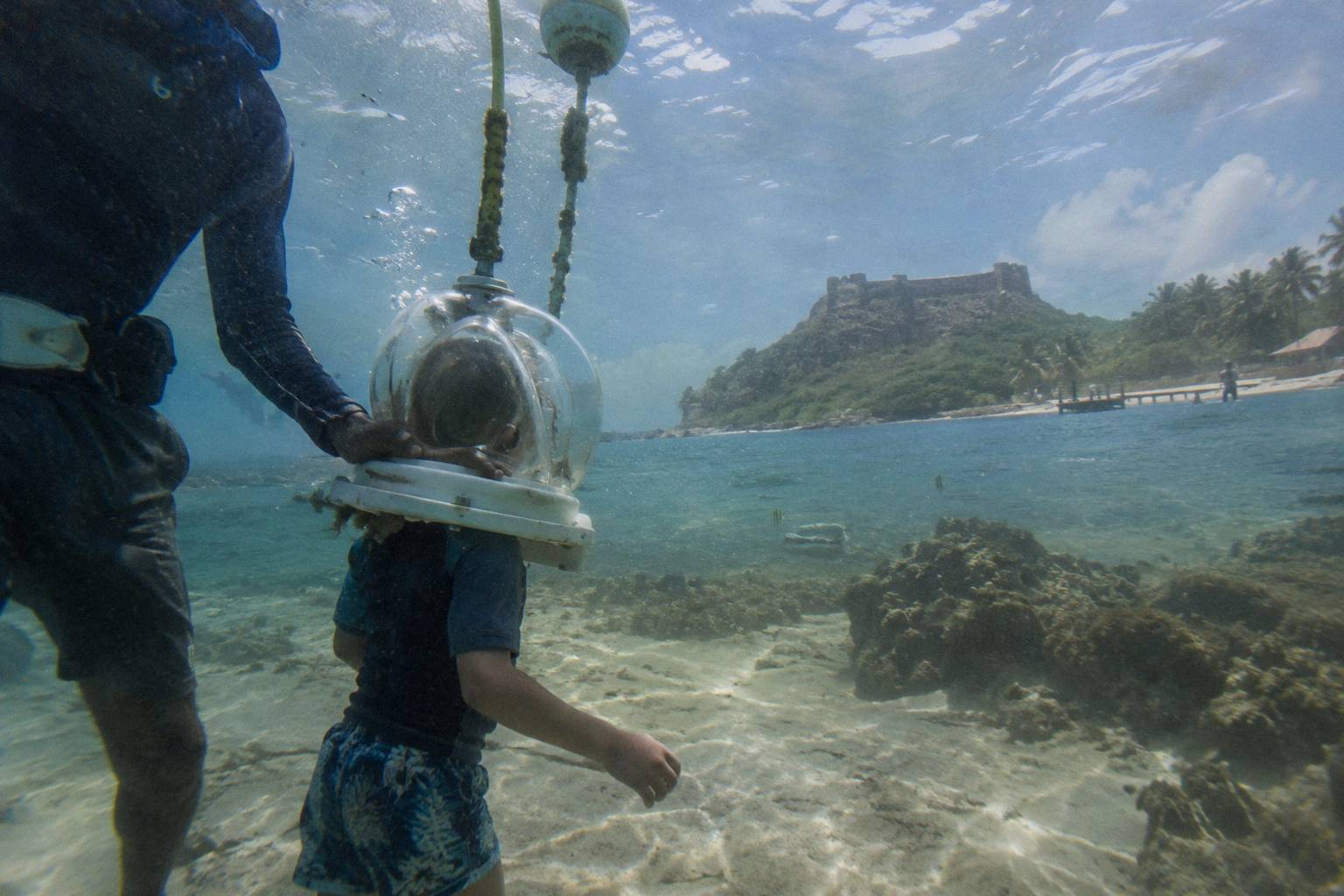
SNUBA participants absorb nitrogen too, in principle, since they breathe pressurised air through a regulator below the surface. But the format keeps participants shallow, sessions are short, and the exposure profile looks closer to snorkeling than to a dive day. The manufacturer's helmet walk makes the contrast even sharper: air flows from the surface through a hose, and the manufacturer describes the helmet as working like an inverted glass with a constant flow of cooled, dried and filtered air keeping it fresh. Whether any of that changes the flying calculation is exactly the question no published study answers, which is why how helmet diving works with its air hose always ends at the same ask-the-operator line.
The practical reading most operators give is proportion: a 1 hour 30 minute session with shallow time in the water is not a two-tank dive day. But proportion is judgement, not guidance, and your own health picture belongs in it. The operator's booking page carries a medical advisory for SNUBA and the helmet walk alike: not recommended for pregnant travelers, travelers with poor cardiovascular health or spinal injuries. If any of those describe you, the question to ask is not only about flying, it is about whether the session suits you at all, and the answer should come from the operator or a doctor.
How A SNUBA Session Compares To A Scuba Day
SNUBA Saint Lucia runs 1 hour 30 minutes from Pigeon Island; both St Lucia scuba tours run 5 hours from Marigot Bay, including boat time, lunch and, for beginners, training before the dive. If a flight is looming, the difference is stark: SNUBA fits a morning with room to spare, while a scuba day consumes most of one and, under DAN's rules for beginners doing a single dive, points to a 12 hour gap.
| Product | Duration | Price from | Rating | Format |
|---|---|---|---|---|
| SNUBA Saint Lucia | 1 hour 30 minutes | US$112 per person | 4.7 from 166 reviews | Shared, ages 8+ |
| St Lucia Beginner Scuba Diving Tour | 5 hours | US$132 per person | 4.7 from 57 reviews | Shared, ages 12+, meal included |
| St Lucia Certified Scuba Diving Tour | 5 hours | US$116 per person | 4.6 from 71 reviews | Shared, ages 12+, meal included |
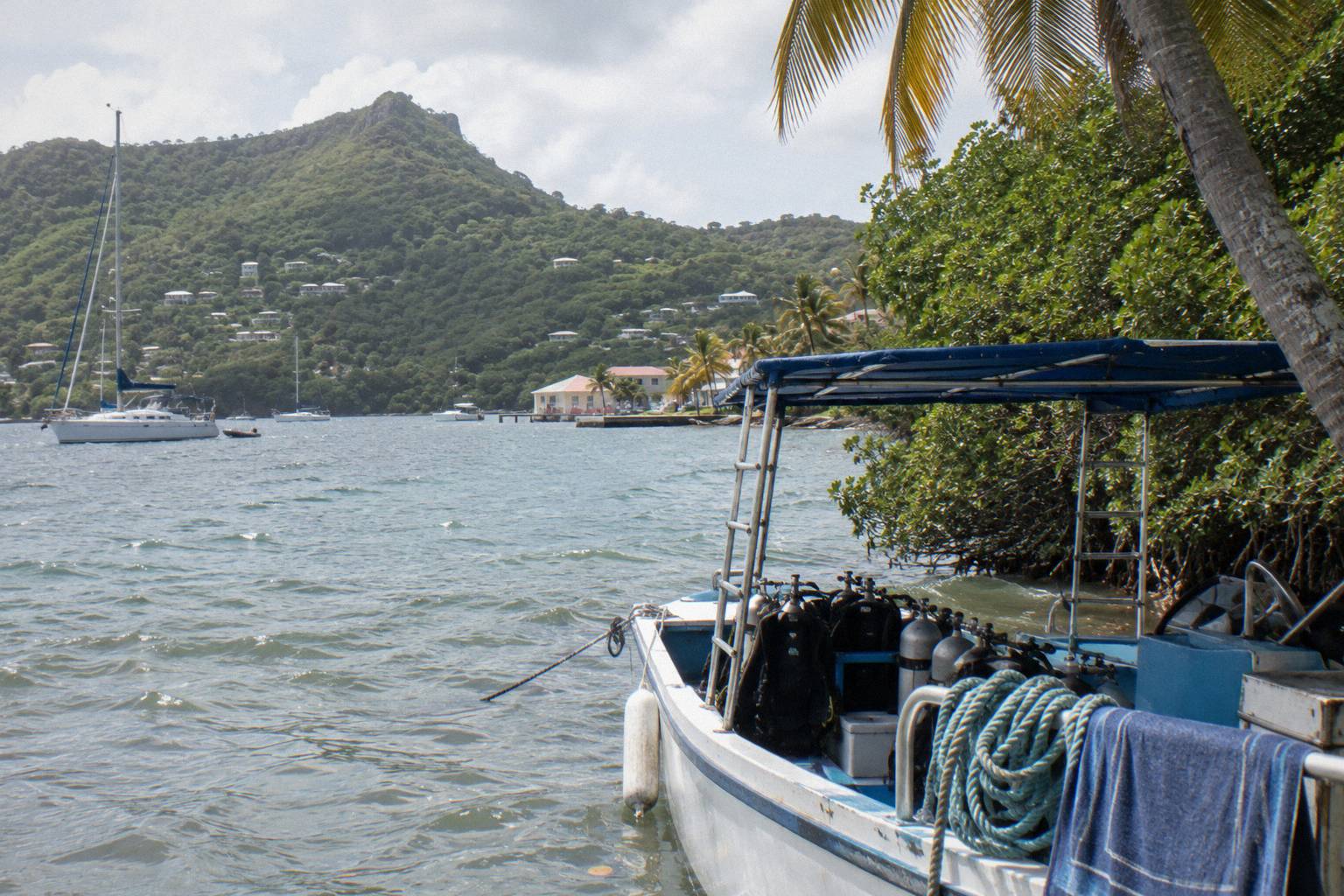
The scuba day deserves its own candid look at scheduling. The beginner tour includes pickup and drop-off from northern to western island locations, water and juices, lunch, one tank dive, tanks and weights, marine fees and instructor training beforehand; the certified tour adds a dive master and local guide, all fees and taxes, and a spacious dive boat with a restroom. Neither includes pickup from the south, so Soufriere, Vieux Fort, Micoud and Dennery hotels are out of range for both. A certified diver doing one dive faces the 12 hour DAN interval; a diver stacking dives or diving several days in a row faces 18 hours, and that is the number that decides whether the farewell dive happens at all.
For beginners the scuba-vs-flight maths usually resolves itself. The beginner tour is a single tank dive with training, which points to the 12 hour interval after it. On a 1 pm flight home, a morning dive is out under DAN's own numbers, and the realistic move is to dive the day before or swap the last morning to SNUBA and the operator's judgement. The beginner scuba try dive and what it involves walks through the training side if you are weighing the two formats on their merits rather than their clocks.
One more scheduling fact belongs here because it eats mornings: Hewanorra International Airport sits in the south of the island, and the drive from Pigeon Island runs about 1 hour 40 minutes, with Gros Islet about 1 hour 30 minutes away, per the Tourism Authority's own figures. Add check-in time and the drive, and a midday departure from the north means the underwater part of your day wants to be over by mid-morning at the latest. The sea cooperates with that more often than not, since morning typically brings the calmest water and clearest visibility around the island.
Planning Your Last Day Around The Flight
Work backwards from check-in, then from the drive, then from the session length. A SNUBA morning at Pigeon Island takes 1 hour 30 minutes, pickup is included from northern hotels, and the drive to Hewanorra from there is about 1 hour 40 minutes. Free cancellation up to 24 hours before start means a delayed flight or a schedule change does not strand your payment.
The cleanest last-day shape depends on when you leave. An evening flight leaves room for a morning session with hours to spare, and it is the pattern most north-coast hotels see. A midday flight squeezes everything: you want the session finished by mid-morning, the drive south started soon after, and no margin for a leisurely lunch. A next-morning flight removes the pressure entirely and is the one case where even a scuba day fits comfortably inside DAN's 12 hour interval, if the dive finishes by early afternoon.
Certified divers should take a realistic look at their logbook before booking that farewell double. Multiple dives in a day, or diving on several consecutive days of the trip, moves the DAN minimum from 12 hours to 18, and cabin altitude does not negotiate. The certified scuba tour out of Marigot Bay question then becomes a day-two question rather than a last-day one, which is exactly how most divers structure a St Lucia week anyway: dive early in the trip, save the gentle formats for the end.
Money rarely decides the last-day question but it is good to know the shape of it. Prices are in US dollars, and the Eastern Caribbean dollar is pegged at EC$2.70 to US$1, with US cash widely accepted and change often given in EC$. Tipping runs about 10 to 12 percent of bills and is not added automatically, per the Saint Lucia tourism travel tips page, so keep a little cash for the guide at the end of the session. Gratuities are named as excluded on the SeaTrek helmet walk, and the same expectation applies across the water activities here.
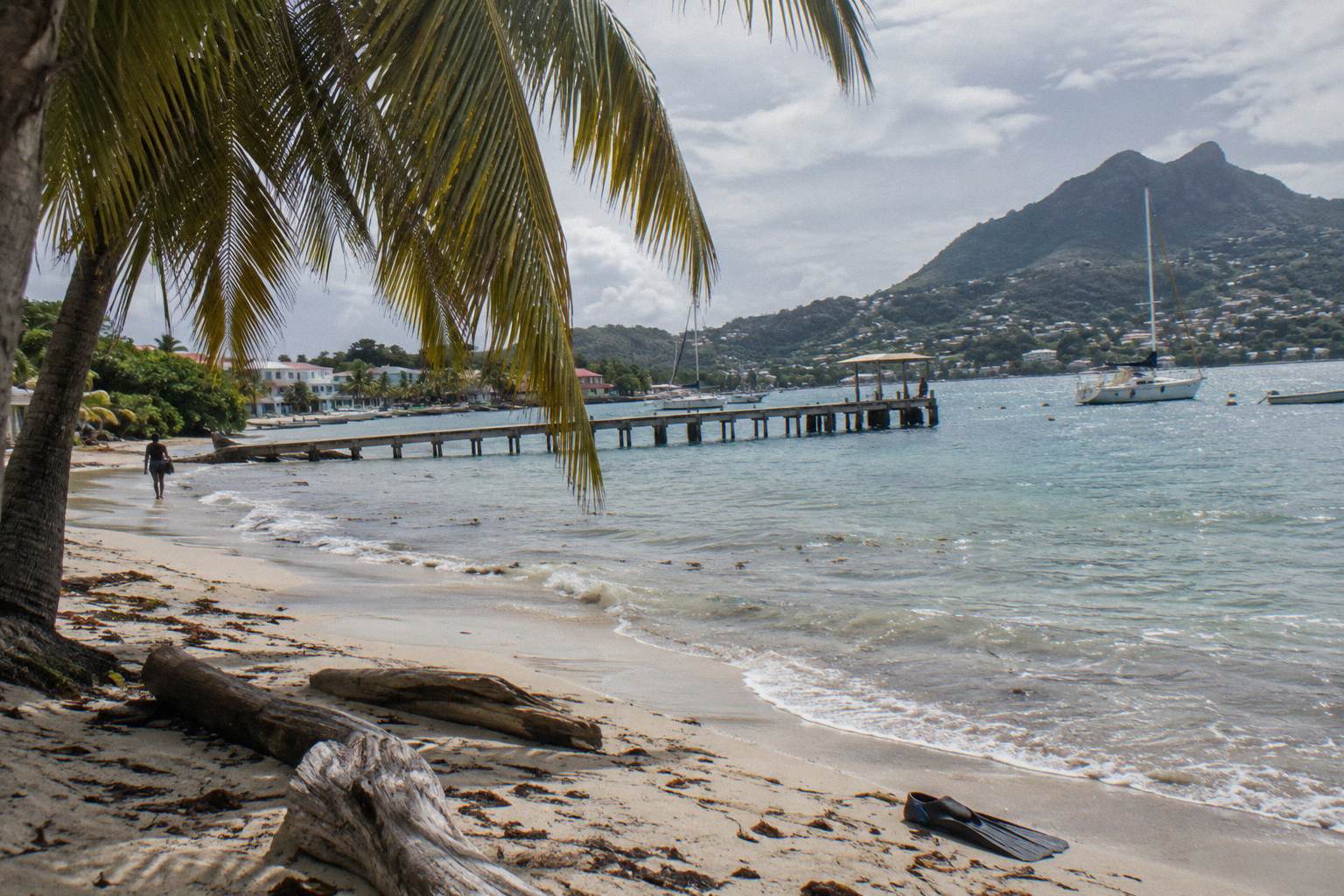
Season shapes the plan too, though less than newcomers fear. The dry season runs December to April and is the busiest stretch; the rainy season runs June to December with usually brief showers; hurricane season spans June 1 to November 30, and the main cruise season runs October to April. Sea temperatures hold between 26 and 29 C all year, so the water side of the decision barely changes by month, per the tourism snorkeling beaches page. Weather, tide and the operator decide what runs on the day; nothing here promises otherwise.
Signs That Mean You Should Not Fly
DAN's symptom guidance is blunt: joint pain, unusual fatigue or skin changes after diving mean do not get on the plane, seek medical advice first. The risk is decompression sickness, and flying with symptoms worsens the outcome. Even without symptoms, the intervals exist because risk drops with time, and DAN states its rules reduce rather than eliminate it.
Learn the short list before the session, not after. Joint or limb pain that appears within a day of in-water time, unusual fatigue out of proportion to the activity, dizziness, numbness or tingling, and skin changes such as itching or mottling are the classic signals. Any of them after a session means the flight waits and a doctor comes first; the island has medical care, and an extra night beats the alternative. The guide to medical conditions and pregnancy on helmet diving covers who should think twice before any of these formats in the first place.
Two habits round out the picture. Hydrate and skip the rum punch until after the flight window, since dehydration and alcohol are the ordinary vices of a holiday that compound any diving risk. And never treat the intervals as a math puzzle to solve downward: DAN's own caveat that its trials used dry, resting volunteers means real immersed, swimming participants have every reason to be generous with the wait, not stingy with it.
Mistakes People Make On Fly-Home Day
The recurring errors are booking a five-hour scuba day against an afternoon flight, treating DAN's scuba intervals as if they govern SNUBA in either direction, forgetting the 1 hour 40 minute drive from Pigeon Island to Hewanorra, and assuming the operator will raise the flying question unprompted. Each one is avoidable with a single question asked at booking time.
The first mistake deserves its own sentence because it is the most common: people read "12 hours after a single dive" and mentally file their beginner dive as half a dive. It is not. One tank dive with training is a dive in DAN's framework, and the interval is the interval. The second is the mirror image, assuming that because SNUBA has no rule it must be risk-free in every case; the correct posture is the operator's answer plus your own health picture, and whether you can SNUBA while pregnant shows how the medical advisory governs that calculation more than any interval does.
The third is logistics. Northern pickup is included on the SNUBA session, but the run south to the airport is on your clock, and traffic, check-in and security belong in the arithmetic. The fourth is silence: state it when you book and let the operator place you in the right slot. Free cancellation up to 24 hours before start is the safety net under all of it, and St Lucia Helmet Dive keeps the calendar and price detail you need to make the call a day ahead rather than at the water's edge.
Common Questions About SNUBA And Flying
Can You SNUBA Before Flying Home?
No DAN, PADI or SNUBA body publishes a preflight interval for SNUBA, so the instruction is to ask the operator when booking. The published figures govern scuba: 12 hours after a single no-decompression dive, 18 hours after multiple dives or multiple days. A 1 hour 30 minute SNUBA session is a different format from a dive day.
How Long Should You Wait To Fly After Scuba Diving?
DAN advises a minimum preflight surface interval of 12 hours after a single no-decompression dive and 18 hours after multiple dives in a day or multiple days of diving, with substantially longer intervals after dives requiring decompression stops. PADI aligns with the same minimums.
Does The 12 Hour Rule Apply To SNUBA?
Not as a written rule. The 12 and 18 hour intervals come from DAN research on scuba divers breathing compressed air, and no equivalent study covers surface-supplied breathing from a raft. Ask the operator, and be generous with the gap if your flight allows it.
Does The Flying Rule Apply To Helmet Diving?
No published interval covers the SeaTrek helmet walk either. Air flows from the surface through a hose, and the manufacturer describes the helmet as working like an inverted glass with a constant flow of fresh air. The same instruction applies: ask the operator before booking a same-day flight.
Can I SNUBA On A Cruise Day In Port?
Format-wise yes, the session runs 1 hour 30 minutes from Pigeon Island, and sea temperatures hold between 26 and 29 C year round. Cruise passenger pickup at the Castries terminal is not listed for the SNUBA session, so confirm transport with the operator before booking.
What Symptoms Mean I Should Not Fly After Being In The Water?
DAN's guidance lists joint pain, unusual fatigue and skin changes among the signals of decompression sickness, and the instruction is to seek medical advice rather than board. The risk exists with any pressurised breathing underwater, which is why longer waits and careful self-checks beat minimums.