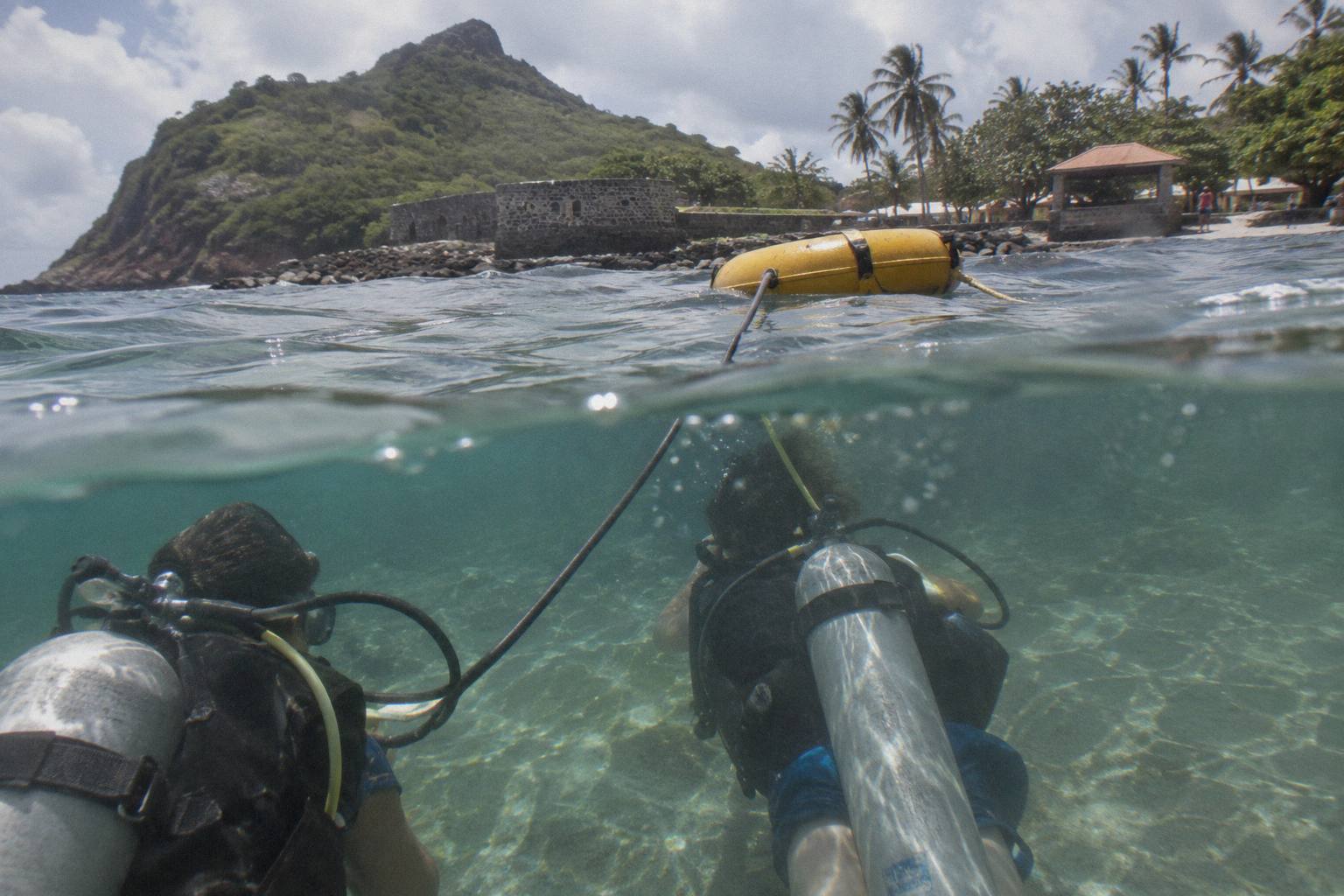
Is SNUBA Safer Than Scuba Diving For Beginners?
How SNUBA and beginner scuba differ in St Lucia: air source, ages, training, duration and price, framed by format and eligibility rather than risk ranking.
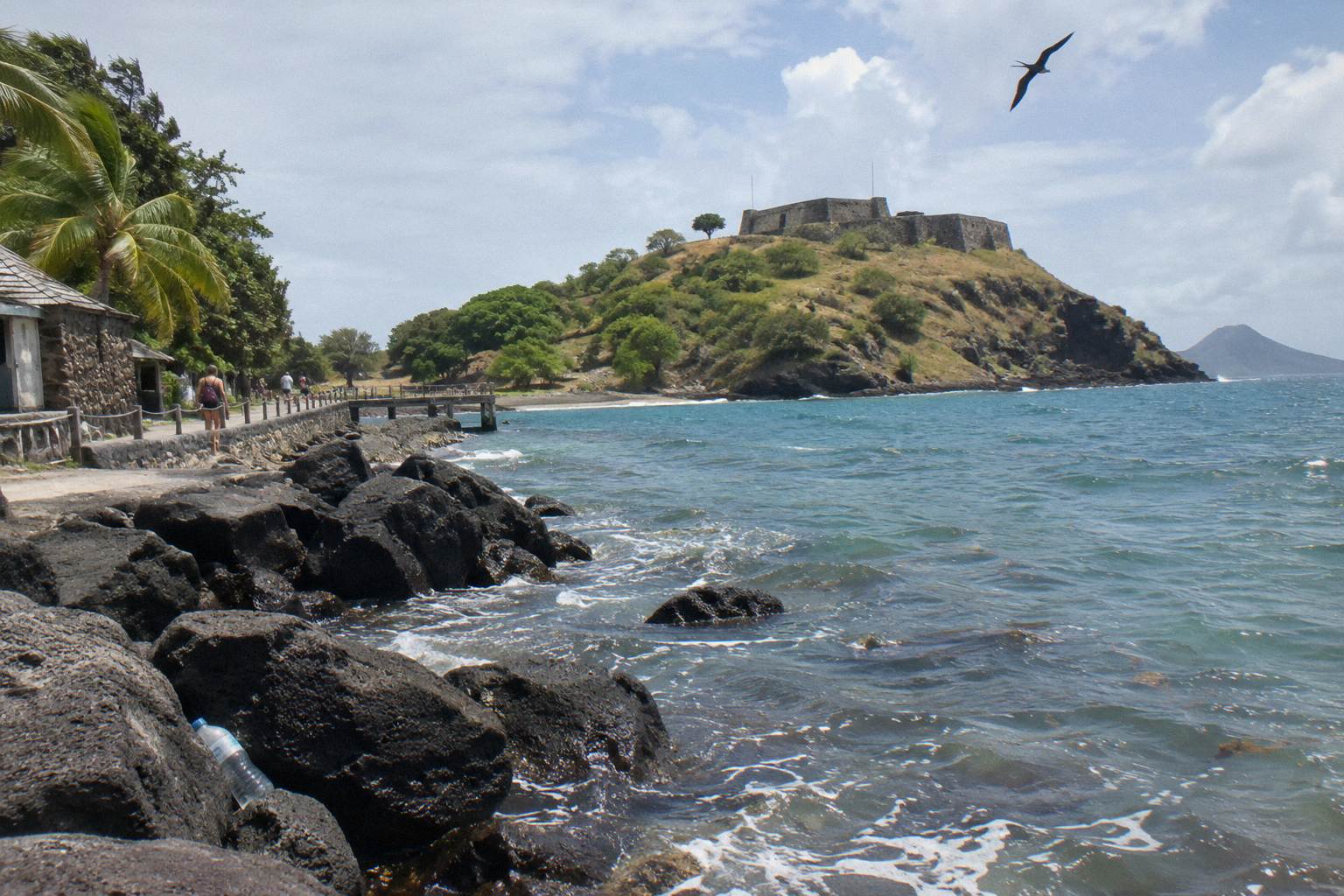
For a first underwater experience in the north of the island, the full menu of helmet walks, SNUBA and beginner scuba options sits on the beginner underwater tours hub, where each format is laid out side by side. Here the focus is one specific question: how SNUBA and beginner scuba actually differ, and which format fits which kind of beginner.
| Fact | Detail |
|---|---|
| SNUBA short version | A cross between snorkeling and scuba diving, no tank, no training |
| SNUBA air source | A regulator connected by hose to a floating raft on the surface |
| SNUBA minimum age | 8 |
| SNUBA group maximum | 14 travelers |
| SNUBA from price | From US$112 per person |
| Beginner scuba minimum age | 12 |
| Beginner scuba duration | 5 hours, with a 1 tank dive and instructor training before the dive |
| Beginner scuba from price | From US$132 per person |
The two formats are different rather than ranked, and no comparative safety claim can be made from what is documented. SNUBA is a cross between snorkeling and scuba diving, with no tank and no training, a regulator fed by hose from a floating raft, open to ages 8 and up. Beginner scuba is a 5 hour product from age 12 that includes instructor training before a 1 tank dive. The decision comes down to format, age and time.
The word "safer" does a lot of quiet work in that question, and it deserves to be unpacked before anything else. No public body publishes comparative incident data for SNUBA against introductory scuba, and no ranking of activities by risk is offered here. What can be said, plainly, is what each format asks of you and what each one supplies.
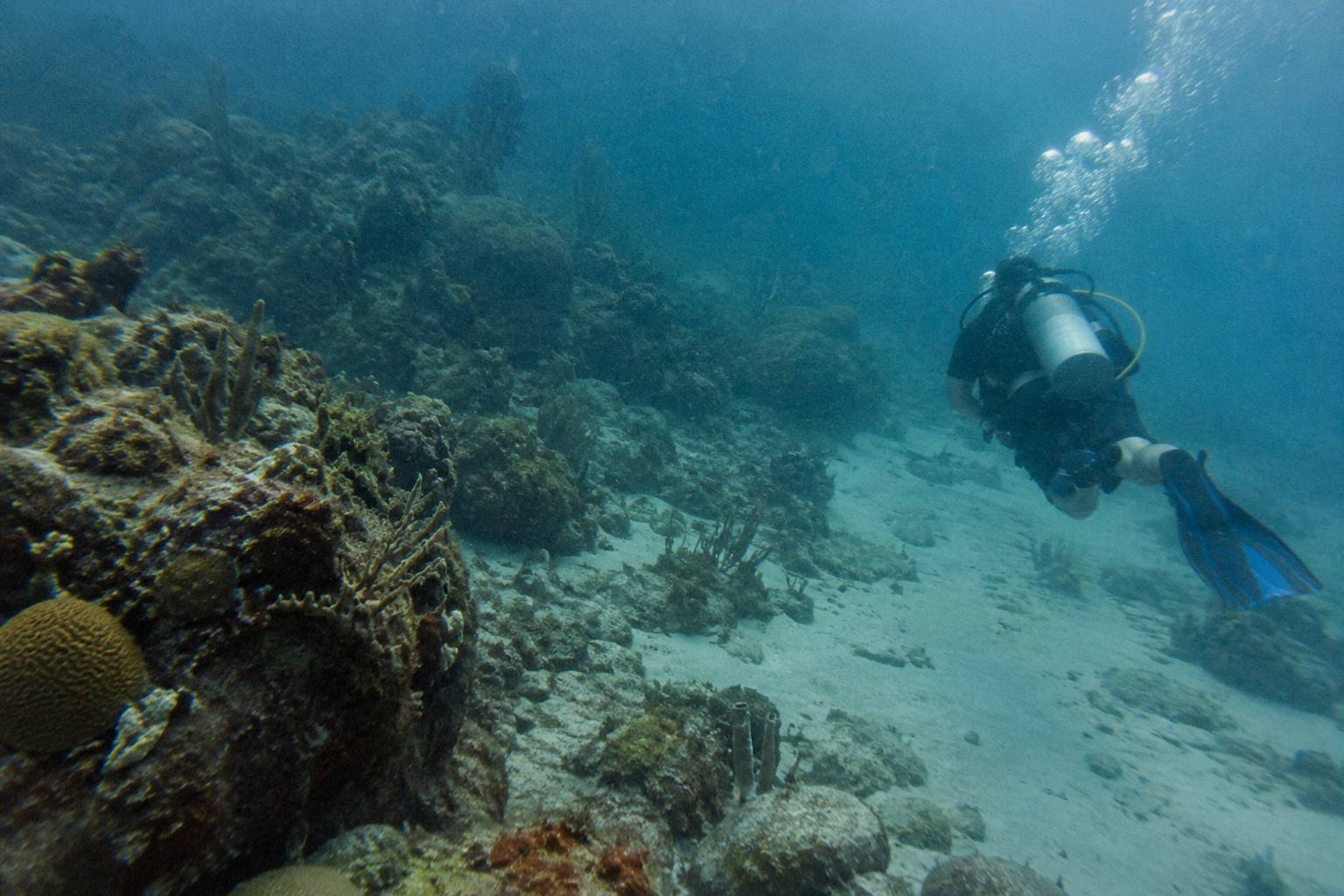
SNUBA, as the operator Sealife Paradise describes it on its own tours page, is "a cross between snorkeling and scuba diving. No tank, No training." You breathe through a regulator, the mouthpiece familiar from scuba, but your air comes down a hose from a raft floating on the surface rather than from cylinders on your back. The operator also notes no certification is needed and the minimum age is 8. For a nervous first timer, the practical differences are the entry barrier: nothing to study, no age 12 gate, no 5 hour commitment.
Beginner scuba, on the other side, is a structured product. The tours on this site for the St Lucia Beginner Scuba Diving Tour name an instructor for training before the dive, a 1 tank dive, tanks and weights, marine fees, lunch, and drinks, all across a 5 hour window from Marigot Bay with hotel or port pickup from northern to western locations. It asks for more of your day and an older minimum participant, and it gives back a genuine first scuba dive with training in front of it.
The reasonable framing is eligibility and appetite. An 8 year old cannot join the scuba line at all; a 12 year old can do either. A visitor with a free morning fits SNUBA's 1 hour 30 minute slot more easily than a 5 hour excursion. Neither framing makes one activity a verdict on the other.
How SNUBA Works Without A Tank Or Certification
SNUBA keeps your air on the surface. You swim and breathe through a standard regulator mouthpiece, connected by a hose to a floating raft that carries the air supply, so nothing sits on your back and no certification is required. The Pigeon Island session runs 1 hour 30 minutes, takes guests from age 8, and caps the group at 14 travelers.
The equipment is the whole idea. In scuba, the diver carries cylinders and a buoyancy control rig and manages both while underwater. In SNUBA, the raft does the carrying. You put the regulator in your mouth, the hose trails up to the raft above you, and you descend as far as the hose and your own comfort allow. The operator's description emphasizes "no tank, no training": there is no classroom segment, no skills checklist before you enter the water, and no certification card at the end.
What the tours on this site list as included on the SNUBA line is the use of all equipment needed to conduct the tour and water provided after the experience. Gratuities are a separate matter, as they are across the island's activity sector; the tourism authority's travel tips page notes tipping runs about 10 to 12 percent of bills and is not added automatically. Swimming ability is needed on the snorkeling lines, and SNUBA sits closer to swimming than walking, so a genuine non swimmer should read the guide to snorkeling for non swimmers before assuming the water is the right place to start.
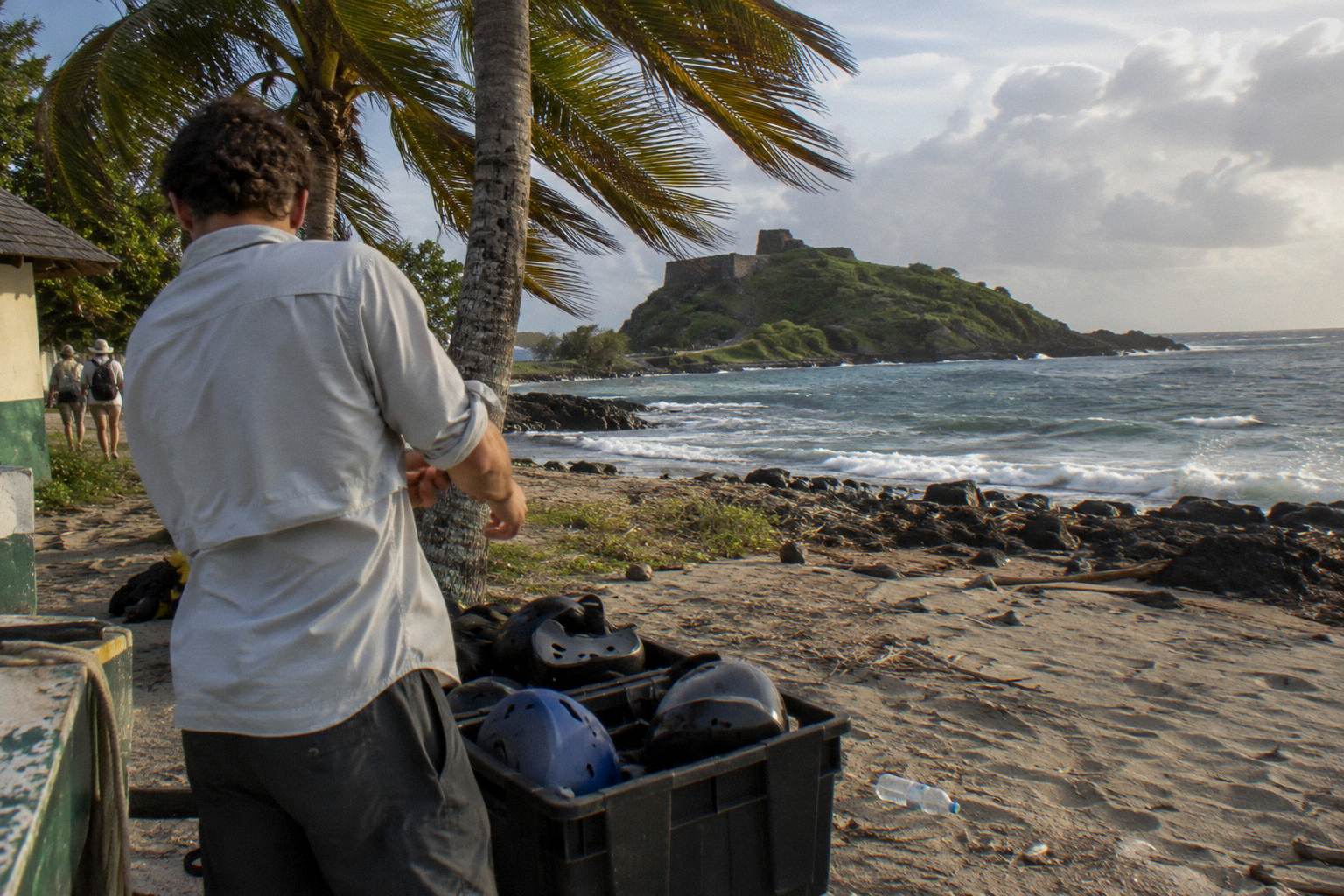
The session itself departs from Pigeon Island in Gros Islet, the historic 44 acre National Landmark on the island's northern tip that the Saint Lucia tourism office describes as home to Fort Rodney, Signal Peak, a museum and a beach with calm, clear water. The landmark is open daily 9:30 am to 5:00 pm with last entry at 4:15 pm, closed December 25, and non resident entry is US$10 for adults 13 and over and US$3 for children 5 to 12, under 5 free, in the National Trust's figures, which can change and are separate from any tour.
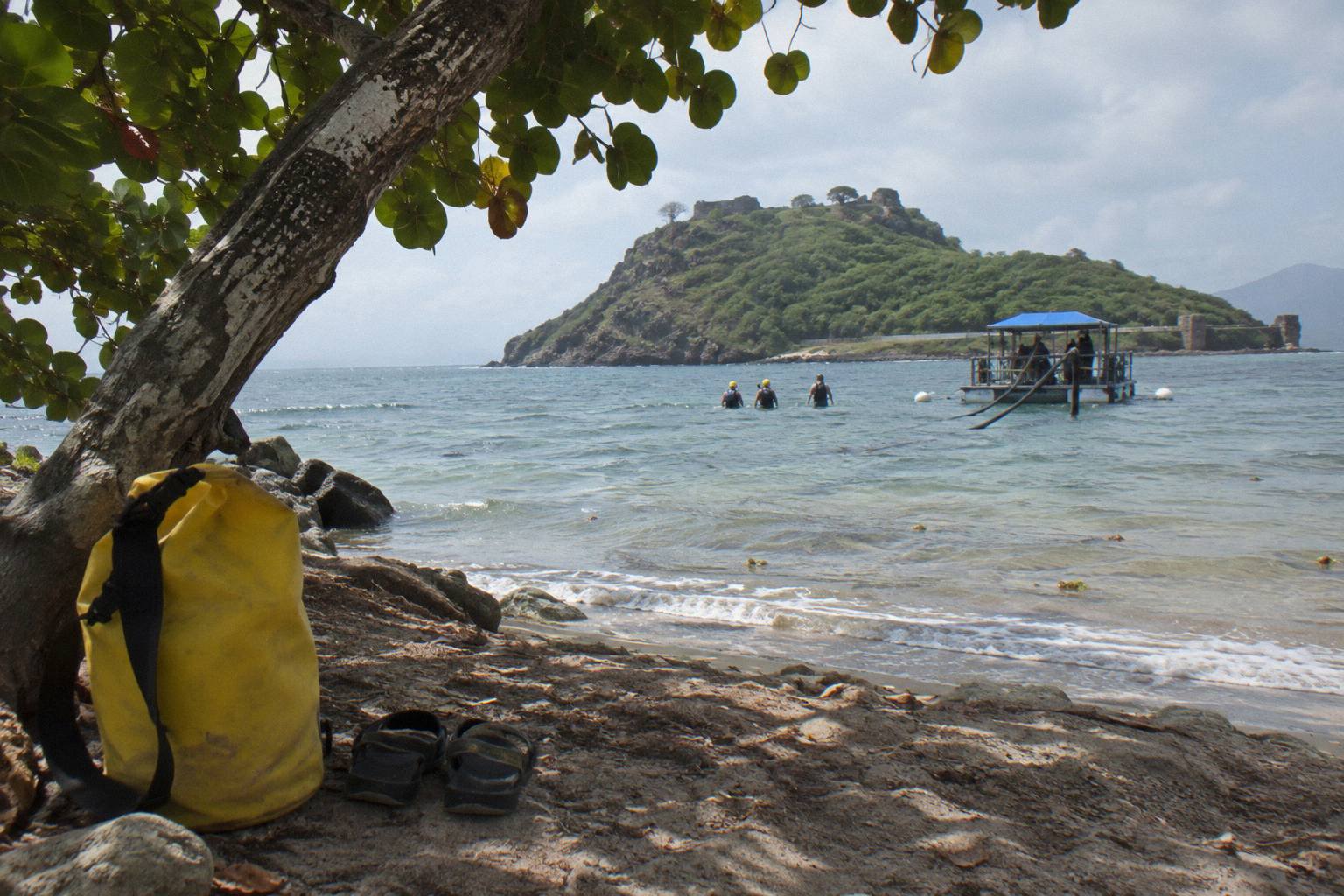
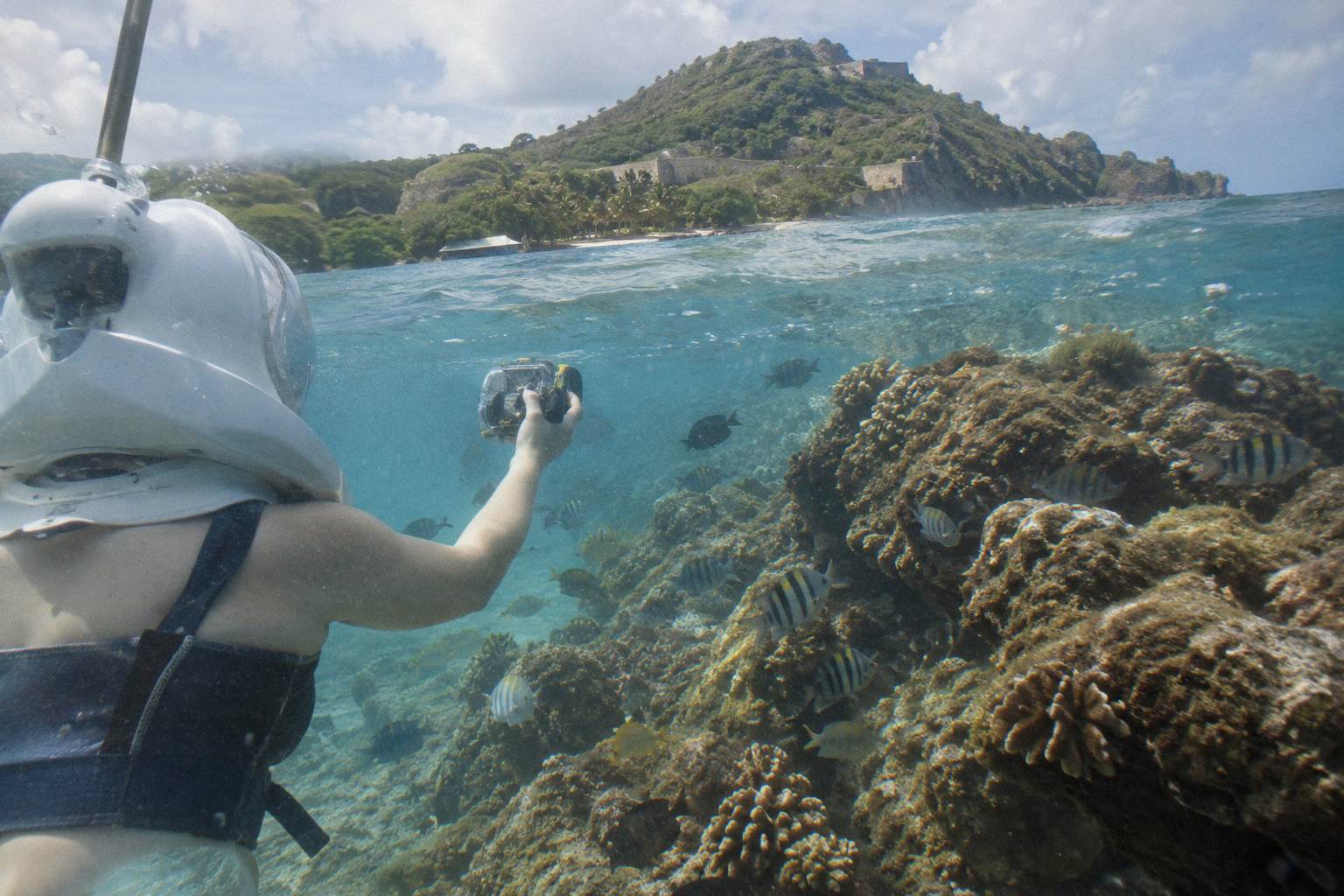
For anyone weighing the commitment, the format summary is short: show up, get briefed, put the regulator in, and let the raft carry the machinery. The manufacturer of the helmet walk system makes a comparable simplicity claim for its own product, and its SeaTrek page states no swimming skills are required for that walk, ages 8 through 96 plus, which is a different product again and one compared further down.
What Beginner Scuba Actually Involves
Beginner scuba is a 5 hour product from age 12 built around training first, diving second. The tour includes an instructor for training before the dive, a 1 tank dive, tanks and weights, marine fees, lunch, water and juices, and hotel or port pickup from northern to western island locations. It costs from US$132 per person and runs from Marigot Bay.
The structure matters more than the word "beginner" suggests. This is not a pool session with a certificate at the end; it is a real dive day compressed for a first timer. Training happens before the dive, delivered by the instructor named in the inclusions, and then the 1 tank dive follows on a real reef. The Saint Lucia tourism diving page lists Dive Fair Helen among the island's dive operators, and the beginner and certified scuba tours on this site both belong to that operator, departing from Marigot Bay on the west coast.
The west coast is the working side of the island for dive boats, and the tourism authority's beach safety guidance notes the west, Caribbean, coast generally offers calmer waters than the Atlantic side. The dive page describes the island's dive sites and the shops that run them, which is useful context for anyone deciding whether a 5 hour scuba day or a 90 minute SNUBA slot fits the trip.
Pickup is the detail that decides many itineraries. The scuba lines include hotel and port pickup and drop off from northern to western island locations only, and explicitly do not include pickup from Soufriere, Vieux Fort, Micoud or Dennery in the south. Anyone staying in the south is booking a drive they arrange themselves, and the same north only pickup rule applies to the Sealife Paradise products at Pigeon Island. Cruise passengers should check the meeting arrangements with the operator directly, as the cruise berths at Pointe Seraphine and La Place Carenage in Castries are the port infrastructure, and the sea ports authority's cruise and ferry services page describes the terminal layout for the October to April season when up to five ships can call in one day.
Cancellation is consistent across the lines discussed here: a full refund if cancelled at least 24 hours before the start. The start time itself is chosen on the booking calendar, so the day's shape is visible before payment rather than after.
SNUBA Versus Beginner Scuba Versus The Helmet Walk
Three beginner formats share the same northern waters but ask different things. SNUBA needs swimming comfort and a regulator, from age 8. Beginner scuba needs a 5 hour day and age 12, with training included. The helmet walk needs no swimming at all, from age 8, with the air supply in a helmet resting on your shoulders. Prices start at US$112, US$132 and US$118 per person respectively.
The comparison below holds the three formats side by side on the details that actually drive the choice: where the air comes from, how old you must be, how long the product runs, what training the inclusions name, and the from price. A fourth line for the beach snorkel at Pigeon Island gives the cheapest entry point to the same water.
| Format | Air source | Minimum age | Duration | Training named | From price |
|---|---|---|---|---|---|
| SNUBA Saint Lucia | Regulator on a hose from a floating raft | 8 | 1 hour 30 minutes | No training | US$112 per person |
| St Lucia Beginner Scuba Diving Tour | Tank carried, 1 tank dive | 12 | 5 hours | Instructor for training before the dive | US$132 per person |
| SeaTrek St. Lucia helmet walk | Air by hose from a surface air center into a shoulder helmet | 8 | 1 hour 30 minutes | Guided by trained and certified guides | US$118 per person |
| Snorkeling at Pigeon Island | Your own breath through a snorkel | 6 | 1 hour 30 minutes | None | US$70 per person |
All amounts are US dollars, and prices vary by date and group; the booking page shows the price for the date you choose. Each figure belongs to its own product and no other.
The helmet walk deserves its own word here because it keeps surfacing in the "which is easier" conversation. The manufacturer, Sub Sea Systems, says the helmet "works similar to an inverted glass": air stays inside as long as the helmet is not turned over, and a constant flow of cooled, dried and filtered air arrives by hose from an electrically powered air center at the surface. The helmet rests on your shoulders, your head and face stay dry, glasses can stay on, and, in the manufacturer's words, you "just walk and breath". It shares SNUBA's surface supplied air idea but swaps swimming for walking, which is why it anchors the whole explanation of how helmet diving works.
Between SNUBA and the helmet walk sits a genuine fork for families with mixed water confidence, and the dedicated comparison of SNUBA against the helmet dive works through it in detail. The short version: SNUBA suits guests who want to swim and float and see the reef from above and beside it; the walk suits guests who want their feet on the sand with a guide beside them.
Ages, Fitness And The Operator's Medical Advisory
SNUBA takes guests from 8 with a maximum of 14 travelers; beginner scuba takes guests from 12 only. The operator's booking page advises that SNUBA and the helmet walk are not recommended for pregnant travelers, travelers with poor cardiovascular health or travelers with spinal injuries. For anything beyond that, ask the operator or a doctor before booking.
That advisory is printed on the operator's own booking pages for both Pigeon Island products, and it is reproduced here as the operator's wording, not as medical guidance. It does not appear in the same form on the scuba lines, which carry their own age and format requirements instead. The distinction is worth respecting in both directions: an advisory against one activity is not clearance for another, and a missing advisory is not an endorsement. More of these guides are collected on St Lucia Helmet Dive.
Age gates are the hard edges. The SNUBA line and the helmet walk line both set the minimum at 8; the beginner and certified scuba lines set it at 12; the beach snorkel at Pigeon Island sets it at 6, though swimming ability is needed there. A family with a 9 year old and a 13 year old has every option open at Pigeon Island; a family with two 10 year olds has two of them.
Fitness and comfort are softer edges, and the answer on those is a routing one. Bring the question to the operator before you pay, and bring a doctor into it where cardiovascular health, spinal injury or pregnancy is part of the picture. The guide to medical conditions and pregnancy on underwater tours covers the same ground for the helmet products.
Flying Home After Your Dive Day
DAN, the divers' medical body, advises a minimum preflight surface interval of 12 hours after a single no-decompression scuba dive, and 18 hours after multiple dives in a day or multiple days of diving. Those figures are scuba guidance and DAN's own. Whether any interval applies to SNUBA or helmet diving is not addressed in DAN's published guidance, so ask the operator.
The reason it matters here is the cruise and short stay pattern: many underwater guests in St Lucia are flying out within a day. For the beginner scuba line, the DAN numbers are directly relevant, since it is a single tank dive with training, and the 12 hour single dive figure is the one to plan around, with the 18 hour figure governing anyone who stacks dive days. Commercial cabins typically sit at 6,000 to 8,000 ft altitude, which is why the interval exists at all.
For SNUBA and the helmet walk, DAN's published text does not cover surface supplied breathing in these formats, so the only responsible move is to put the question to the operator when booking, especially on a departure day. The article on SNUBA before flying home goes deeper on that specific itinerary problem.
One scheduling note with a source: the main cruise season runs October to April, and the dry season December to April is the busiest stretch of the island year, with the rainy season June to December bringing usually brief showers and the Atlantic hurricane season running June 1 to November 30. None of that gates a booking, but it shapes how tight a fly out day feels.
What The Money And The Clock Actually Buy
SNUBA costs from US$112 per person for 90 minutes with equipment included; beginner scuba costs from US$132 per person for 5 hours with training, a tank dive, lunch, drinks and west coast pickup included; the helmet walk costs from US$118 per person for 90 minutes with private transportation included. All three cancel free up to 24 hours before start.
Reading those lines together, the scuba product is the one whose inclusions list is doing the most work: lunch, water and juices, tanks and weights, marine fees, the instructor, and hotel or port pickup from the north and west all sit inside its from price, with the named exclusions being southern pickup areas and, on the certified sibling line, equipment and wetsuit options. The SNUBA line's inclusions are leaner, equipment and water after, and its price buys the format rather than the day. The helmet walk includes private transportation from northern hotels and excludes gratuities, and photos are not among its included items.
The 10 percent per person government VAT surcharge on the boat snorkel tour compared here, payable at check in, is a reminder to read each product's own conditions rather than assuming the pattern carries over. For SNUBA, no surcharge is listed for that tour. The island's currency context helps with day of spending: the Eastern Caribbean dollar is pegged at EC$2.70 to US$1, and US dollars are widely accepted, with change often given in EC$.
Ratings, for what they are worth as signals, each come with their pool: SNUBA Saint Lucia carries 4.7 from 166 reviews, the beginner scuba line 4.7 from 57, and the helmet walk 4.8 from 231. A rating is a record of other people's days, not a promise of yours, and none of these numbers is a reason to skip reading the eligibility rules above.
Check the live price on the SNUBA tour page for your date, since amounts move with season and group.
What Trips People Up Before You Book
The recurring mistakes are assuming pickup island wide, booking scuba for an under 12, ignoring the 24 hour cancellation edge, and picking a format by price instead of by water comfort. Pickup on the northern products is northern hotels only; southern pickup is excluded on the scuba lines by name; ages are hard gates; and every product here cancels free only up to 24 hours before start.
Pickup is the first one. The Sealife Paradise products at Pigeon Island include pickup from hotels in the north of the island only, and the Dive Fair Helen scuba and boat snorkel lines include hotel and port pickup from northern to western locations only, with the tours on this site naming the excluded southern areas: Soufriere, Vieux Fort, Micoud and Dennery. A guest staying in Soufriere booking a northern product is quietly booking a self drive of their own arrangement.
Age is the second. The gap between 8 and 12 splits families, and it splits them silently if nobody reads the fine print. The SNUBA and helmet lines sit at 8, the scuba lines at 12, the beach snorkel at 6.
The third is the clock around the dive. Cruise passengers especially should check the timing question with the operator directly, since tour start, pickup and return times are set on the booking calendar rather than in any brochure, and the DAN surface interval belongs in the plan for the scuba line on a fly out day.
The fourth is format mismatch. SNUBA needs swimming comfort; the helmet walk does not, in the manufacturer's own "can't swim? no worries" framing; scuba needs both the age and a 5 hour appetite. Choosing by a US$20 price gap between formats that ask completely different things of your body is the classic way to book the wrong morning. The wider format comparison guide works through that fit question at length.
Practical Details Worth Knowing Before You Choose
SNUBA runs from Pigeon Island in Gros Islet, 1 hour 30 minutes, ages 8 and up, maximum 14 travelers, from US$112 per person, with free cancellation up to 24 hours before. Beginner scuba runs from Marigot Bay, 5 hours, ages 12 and up, from US$132 per person, lunch and training included, west coast pickup only. Both are shared format products.
Pigeon Island itself is worth the early ferry of decision energy. It is a 44 acre National Landmark, designated a National Park in 1979 and a National Landmark in 1992, joined to the mainland by a causeway built in the early 1970s, with Fort Rodney, Signal Peak, Two-Gun Battery, military ruins and a museum alongside the beach. The tourism office places it about 1 hour 40 minutes from Hewanorra International Airport, and Gros Islet about 1 hour 30 minutes from the same airport, which frames the drive for anyone arriving from the south and staying north.
Sea conditions favor the morning, in the tourism authority's guidance: sea temperatures hold between 26 and 29 C, that is 79 to 84 F, all year, and morning offers the calmest water and clearest conditions. The west coast generally runs calmer than the east. Beach safety guidance adds the standing rules: many beaches have no lifeguards, never snorkel alone, mind boat traffic, use reef safe sunscreen, and never touch coral or marine life.
The helmet walk adds one more planning wrinkle that belongs to its own format: the manufacturer describes guides as trained and certified on every tour, and the product includes private transportation from northern hotels, while photos are not among the included items, so picture plans should be raised with the operator before the day. Deeper planning for the whole family sits in the guide to age limits and kids on underwater tours.
Common Questions About SNUBA And Scuba For Beginners
Is SNUBA Safer Than Scuba Diving For Beginners?
No comparative safety claim can be made from the documented facts. The formats differ: SNUBA is a cross between snorkeling and scuba diving with no tank, no training and air from a floating raft, from age 8; beginner scuba is a 5 hour product from age 12 with instructor training before a 1 tank dive. Choose by format, age and time, and raise health questions with the operator or a doctor.
Do I Need A Certification To Try SNUBA In St Lucia?
No. The operator describes SNUBA as needing no tank, no training and no certification, with air delivered through a regulator connected to a floating raft. The minimum age is 8 and the group maximum is 14 travelers, with the use of all needed equipment named as included.
How Old Do You Have To Be For Beginner Scuba?
Twelve. The St Lucia Beginner Scuba Diving Tour sets the minimum age at 12 and runs 5 hours, including an instructor for training before the dive, a 1 tank dive, tanks and weights, lunch, drinks and pickup from northern to western island locations. Southern pickup areas are excluded by name.
Can I Do SNUBA If I Cannot Swim?
SNUBA sits closer to swimming than walking, since you move through the water with a regulator. If swimming ability is the barrier, the helmet walk format is the one the manufacturer describes as requiring no swimming skills, from age 8, with the helmet resting on your shoulders and your head staying dry.
Can I Fly Home On The Same Day As A Beginner Scuba Dive?
DAN, the divers' medical body, advises a minimum preflight surface interval of 12 hours after a single no-decompression dive and 18 hours after multiple dives or multiple days. Those are DAN's scuba figures. For SNUBA and helmet diving, DAN's published guidance does not address an interval, so ask the operator before booking a same day flight.
What Does SNUBA Cost Compared With Beginner Scuba?
SNUBA Saint Lucia costs from US$112 per person for 1 hour 30 minutes; the beginner scuba tour costs from US$132 per person for 5 hours with lunch, training and west coast pickup included; the helmet walk costs from US$118 per person. Amounts are US dollars, vary by date and group, and each product's booking page shows the price for your date.