Snorkeling At Pigeon Island National Park: What To Expect
Pigeon Island Beach sits inside a 44-acre National Landmark in Gros Islet, and the Saint Lucia Tourism Authority describes its waters as calm, sheltered and perfect for beginner snorkelers. Here is what the beach, the park and the bookable snorkel options actually involve.
Short answer
Snorkeling at Pigeon Island runs from the beach inside the National Landmark at Gros Islet. A shared beach snorkel runs 1 hour 30 minutes from US$70 per person with equipment and bottled water included, minimum age 6, and swimming ability is needed. The Landmark is open 9:30 am to 5:00 pm, and non-resident entry is US$10 for adults, US$3 for children 5 to 12.
Snorkeling at Pigeon Island is one entry point into the wider range of St Lucia snorkeling tours and boat trips, and the focus here stays with the Pigeon Island options: the beach session, the neighboring SNUBA and helmet walk that depart from the same stretch of coast, and the landmark you walk through to reach the water.
| Fact | Detail |
|---|---|
| Location | Pigeon Island Beach, Gros Islet, inside Pigeon Island National Landmark |
| Beach character | Calm, sheltered water the Tourism Authority calls perfect for beginner snorkelers |
| Shared beach snorkel | 1 hour 30 minutes, from US$70 per person, minimum age 6 |
| SNUBA at the same site | 1 hour 30 minutes, from US$112 per person, minimum age 8, group maximum 14 |
| Helmet walk at the same site | 1 hour 30 minutes, from US$118 per person, minimum age 8, no swimming needed |
| Landmark hours | 9:30 am to 5:00 pm daily, last entry 4:15 pm, closed December 25 |
| Non-resident entry | US$10 adult, US$3 child 5 to 12, under 5 free, National Trust figures, fees can change |
| Sea temperature | 26 to 29 C (79 to 84 F) all year |
What Is Snorkeling At Pigeon Island Actually Like?
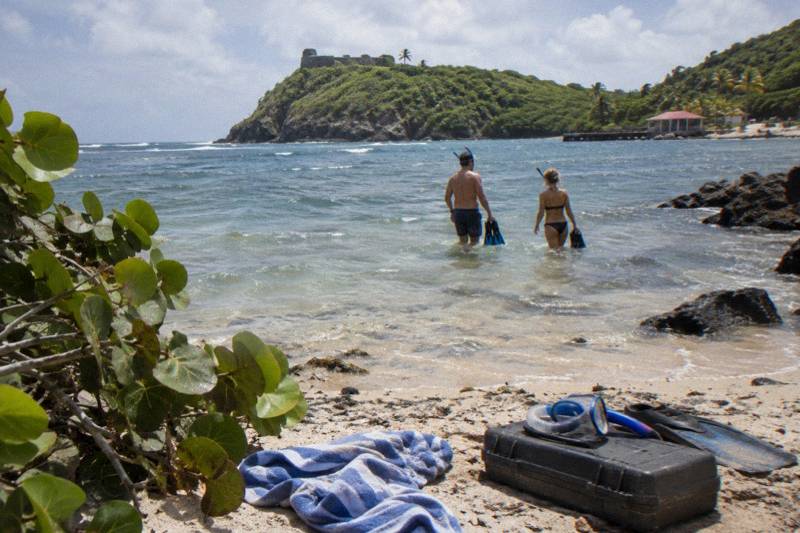
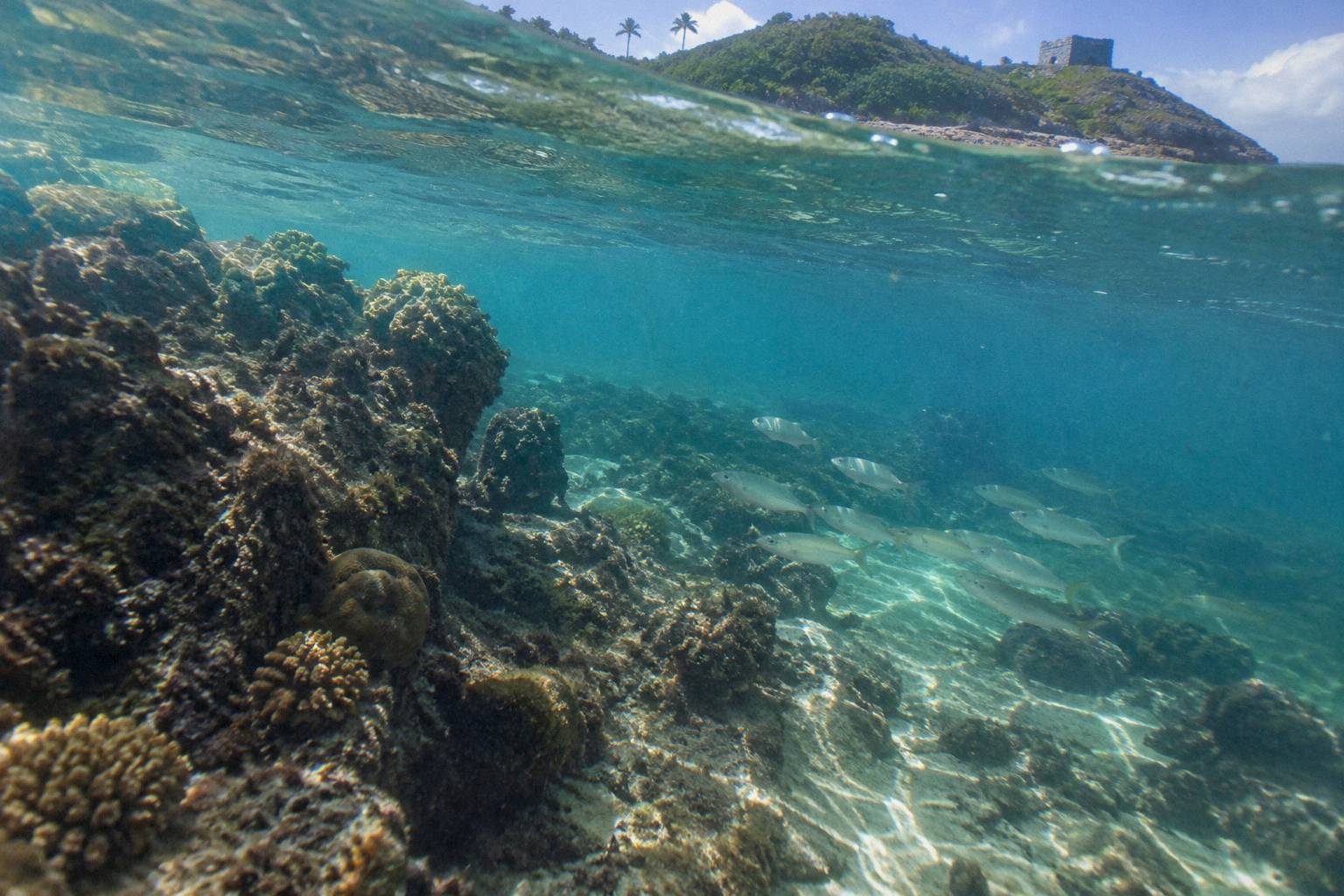
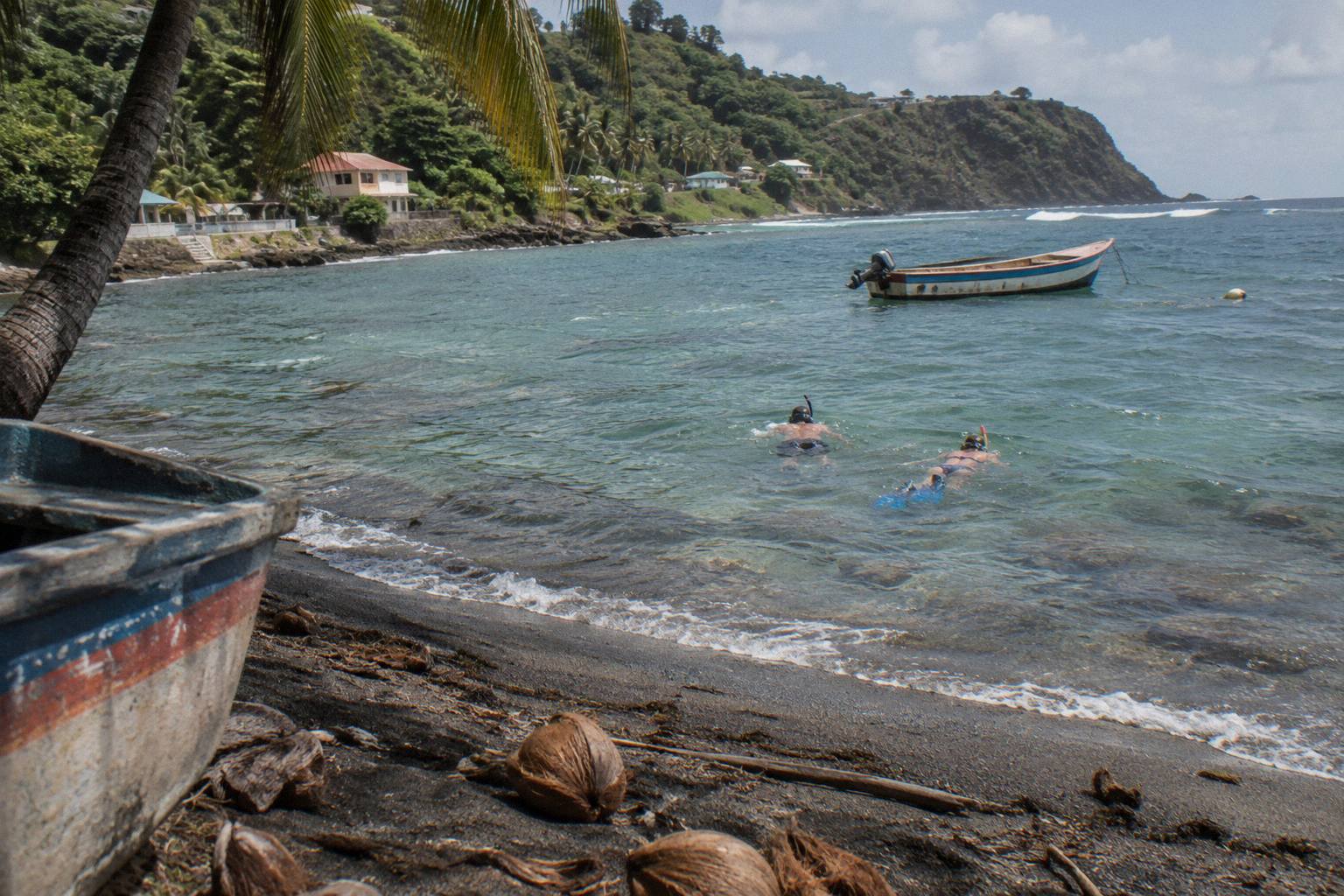
The beach sits inside a 44-acre National Landmark joined to the mainland by a causeway, and the water in the bay is the calm, sheltered kind that beginners do well in. The Saint Lucia Tourism Authority describes Pigeon Island Beach as having calm, sheltered waters perfect for beginner snorkelers, with a rocky coastline around it that attracts a variety of fish and marine life. It is a walk-in beach session, not a boat ride out to a reef.
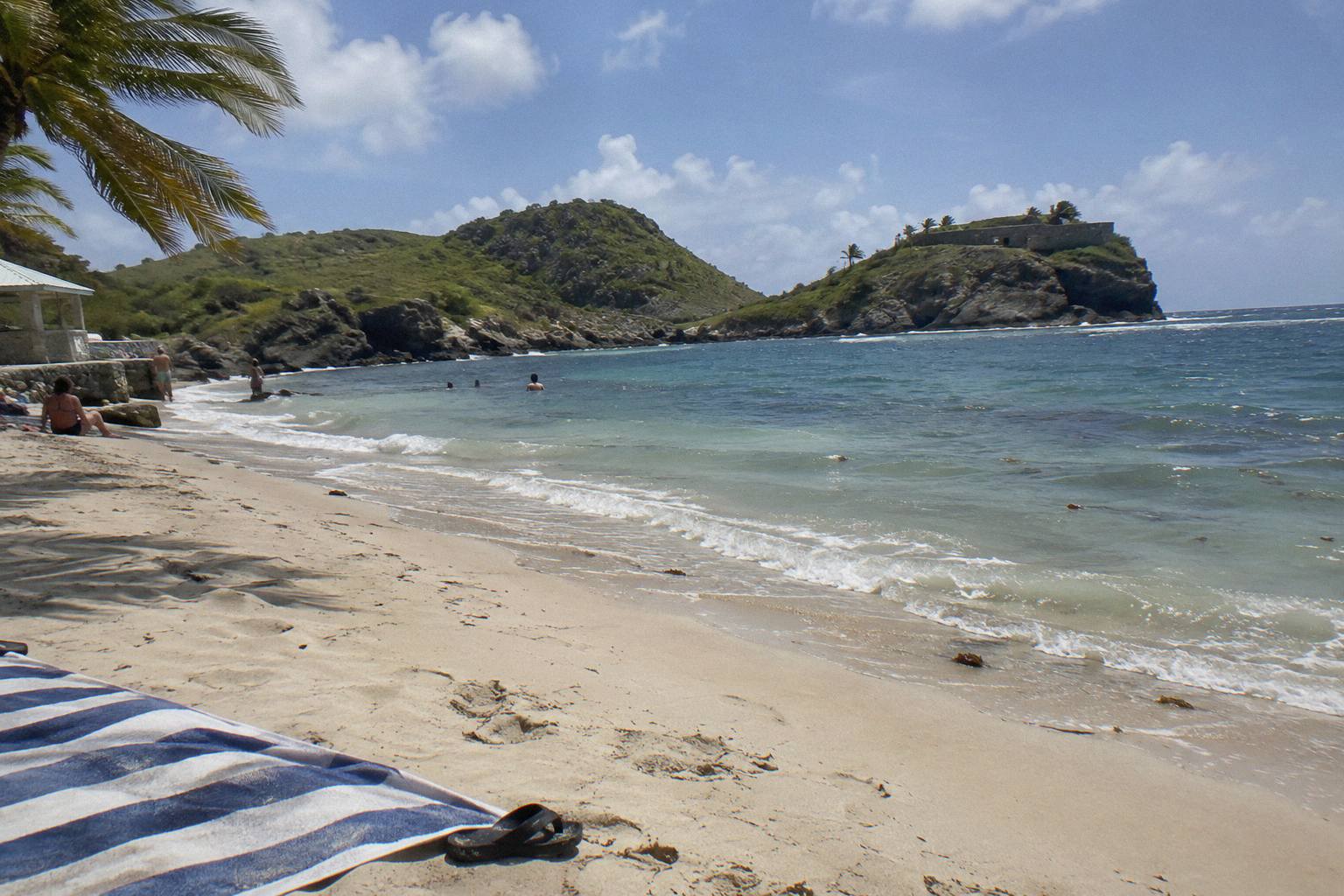
That Tourism Authority description matters more here than it would on a windward beach, because Pigeon Island sits on the northwest corner of St Lucia where the Caribbean Sea side of the island generally offers the calmer water. The Authority's beach guidance says the west coast is the gentler one, and Pigeon Island Beach is about as far northwest as you can get. The same rocky coastline the Authority mentions is what draws fish close to shore: structure in the water gives small marine life somewhere to hold, and the fish follow.
The shape of the visit is simple. You come in through the Landmark entrance, walk the ground, and the beach is right there. The operator that runs the beach snorkel, Sealife Paradise, sits on Pigeon Island Beach itself, and the shared session line gives the format plainly: 1 hour 30 minutes total, from the operator's beach, with bottled water and the use of snorkelling equipment named as included. Minimum age is 6, and swimming ability is needed. Pickup is not included on that line, so you make your own way in.
What the beach is not is a private cove. It is the swimming beach for a National Landmark, so on a busy day there will be other visitors in and around the water, and the Authority's safety guidance for St Lucia beaches applies: many beaches have no lifeguards, never snorkel alone, and mind boat traffic. There is more on that in the safety section below, and it is worth reading before you go rather than after.
If you want a fuller picture of where this beach sits among the island's other options, the beginner-friendly snorkeling spots around St Lucia guide covers the wider coast. For Pigeon Island itself, what you are choosing is convenience and calm water over boat travel, and that trade works best for families with young children and for anyone who wants land close by.
Which Snorkel Option Should You Book At Pigeon Island?
Book the beach snorkel at the Landmark if you want to stay on Pigeon Island itself, since it runs from US$70 per person for 1 hour 30 minutes. Book the boat trip from Marigot Bay if you would rather travel the coast, as it runs from US$83 per person for 5 hours, plus a 10% government VAT at check-in.
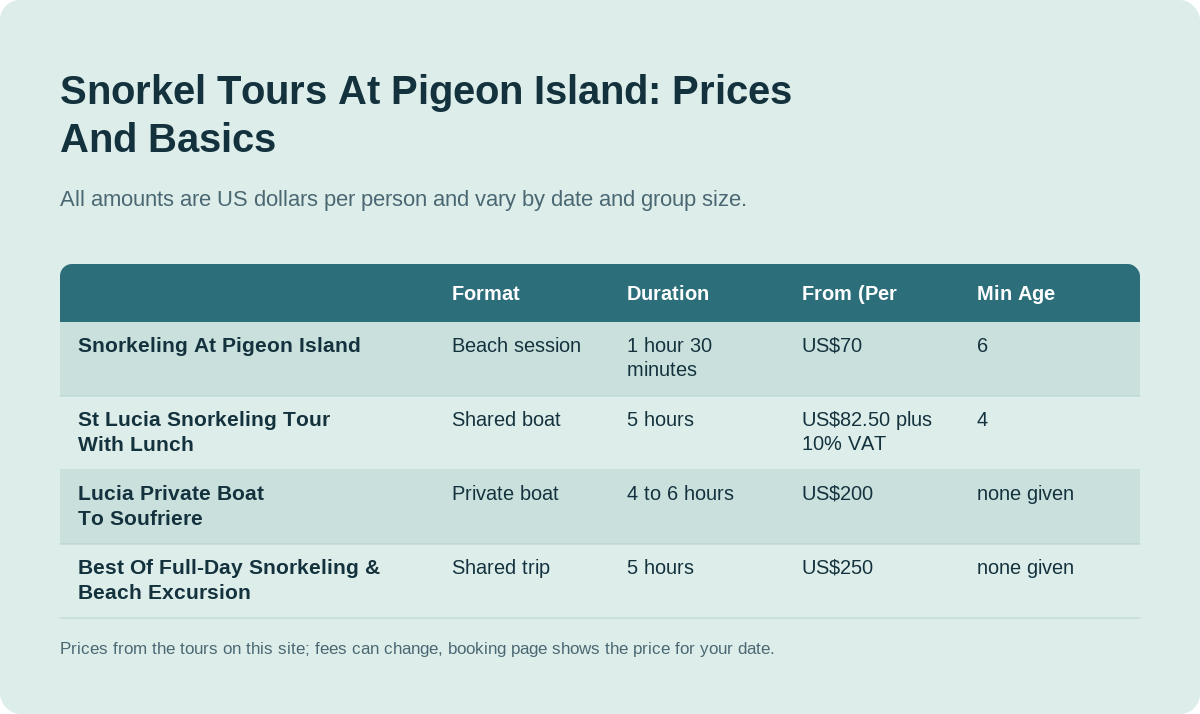
The beach session is the one that actually happens at Pigeon Island, so if the Landmark is the reason you are here, that is the line to book: "Snorkeling at Pigeon Island", 1 hour 30 minutes, from US$70 per person, equipment and bottled water included, minimum age 6, swimming ability needed, free cancellation up to 24 hours before the start. Its rating is 4.4 from 16 reviews, a small pool, so treat the number as a light signal rather than a verdict. Pickup is not included, which is consistent with the site: you are already at the beach.
The boat-based alternatives put you on the water for longer and carry a lunch. "St Lucia Snorkeling Tour with Lunch" runs 5 hours from US$83 per person from the Marigot Bay ferry dock, 4.5 from 126 reviews, minimum age 4, with hotel pickup from northern to western island locations, lunch, juices and equipment included, and a 10% per person government VAT payable at check-in on top of the listed price. The private option, "Lucia Private Boat to Soufriere Snorkeling Sightseeing Beach", runs 4 to 6 hours from US$200 per person, 4.9 from 184 reviews, with beverages, gear and dock pickup included, but lunch from about US$15 per person and a fuel surcharge excluded.
| Product | Format | Duration | From (US$ per person) | Min age | Swimming needed |
|---|---|---|---|---|---|
| Snorkeling at Pigeon Island | Beach session at the Landmark | 1 hour 30 minutes | US$70 | 6 | Yes |
| St Lucia Snorkeling Tour with Lunch | Shared boat from Marigot Bay | 5 hours | US$83 plus 10% VAT at check-in | 4 | Yes |
| Lucia Private Boat to Soufriere | Private boat from Castries, Marigot Bay or Rodney Bay | 4 to 6 hours | US$200 | none given | Yes |
| Best Of Full-Day Snorkeling & Beach Excursion | Shared trip with lunch and drinks | 5 hours | US$250 | none given | Yes |
The fourth line in that table, "Best Of Full-Day Snorkeling & Beach Excursion with lunch & drinks", is the long day out: 5 hours, from US$250 per person, 5.0 from 69 reviews, with a local chicken or fish lunch, beer, rum punch and non-alcoholic drinks, a guide who stays in the water with you, and pickup included, though all fees and taxes are excluded. It suits a visitor who wants the whole day spoken for.
All amounts above are US dollars, per person, and prices vary by date and group; the booking page shows the price for your date. Cancellation is free up to 24 hours before the start on every line in the table, which makes an early booking low-risk.
Before committing, check dates and live pricing for the Pigeon Island beach snorkel, since the calendar fills on cruise days. Those days are worth a thought: the main cruise season runs October to April, and the port authority notes Castries can see up to five ships in one day, which puts more people on the north's beaches. A morning slot is the calmer bet anyway, because the Tourism Authority says morning offers the calmest water and clearest visibility.
Snorkeling, SNUBA Or A Helmet Walk: Which Suits Your Group?
If anyone in your party cannot swim confidently, the beach snorkel is the wrong pick, because its tour description requires swimming ability. The SNUBA session and the helmet walk both list minimum age 8 with no swimming requirement, and both run an hour and a half from the same Pigeon Island departure point. SNUBA costs from US$112 per person, the helmet walk from US$118, so the money is close and the format decides it.
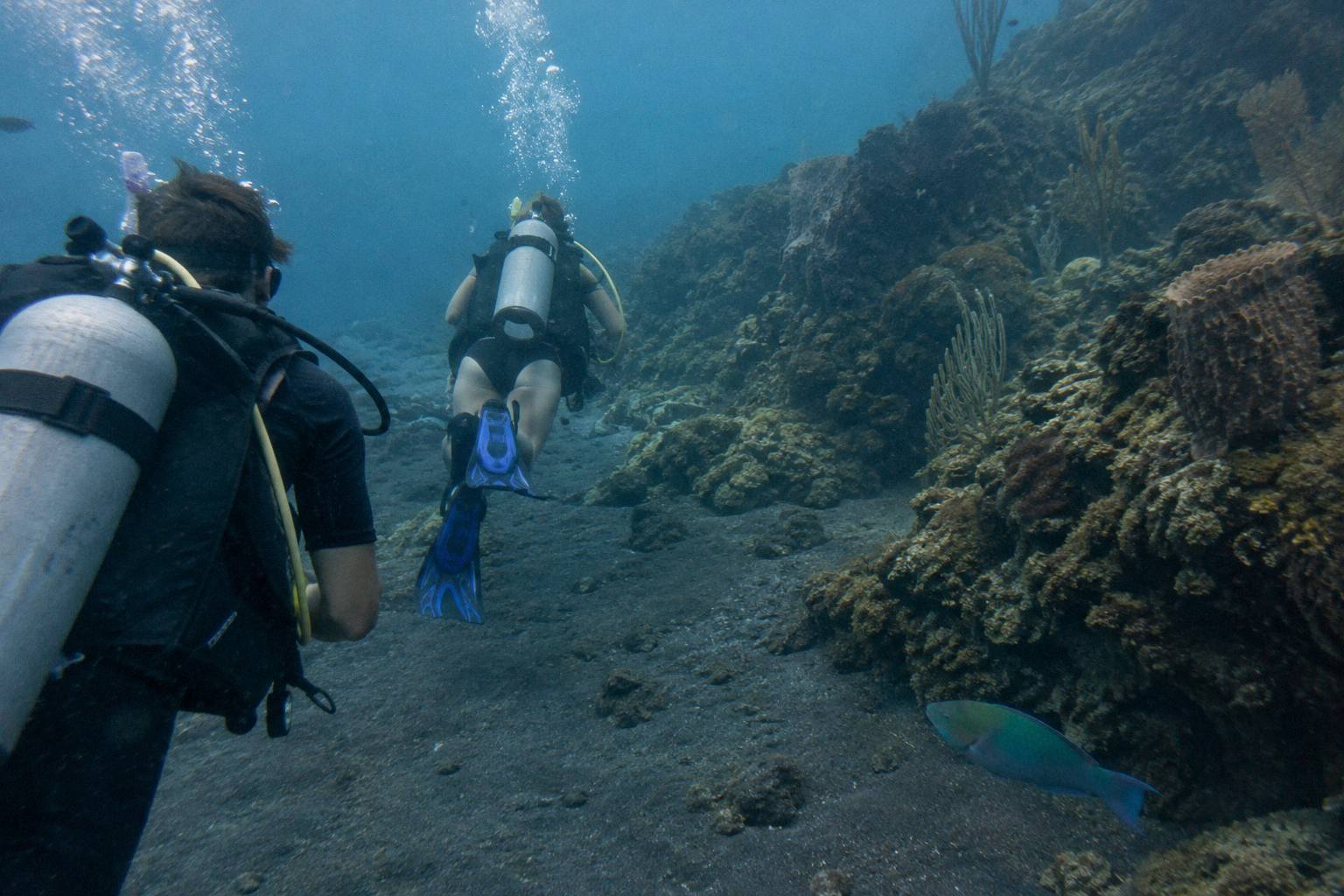
SNUBA, as the operator Sealife Paradise describes it, is a cross between snorkeling and scuba diving: no tank on your back, no certification, and you breathe through a regulator connected to a floating raft on the surface. The tour listed as "SNUBA Saint Lucia" runs 1 hour 30 minutes, from US$112 per person, minimum age 8, a group maximum of 14, use of all equipment and water after the session included, pickup included from hotels in the north of the island only, and free cancellation up to 24 hours before. It carries a 4.7 rating from 166 reviews. The operator's own advisory on its booking page says the session is not recommended for pregnant travelers, travelers with poor cardiovascular health or travelers with spinal injuries; ask the operator or a doctor if any of those apply.
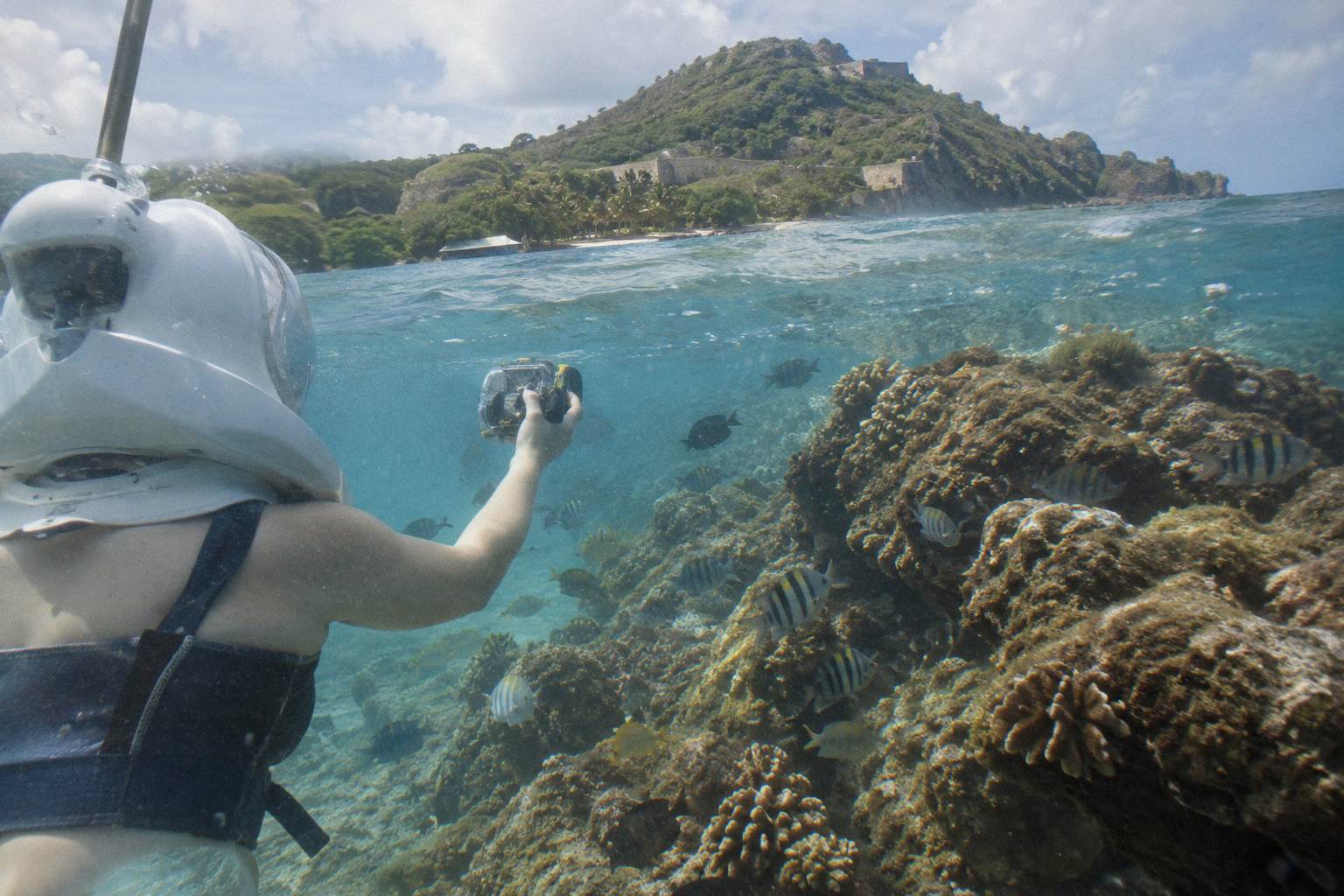
The helmet walk is the other non-swimmer route. "SeaTrek St. Lucia" runs 1 hour 30 minutes, from US$118 per person, minimum age 8, 4.8 from 231 reviews, with private transportation included and gratuities excluded. The manufacturer of the SeaTrek helmet, Sub Sea Systems, says the helmet works similar to an inverted glass: air stays inside as long as the helmet is not turned over, and a constant flow of cooled, dried and filtered air comes by hose from a surface air center, keeping a fresh turnover inside. The helmet rests on your shoulders, head and face stay dry, prescription glasses can stay on, and the manufacturer's phrase for the whole experience is "just walk and breath". Guides are trained and certified. That session breaks down as about 10 minutes of briefing and about 25 minutes underwater.
So the practical split is three-way. Confident swimmers who want simplicity and the lowest price take the beach snorkel. Swimmers who want to go deeper without a course take SNUBA. Non-swimmers, nervous guests and anyone who wants to keep glasses on take the helmet walk. A mixed family can genuinely split across two of these on the same morning at the same place, which is part of why this corner of the island works for groups that do not all want the same thing.
For the deeper comparison of all four underwater formats, including beginner scuba, see how SeaTrek, SNUBA, scuba and snorkeling compare.
What Else Is In The National Landmark Above The Beach?
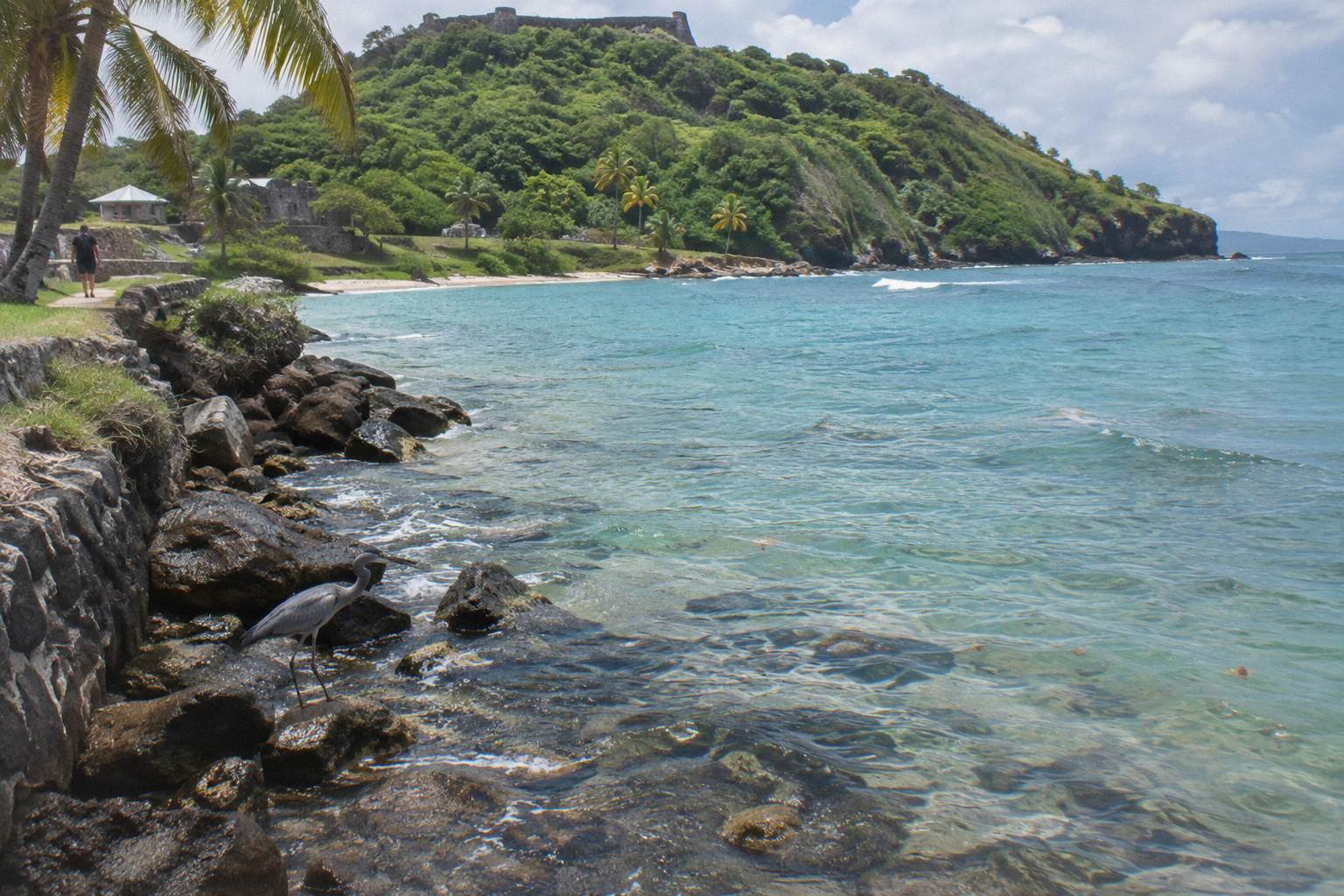
Pigeon Island is a 44-acre historic park, not just a beach, and a visit can fill half a day before you even get wet. It holds the 18th-century Fort Rodney, the Signal Peak hike, a National Trust museum, the Two-Gun Battery and military ruins, all joined to the mainland by a causeway built in the early 1970s. The Landmark opens 9:30 am to 5:00 pm daily, last entry 4:15 pm, closed December 25.
The history is real and compact. The island became a National Park in 1979 and a National Landmark in 1992, and before the causeway went in during the early 1970s it was a true island. Fort Rodney is an 18th-century British fort with views over Rodney Bay, and Signal Peak is the highest point, reached by a short hike that the Saint Lucia tourism Pigeon Island page lists among the site's draws alongside the museum and the beach. Two-Gun Battery and the scattered military ruins round it out.
| Landmark feature | What it is |
|---|---|
| Fort Rodney | 18th-century British fort with views over Rodney Bay |
| Signal Peak | Highest point of the island, short hike |
| National Trust museum | Exhibits on the island's history |
| Two-Gun Battery | Historic gun emplacement |
| Military ruins | Scattered fortifications across the 44 acres |
| Pigeon Island Beach | Calm, clear water the Tourism Authority calls ideal for swimming |
| Causeway | Road link to the mainland, built in the early 1970s |
For a snorkeling visitor this matters in two ways. First, the landmark gives your group a land activity for whoever is not in the water, which is handy if you are travelling with people who would rather climb Signal Peak than swim. Second, the hours set your window: the site opens 9:30 am and stops admitting at 4:15 pm, and the National Trust notes a September closure for maintenance is possible. Those are the Trust's hours for the park, not a tour time; your tour time comes from the booking calendar.
Entry fees are separate from any tour. Non-resident entry is US$10 for adults and US$3 for children aged 5 to 12, with under 5s free; those are the National Trust's figures and fees can change. How entry relates to any given tour is something to confirm when you book, so ask the operator.
Getting To Pigeon Island And What It Costs To Arrive
Pigeon Island sits at Gros Islet in the island's north, about 1 hour 40 minutes by road from Hewanorra International Airport according to the tourism authority, and the beach snorkel line does not include pickup, so you arrange your own transport. The SNUBA and helmet walk lines do include pickup, but only from hotels in the north of the island. If you are staying in the south, plan on making your own way to Gros Islet.
The airport distance is the one sourced figure for travel time to this coast, from the tourism authority's own page on Pigeon Island, and it explains most of the logistics decisions you will make. Visitors staying around Rodney Bay, Gros Islet or Cap Estate are minutes from the Landmark; visitors flying into Hewanorra and heading straight north should budget most of two hours for the transfer. The tourism authority's Gros Islet page puts Hewanorra to Gros Islet at about 1 hour 30 minutes, and names Rodney Bay, Pigeon Island and Reduit Beach as the area's highlights. Everything else covered here is indexed on St Lucia Helmet Dive.
For cruise passengers the calculus is different. The Castries cruise port has dedicated berths at Pointe Seraphine and duty-free shopping at La Place Carenage, with water taxis linking them, per the Saint Lucia Air and Sea Ports Authority cruise services page. Whether a cruise-day visit to Pigeon Island fits your all-aboard time is a question of your ship's schedule, and the authority notes the main cruise season runs October to April with up to five ships in Castries on one day. The getting-there detail, including cruise-day planning, is covered fully in getting to Pigeon Island from Rodney Bay, Castries and the cruise port.
Money on the ground is straightforward. The Eastern Caribbean dollar is pegged at EC$2.70 to US$1, US dollars are widely accepted, and change often comes in EC$. The tourism authority's travel tips note a 10% VAT and a 10% service charge on hotel and restaurant bills, with tipping around 10 to 12% not added automatically. None of that touches your tour price, which is quoted in US dollars.
Sea Temperature, Seasons And The Best Time To Snorkel Here
Sea temperature around St Lucia stays between 26 and 29 C (79 to 84 F) all year, so cold water is never the reason to skip a snorkel at Pigeon Island. The variables that matter are rain and crowds: the dry season from December to April is the busiest, the rainy season runs June to December with usually brief showers, and hurricane season spans June 1 to November 30. Mornings are the calmest and clearest window on any given day.
Those sea figures come from the Saint Lucia tourism snorkeling beaches page, which is also the source for the morning advice: earlier is flatter and clearer. Since the beach snorkel runs just 1 hour 30 minutes, a morning slot plus the rest of the day at the Landmark is a natural shape for the visit, and the park's 9:30 am opening lines up with that.
| Season | Months | What it means for a snorkel visit |
|---|---|---|
| Dry season | December to April | Driest and busiest stretch; most cruise traffic October to April |
| Rainy season | June to December | Showers usually brief; water stays warm |
| Hurricane season | June 1 to November 30 | A trip can be cancelled or rescheduled under the tourism authority's Holiday Guarantee |
| Sea temperature | All year | 26 to 29 C (79 to 84 F); calmest, clearest water in the morning |
Seasonally, the tourism authority describes December to April as the driest and busiest stretch, with the rainy season from June to December bringing showers that usually pass quickly. The US National Hurricane Center's climatology page fixes the Atlantic hurricane season at June 1 to November 30, which overlaps the rainy season. The tourism authority also notes a Holiday Guarantee under which a trip can be cancelled or rescheduled in the event of a hurricane. On the tour side, every tour compared here carries free cancellation up to 24 hours before the start, so a wet-season booking is not a locked door.
None of this promises conditions on your day. Weather, season, tide and boat traffic decide what the water looks like, and no operator guarantees sightings or sea state. What the seasonal facts do tell you is that the water is warm enough to snorkel in any month, and that the trade-off in peak season is crowds against dry skies. If your dates are fixed by a cruise or a wedding, go when you are there and pick a morning.
One pairing worth knowing: if part of your group wants more than a surface swim on the same morning, the SNUBA session runs the same hour and a half from the same end of the island, so the two activities can share a day and a taxi. See dates on the booking page for both before you plan the hour-by-hour schedule.
Beach Safety And Reef Rules At Pigeon Island
The Tourism Authority's beach safety guidance is the rulebook here: many beaches in St Lucia have no lifeguards, never snorkel alone, and mind boat traffic, and the west coast generally offers the calmer water. For the reef itself, the Authority says use reef-safe sunscreen and never touch coral or marine life. For the helmet walk and SNUBA, the manufacturer says guides are trained and certified on every tour.
The no-lifeguard point deserves emphasis because Pigeon Island Beach reads as a managed place: it has an operator on it, a national landmark around it and calm water in front of it. None of that equals a patrol. Snorkel with a buddy, keep an eye on boats coming and going, and treat the rocky stretches the Authority says attract marine life as something to look at, not hang on to.
The tours on this site add their own boundaries. The beach snorkel requires swimming ability and sets minimum age 6; SNUBA and the helmet walk set minimum age 8. The operator's booking page advises against SNUBA and the helmet walk for pregnant travelers, travelers with poor cardiovascular health or travelers with spinal injuries, and the right response to any of those is to ask the operator or a doctor before booking rather than after. No depth, weight or height limit for the helmet session is published, so ask the operator directly about any such concern.
Reef etiquette doubles as fish-watching advice. The Tourism Authority's snorkeling tips are short and specific: reef-safe sunscreen, and never touch coral or marine life. Ordinary sunscreen washes off and hurts the reef that holds the fish you came to see; a reef-safe formulation and a bit of distance do more for your sightings than any amount of chasing. More on what lives along this coast is in the marine life around Pigeon Island and Rodney Bay guide, including the dive site at the base of the island.
One scuba-specific note, for anyone combining activities: the Divers Alert Network guidance on flying after diving recommends a 12-hour preflight surface interval after a single no-decompression dive and 18 hours after multiple dives or multiple days. That is scuba guidance; for the helmet walk or SNUBA, ask the operator about any interval before a flight.
What Trips People Up Before You Book
The recurring mistakes are simple ones: booking the beach snorkel for a non-swimmer, assuming pickup is included when the tour line says it is not, forgetting that the Landmark has its own entry fee and hours, and budgeting only the listed price when a product carries a check-in surcharge. Each of these is avoidable in about two minutes of reading before you pay. A little care here saves the most common day-of disappointments.
The swimming assumption comes first. The beach snorkel line says swimming ability is needed, minimum age 6, and the sea is calm but it is still the sea. If that rules someone out, the answer is not to hope, it is to book the helmet walk, which requires no swimming, or SNUBA, which also carries no swimming requirement on its line. The wrong-format booking is the hardest to fix on the day because slots go.
Pickup is the second trap. The beach snorkel includes no pickup at all. The SNUBA and helmet walk lines include pickup from hotels in the north of the island only, with the exact meeting point on the booking confirmation. The Dive Fair Helen boat trips from Marigot Bay include pickup from northern to western locations but not from Soufriere, Vieux Fort, Micoud or Dennery. Match your accommodation to the line before you book, not after.
Third, the Landmark itself. It has hours, 9:30 am to 5:00 pm with last entry at 4:15 pm, a December 25 closure, and its own entry fee of US$10 for adults and US$3 for children 5 to 12 that the National Trust can change. Ask the operator how entry is handled for your session rather than assuming either way. Fourth, price add-ons: the boat snorkel with lunch carries a 10% per person government VAT payable at check-in, and the private boat line excludes a fuel surcharge and lunch from about US$15 per person. The beach, SNUBA and helmet lines at Pigeon Island carry no named surcharge, but gratuities are excluded on the helmet line. Check the live price for your date before you finalize the budget.
Worth remembering too: photos are not among the included items on the helmet walk line, so plan for that if pictures are the point of the trip, and see whether you can take photos on a helmet dive for the options. And if your day pairs a boat trip with the beach session, the lunch-included boat line from Marigot Bay covers food that the Pigeon Island lines do not.
To sum up the planning shape: book the beach snorkel for swimmers who want short and cheap, the helmet walk for non-swimmers and glasses-wearers, SNUBA for confident swimmers who want to go deeper, and the boat lines for a full-day itinerary. Check dates on the booking page for whichever you choose, since availability moves with the cruise calendar in season.
Common Questions About Pigeon Island Snorkeling
Is Pigeon Island Beach Good For Beginner Snorkelers?
Yes, by the Tourism Authority's own description: it has calm, sheltered waters perfect for beginner snorkelers, with a rocky coastline that attracts a variety of fish and marine life. Conditions on any given day still depend on weather, tide and boat traffic, and the Authority advises never snorkeling alone.
How Much Does Snorkeling At Pigeon Island Cost?
The shared beach session, Snorkeling at Pigeon Island, runs from US$70 per person for 1 hour 30 minutes, with bottled water and snorkelling equipment included. Amounts are in US dollars, prices vary by date and group, and the booking page shows the price for your date.
Do You Need To Be Able To Swim To Snorkel At Pigeon Island?
Yes. The tour listing for the beach snorkel requires swimming ability and sets a minimum age of 6. Non-swimmers have two alternatives at the same end of the island: the SNUBA session and the SeaTrek helmet walk, both minimum age 8 with no swimming requirement listed for either.
What Are The Pigeon Island National Landmark Hours And Entry Fees?
The Landmark is open daily 9:30 am to 5:00 pm, with last entry at 4:15 pm, and it is closed on December 25. Non-resident entry is US$10 for adults and US$3 for children aged 5 to 12, with under 5s free. These are National Trust figures and can change; ask the operator how entry relates to your tour.
Is Pickup Included For The Pigeon Island Snorkel Tour?
No. The beach snorkel line does not include pickup, so you make your own way to the Landmark at Gros Islet. The SNUBA and helmet walk lines from the same coast do include pickup, but only from hotels in the north of the island, with the exact meeting point given on the booking confirmation.
Can Children Do The Water Activities At Pigeon Island?
Yes, with age floors. The beach snorkel takes children from age 6, while SNUBA and the SeaTrek helmet walk both set minimum age 8. The manufacturer says the helmet suits ages 8 to 96-plus, keeps the head and face dry, and allows prescription glasses to stay on.