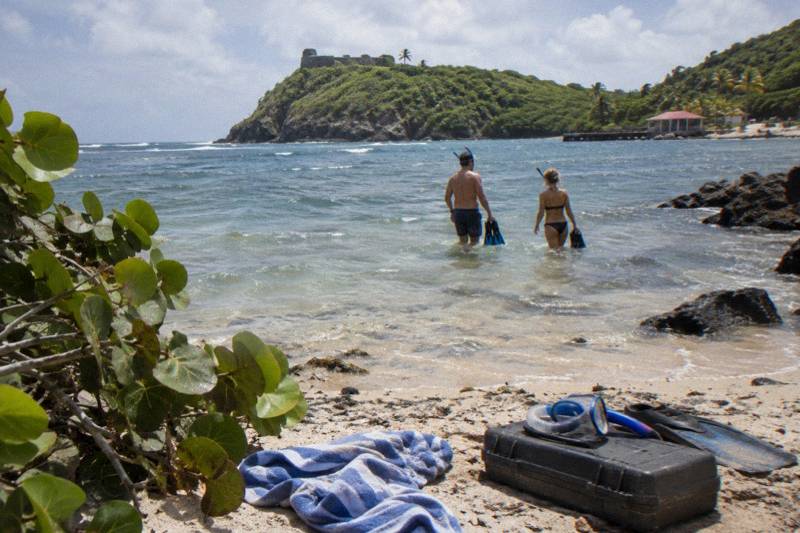
Marine Life At Pigeon Island And Rodney Bay Reefs: What You Can See
The water around Pigeon Island is the reason most people book an underwater tour in the north of St Lucia. Here is what the official sources actually say lives there, which tour format meets which part of the water column, and how to see it without harming it.
Short answer
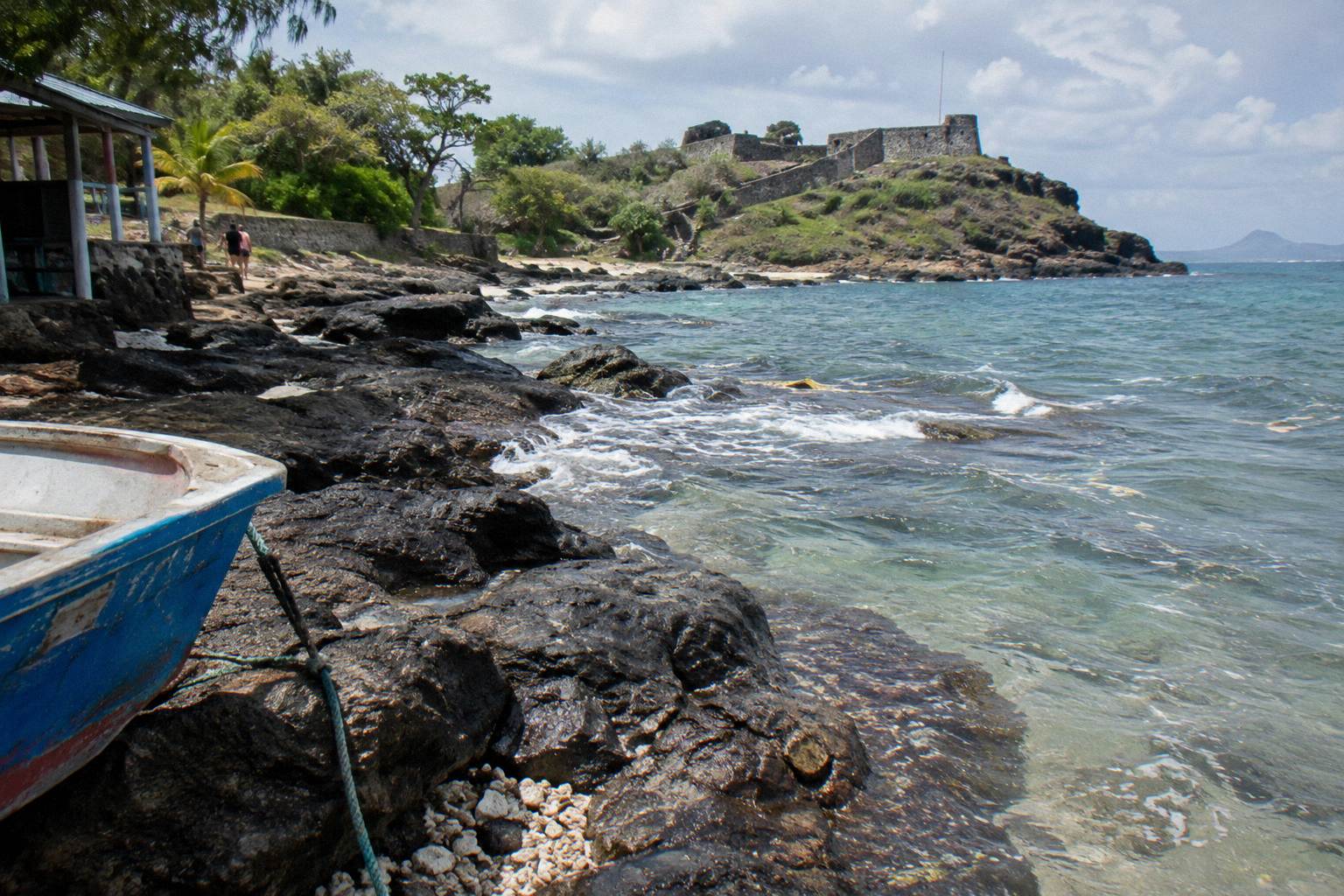
The Saint Lucia Tourism Authority names eagle rays, moray eels, lobsters and great barracuda as seen regularly at the Pigeon Island scuba site, which runs from about 15 ft over sand and coral to a maximum of 60 ft. The beach's rocky coastline attracts a variety of fish. Format, not luck, decides how you encounter it.
Marine life in the north of St Lucia is best understood through the snorkeling tours that operate around Pigeon Island, because that stretch of Gros Islet coast is where the island's beginner underwater products are based. What follows sets out what actually lives in that water, which format puts you where in the water column, and the viewing rules that keep the reef worth returning to.
| Fact | Detail |
|---|---|
| Named species at the Pigeon Island scuba site | Eagle rays, moray eels, lobsters, great barracuda (Tourism Authority) |
| Scuba site profile | Starts about 15 ft over sand and coral, maximum 60 ft (Tourism Authority) |
| The beach | Rocky coastline attracts a variety of fish and marine life (Tourism Authority) |
| Sea temperature | 26 to 29 C (79 to 84 F) all year |
| Calmest water | Mornings, per the Tourism Authority's snorkeling guidance |
| Landmark status | Pigeon Island is a 44-acre National Landmark, National Park 1979, National Landmark 1992 |
| Non-resident landmark entry | US$10 adult, US$3 child 5 to 12, under 5 free (National Trust figures, can change) |
What Marine Life Lives Around Pigeon Island?
Eagle rays, moray eels, lobsters and great barracuda are the named species the Saint Lucia Tourism Authority lists as "seen regularly" at the dive site off Pigeon Island, which descends from about 15 ft over sand and coral to a maximum of 60 ft. Around the beach itself, the Authority says only that the rocky coastline attracts a variety of fish and marine life, without naming species.
The distinction matters because a first page of search results tends to blur it. Trip reports and aggregation pages often describe "the marine life at Pigeon Island" as if every product in the water sees the same animals at the same range, and that is simply not how a 60 ft scuba site and a surface swim over a rocky shoreline compare. The barracuda and eagle rays the Authority names are associated with the deeper sand-and-coral ground that scuba divers reach; a snorkeler at the beach works the shallows along that rocky coastline, where the fish community is whatever the "variety of fish and marine life" phrase covers.
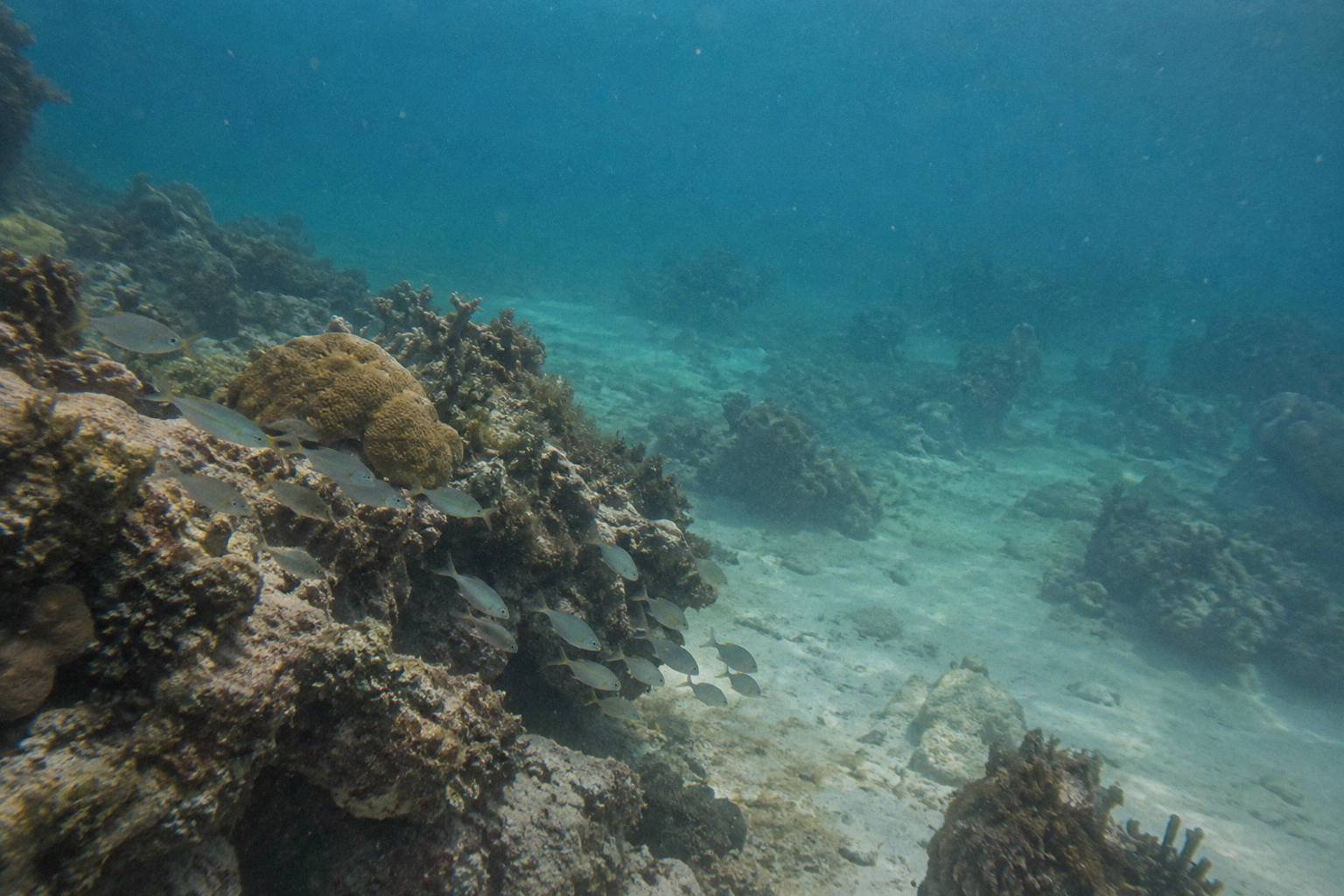
It is worth being equally disciplined in the other direction. No sighting of any animal is promised on any day, by any product. Weather, season, boat traffic and the animals themselves decide what appears, and the tours on this site carry no visibility or sighting claims. What is supported is habitat: sand and coral ground descending to 60 ft at the scuba site, rocky shallows along the beach, and sea temperatures that stay between 26 and 29 C (79 to 84 F) all year, per the Saint Lucia tourism diving page. Warm, stable water of that kind is why the same coast supports guided walking dives, raft-fed breathing systems and surface swims side by side.
For a fuller picture of what the deeper site involves and how it differs from the beginner products, readers wanting the scuba product itself can start with the beginner scuba try dive and what it involves, which runs from Marigot Bay on the west coast rather than at Pigeon Island.
How Each Underwater Format Meets The Water?
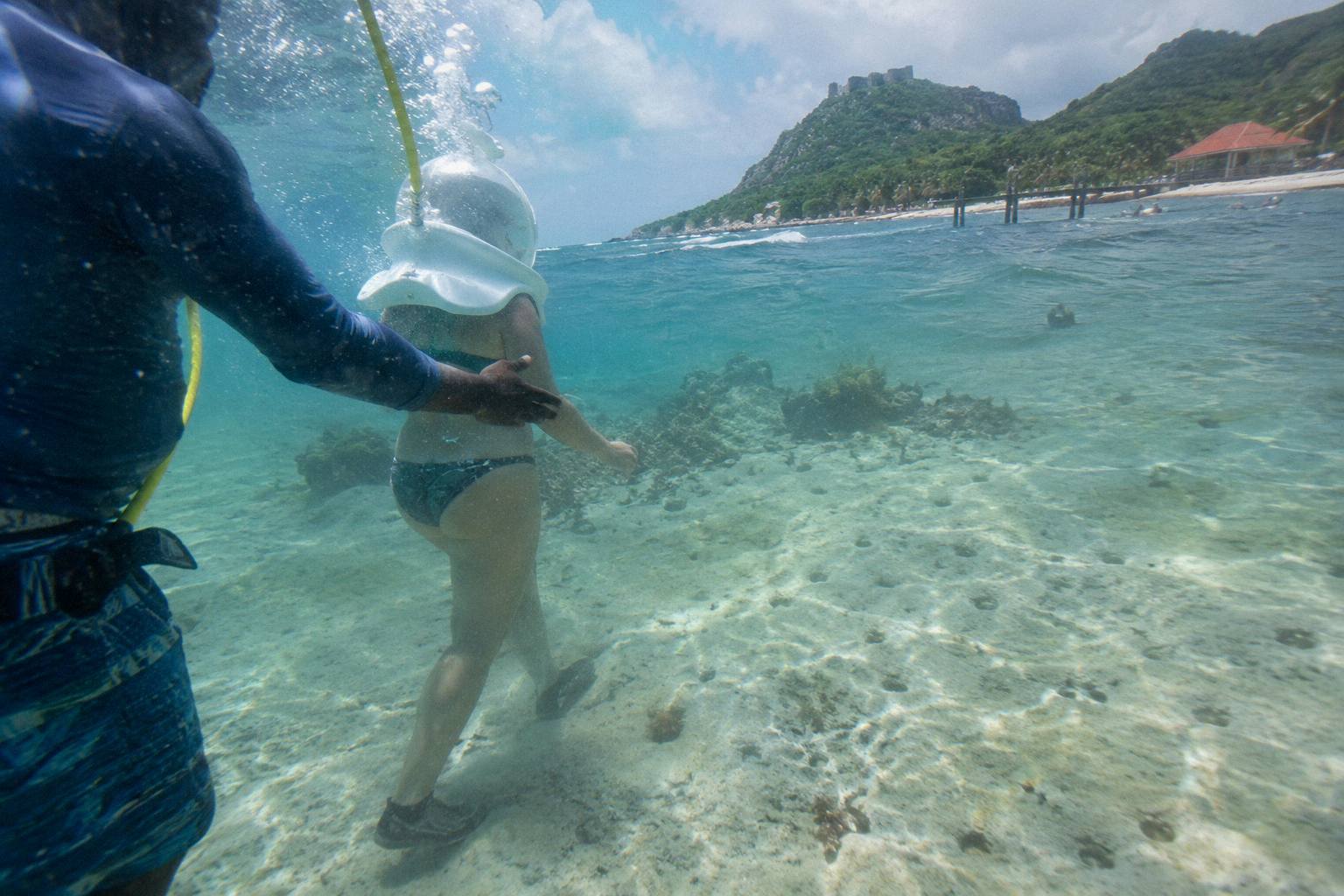
Helmet walking keeps your head dry on the seabed, SNUBA suspends you mid-water on a raft-fed line, snorkeling holds you at the surface, and scuba takes you deepest with a tank, so around Pigeon Island each format occupies its own slice of the water column and the one you book largely decides which part of the habitat you actually visit.
The manufacturer's own description of the helmet, on the manufacturer's SeaTrek page, is that it "works similar to an inverted glass": air stays inside as long as the helmet is not turned over, and a constant flow of cooled, dried and filtered air from an electrically powered surface center keeps it fresh. The helmet rests on the shoulders, prescription glasses can stay on, and the manufacturer's line to non-swimmers is "just walk and breath", with trained and certified guides on every tour and ages 8 and up. SNUBA, in the operator Sealife Paradise's words, is "a cross between snorkeling and scuba diving. No tank, No training", breathing from a regulator connected to a floating raft.
| Format | How you breathe | Where you sit in the water | Minimum age | Swimming needed |
|---|---|---|---|---|
| Helmet walk (SeaTrek St. Lucia) | Air by hose from a surface air center, head dry inside the helmet | Walking the seabed | 8 | No, per the manufacturer and the tours on this site |
| SNUBA (SNUBA Saint Lucia) | Regulator fed from a floating raft | Below the surface, tethered to the raft | 8 | The tours on this site carry no swim flag for it |
| Beach snorkel (Snorkeling at Pigeon Island) | Snorkel, mask and fins | Surface | 6 | Yes, swimming ability needed |
| Boat snorkel (St Lucia Snorkeling Tour with Lunch) | Snorkel, mask and fins | Surface, from a boat | 4 | Yes, swimming ability needed |
| Beginner scuba (St Lucia Beginner Scuba Diving Tour) | Tank on your back, after training | Deepest ground, from Marigot Bay | 12 | Scuba product, training included |
Each of these is a separate bookable product with its own duration and from-price: the helmet walk runs 1 hour 30 minutes from US$118 per person, SNUBA the same duration from US$112, the beach snorkel 1 hour 30 minutes from US$70, the boat snorkel with lunch 5 hours from US$83 per person, and the beginner scuba day 5 hours from US$132 from Marigot Bay. Amounts are in US dollars, per person as the tours here list them, and they vary by date and group; the booking page shows the price for your date. If seeing fish from the surface is the goal, the beach snorkel is the entry point, and the helmet and SNUBA products suit travelers who want to be under the water without learning to dive.
Where Does This Water Sit Relative To Rodney Bay And Gros Islet?
Pigeon Island and its water sit at the northern tip of the Gros Islet area, near Rodney Bay, and they are joined to the mainland by a causeway built in the early 1970s. The island itself is a 44-acre National Landmark, and the water around it sits below Fort Rodney, Signal Peak, a National Trust museum and the Two-Gun Battery.
Rodney Bay itself is the developed hub of the area, and the plain framing is that no sourced reef facts exist for it: the record names it as a highlight of Gros Islet alongside Pigeon Island and Reduit Beach, and nothing more, so nothing more is claimed here. The water with the sourced habitat is at Pigeon Island, on the landmark's beach and at the dive site off its base. The operator behind the helmet, SNUBA and beach snorkel products, Sealife Paradise, sits on Pigeon Island beach, and its tours depart from there.
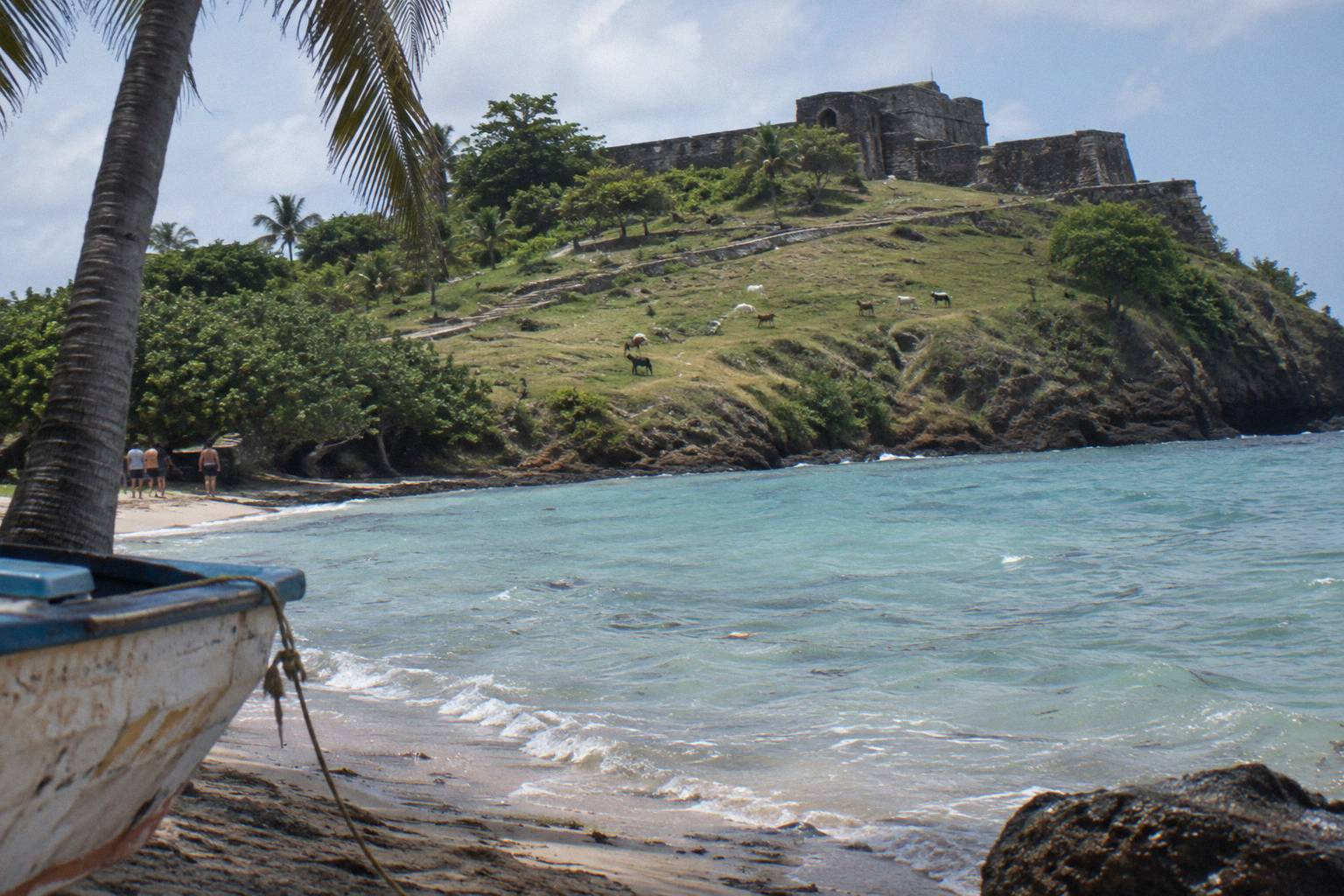
The landmark is open daily 9:30 am to 5:00 pm with last entry 4:15 pm, closed December 25, and non-resident entry runs at US$10 for adults, US$3 for children 5 to 12, and free under 5; these are the National Trust's figures and can change, and they are never included in or excluded from any tour, so check with the operator when you book. More on the ground itself is in the guide to snorkeling at Pigeon Island National Park, and the Saint Lucia tourism Pigeon Island page covers the fort, Signal Peak and the beach.
For travelers staying in the north, pickup is included on several of the tours on this site from hotels in the north of the island only, with the exact meeting point confirmed at booking. Soufriere, Vieux Fort, Micoud and Dennery are outside the pickup zones of the west-coast products, a detail that catches out south-based visitors every week, as the guide to getting to Pigeon Island from Rodney Bay, Castries and the cruise ports explains in full.
When Is The Water At Its Best For Seeing Marine Life?
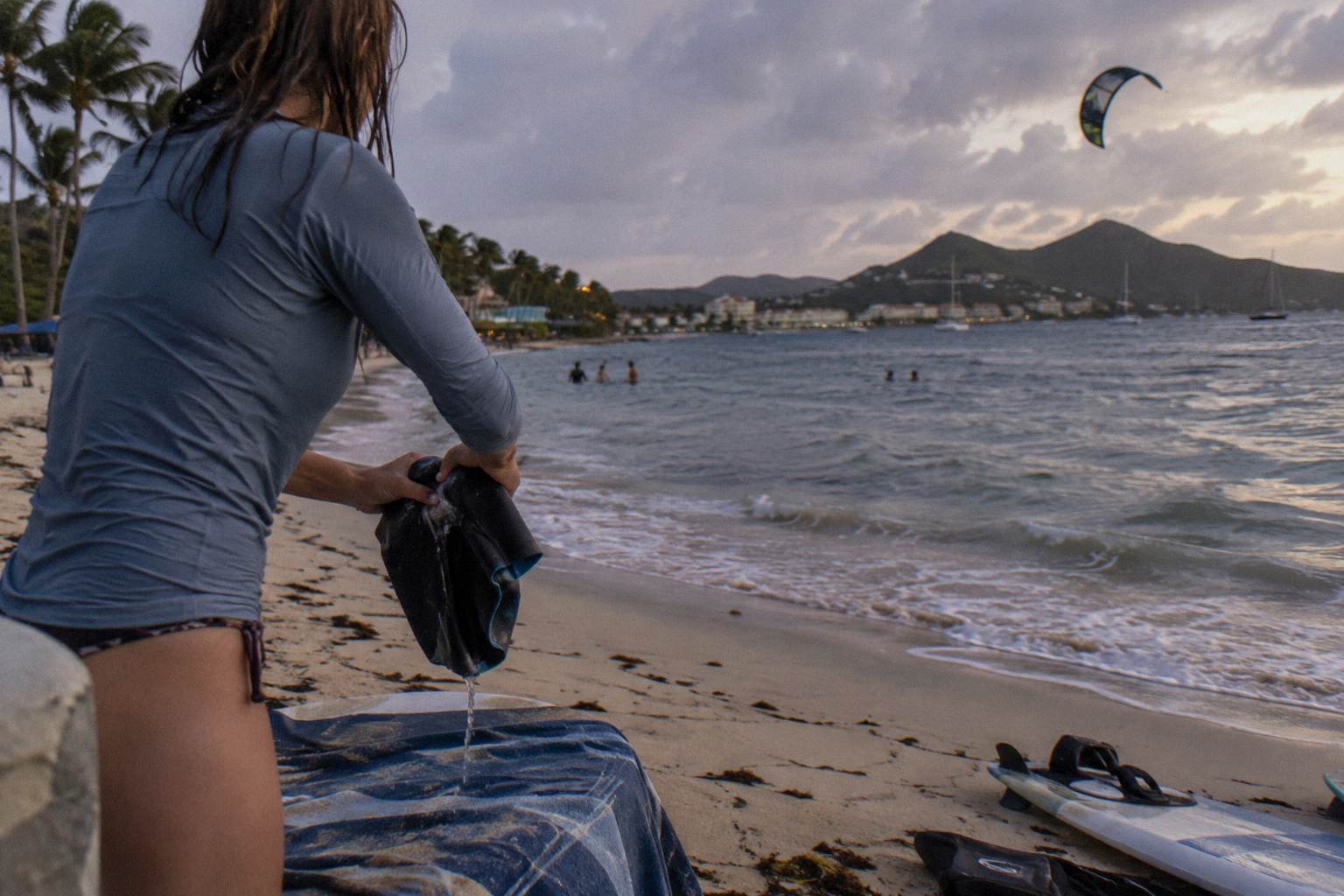
Mornings give you the calmest water and clearest conditions year round, so time of day matters more than season here. Sea temperatures hold between 26 and 29 C (79 to 84 F) all year, so warmth is never the deciding variable. For the best odds, visit during the dry season from December to April, when conditions are typically at their most favorable for marine life viewing.
The seasonal pattern is worth reading numerically rather than as vibes. Rainfall and visitor density move roughly together, with the December to April window both the driest and the most crowded, and the late-summer months the wettest. Sea temperature barely moves across the year, which is why underwater tours in the north run in every month rather than having an off season for cold water.
| Season | Months | What it means for the water |
|---|---|---|
| Dry season | December to April | Driest and busiest period; driest air, most visitors |
| Rainy season | June to December | Showers usually brief, per the Tourism Authority |
| Hurricane season | June 1 to November 30 | Overlaps the rainy season; the Tourism Authority's Holiday Guarantee allows rescheduling in a hurricane |
| Sea temperature | All year | 26 to 29 C (79 to 84 F) |
| Calmest window | Mornings | The Tourism Authority's guidance for calm water and clear conditions |
A morning start also fits the way these products are actually built. Every tour compared here has its start time chosen on the booking calendar rather than fixed in print, so a traveler who wants the calmer morning water picks the earliest calendar slot the operator offers. Cruise passengers have a tighter version of the same calculation, with the main cruise season running October to April and up to five ships calling at Castries on a single day; the guide to fitting an underwater excursion into a cruise day in St Lucia covers it. Water temperature and clarity questions in more depth sit in the guide to water temperature and visibility for snorkeling and diving in St Lucia.
The helmet walk pairs naturally with a morning: 1 hour 30 minutes in total, about 10 minutes of briefing and about 25 minutes underwater, from US$118 per person with private transportation included and gratuities not included, free cancellation up to 24 hours before the start. It rates 4.8 from 231 reviews on its booking page, a pool large enough to read as a real signal. Check availability if the seabed-walking format is the one that fits your group, or read the full SeaTrek St. Lucia tour page first.
How Do You View Marine Life Without Harming It?
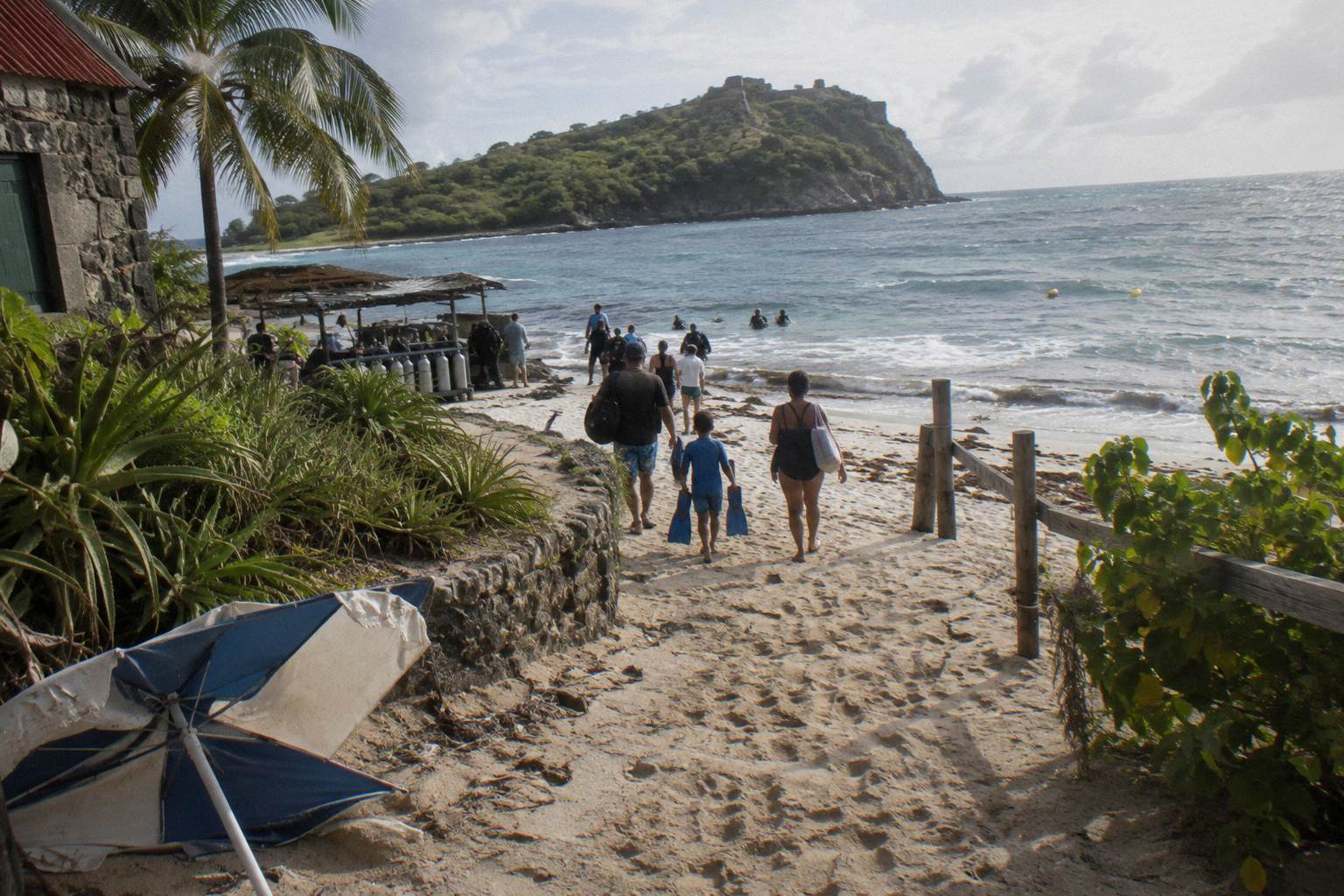
View marine life responsibly by following the Tourism Authority's rules: use reef-safe sunscreen, never touch coral or marine life, never snorkel alone, and stay alert to boat traffic, since many beaches lack lifeguards. These rules matter because coral damaged by touch or sunscreen takes years to recover, and the fish community along the rocky coastline depends on that habitat remaining intact.
The rules apply across every format, not just snorkeling. A helmet diver walks on the seabed, which makes where you put your feet the central question; the manufacturer's design keeps your head dry and your hands free, and the trained and certified guides who lead every tour are there in part to keep guests off anything fragile. A SNUBA diver tethered to a raft can reach farther than a snorkeler, which makes the never-touch rule more, not less, important at the edge of your range.
| Rule | Source | Applies to |
|---|---|---|
| Reef-safe sunscreen | Tourism Authority snorkeling guidance | All in-water formats |
| Never touch coral or marine life | Tourism Authority | All in-water formats |
| Never snorkel alone | Tourism Authority beach safety guidance | Snorkeling products |
| Mind boat traffic | Tourism Authority | All surface and near-surface formats |
| Many beaches have no lifeguards | Tourism Authority | Independent swimming, not guided tours |
The full safety framing, including who should think twice before any in-water activity, is in the guide to whether helmet diving is safe, its risks and limits. For the marine-life angle specifically, the operating principle is simple: the four named species at the scuba site and the unspecified variety along the beach are wild animals in their habitat, and every product on this coast depends on that habitat staying healthy enough to keep them there. See the Saint Lucia tourism beach safety page for the Authority's own wording.
SNUBA sits in the middle of the viewing question, and it is the middle of the depth question too. The tour compared here carries a maximum of 14 travelers for the SNUBA product, minimum age 8, with all equipment and water afterward included, from US$112 per person for 1 hour 30 minutes, free cancellation up to 24 hours out. It rates 4.7 from 166 reviews. The operator's own medical advisory, from its booking page, is that the experience is not recommended for pregnant travelers, travelers with poor cardiovascular health or travelers with spinal injuries; if any of those apply, ask the operator or a doctor before booking.
Who Sees This Water, And From Where?
Families, non-swimmers, cruise visitors and certified divers all reach this coast, but through different products with different ages, durations and inclusions, and matching the person to the product matters more here than on most coasts. The beach snorkel takes children from age 6 and requires swimming ability, while the helmet walk takes age 8 with no swimming needed at all.
The non-swimmer angle deserves its own sentence, because it is the most common filter. Snorkeling products among the tours on this site carry a swimming-ability requirement, so a nervous or non-swimming traveler who wants to see under the water is looking at the helmet format, where the manufacturer's line is "Can't swim? No worries!" and the whole design is built around walking rather than swimming. The guide to helmet diving for non-swimmers and what to expect works through it in detail, and the comparison of SeaTrek versus SNUBA versus scuba versus snorkeling puts the four formats side by side.
The Tourism Authority calls Pigeon Island Beach's water "calm sheltered waters perfect for beginner snorkelers", which is the closest the official record comes to a beginner endorsement of this specific beach. Glasses wearers can keep them on in the helmet, per the manufacturer, which removes one of the small frictions that stops people snorkeling; the guide to helmet diving with glasses or contact lenses covers the detail. Photographers should read whether you can take photos on a helmet dive before packing a camera, since photos are not among the helmet walk's included items.
| Traveler | Best-fit tour | Why |
|---|---|---|
| Non-swimmer, age 8 plus | SeaTrek St. Lucia | Walking format, no swimming required, head stays dry |
| Family with children 6 to 7 | Snorkeling at Pigeon Island | Minimum age 6, beach-based, 1 hour 30 minutes |
| Small group wanting depth without certification | SNUBA Saint Lucia | Raft-fed regulator, maximum 14 travelers, age 8 plus |
| Group wanting a full day with lunch | St Lucia Snorkeling Tour with Lunch | 5 hours, lunch and drinks included, minimum age 4 |
What Trips People Up Before You Book?
Most disappointments on this coast trace to three mix-ups: expecting the scuba site's species on a surface tour, booking a product whose pickup zone does not cover your hotel, and assuming the island's entry fee or lunch is inside the tour price. Each is avoidable in under a minute of reading. Match the format to the water you want to see, check the pickup area against where you are staying, and treat the landmark entry fee as its own line item. Weather and sea state still decide the day, and no tour promises an animal.
The species mix-up is the quietest of the three because nothing on a booking page corrects it. The eagle rays, moray eels, lobsters and great barracuda the Tourism Authority names are "seen regularly" on the scuba dive at the base of the island; the helmet, SNUBA and snorkel products work other parts of the same water, and the beach's official description is the broader "variety of fish and marine life". A traveler who books a 1 hour 30 minute beach session expecting a 60 ft dive-site encounter has bought the wrong product, not a bad one.
The pickup issue is geographic and firm. Northern-hotel pickup is included on the Pigeon Island products, and the west-coast Dive Fair Helen products pick up from northern to western locations only, explicitly excluding Soufriere, Vieux Fort, Micoud and Dennery. South-based travelers need their own transport to a pickup point, and cruise passengers should not assume port pickup for the Pigeon Island tours; ask the operator. Finally, watch the excluded lines: gratuities are not included on the helmet walk, the boat snorkel's listed price excludes a 10% per person government VAT payable at check-in, and lunch is extra on the private boat option.
The boat snorkel with lunch is the product that answers most of this in one package: 5 hours from US$83 per person plus the VAT at check-in, lunch, juices, equipment, a local guide and boat with restrooms included, hotel pickup from northern to western locations, minimum age 4, free cancellation up to 24 hours before, rated 4.5 from 126 reviews. Check the live price for your date before comparing it against the beach snorkel.
For planning further out, the arithmetic of the day matters as much as the species. A family of four weighing the US$70 beach snorkel against the US$118 helmet walk is really weighing surface viewing against 25 minutes of seabed walking; the depth, duration and age details are in how deep and how long a helmet dive lasts and the fuller cost picture in helmet diving cost and whether it is worth it against snorkeling. What this coast rewards is choosing deliberately: the water is warm all year, the official record is clear about which animals live where, and every format compared here is a legitimate way into it. St Lucia Helmet Dive exists to make that choice easier, one product at a time.
Common Questions About Pigeon Island Marine Life
What Marine Life Lives Around Pigeon Island?
The Saint Lucia Tourism Authority names eagle rays, moray eels, lobsters and great barracuda as "seen regularly" at the scuba site at the base of the island, which runs from about 15 ft over sand and coral to a maximum of 60 ft. For the beach, the Authority says the surrounding rocky coastline attracts a variety of fish and marine life. No sighting is promised on any day.
Will I See Eagle Rays Or Barracuda On A Helmet Dive Or Snorkel Tour?
The named species are associated with the scuba site specifically, so treat them as the deeper-water record, not as a promise for any surface or seabed-walking product. The beach's official description is a variety of fish and marine life around the rocky coastline. Weather, season and the animals decide what appears.
Which Tour Format Gets Non-Swimmers Into This Water?
The helmet walk. SeaTrek St. Lucia takes ages 8 and up, requires no swimming, and keeps head and face dry inside a helmet fed by hose from the surface, from US$118 per person for 1 hour 30 minutes. The snorkel tours on this site require swimming ability.
Is The Water Warm Enough All Year?
Yes. Sea temperatures stay between 26 and 29 C (79 to 84 F) throughout the year, per the Tourism Authority. The seasonal variables are rain, crowds and sea state rather than warmth: the dry season is December to April, and mornings generally offer the calmest, clearest water.
How Do I Avoid Harming The Reef At Pigeon Island?
Follow the Tourism Authority's rules: reef-safe sunscreen, never touch coral or marine life, never snorkel alone, and mind boat traffic, since many beaches have no lifeguards. Guided products put a trained guide in the water with you, which helps with all four.
Does The Tour Price Include Pigeon Island Entry?
Non-resident entry to the National Landmark is US$10 for adults and US$3 for children 5 to 12, under 5 free, per the National Trust's figures, which can change. Confirm with the operator at booking how entry is handled for your tour, and note the beach snorkel itself runs from US$70 per person with equipment included.