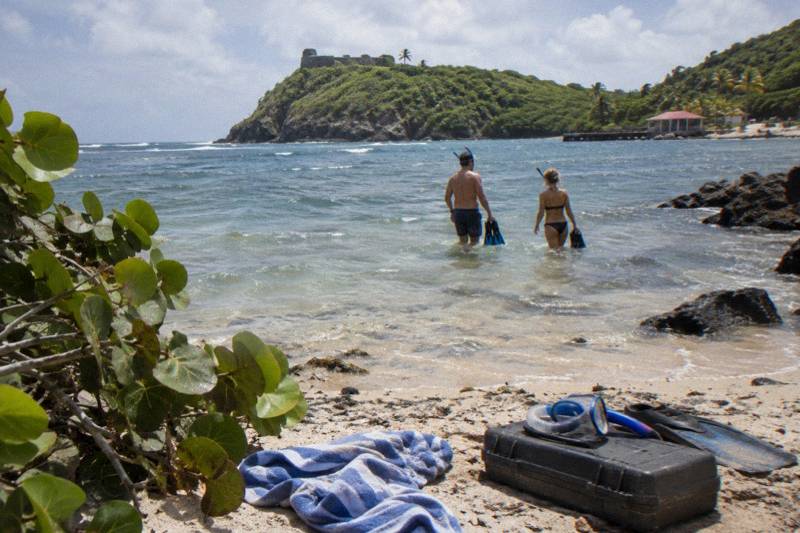
Sharks And Stinging Marine Life At Pigeon Island: Is It Safe To Dive
Shark and sting worries are the most common reason hesitant travelers hold back from a first underwater tour in St Lucia. The answer sits in what the official details do and do not say, and in how each tour format changes how close you get to anything with fins, spines or tentacles.
Short answer
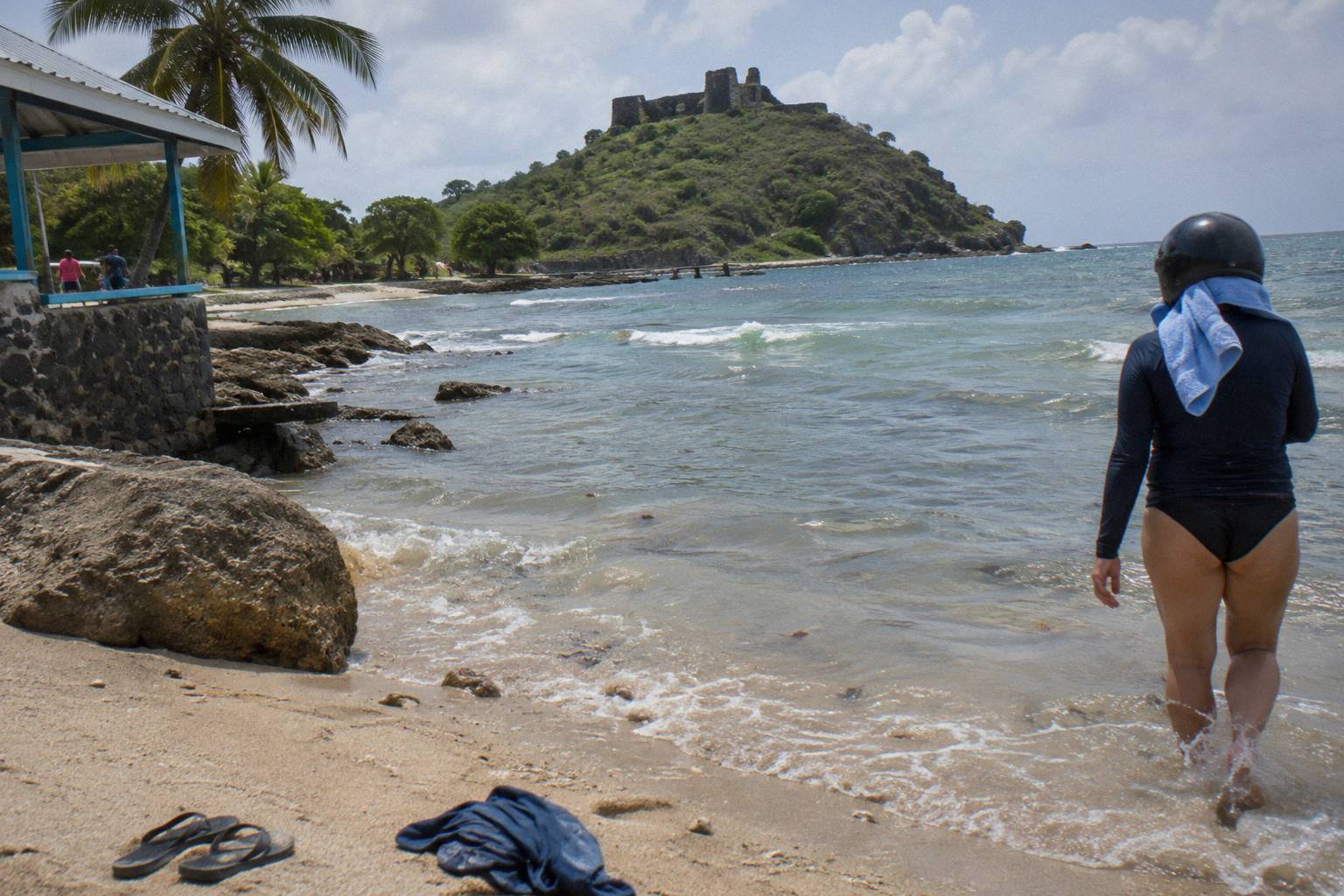
No official source states which sharks, jellyfish or urchins are present, absent, common or rare around Pigeon Island, so no verdict on safety can be given here. The Tourism Authority's own guidance is about behaviour: never touch coral or marine life, never snorkel alone, mind boat traffic, and use reef-safe sunscreen on the generally calmer west coast.
For a wider view of every no-swimming and beginner underwater option on the island, start with the beginner underwater tours hub, which gathers the helmet walk, SNUBA and beginner scuba products in one place. The question below comes up constantly from readers holding back on a first booking, and it deserves a careful answer built only on what the official sources actually say.
| Fact | Detail |
|---|---|
| Main helmet walk | SeaTrek St. Lucia, from US$118 per person, 1 hour 30 minutes |
| Helmet walk rating | 4.8 from 231 reviews |
| Minimum age, helmet walk and SNUBA | 8 |
| Snorkeling at Pigeon Island | From US$70 per person, minimum age 6, swimming needed |
| Beginner scuba at Marigot Bay | From US$132 per person, minimum age 12, 5 hours |
| Official marine-contact guidance | Never touch coral or marine life, never snorkel alone, reef-safe sunscreen |
| Sea temperature range | 26 to 29 C (79 to 84 F) all year |
| Coast note | The west coast generally offers calmer waters |
Amounts are in US dollars, per person, as each tour listing gives them; prices vary by date and group and the booking page shows the price for the date you choose.
Are There Sharks In St Lucia Waters?
No official source for Pigeon Island states which shark species are present, absent, common or rare, and nothing here claims either an absence or a presence. The Saint Lucia Tourism Authority publishes behavioural guidance rather than species lists for this stretch of coast, and its diving page names species only for the scuba site at the base of the island. Any confident claim you read elsewhere about shark sightings at this beach is not something an official body backs.
That non-answer is itself the useful answer for a nervous first-timer. The region's tourism bodies write their water-safety advice around things a swimmer controls: company, boat traffic, sun protection and contact with the reef. The Saint Lucia tourism beach safety page says the west, Caribbean, coast generally offers calmer waters, that many beaches have no lifeguards, that you should never snorkel alone, and that you should mind boat traffic. Notice what that guidance assumes: the risk picture around swimming and snorkeling here is built around people, boats and behaviour, with reef contact called out explicitly.
The same page, together with the Tourism Authority's snorkeling guidance, adds two lines that matter more than any species count ever could: use reef-safe sunscreen, and never touch coral or marine life. Those two rules cover nearly every realistic sting, scrape or urchin encounter a beginner could have, because stinging and spiny animals overwhelmingly cause problems when a hand reaches out or a body stands on something. Floating past, at a respectful distance, is the behaviour every official source keeps returning to.
If a shark question is the thing stopping a booking, the productive move is not to hunt for a sighting statistic, it is to choose a format that removes the free-roaming element altogether. The helmet walk keeps a walker on the seabed path with trained and certified guides, per the manufacturer, and the snorkeling products run from a sheltered beach the Tourism Authority describes as having calm, sheltered waters suited to beginner snorkelers. Neither the manufacturer nor any official source promises any animal on any day, and no product on this island will.
What Stinging Marine Life Is Listed For Pigeon Island?
The only official species list for this area belongs to the scuba site at the base of Pigeon Island, where the Tourism Authority names eagle rays, moray eels, lobsters and great barracuda as seen regularly on that dive. For jellyfish, urchins or fire coral, no official statement of presence or absence exists, so none is printed here. The reliable protection is behavioural: do not touch, do not stand on, do not chase.
It helps to be precise about what that scuba-site list is and is not. It describes a dive that starts about 15 ft over sand and coral and reaches a maximum of 60 ft, which is a different activity and a different depth range from the helmet walk along the seabed, the SNUBA experience on its floating raft hose, or a beach snorkel. Every animal on it is described as regularly seen by divers at that site, which tells you the reef around the island's base is alive and inhabited, exactly as a healthy Caribbean reef should be. It tells you nothing about what a walker or floater will meet at the beach end, on a given morning.
For the beach and the shallow water where beginner products actually run, the Tourism Authority's wording is about water and coast, not animals: Pigeon Island Beach has calm, sheltered waters suited to beginner snorkelers, and the rocky coastline around it attracts a variety of fish and marine life, phrasing that appears on the Saint Lucia tourism snorkeling beaches page. "A variety of fish and marine life" is as specific as the official record gets for the snorkel zone, and no fish beyond that will be named here.
The practical takeaway for a worried booker is that stings and scrapes on a Caribbean reef are almost always contact events, and contact is optional. Reef-safe sunscreen protects the coral you float over. Keeping hands to yourself protects you from anything with spines or stinging cells. Staying off the reef with your feet, rather than standing when tired, protects both. None of that requires knowing the species, and all of it works whatever is swimming below. For a fuller picture of what actually lives around this coast, the marine life at Pigeon Island and Rodney Bay reefs guide walks the same official record in more detail.
How Each Underwater Format Changes Your Contact With Marine Life?
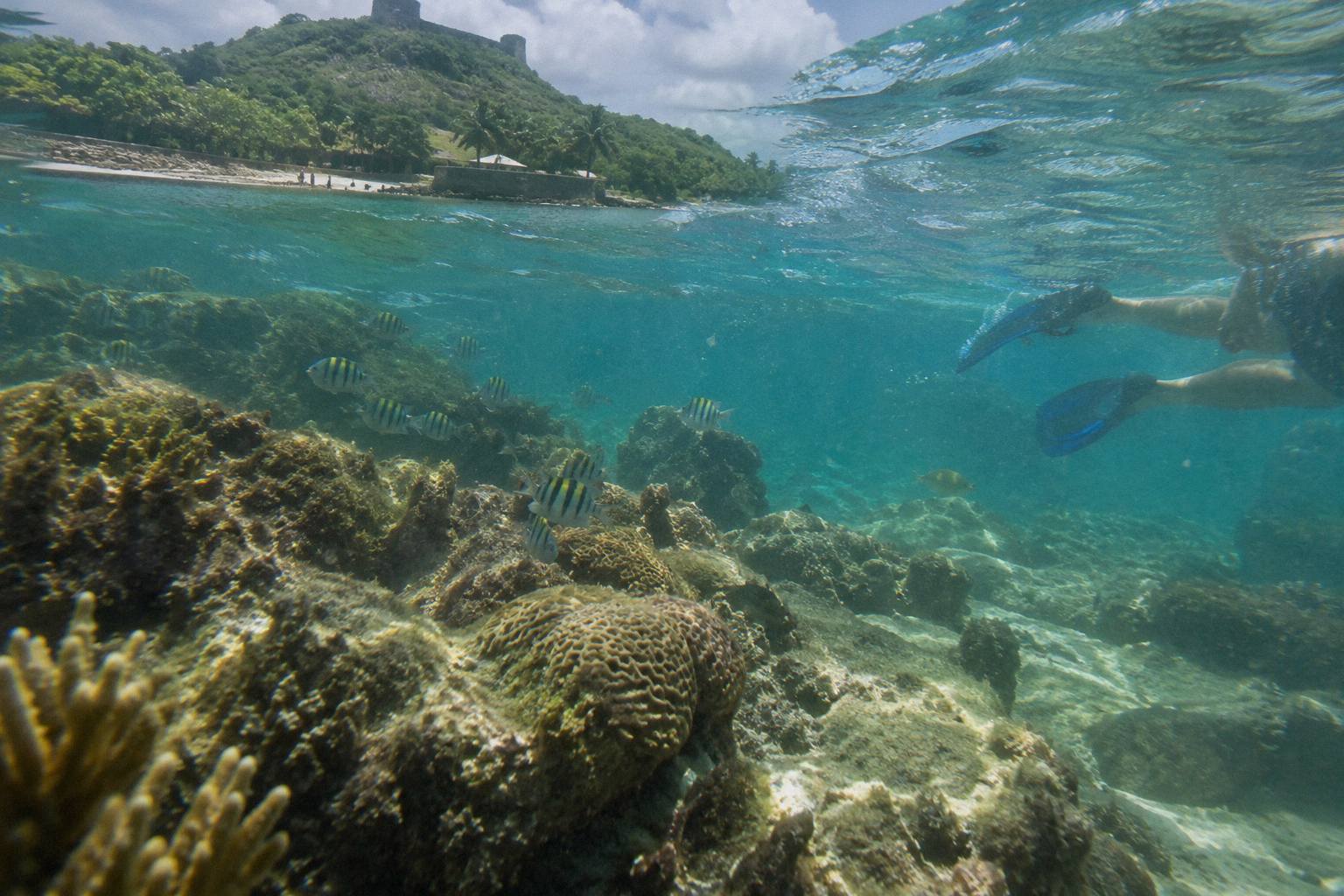
Every bookable format puts you in the water differently, and the differences matter more than any animal could. The helmet walk keeps you upright and walking, with head and face dry; SNUBA puts you on a regulator fed from a raft; beach snorkeling floats you face-down near the surface; scuba takes you down the reef slope with a guide. Each posture changes what you can reach, and therefore what can reach you.
Start with the helmet, because it is the format built for exactly the reader asking this question. The manufacturer, Sub Sea Systems, describes the SeaTrek helmet as working similar to an inverted glass: air stays inside as long as the helmet is not turned over, and a constant flow of cooled, dried and filtered air arrives by hose from a surface air center. The helmet rests on the shoulders, prescription glasses can stay on, no swimming skill is required, and walkers are guided by trained and certified guides, per the manufacturer's SeaTrek page. A walker is upright, hands free, on a path, not drifting across a reef face.
SNUBA sits in the middle. The operator calls it a cross between snorkeling and scuba diving: no tank on your back, a regulator connected to a floating raft on the surface, no certification needed, ages 8 and up, with a group maximum of 14. You are horizontal like a snorkeler but freer in three dimensions than a helmet walker, so the self-discipline about hands and fins matters more here. The operator's booking advisory adds that it is not recommended for pregnant travelers, travelers with poor cardiovascular health or travelers with spinal injuries; ask the operator or a doctor about your own case.
Beach snorkeling and boat snorkeling float you at the surface over whatever is below. The Pigeon Island beach snorkel runs from the operator's own beach with equipment and bottled water included, minimum age 6, swimming needed, no pickup. The boat snorkel with lunch runs from Marigot Bay for 5 hours with equipment, guide, lunch and drinks included, from US$83 per person, plus a 10% per person government VAT payable at check-in, minimum age 4. Scuba, finally, is the deep end: the beginner tour at Marigot Bay includes training before the dive, a tank dive, lunch and instructor, minimum age 12, 5 hours.
| Format | Posture And Position | What It Means For Reef Contact | Tours Compared |
|---|---|---|---|
| Helmet walk | Upright on the seabed, head and face dry, guides alongside | Hands free but feet on the bottom; follow the guide's path | SeaTrek St. Lucia, from US$118, age 8, 1 hour 30 minutes |
| SNUBA | Horizontal on regulator, hose to a floating raft, up to 14 per group | Free to move in three dimensions; discipline over hands and fins | SNUBA Saint Lucia, from US$112, age 8, 1 hour 30 minutes |
| Beach snorkel | Face-down at the surface, from the operator's beach | Floats above the reef; swimming ability needed | Snorkeling at Pigeon Island, from US$70, age 6 |
| Boat snorkel | Surface snorkeling from a boat, guide in the water | Guide present; longer day, lunch included | St Lucia Snorkeling Tour with Lunch, from US$83, age 4 |
| Beginner scuba | Trained then diving the reef slope with an instructor | Closest pass to the reef and its residents; training included | St Lucia Beginner Scuba Diving Tour, from US$132, age 12, 5 hours |
For readers deciding between the two Pigeon Island formats specifically, the SNUBA at Pigeon Island comparison guide breaks down the differences without any species claims at all, which is the only way a comparison like that can be written from the official record.
The helmet walk holds you on a guided path, the beach snorkel keeps you on the surface in sheltered water, and beginner scuba trains you before you descend. Whichever you lean toward, check the live price for your date before deciding anything else.
Why Trained And Certified Guides Change The Picture?
The manufacturer states that every SeaTrek tour is guided by trained and certified guides, and the tours on this site show guides or instructors named as included on the SNUBA, boat snorkel, beginner scuba and full-day products. On a reef, a guide is the working substitute for local knowledge you do not have: they set the route, the pace and the distance, and they are the person to point at anything before a hand goes near it.
That is not a safety verdict, and no verdict on the safety of any activity appears anywhere here. It is a statement about structure. An unguided swimmer makes every decision alone: where to float, how close to pass, when to turn back, whether the water looks right. A guided walker or snorkeler inherits a set of decisions already made by someone whose training the manufacturer or operator stands behind. On the full-day snorkel excursion the tours on this site even name a guide who stays with you in the water while you snorkel, which is the closest thing to a format where reef contact is supervised move by move.
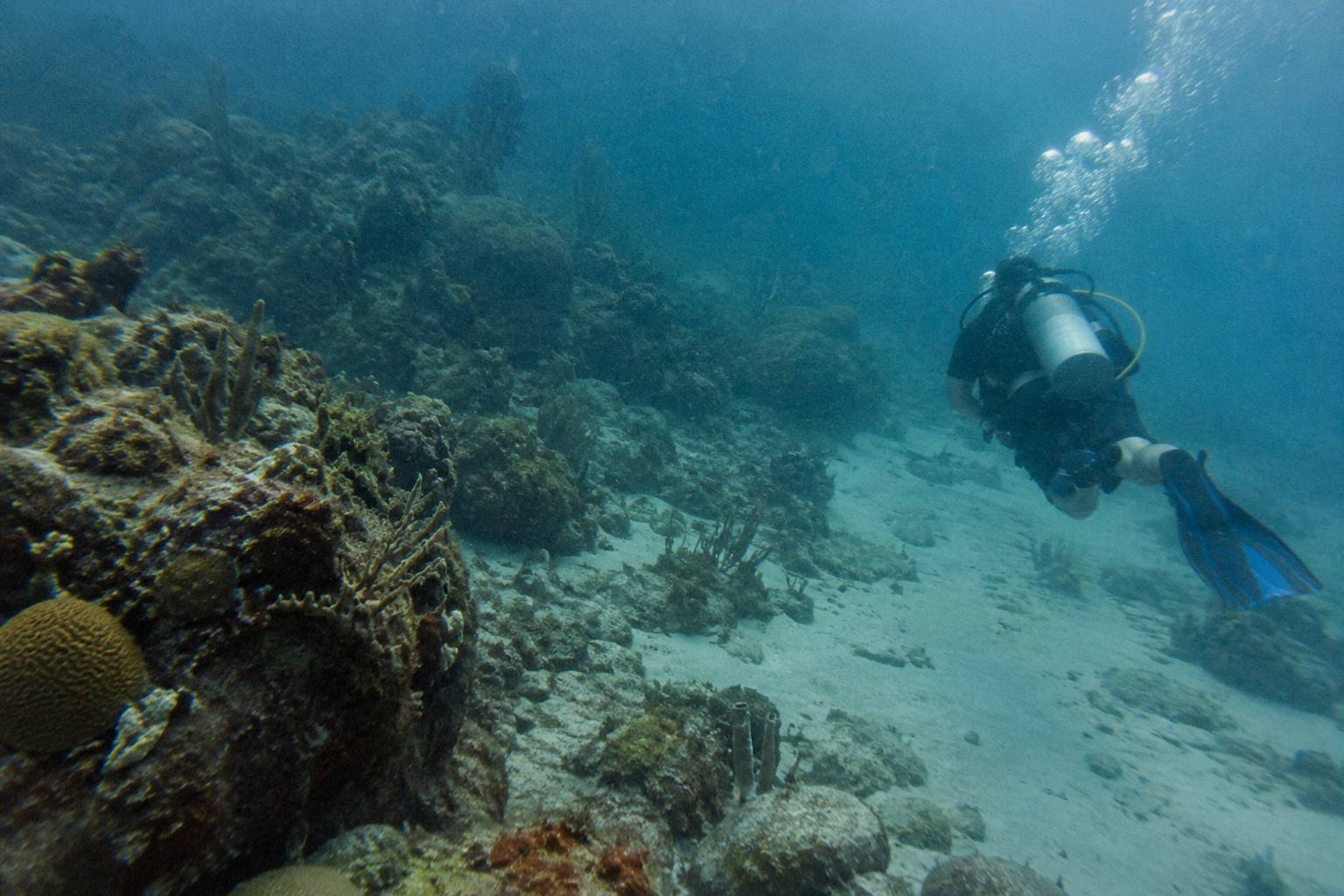
The beginner scuba line makes the same point at greater depth: an instructor gives training before the dive, and the dive itself is a 1 tank dive with tanks, weights and marine fees included, from US$132 per person, 5 hours, minimum age 12, with pickup from northern to western island locations only. Someone who was worried about animals an hour ago is, by the middle of that tour, worried about buoyancy and ear clearance instead, which is the truer hierarchy of beginner concerns on a reef.
| Product | Guide Or Instructor Line | Group Detail | Cancellation |
|---|---|---|---|
| SeaTrek St. Lucia | Trained and certified guides on every tour, per the manufacturer | Shared format, minimum age 8 | Free up to 24 hours before start |
| SNUBA Saint Lucia | Equipment included, water provided after | Shared, maximum 14 travelers | Free up to 24 hours before start |
| St Lucia Snorkeling Tour with Lunch | Local guide named as included | Shared, minimum age 4 | Free up to 24 hours before start |
| Best Of Full-Day Snorkeling & Beach Excursion | Tour guide stays with you while snorkeling | Shared, drinks and lunch included | Free up to 24 hours before start |
| St Lucia Beginner Scuba Diving Tour | Instructor for training before the dive | Shared, minimum age 12 | Free up to 24 hours before start |
The pick-up and cancellation structure also lowers the cost of changing your mind, which matters when the worry is emotional rather than logistical. Every tour compared here carries free cancellation up to 24 hours before start, so a hesitant booker can reserve a place, sit with the decision, and still withdraw. See dates on the booking calendar for whichever product fits; the calendar, not any article elsewhere, holds the start options for your day.
What The Helmet Walk Actually Feels Like, Mechanically?
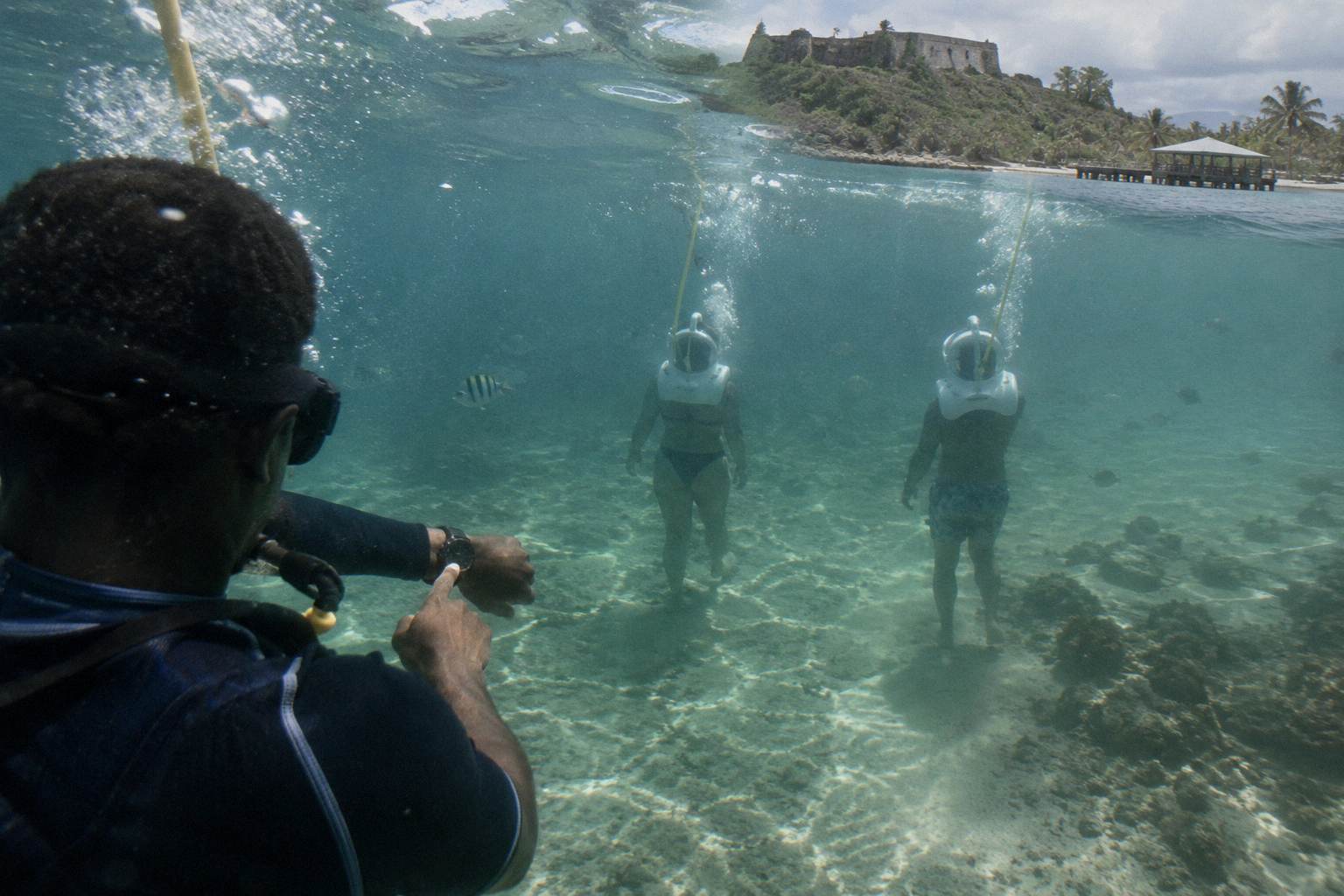
The manufacturer's description is the only authoritative one: the helmet works like an inverted glass, the air stays put unless the helmet tips, and a constant flow of cooled, dried and filtered air keeps it fresh. Your head and face stay dry, glasses stay on, and the walk itself is described as just walk and breath. Underwater the manufacturer gives the helmet's weight as about 15 lb, a figure about the equipment, never a limit on a guest.
Reading that description carefully is the best antidote to the mental image that usually drives the shark question, which is of a swimmer alone in open water. A helmet walker is none of those things: not swimming, not alone, not in open water. The tour runs 1 hour 30 minutes in total, of which about 10 minutes is briefing and about 25 minutes is spent underwater, with the balance on the surface and the beach. The polycarbonate helmet with its panoramic acrylic lens sits on the shoulders, and the air arrives from an electrically powered surface air center down a hose.
The Pigeon Island session departs from Pigeon Island in Gros Islet, operated by Sealife Paradise, from US$118 per person, minimum age 8, private transportation included from hotels in the north of the island only, gratuities not included, and photos are not among the included items. It carries a 4.8 rating from 231 reviews on its booking page. For the full mechanical walkthrough, including the air system in more depth, see how helmet diving works, air hose and helmet explained.
For readers whose worry is really about water in the face, the manufacturer's head-and-face-dry wording answers it directly, and the helmet diving for non swimmers guide covers the no-swimming question in full. The site behind all of this, St Lucia Helmet Dive, exists precisely because the helmet format answers so many beginner anxieties at once.
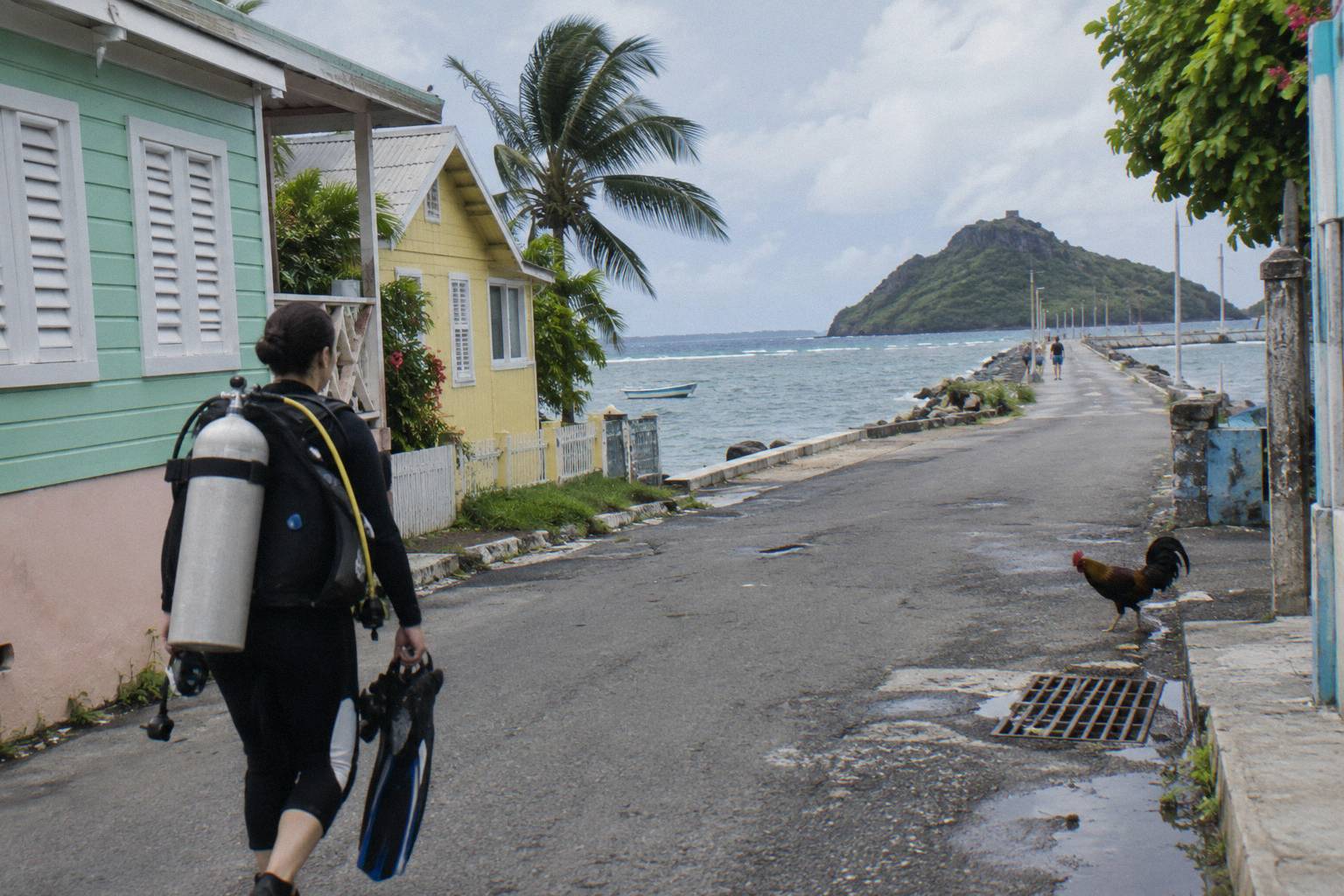
SNUBA, shown above, is the natural second look for anyone who finds the helmet too constrained but still wants no certification and no tank. It runs from the same Pigeon Island departure point, from US$112 per person, 1 hour 30 minutes, ages 8 and up, equipment included and water provided after, with a group maximum of 14 and the same northern-hotels pickup and 24 hour free cancellation terms.
What Trips People Up Before You Book?
The mistakes are behavioural, not zoological: touching coral or marine life, standing on the reef when tired, chasing animals for a photo, snorkeling alone, and ignoring boat traffic. The Tourism Authority flags every one of these. Add the booking-side errors, skipping the medical advisory and assuming pickup from the south, and you have the full list of things that genuinely go wrong around Pigeon Island, none of which involves a species forecast.
Touching comes first because the official guidance names it first. Never touch coral or marine life is a Tourism Authority line, and it protects the reef and the traveler in the same sentence. Coral can scrape and sting; urchins hide in crevices; moray eels, which the diving page lists for the scuba site, defend holes when hands intrude. The rule needs no species list because it applies to all of them.
Standing is the sneaky one, because a tired snorkeler stands without thinking. Fins off, feet down, and the reef takes the weight. The fix is positional awareness: float, tread water, or head for sand, and treat anything dark and lumpy as something not to stand on. Chasing is the third error, and the camera is usually the cause. Every animal on a reef moves faster than a beginner expects, and pursuing one drags a swimmer further out and closer to the reef edge than planned.
Then the paperwork mistakes. The operator's advisory says SNUBA and the helmet walk are not recommended for pregnant travelers, travelers with poor cardiovascular health or travelers with spinal injuries; ask the operator or a doctor rather than self-assessing. Pickup on the Sealife Paradise products is from hotels in the north only, and on the Marigot Bay scuba and boat-snorkel lines from northern to western locations only, explicitly not Soufriere, Vieux Fort, Micoud or Dennery, so check where you are staying before choosing. And remember the beach basics from the official safety page: many beaches have no lifeguards, so never snorkel alone, and mornings bring the calmest water and clearest visibility of the day per the Tourism Authority.
What To Ask The Operator At Booking?
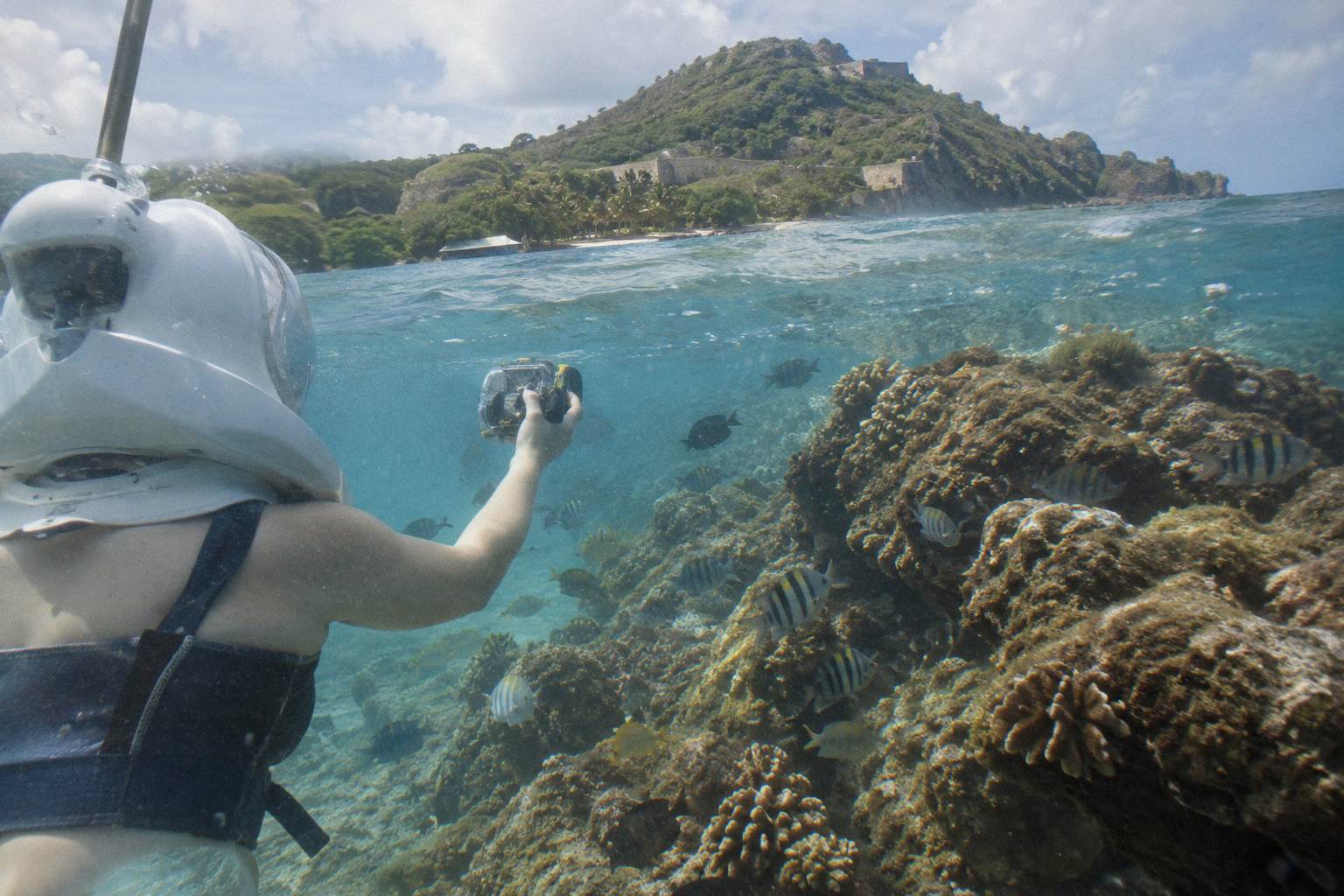
Ask five things: whether your medical situation fits the tour's advisory, what the pickup arrangements are for your hotel's area, what the guide ratio is, what the route and bottom conditions are like that week, and what the cancellation terms mean for your date. Each question is answerable by the operator in one line, and together they replace almost everything an anxious reader was hoping a shark statistic would tell them.
The medical question is the one to ask first because it gates everything else. The advisory naming pregnancy, cardiovascular health and spinal injuries comes from the operator's booking information, and the operator can tell you how it applies to a specific condition, something no article can. The pickup question matters because the tours on this site draw a hard line between northern-hotel pickup on the Pigeon Island products and the northern-to-western range on the Marigot Bay products, with no southern pickup at all; ask the operator where your accommodation falls.
Guide ratio and route questions get you the local knowledge that no write-up should invent. The manufacturer guarantees trained and certified guides on SeaTrek tours, and the operator can tell you how many walkers or snorkelers each guide takes and what the seabed or reef has been like recently, in plain terms, for your week. The cancellation question closes it out: every product listed cancels free up to 24 hours before start, and confirming that against your flight or cruise schedule takes one message.
| Question To Ask | Why It Matters | Who Answers It |
|---|---|---|
| Does my medical condition fit the advisory? | The operator lists conditions the tours are not recommended for | Operator or your doctor |
| Is pickup included from my hotel area? | Northern pickup only on Pigeon Island products; northern to western on Marigot Bay lines | Operator |
| How many guests per guide? | Manufacturer guarantees certified guides; ratio is set locally | Operator |
| What is the route like this week? | Conditions change; no article can carry a live report | Operator |
| What are the cancellation terms for my date? | Free cancellation up to 24 hours before start on the tours on this site | Booking page |
Once those five are answered, the choice between formats usually makes itself. A traveller who wants hands free and a dry head picks the helmet walk; a traveller who wants to roam a little picks SNUBA; a traveller who wants the surface only picks the beach snorkel. Check the live price for your date, because every figure quoted is a from-price that moves with the calendar.
The boat snorkel above suits the reader who wants a guide in the water and a structured day: 5 hours from the Marigot Bay ferry dock, lunch and drinks included, equipment included, guide included, from US$83 per person plus the 10% per person government VAT payable at check-in, minimum age 4, swimming needed, free cancellation up to 24 hours before start.
When Should Worry Change Which Tour You Pick?
If the worry is animals in open water, pick the format that removes open water: the helmet walk, with its guided seabed path, dry head and minimum age of 8. If the worry is swimming ability, the same product answers it, since no swimming is required. If the worry is confinement, widen to SNUBA or the beach snorkel. The right response to anxiety is architectural, choosing the format, not statistical, hunting data no official source publishes.
That reframing is why the helmet walk stays at the centre of the beginner coverage. The reader asking about sharks is usually imagining the most exposed version of the sea, alone and swimming, and the plain answer is that no bookable product puts a beginner in that position. The helmet walk is upright, guided and brief underwater, about 25 minutes of it. SNUBA is raft-connected and group-run, maximum 14. The beach snorkel is in sheltered water the Tourism Authority itself describes as suited to beginners, though it does require swimming ability, and the snorkeling for non swimmers guide covers that gap in detail.
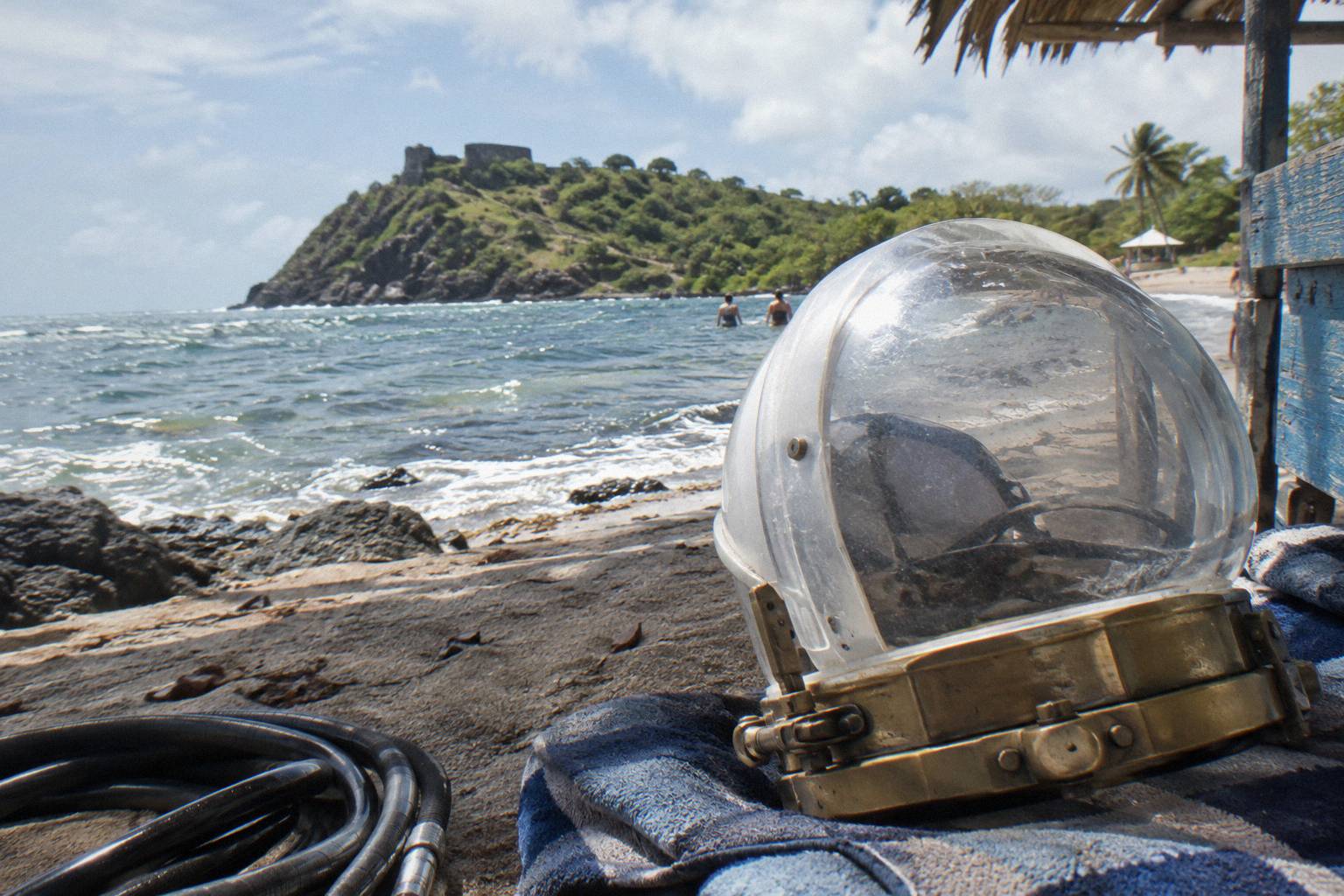
Season and timing are the last levers, and they are behavioural too. The best time of year for underwater tours guide covers the calendar in full: sea temperatures hold between 26 and 29 C all year, the dry season runs December to April and is the busiest, and the rainy season June to December brings usually brief showers. Morning is the calmest and clearest window on any given day, per the Tourism Authority, so a nervous beginner books a morning slot and gets the flattest water the day has to offer.
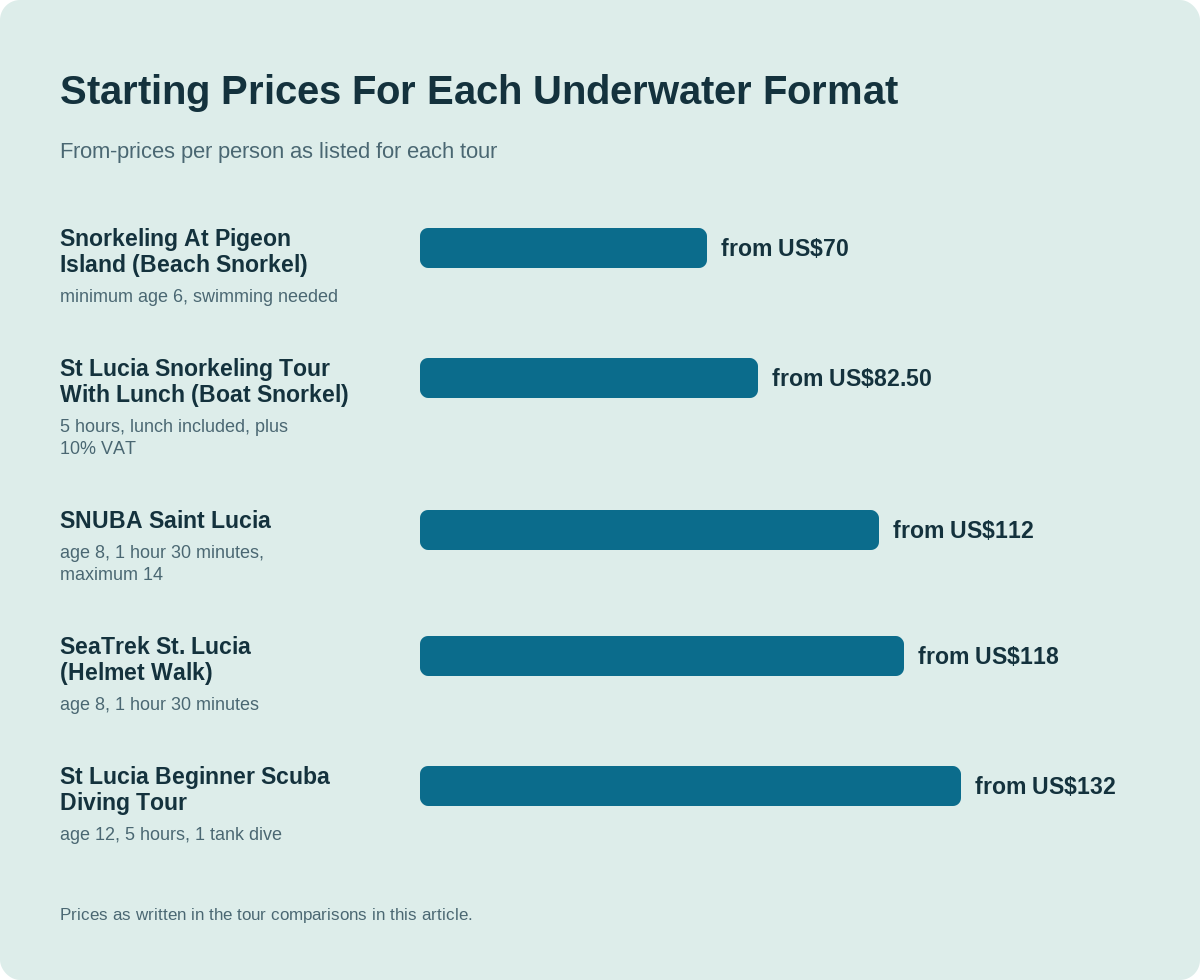
The chart above compresses the whole decision into one view, and it makes the pattern visible: the more the format constrains your movement, the lower the minimum age, because the operator is accounting for what a beginner can manage in that posture. The helmet walk and SNUBA both start at 8, the beach snorkel at 6, the boat snorkel at 4 with a guide in the water, and scuba at 12 after training. Choose the constraint that matches your worry and the age column does the rest.
Common Questions About Sharks And Stings At Pigeon Island
Are There Sharks In St Lucia?
No official source states which shark species are present, absent, common or rare around Pigeon Island or the rest of the island's coast, so no claim either way is made here. The Tourism Authority's published water guidance concerns behaviour, not species: never snorkel alone, mind boat traffic, never touch coral or marine life, and use reef-safe sunscreen.
Are There Jellyfish Or Urchins At Pigeon Island Beach?
Whether jellyfish, urchins or fire coral occur at this beach is not published or confirmed. The Tourism Authority describes the beach as having calm, sheltered waters suited to beginner snorkelers, with a variety of fish and marine life around the rocky coastline. Contact is what causes stings, so keep hands and feet off everything.
Is It Safe To Dive Or Snorkel At Pigeon Island?
No verdict on the safety of any activity is offered here. What the official guidance offers instead: the west coast generally has calmer waters, many beaches have no lifeguards, never snorkel alone, mind boat traffic, use reef-safe sunscreen and never touch coral or marine life. Guided formats add trained and certified guides per the manufacturer.
Which Marine Life Does The Official Record List Near Pigeon Island?
The Tourism Authority's diving page lists eagle rays, moray eels, lobsters and great barracuda as seen regularly on the scuba site at the base of the island, a dive running from about 15 ft to a maximum of 60 ft. That list belongs to that scuba site only; no species list exists for the helmet walk or the beach snorkel zone.
Does The Helmet Dive Protect You From Stings?
The manufacturer describes a helmet that keeps head and face dry and walks guided by trained and certified guides, which changes your posture and route, but no product promises protection from any animal. The behaviour rules still apply: follow the guide's path and keep hands off the reef and everything on it.
What Should A Nervous Beginner Book First?
The SeaTrek St. Lucia helmet walk is built for exactly that reader: no swimming required, minimum age 8, 1 hour 30 minutes total with about 25 minutes underwater, from US$118 per person, guided, with free cancellation up to 24 hours before start. Readers who want more freedom can widen to SNUBA from US$112 or the beach snorkel from US$70.