What Is Underwater Walking Called, Sea Walk Or Helmet Dive?
Underwater walking goes by helmet diving and Sea Trek in St Lucia. Here is what each name means, how the helmet works, and what the Pigeon Island session involves.
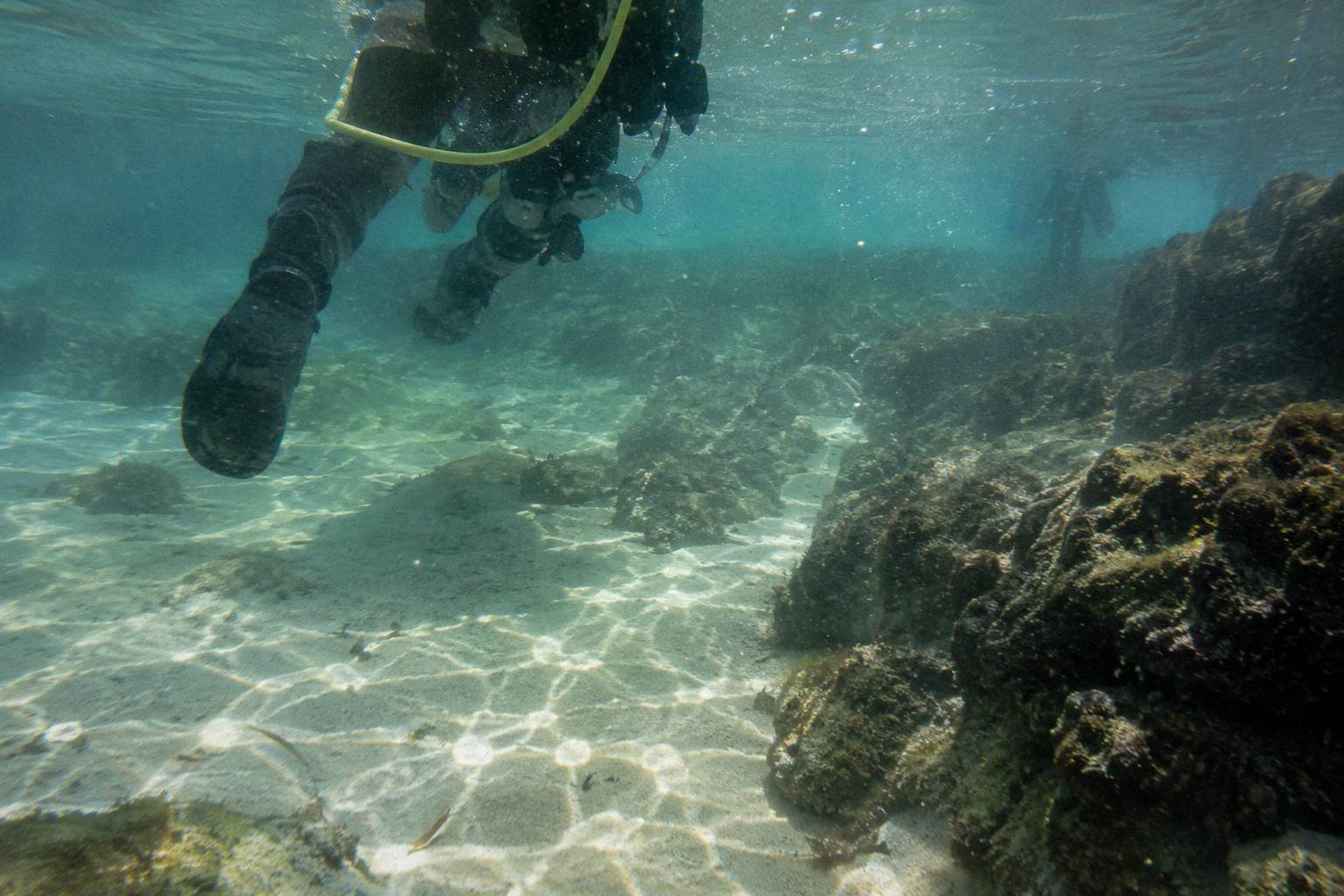
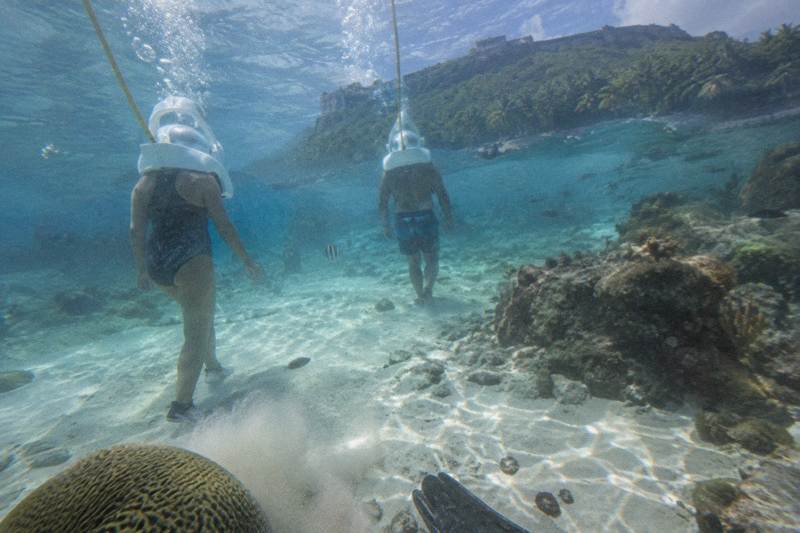
Start with the beginner underwater tours in St Lucia if you want the full spread of walk-in, no-certification formats. The short version: the activity where you descend a ladder, a helmet settles on your shoulders, and you stroll along the seabed breathing normally is called helmet diving, and in St Lucia the product you book carries the SeaTrek name.
| Fact | Detail |
|---|---|
| Most common name | Helmet diving |
| Brand name in St Lucia | Sea Trek (SeaTREK, by Sub Sea Systems) |
| Other loose terms | Sea walking, underwater walking, helmet walk |
| How it works | Surface-supplied air by hose, helmet on the shoulders |
| Head and face | Stay dry, per the manufacturer |
| Minimum age | 8 |
| Swimming needed | No |
| Local session | 1 hour 30 minutes total, about 25 minutes underwater |
Underwater walking is called helmet diving, and when it runs on the SeaTREK system it is also called Sea Trek. The manufacturer, Sub Sea Systems, describes SeaTREK as a helmet diving system in which guests walk on the ocean floor while breathing naturally, and it is the most recognized brand of that system, with locations in 25 countries. Sea walk is a loose, informal name operators elsewhere use, not a distinct format.
So the two names you will actually meet in St Lucia point to the same thing. Helmet diving is the generic family name: you wear a helmet, air comes from the surface, you walk. Sea Trek, styled SeaTREK, is the brand of helmet system that the local operator uses, and its product title leads with that name. A reader comparing brochures from different islands may also run into the word SeaWalker, a separate patented helmet system of Japanese origin. Operators around the world use terms like sea walking, underwater walking and helmet walk loosely for both brands, which is why the naming feels muddled: the words describe one activity, the trademarks describe who built the helmet.
The manufacturer's own description of the experience is worth reading in its plain form. On the manufacturer's SeaTrek page, Sub Sea Systems explains that the helmet keeps your head and face dry, that prescription glasses can stay on, that no swimming skills are required, and that guests aged 8 and upward can take part, guided by trained and certified guides on every tour. The page sums up the whole activity in three words: "just walk and breath". That is the pitch, and it is also a fair technical summary.
Why does the naming question matter for a booking? Because searching "sea walk St Lucia" or "underwater walking St Lucia" will still land you on the helmet diving product, but searching a term no operator uses will not land you anywhere. The words on the booking page are SeaTrek, helmet and underwater walk. If a guide elsewhere calls the same activity a sea walk, that is vocabulary, not a different tour.
The product that carries these names here is St Lucia Helmet Dive's featured walk: the SeaTrek St. Lucia session at Pigeon Island, operated by Sealife Paradise. It runs 1 hour 30 minutes in total, from US$118 per person, and rates 4.8 from 231 reviews. You can also read the full SeaTrek seabed walk product page for its inclusions, pickup area and cancellation terms. Amounts on these pages are in US dollars.
What The Helmet Actually Is And How The Air Reaches You
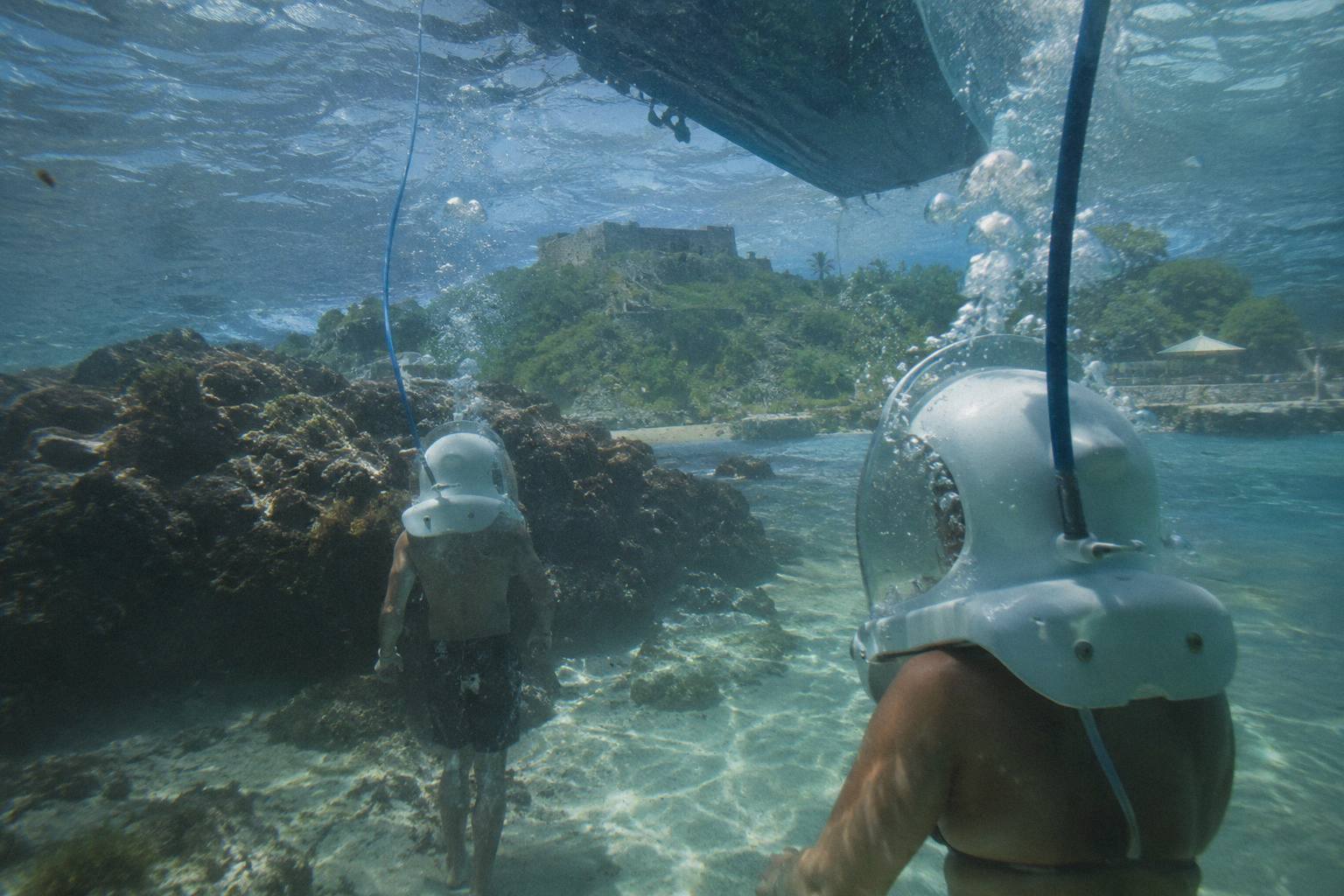
The helmet is a sealed shell of polycarbonate and marine-grade parts with a panoramic acrylic lens that rests on your shoulders, while air arrives through a hose from an electrically powered air center at the surface. The manufacturer compares it to an inverted glass: air stays inside as long as the helmet is not turned over, and a constant flow of cooled, dried and filtered air keeps it fresh.
That inverted-glass picture is the single most useful mental model. Turn a glass upside down and push it into water, and the air pocket stays put because the water cannot rise into it while the opening faces down. The helmet works the same way, with one improvement: rather than trapping a fixed amount of air, it receives a continuous supply from the surface, so the air inside does not go stale. Your head and face stay dry, in the manufacturer's words, and glasses can stay on because there is no water against your face to dislodge them.
The supply chain is short. A hose connects the helmet to an air center on the surface, which the manufacturer says is electrically powered and delivers air that has been cooled, dried and filtered. Other configurations exist in the wider SeaTREK family, including portable pods, backpacks and adapted chairs, but the shoulder-resting helmet fed by hose is the standard one. Guides are trained and certified, per the manufacturer, and they are in the water with the group rather than watching from a boat.
On weight: the manufacturer gives about 15 lb for the helmet underwater. That figure belongs to the equipment, not to you; the water supports most of the helmet's bulk, which is why the manufacturer's tagline for the sensation is near weightlessness. Do not read that 15 lb as a luggage weight or a guest limit, because it is neither. If weight or size is a personal concern, ask the operator before booking.
The names and mechanics are covered more fully in how helmet diving works, the air hose and helmet explained, which walks through the air path piece by piece.
Helmet Diving, Sea Trek, SeaWalker And The Loose Names Operators Use
Helmet diving is the generic name of the activity, SeaTREK is Sub Sea Systems' brand of helmet system, and SeaWalker is a separate patented helmet system of Japanese origin. Operators elsewhere use sea walking, underwater walking and helmet walk loosely across both brands. In St Lucia the product title uses the SeaTrek name, so that is the word that matters locally.
A small table keeps the vocabulary straight, because the words overlap in ways that trip up searches.
| Name | What it denotes | Status |
|---|---|---|
| Helmet diving | The activity: helmet on the shoulders, surface-supplied air, walking the seabed | Generic term |
| Sea Trek / SeaTREK | Sub Sea Systems' brand of helmet diving system, in 25 countries | Manufacturer's brand |
| SeaWalker | A distinct patented helmet system of Japanese origin | Separate brand, not among the tours in St Lucia compared here |
| Sea walking / underwater walking / helmet walk | Informal descriptions operators elsewhere apply to any helmet walk | Loose terms |
| SNUBA | A different format: regulator fed from a floating raft, no helmet | Different activity |
Two clarifications do most of the work. First, brand versus activity: calling a tour a Sea Trek says who made the helmet, while calling it helmet diving says what you do, and one tour can carry both labels. Second, geography: SeaWalker helmets operate in other parts of the world, but no product in St Lucia's lineup uses that name, so a search for it here leads nowhere useful. The local operator, Sealife Paradise, titles its helmet product with SeaTrek, and its own tours page lists the walk alongside SNUBA and snorkeling at Pigeon Island, as the operator's tours page shows.
A related question people ask is whether SeaTrek and helmet diving are the same thing at all, and the short answer is yes, with the brand caveat above; the comparison of SeaTrek and generic helmet diving covers the differences in equipment lineage. There is also a longer history behind the word helmet itself, since hard diving helmets predate walking tours by more than a century; the story of old-style diving helmets and the SeaTrek version traces that line.
SeaTrek St. Lucia At Pigeon Island: The Session Itself
The St Lucia session runs 1 hour 30 minutes in total, with about 10 minutes of briefing and about 25 minutes on the seabed, from US$118 per person. It departs from Pigeon Island in Gros Islet, carries a minimum age of 8, requires no swimming skill, and includes private transportation from hotels in the north of the island. Gratuities are not included.
The shape of the session matters more than the name on it. Just over an hour and a half covers the whole experience door to door, and the part most people picture, the walk itself, is roughly the length of a podcast episode. The briefing beforehand, about 10 minutes, covers hand signals and the few things you need to know before the ladder. It is a shared-format tour, and the operator promises small groups, certified guides and free transfers within the north of the island on its own site.
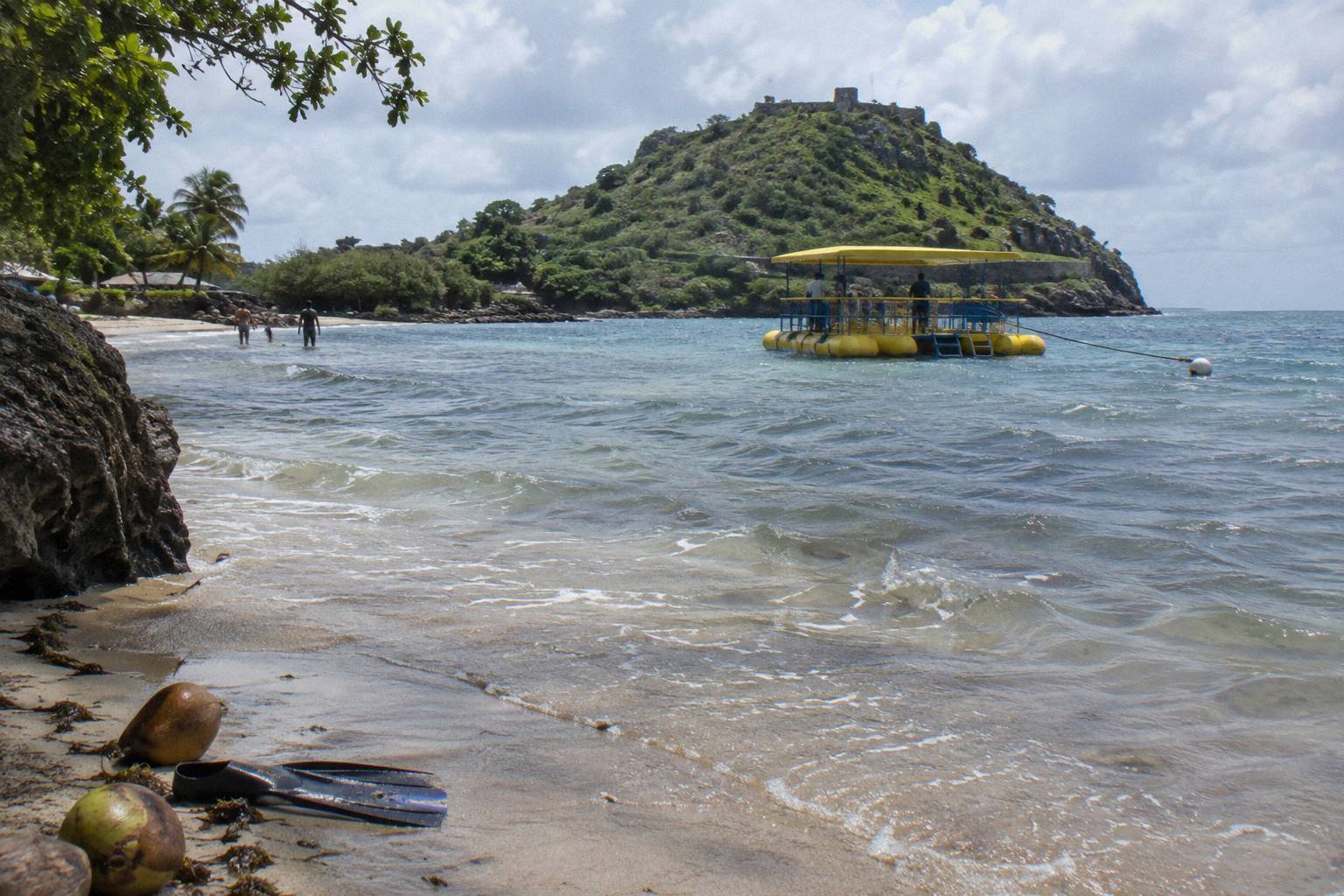
Pigeon Island itself deserves a sentence or two of context, because it is why the water there suits a first underwater walk. The 44-acre island became a National Park in 1979 and a National Landmark in 1992, and it joined the mainland by a causeway built in the early 1970s. The Tourism Authority describes Pigeon Island Beach as having calm, sheltered waters that suit beginner snorkelers, with a rocky coastline around it that attracts marine life, as the Saint Lucia tourism Pigeon Island page sets out. The National Trust opens the landmark daily from 9:30 am to 5:00 pm, with last entry at 4:15 pm, and non-resident entry fees run US$10 for adults and US$3 for children 5 to 12; those fees are the National Trust's own, can change, and stand apart from any tour price.
The session facts in one place:
| Detail | Figure |
|---|---|
| Total duration | 1 hour 30 minutes |
| Briefing | About 10 minutes |
| Underwater | About 25 minutes |
| From price | US$118 per person |
| Minimum age | 8 |
| Swimming | Not required |
| Rating | 4.8 from 231 reviews |
| Departure point | Pigeon Island, Gros Islet |
| Pickup | Included from northern hotels only |
| Cancellation | Free up to 24 hours before start |
One medical note, in the operator's own words rather than anyone's interpretation: the booking page says the walk is not recommended for pregnant travelers, travelers with poor cardiovascular health or travelers with spinal injuries. If any of those apply, ask the operator or a doctor before booking. Photos are not among the included items, so plan for that if pictures are the point of the day.
Prices vary by date and group, and the booking page shows the price for the date you choose. You can check dates on the booking calendar at any time.
Helmet Walk Or SNUBA: Which Beginner Format Fits
SNUBA is a cross between snorkeling and scuba diving, in the operator's words: you breathe through a regulator connected to a floating raft, with no tank on your back and no certification needed. The helmet walk keeps your head dry and needs nothing in your mouth; SNUBA puts a regulator in your mouth but lets you swim rather than walk. Both start at age 8 and both run 1 hour 30 minutes in St Lucia.
The choice usually comes down to one preference. If the idea of a regulator in your mouth is the barrier, the helmet wins, because the manufacturer's design keeps breathing entirely normal, glasses on and face dry. If wearing a helmet feels confining and swimming feels natural, SNUBA gives more freedom of movement: the raft floats above, the hose follows you, and a group of up to 14 travels together on the local product. The SNUBA session starts from US$112 per person and rates 4.7 from 166 reviews, against the helmet walk's US$118 and 4.8 from 231 reviews.
There is a third rung on the same ladder. Snorkeling at Pigeon Island, from US$70 per person, stays on the surface with a mask and snorkel, equipment included, minimum age 6, and it needs swimming ability, which the two hose-fed formats do not. It rates 4.4 from 16 reviews. None of the three requires certification, and all three depart from the same corner of the island, which is why families so often split across them in a single morning: one parent on the seabed walk, an older child on SNUBA, a confident swimmer on the reef with a mask.
The medical advisory is the same shape for both hose-fed formats. The operator's booking page applies the same caution to SNUBA as to the helmet walk, naming pregnancy, poor cardiovascular health and spinal injuries, so the routing is identical: ask the operator or a doctor first. For flying after either session, no official interval exists for surface-supplied walking or SNUBA, so ask the operator; the 12 and 18 hour DAN figures belong to scuba only, and the deeper comparison of formats sits in SeaTrek versus SNUBA versus scuba versus snorkeling.
What Trips People Up Before You Book
Most booking mistakes around underwater walking come from the names: searching terms no local operator uses, expecting a product the lineup does not carry, or assuming pickup reaches the whole island. The helmet walk includes pickup from northern hotels only, gratuities are excluded, photos are not included, and free cancellation ends 24 hours before start. Read the pickup line before anything else.
Pickup is the detail that most often goes wrong. The helmet walk and the SNUBA session both include transportation from hotels in the north of the island only, and the exact meeting point arrives with the booking confirmation. Staying in Soufriere, Vieux Fort, Micoud or Dennery, the far south and east, means arranging your own way north; Hewanorra airport to the Gros Islet area is about 1 hour 30 minutes and to Pigeon Island about 1 hour 40 minutes, per the Tourism Authority's figures. Cruise passengers should check the booking calendar for port options before assuming a terminal pickup exists.
The second trap is vocabulary. Searches for names used in other countries can miss the local product entirely, because the words that match here are SeaTrek, helmet and underwater walk. The third is expectation: the underwater portion is about 25 minutes, not the whole session, and the rest is briefing, gearing up and the surface parts of the experience. Anyone booking purely for photography should note that photos are not among the included items and plan around it.
Finally, season and sea. The west coast generally offers calmer waters, sea temperatures hold between 26 and 29 C all year, and mornings bring the calmest water and clearest conditions, per the Tourism Authority. What any given day delivers is up to weather and the operator, so the free cancellation window, 24 hours before start, is the buffer that matters. Book the decision, not the forecast.
Common Questions About Underwater Walking Names
What Is Underwater Walking Called, Sea Walk Or Helmet Dive?
The activity is called helmet diving. When it runs on the SeaTREK system by Sub Sea Systems it is also called Sea Trek, which is the name on the St Lucia product. Sea walk is an informal term some operators elsewhere use for the same kind of tour, not a separate format.
Is Sea Trek The Same As Helmet Diving?
Yes. SeaTREK is a brand of helmet diving system, so every Sea Trek tour is a helmet dive, though not every helmet dive worldwide runs on SeaTREK helmets. The St Lucia product uses the SeaTrek name in its title.
Do You Need To Swim For Underwater Walking?
No. The manufacturer states no swimming skills are required, and the St Lucia tour carries the same flag: you walk on the seabed with the helmet on your shoulders. Comfortable walking is the requirement, per the manufacturer's wording.
How Old Do You Have To Be?
The St Lucia helmet walk sets a minimum age of 8, and the manufacturer's own guidance covers ages 8 upward. SNUBA locally also starts at 8, while beach snorkeling at Pigeon Island starts at 6.
How Long Are You Actually Underwater?
About 25 minutes, within a total session of 1 hour 30 minutes that includes roughly 10 minutes of briefing. The rest is gearing up and the surface portions of the experience.
What Does The Helmet Walk Cost In St Lucia?
The SeaTrek St. Lucia session starts from US$118 per person, with SNUBA from US$112 and beach snorkeling from US$70. Prices vary by date and group, and the booking page shows the price for the date you choose.