What Are Old-Style Diving Helmets Called, And Is A Sea Trek Helmet The Same?
Old-style diving helmets are called standard diving dress, hard-hat or copper hat gear. Here is how they differ from the modern SeaTrek helmet used on the Pigeon Island seabed walk in St Lucia.
The walk most visitors take at Pigeon Island belongs to a small family of beginner underwater tours in St Lucia, and the helmet at the centre of it gets compared, constantly, to the copper globes of old photographs. The comparison is worth taking seriously, because the two devices share one idea, air supplied from the surface through a hose, and differ on almost everything else.
| Fact | Detail |
|---|---|
| Old helmet name | Standard diving dress, also hard-hat or copper hat equipment |
| Origin | England, 1840, Augustus Siebe, with the Deane brothers |
| Classic example | U.S. Navy Mark V, about 55 lb (25 kg), in service until 1984 |
| Modern equivalent | SeaTrek surface-supplied walking helmet |
| SeaTrek weight underwater | About 15 lb, the manufacturer's figure |
| Minimum age for SeaTrek | 8 |
| Swimming skill needed | No, per the manufacturer |
| Where it runs in St Lucia | Pigeon Island, Gros Islet |
Old-style diving helmets are called standard diving dress, also known as hard-hat or copper hat equipment, and no, a SeaTrek helmet is not the same thing. The old gear was a sealed copper bonnet clamped to a waterproofed canvas suit and fed by a surface pump, built for working dives. The SeaTrek helmet is an open-bottom recreational shell that rests on the shoulders and needs no suit, no certification and no swimming skill.
The name comes from the whole ensemble rather than the metal headpiece alone. A traditional helmet formed part of the standard diving dress, the term used for the combined suit, breastplate and bonnet that commercial and navy divers wore for well over a century. Sailors and dockworkers knew it more plainly as hard-hat gear, or the copper hat, and the nickname stuck even as the equipment evolved.
The lineage is documented by the Divers Alert Network's history of diving material: the deep-sea helmet was developed in England in 1840 by Augustus Siebe, with contributions from the Deane brothers, as a copper bonnet mounted on a breastplate and joined by a screw neck ring. Air came down a hose from a pump at the surface, and exhaled air left through an exhaust valve. That single arrangement, sealed suit plus pumped air, defined working diving for generations.
The SeaTrek helmet keeps the surface-supplied idea and discards the rest. There is no suit, no seal and no pump in the old sense; air arrives by hose from an electrically powered air center that supplies a constant flow of cooled, dried and filtered air, and the helmet simply rests on the shoulders. The manufacturer's SeaTrek page describes it as working like an inverted glass, the air stays inside as long as the helmet is not turned over, and a continuous turnover keeps it fresh. For a St Lucia version of the experience, the Seabed Helmet Walk at Pigeon Island runs 1 hour 30 minutes in total with about 10 minutes of briefing and about 25 minutes underwater.
How The Traditional Hard-Hat Helmet Worked
A traditional helmet sealed the diver's head inside copper, locked to a breastplate with bolts, and depended entirely on a pump and a crew on the surface. Air came down a hose under pressure, exhaled air escaped through a valve, and the canvas suit kept the water out. It was machinery for paid work underwater, not for a holiday afternoon.
The classic American example is the U.S. Navy Mark V, produced from about 1915 to 1916, a 12-bolt helmet of spun copper and tobin bronze with four viewing lights, weighing about 55 lb (25 kg) and staying in navy service until 1984. General background on that design and its relatives is covered in the diving helmet reference, which treats the Mark V as the archetypal hard hat. The weight alone tells you what the equipment assumed: a diver lowered from a boat, dressed by assistants, doing salvage, construction or military work for hours.
Everything about the system was interdependent. If the pump stopped, the diver had a problem, which is why old diving outfits ran with tenders and signal lines and strict procedures. The suit had to be waterproofed and clamped correctly at every joint, because the helmet and dress together formed a pressure vessel worn on the body. Training was long, and the people who qualified were professionals.
That context explains the nostalgia the image carries. The round copper helmet with its faceplate is one of the most recognisable silhouettes in industrial history, and it appears on dive-club crests, film posters and restaurant walls to this day. It was also, by modern recreational standards, enormously heavy apparatus for what it delivered: breathable air at depth, for a trained worker, at the cost of a full support crew.
What The SeaTrek Helmet Is Made Of
The SeaTrek helmet is built from polycarbonate and marine-grade components with a panoramic acrylic lens, and it is open at the bottom rather than sealed. It rests on the wearer's shoulders with no suit and no clamping ring, keeps the head and face dry by the inverted-glass principle, and is fed a constant flow of cooled, dried and filtered air through a hose from the surface.
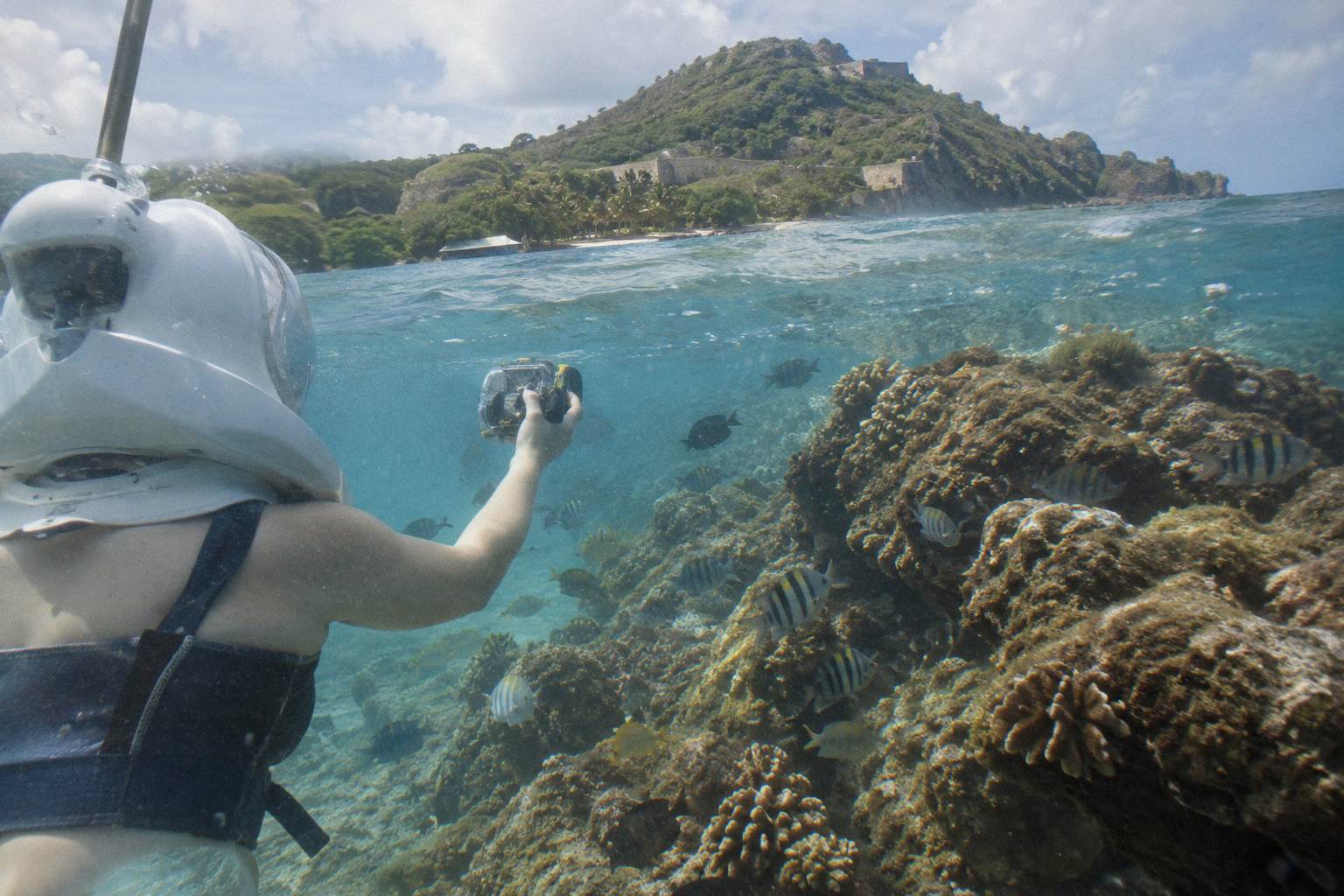
The manufacturer, Sub Sea Systems, gives a useful engineering picture of the air supply. Beyond the electric air center configuration used at permanent sites, the system can also run from a portable pod, a backpack or an adapted chair, but the principle never changes: air flows continuously into the helmet, and the open bottom holds it there the way an upturned glass holds air in a sink. The manufacturer's Q&A material puts the free flow at about 1.6 CFM, roughly three times typical breathing demand, so the supply is generous rather than marginal.
The shoulder-resting design does several jobs at once. It means the helmet's weight is carried by the body's frame instead of the neck, it means nothing has to be sealed against skin, and it means the wearer can stand, walk and turn the head to look through the panoramic lens. The manufacturer says prescription glasses can stay on and no swimming skill is needed, with ages 8 and up welcome. On the St Lucia product the tour details list a minimum age of 8 and a total duration of 1 hour 30 minutes, with private transportation included from hotels in the north of the island.
The Helmet Part By Part
Reading the SeaTrek helmet from the top down: a shell of polycarbonate and marine-grade parts, a panoramic acrylic lens for a wide view, an open bottom that sits on the shoulders, a hose connecting to the surface air supply, and a continuous outward flow of exhaled air. No breastplate, no bolts, no suit, and no exhaust valve the wearer has to think about.
| Part | Traditional Hard Hat | SeaTrek Helmet |
|---|---|---|
| Shell | Spun copper and bronze bonnet | Polycarbonate, marine-grade components |
| Viewing | Four small glass lights | Panoramic acrylic lens |
| Body connection | Bolted breastplate and clamped canvas suit | Rests on the shoulders, no suit |
| Air supply | Hose from a surface pump | Hose from an electrically powered air center |
| Air handling | Exhaust valve, metered flow | Continuous free flow, open bottom |
| Weight in water | About 55 lb total for the Mark V helmet | About 15 lb underwater, manufacturer's figure |
| Purpose | Working dives, professional crews | Recreational seabed walking, ages 8 and up |
The comparison table is the most direct way to line the two devices up, because each row is a design decision rather than a marketing claim. Copper was chosen in the 1840s because it could be spun, joined and repaired with the tools of the time, and because it survived salt water. Polycarbonate is chosen now because it is light, tough and transparent enough to mould into a single wide viewport.
The air rows matter most for anyone nervous about breathing underwater. The old helmet depended on a tender at the pump; the modern helmet depends on an air center with continuous output well above demand, as the manufacturer describes it. Neither is a scuba tank. Both belong to the surface-supplied family, which is exactly why the visual comparison people make is half right: the silhouette echoes the old gear, the engineering does not.
What A Guest Actually Wears And Does
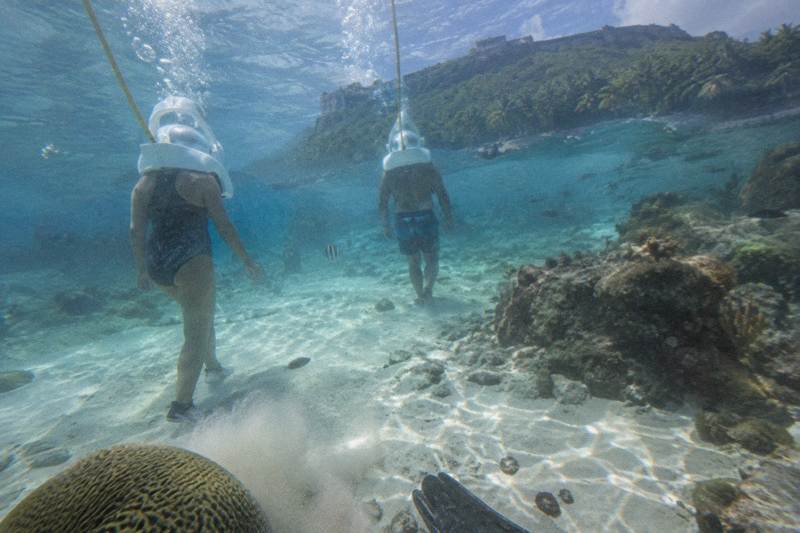
A guest on the seabed walk wears a helmet and whatever is comfortable for walking in shallow water: no diving suit, no fins, no boots, no mouthpiece. The session runs 1 hour 30 minutes in total, about 10 minutes of it a briefing and about 25 minutes underwater, walking the bottom alongside trained and certified guides at Pigeon Island.
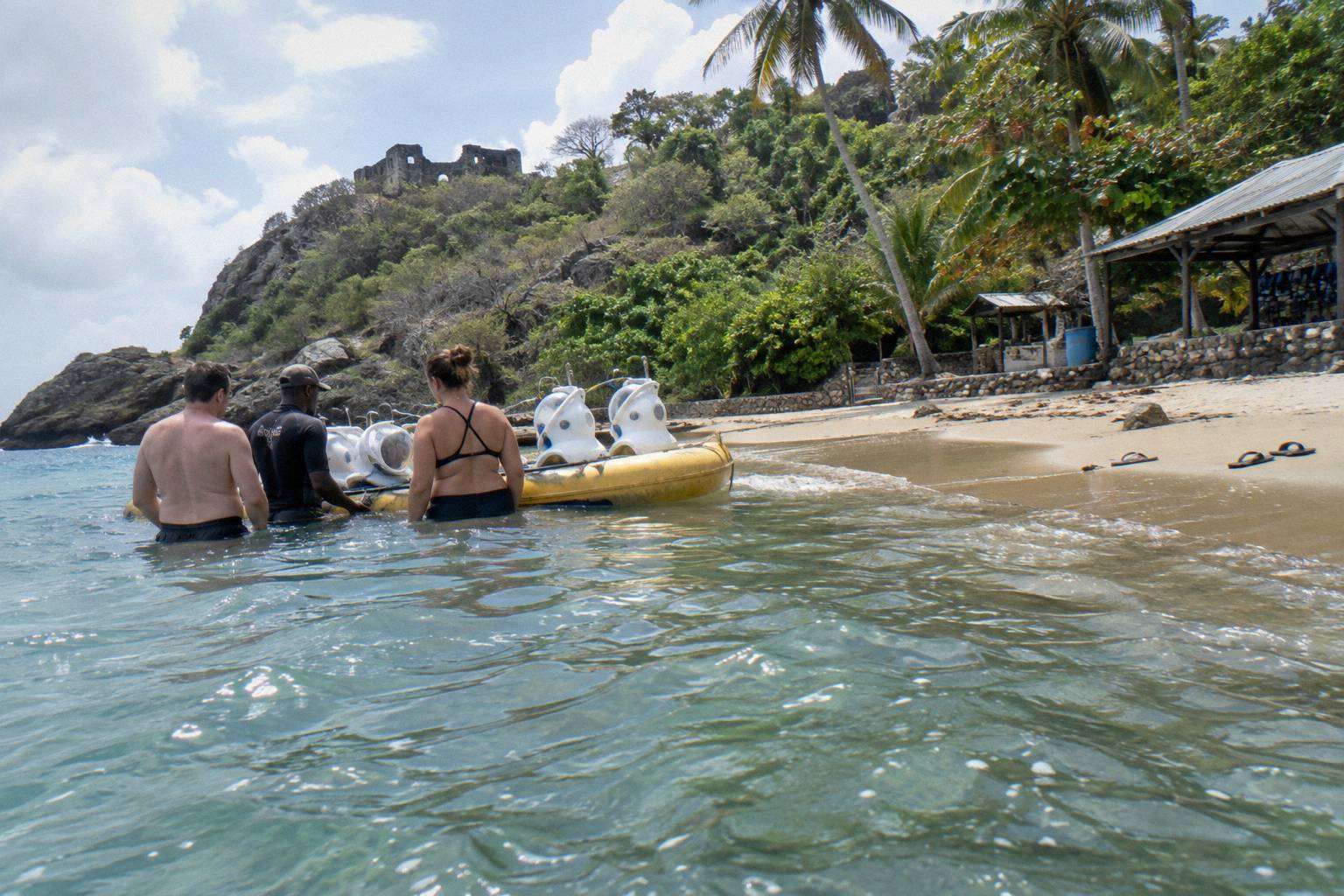
The manufacturer's phrase for the experience is "just walk and breath", and it is a fair summary of the guest's job description. Entry and exit happen at the surface, the helmet goes on before the descent and comes off after, and the guides escort the walk throughout. The head and face stay dry, in the manufacturer's description, which is what lets glasses stay on and hair stay unsoaked. The questions visitors ask most often, whether hair gets wet and how the breathing feels, are covered in the guides on getting your hair wet on a helmet dive and breathing normally in a SeaTrek helmet.
Contrast that with the old dress, where simply getting into the equipment was a two-person job. A hard-hat diver needed the suit pulled on, the gloves and collar clamped, the bonnet screwed down, and then help getting to and from the water. The recreational helmet inverts the priority: preparation is a briefing, not a dressing ceremony, and the whole in-water portion fits inside half an hour. Other pages covering the same trip are gathered on St Lucia Helmet Dive.
The St Lucia operator, Sealife Paradise, runs the walk from Pigeon Island in Gros Islet, with pickup included from hotels in the north of the island and the exact meeting point given on the booking confirmation. Cancellation is free up to 24 hours before the start, and prices run from US$118 per person, with gratuities not included. Amounts on these pages are US dollars.
Old Helmet Versus SeaTrek: The Key Differences
The short version is this: the traditional helmet was sealed, suited and pump-fed so professionals could work underwater, while the SeaTrek helmet is a lightweight, open-bottom walking system for recreation, needing no certification and no swimming skill. Both are surface-supplied. Beyond that shared hose, they differ in material, weight, purpose, training and the kind of person they were built for.
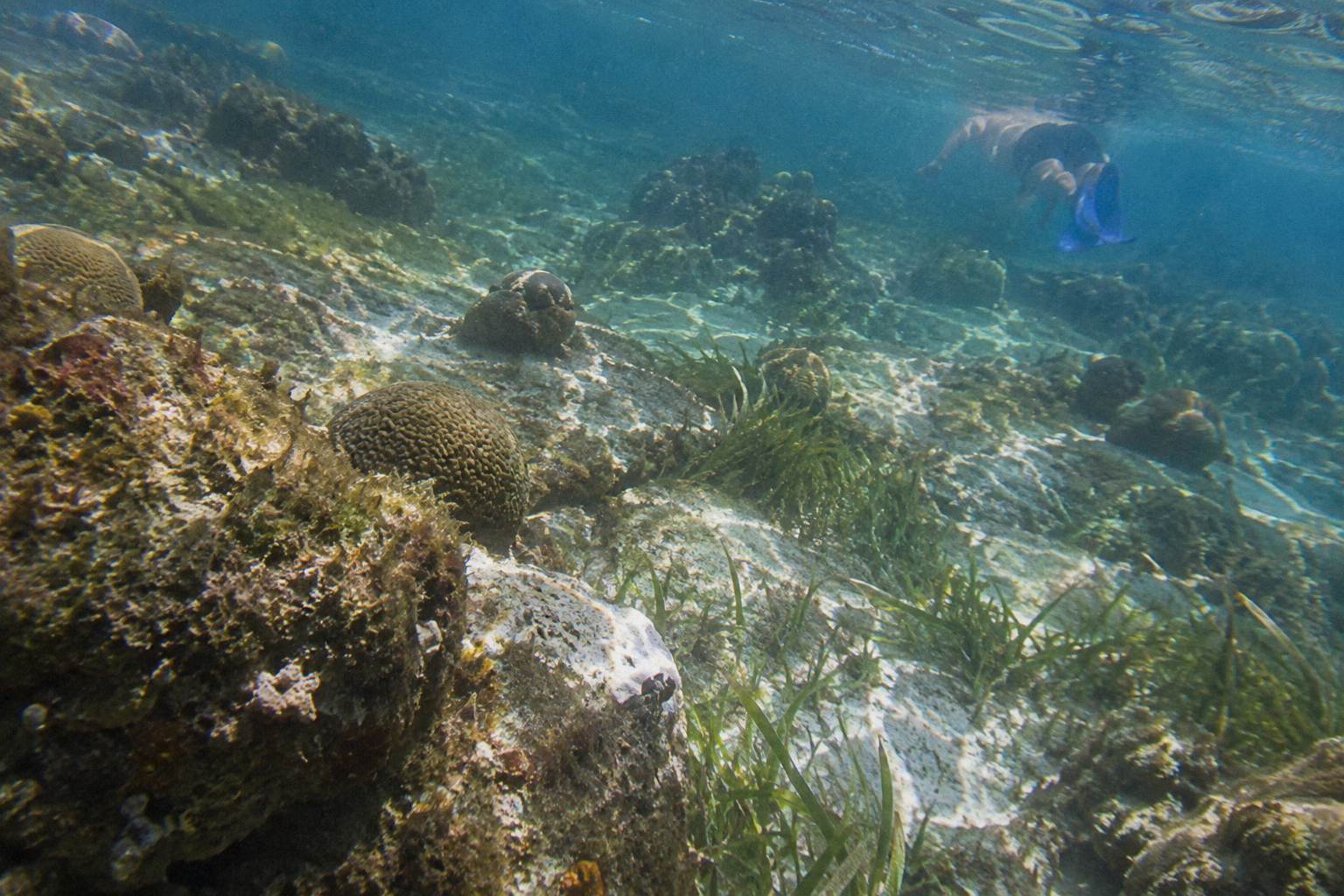
The certification point deserves its own sentence. Standard diving dress required lengthy professional training, and its modern descendants in commercial diving still do. The SeaTrek walk requires none: the manufacturer states no certification is needed, only the ability to walk, and the guides who lead every tour are trained and certified themselves. That inversion, from a device that demanded expertise to a device that supplies supervision, is the whole story of the comparison.
Depth is where the two designs diverge hardest, and it is also where the published details for the St Lucia session go quiet, so the fair approach is to state the general contrast and stop. Hard-hat gear was engineered for working depths under pressure, with the suit managing the diver's protection. The recreational helmet is engineered for shallow, guided walking; the manufacturer describes near weightlessness and an easy stride, and the tour compared here puts about 25 minutes underwater. Ask the operator about any depth question specific to the Pigeon Island walk.
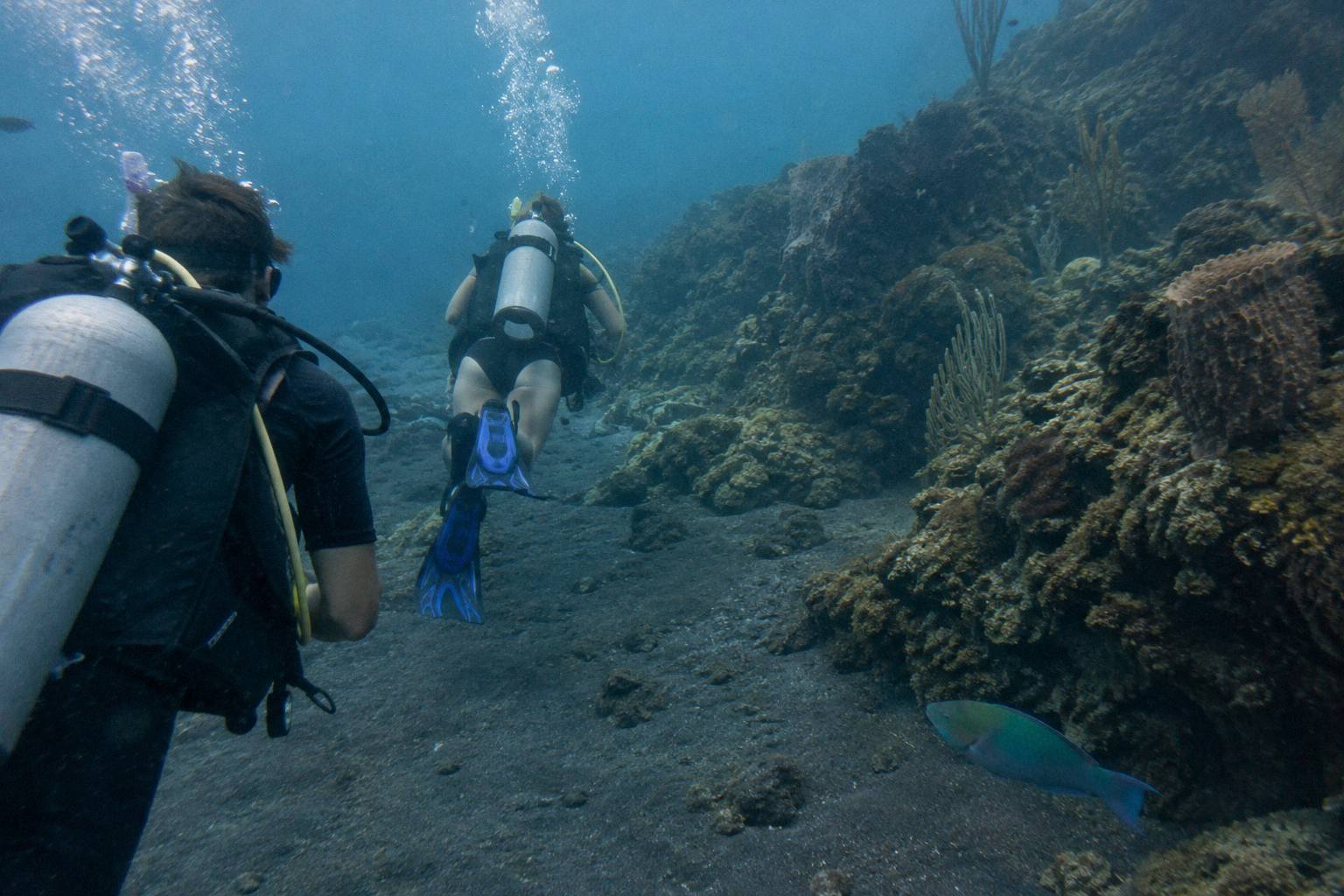
For anyone weighing formats rather than history, the neighbouring products make the decision easier to see. SNUBA Saint Lucia, from US$112 per person and rated 4.7 from 166 reviews, sits between snorkeling and scuba with a regulator fed from a floating raft, a group maximum of 14 and a minimum age of 8. The same operator runs it from Pigeon Island, so the choice between walking the bottom and drifting on a hose is a real one, and the guide comparing SNUBA against the helmet walk works through it in detail.
Why The Difference Matters For Beginners
For a beginner, the difference matters because it decides what you have to learn before the water. A hard-hat diver trained for months; a SeaTrek guest gets a roughly 10 minute briefing. The modern helmet removed the suit, the seals, the pump discipline and the certification, and kept the one comforting feature beginners actually want: air coming continuously from above, with a guide alongside the whole way.
That is why the old photographs still do useful work in explaining the modern product. When people picture a diving helmet, they picture weight, and the question that follows is almost always whether they can carry it. The manufacturer's figure of about 15 lb underwater, from its own Q&A material, is the number to hold onto: the helmet feels manageable in the water even though it is a substantial object on land. The question of how heavy a SeaTrek helmet really is gets its own fuller treatment elsewhere.
Beginners weighing the walk against a first scuba experience can also compare the commitment levels directly, and the three beginner formats available at Pigeon Island and Marigot Bay line up like this:
| Product | Format | From (US$) | Duration | Minimum Age | Rating |
|---|---|---|---|---|---|
| SeaTrek St. Lucia | Seabed helmet walk | 118 | 1 hour 30 minutes | 8 | 4.8 from 231 reviews |
| SNUBA Saint Lucia | Surface raft air hose | 112 | 1 hour 30 minutes | 8 | 4.7 from 166 reviews |
| St Lucia Beginner Scuba Diving Tour | First scuba dive with training | 132 | 5 hours | 12 | 4.7 from 57 reviews |
Neither of the other two is the soft option; they are different amounts of day and different amounts of instruction. The beginner scuba tour from Dive Fair Helen departs Marigot Bay and includes training before the dive, lunch, tanks and weights, with pickup from northern to western island locations only. The helmet walk and SNUBA both leave from Pigeon Island, include pickup from hotels in the north, and share the same free-cancellation window of 24 hours before the start.
The medical framing also comes from the operator rather than from folklore. The operator's advisory on the booking page says the helmet walk and SNUBA are not recommended for pregnant travelers, travelers with poor cardiovascular health or travelers with spinal injuries. Ask the operator or a doctor about any specific concern before booking. For the scuba end of the spectrum, DAN's flying-after-diving guidance gives a 12 hour preflight surface interval after a single no-decompression dive and 18 hours after multiple dives or multiple days, but that is scuba guidance; for the helmet walk print no interval and ask the operator instead.
What Trips People Up When Comparing Helmet Types
Three mix-ups recur. People assume the modern helmet is a lighter replica of the old one, when it is a different design that merely shares the hose. People assume weight is the barrier, when the manufacturer's underwater figure is about 15 lb. And people assume old equals dangerous and new equals safe, which is not a claim anyone should make about any water activity: what differs is training, purpose and the conditions each device was engineered for.
Naming the mix-ups plainly helps. The SeaTrek helmet is not a modernised Mark V; it belongs to a younger category of recreational surface-supplied walking systems, built so that a person with no diving background can stand on the seabed breathing surface air. The old gear answered the question of how a worker could survive a full shift underwater. The new helmet answers the question of how a holidaymaker can spend 25 minutes underwater without learning to swim.
The second mix-up, weight anxiety, dissolves on contact with the numbers. A Mark V helmet weighed about 55 lb before the suit and weights; the SeaTrek helmet's manufacturer gives about 15 lb underwater. The third mix-up is subtler. Equipment does not make an activity risk-free, and no verdict of that kind belongs in print; what can be said is that the guided, shallow, continuously supplied format was designed around first-timers, that the manufacturer requires trained and certified guides on every tour, and that the Tourism Authority's general beach-safety advice, never snorkel alone, mind boat traffic, use reef-safe sunscreen, never touch coral or marine life, applies to everyone in St Lucia's water regardless of what is on their head.
Common Questions About Diving Helmet History And The Modern Walk
What Are Old-Style Diving Helmets Called, And Is A Sea Trek Helmet The Same?
They are called standard diving dress, also hard-hat or copper hat equipment, developed in England in 1840 by Augustus Siebe. A SeaTrek helmet is not the same: it is an open-bottom, shoulder-resting recreational helmet fed a constant flow of cooled, dried and filtered air from the surface, needing no suit, no certification and no swimming skill.
Is A SeaTrek Helmet A Replica Of A Navy Diving Helmet?
No. The navy Mark V was a sealed copper and bronze bonnet bolted to a breastplate and canvas suit, fed by a surface pump, weighing about 55 lb. The SeaTrek helmet is polycarbonate and marine-grade parts with a panoramic acrylic lens, open at the bottom, resting on the shoulders, with the manufacturer giving about 15 lb underwater.
Do You Need To Know How To Swim For A SeaTrek Helmet Walk?
No. The manufacturer states no swimming skill is required, only comfortable walking, with participants aged 8 and up. The St Lucia session runs 1 hour 30 minutes in total with about 25 minutes underwater, guided throughout by trained and certified guides.
Does Your Head Get Wet Inside The Helmet?
The manufacturer's description is that the head and face stay dry, because the helmet works like an inverted glass: air stays inside as long as the helmet is not turned over. Prescription glasses can stay on, and the constant surface-supplied airflow keeps the inside fresh.
How Deep Does The Old-Style Hard-Hat Gear Go Compared With A SeaTrek Helmet?
Hard-hat gear was engineered for working dives under pressure with a sealed suit. The SeaTrek walk is built for shallow, guided seabed walking; no depth figure for the Pigeon Island session is printed here, so ask the operator about that specific detail when booking.
Where Does The Helmet Walk Run In St Lucia And What Does It Cost?
SeaTrek St. Lucia, operated by Sealife Paradise, departs from Pigeon Island in Gros Islet and is rated 4.8 from 231 reviews, from US$118 per person. Pickup is included from hotels in the north of the island, and cancellation is free up to 24 hours before the start.