Do You Get Your Hair Wet On A Helmet Dive?
The manufacturer and the St Lucia operator both describe the helmet as keeping head and face dry. Here is how that works, what still gets wet, and how it compares with SNUBA, snorkeling and scuba.
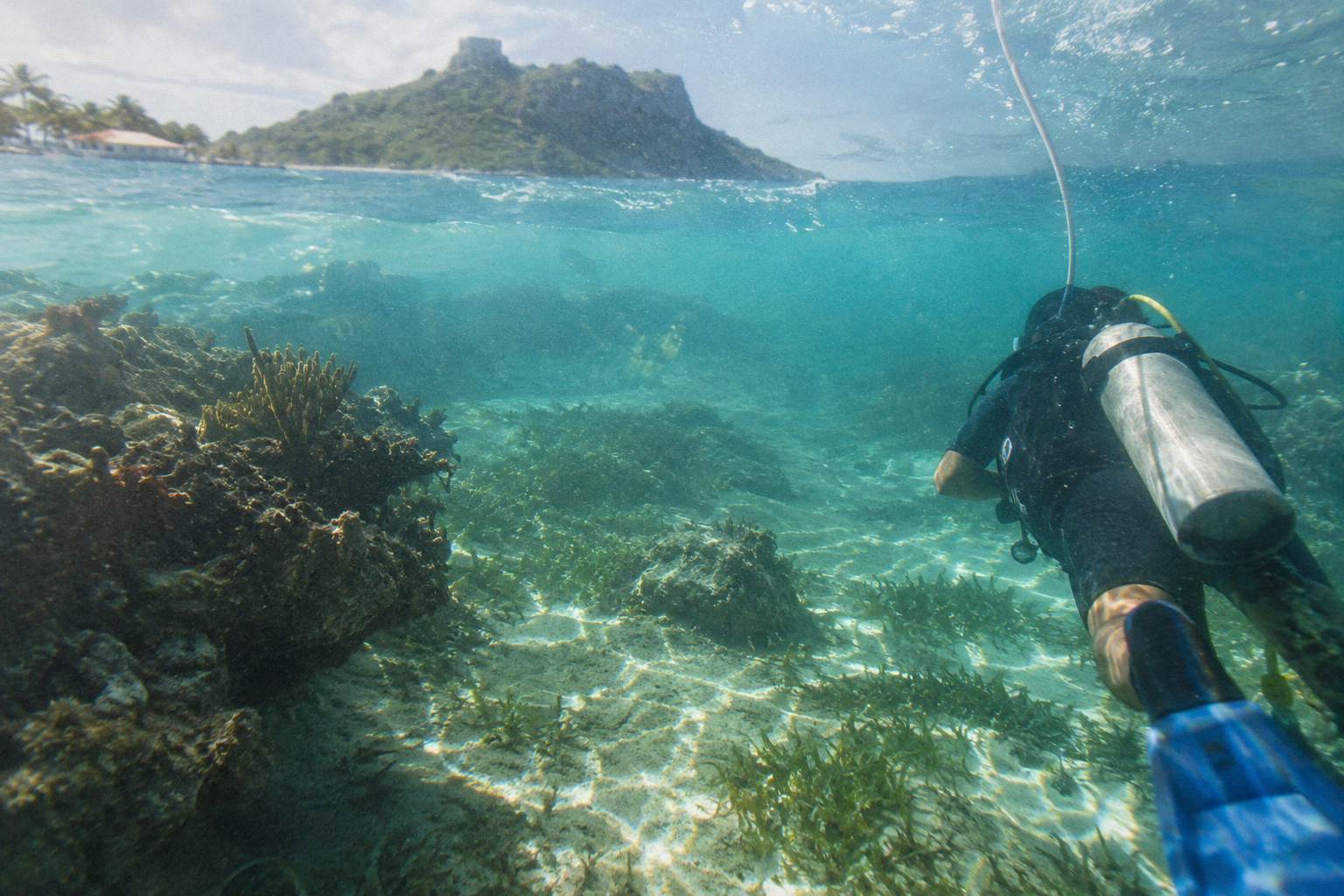
Start with the wider picture: the walk belongs to a family of beginner underwater tours in St Lucia that covers helmet walks, SNUBA and first-time scuba, all built around the idea that you do not need to be a diver to go below the surface. The hair question comes up constantly because it decides what the morning looks like afterward: whether the helmet walk is a before-lunch activity or a soak-your-head-and-start-again activity. The answer, from the people who make and run the equipment, is the reassuring one, with a few caveats worth knowing about.
| Fact | Detail |
|---|---|
| Head and hair | The manufacturer says the helmet keeps your head and face dry |
| How | Air pocket held like an inverted glass, with constant surface-supplied airflow |
| Helmet weight | The manufacturer gives about 15 lb underwater, never a guest limit |
| Session length | 1 hour 30 minutes total, about 10 minutes of briefing, about 25 minutes underwater |
| Swimming | Not required for the helmet walk |
| Minimum age | 8 for the helmet walk and for SNUBA |
| Location | Pigeon Island, Gros Islet, with the operator Sealife Paradise |
| Price | From US$118 per person, amounts in US dollars |
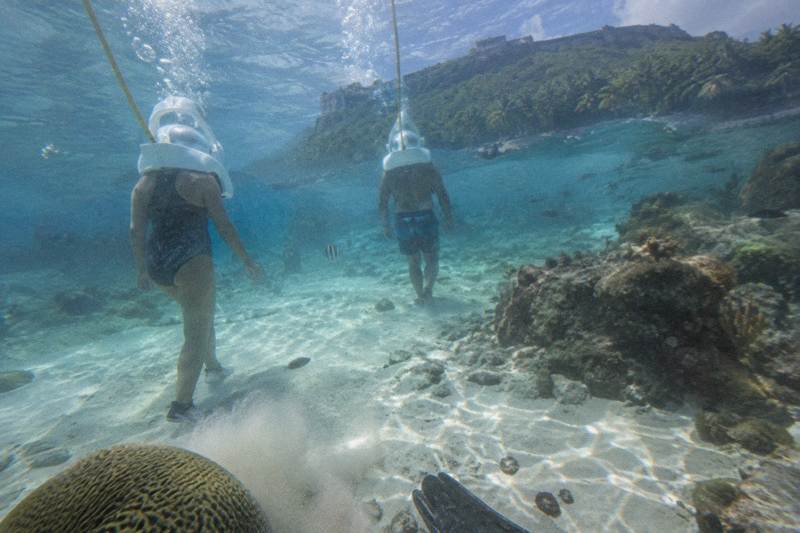
No, not in the way the equipment is built to work. The manufacturer's description is explicit that the helmet keeps your head and face dry, because the helmet rests on your shoulders and traps an air pocket the way an inverted glass traps air underwater, while a hose from the surface feeds a constant flow of cooled, dried and filtered air. Your hair, in that description, stays dry.
The claim comes straight from the equipment maker, the manufacturer's SeaTrek page, which describes a helmet of polycarbonate and marine-grade components with a panoramic acrylic lens, sitting on the shoulders, with the wearer able to keep prescription glasses on and to simply walk and breathe. The same page is blunt about who it is for: ages 8 through 96 and up, no swimming skills needed, comfortable walking is the requirement. The operator Sealife Paradise, which runs the St Lucia sessions from Pigeon Island, uses matching language on its own tours page: slip on the helmet, breathe naturally, no swimming required.
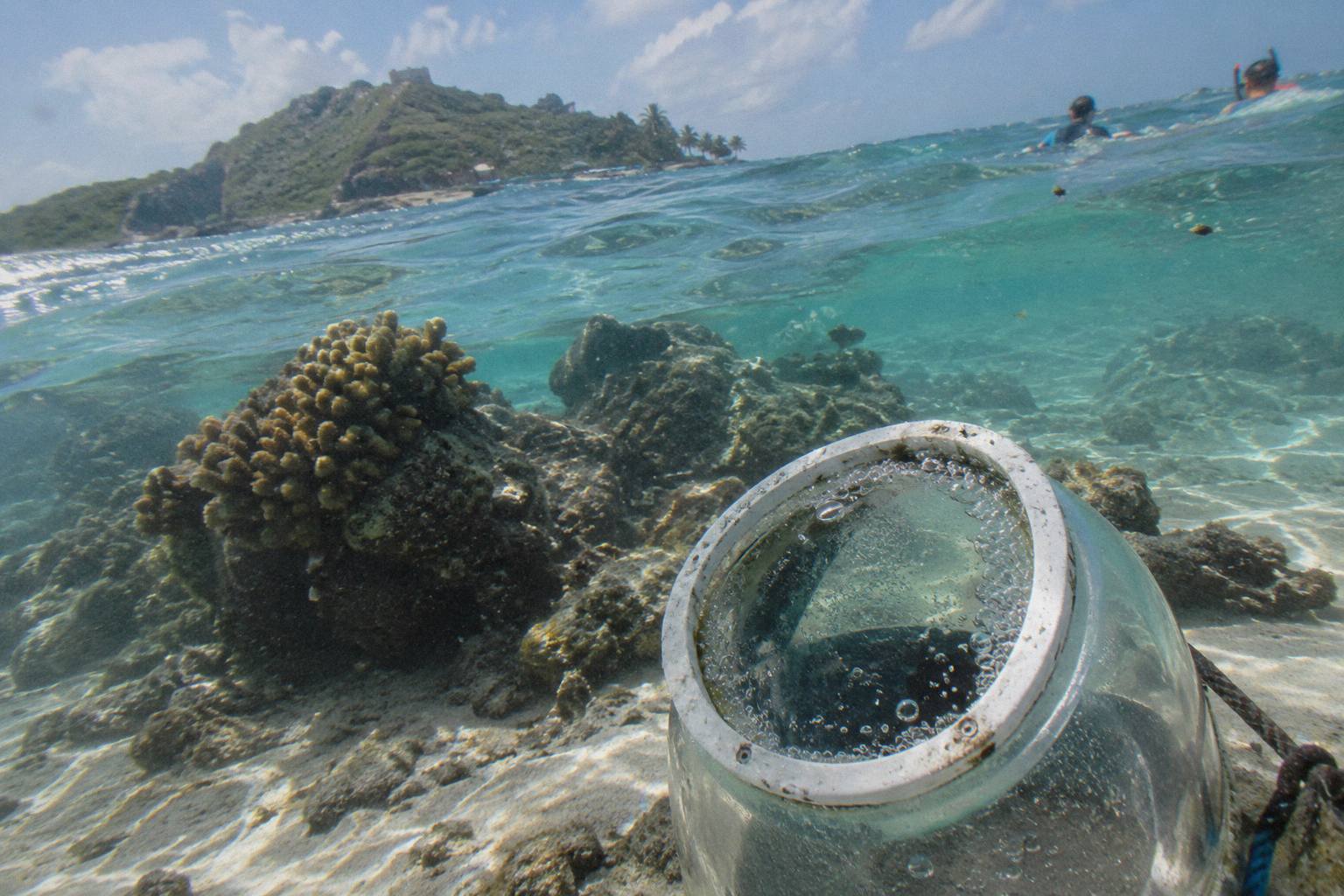
The physics is simple enough to trust. Turn a glass upside down and push it into water, and the air stays inside as long as the opening faces down. The helmet works the same way, with two refinements: the rim sits on your shoulders rather than in your hands, and a surface hose replaces your lungs as the thing keeping the air fresh. The water line sits somewhere below the chin, and the airflow from above means the pocket is constantly renewed rather than slowly going stale.
That is the design promise. Sea conditions, boarding a boat, climbing a ladder and a tropical shower can all put water where the design does not, and a realistic account of the morning includes those edges. The main St Lucia product here is the SeaTrek helmet walk at Pigeon Island, a 1 hour 30 minute session from US$118 per person with a 4.8 rating from 231 reviews, and it is the one to read closely if dry hair is the deciding factor. Amounts throughout are in US dollars, and prices vary by date and group, with the booking page showing the price for your date.
Why The Helmet Keeps Your Head Dry
It comes down to trapped air plus continuous supply. The helmet is open at the bottom and sealed against your shoulders, so water cannot rise past the air pocket, exactly like a glass pushed mouth-down into a sink. The surface hose then pushes a constant stream of cooled, dried and filtered air through the helmet, which keeps the pocket fresh and holds the water level steady below the chin.
The manufacturer describes the air as coming from an electrically powered air center at the surface, delivered by hose, with other configurations using a portable pod or a floating raft depending on the setup. The helmet itself weighs about 71 lb out of the water, which is why it is lowered on and lifted off rather than carried, and the manufacturer gives its underwater effective weight as about 15 lb, a figure about the equipment rather than a limit on any guest. None of that touches your hair: the air boundary, not a gasket or a seal against skin, is what does the work.
This is also why the helmet walk suits people who dislike the feeling of water on their face, a group that includes a surprising share of confident swimmers. Snorkeling puts a mask across the eyes and nose and leaves the mouth in water; scuba puts a regulator there. The helmet puts nothing in or on your mouth at all. You breathe as you do reading a menu, and your glasses can stay on because nothing about the design requires a suction seal on your skin.
The one mechanical way to defeat the system is to tip the helmet over, which is why the guides control the descent and ascent and why you are told, plainly, not to duck or lean once under. The manufacturer's own phrasing is that the air stays in as long as the helmet is not turned over. In practice that means the dry-head promise is conditional on following the guide, which is a reasonable condition, since the guides are the manufacturer-certified ones the operator describes.
| What the maker and operator say | Who says it |
|---|---|
| "Keeps your head and face dry" | Manufacturer, SeaTrek page |
| Works similar to an inverted glass; air stays while not turned over | Manufacturer |
| "Just walk and breath" | Manufacturer |
| Glasses on, no problem; no swimming skills required | Manufacturer |
| No swimming needed, from ages 8+, just need to walk and breathe | Operator Sealife Paradise |
| Small groups, certified guides, free transfers within the north | Operator |
The table reads as a stack of attributions for a reason: dryness is a product description, not a law of nature, and the manufacturer's and operator's wording is the correct thing to lean on. Neither promises a dry head in every sea state, and neither needs to, because the design does the quiet work of holding the air pocket in the conditions the session runs in.
What Does Get Wet On A Helmet Dive
Everything from the shoulders down gets wet, plus whatever the sea splashes on you before and after. Your hair and face stay dry inside the helmet per the design, but you wade into the water to reach the descent point, stand on the seabed, and climb a ladder back onto a boat that may be rocking, so splashes at entry and spray on the ride are normal parts of the trip.
Think of the session in three wet phases. The first is the walk into the sea, waist-deep or so, before the helmet goes on: your lower half is wet, and a wave can reach higher on a bumpy day. The second is the walk itself, where the water line sits below your chin inside the helmet and your arms and torso are in the sea as you move. Guides position you and signal directions; the Saint Lucia tourism snorkeling page describes Pigeon Island Beach as having calm, sheltered waters well suited to beginners, which is the environment the session uses, though no sea is calm by guarantee.
The third phase is the exit, and it is the one that undoes dry hair most often. The helmet comes off at or near the surface, sometimes with a splash, and a ladder climb in swell can put a wave across anyone. Anyone whose hair absolutely must survive to the afternoon should treat the promise as head-dry-underwater rather than bone-dry-all-morning, and should bring a tie-back anyway. Salt spray finds loose hair regardless of equipment.
A note on what else stays dry: the manufacturer points out that glasses stay on, and the same logic protects makeup and beards in the manufacturer's description of a dry face. Contact lens wearers should ask the operator directly, since the manufacturer does not address lenses. And sunscreen still matters for the boat time, with the Tourism Authority recommending reef-safe products and a strict no-touch approach to coral and marine life, advice worth carrying into every St Lucia beach day.
Hair, Glasses And Makeup: Practical Notes For The Dry-Headed
Plan around the design, not around a guarantee. Tie hair back so nothing strands across the helmet rim at descent, keep glasses on as the manufacturer permits, and expect the hairline to catch whatever the ladder and the boat deck throw at it. The face inside the helmet stays dry in the manufacturer's words, so mascara survives the underwater half; the surface half is ordinary beach logistics and a towel settles it.
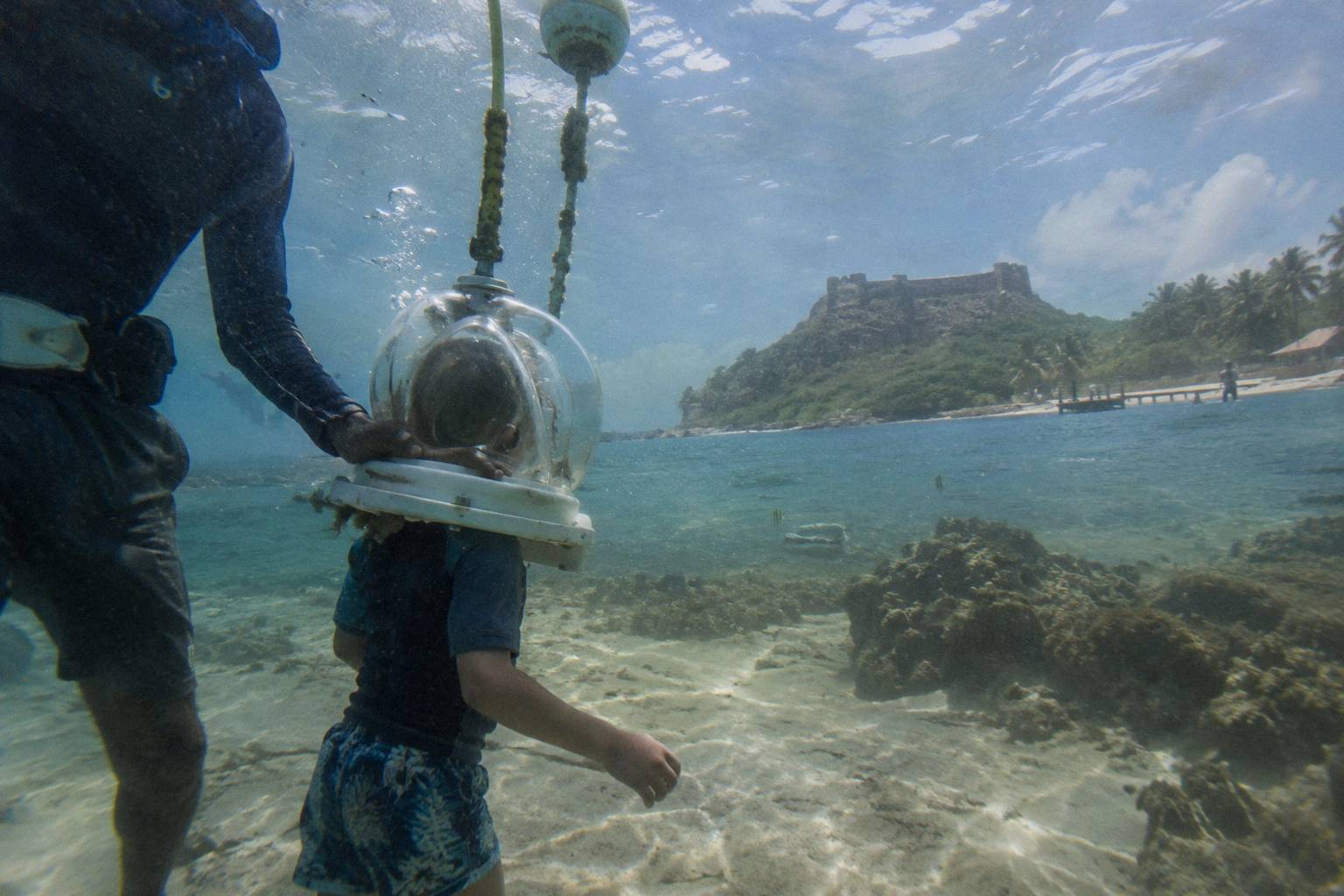
Long hair deserves the most planning. A low bun or a braid keeps hair from sitting where the helmet rim meets the shoulders, which is comfort rather than waterproofing, but comfort matters over 25 minutes of walking. Anyone with a fresh blowout should weigh the boat ride carefully: wind and spray, not the helmet, are the threat. A cap for the ride back is a common and sensible move. More of these guides are collected on St Lucia Helmet Dive.
For glasses wearers, the helmet walk is close to unique among underwater options. Masks and prescription lenses are the usual workaround for snorkeling and diving; here the manufacturer simply says glasses on, no problem, because the air pocket keeps the whole face dry. That single line is why some travelers pick the helmet over every other format, and it is worth holding against the alternatives in the next section.
Makeup follows the same logic. Nothing about the underwater portion touches the face in the manufacturer's description, so the risk window is the splash zones at entry and exit. Waterproof mascara is a low-cost hedge for anyone who cares. Nobody on the boat is assessing anyone's eyeliner, but the sea does what it does, and the fair framing is that the equipment keeps the head dry while the ocean keeps its own schedule.
The SeaTrek session's shape supports all of this: 1 hour 30 minutes total, of which about 10 minutes is briefing and about 25 minutes is the walk itself, leaving time on the beach before and after. The Tourism Authority's water guidance, sea temperatures of 26 to 29 C year-round with mornings typically the calmest and clearest, makes an early slot the natural pick for the flattest water and the driest hair outcome, subject always to what the day serves up.
Helmet Dive Vs SNUBA Vs Snorkeling: How Wet Each Format Gets
The helmet walk is the only format of the three that keeps the head dry by design, and the difference is total. Snorkeling puts the face in the water behind a mask, with hair fully wet. SNUBA sits between the two, keeping the head above water for breathing through a raft-fed regulator while the body is submerged, so hair stays mostly dry but the mouth carries a mouthpiece the helmet never has.
| Format | Head and hair | What you wear to breathe | Swimming needed |
|---|---|---|---|
| Helmet walk (SeaTrek) | Dry, per the manufacturer's description | Helmet fed by surface hose, rests on shoulders | No |
| SNUBA | Above water for breathing; body submerged | Regulator connected to a floating raft | Comfort in deep water expected |
| Beach snorkeling | In the water behind a mask | Snorkel and mask | Yes |
| Boat snorkel with lunch | In the water behind a mask | Snorkel and mask | Yes |
The St Lucia selection of tours makes the comparison concrete. The SNUBA session at Pigeon Island, also run by Sealife Paradise, runs 1 hour 30 minutes from US$112 per person with a 4.7 rating from 166 reviews, ages 8 and up, group maximum 14, equipment included. The operator describes SNUBA as a cross between snorkeling and scuba: no tank on your back, no certification, breathing through a regulator fed from a raft you follow across the surface. Your hair stays above water while you breathe, but your mouth holds a regulator and your face is in the sea whenever you look down, which is most of the time.
Snorkeling makes no dryness claims at all, which is its own kind of clarity. The beach session from Pigeon Island, from US$70 per person with a 4.4 rating from 16 reviews, includes bottled water and snorkel gear, minimum age 6, swimming ability needed, no pickup. The boat version from Marigot Bay, from US$83 per person with a 4.5 rating from 126 reviews, adds lunch, a guide and hotel pickup from northern and western locations, with a 10% per person government VAT payable at check-in on top of the listed price. Both wet the hair completely; the Tourism Authority recommends never snorkeling alone and minding boat traffic, advice that applies regardless of format.
If the dry head is the whole point, the helmet wins without argument. If a mouthpiece is tolerable but full immersion is not, SNUBA is the middle path, with the operator's own advisory that it is not recommended for pregnant travelers, anyone with poor cardiovascular health or anyone with spinal injuries, a caution the helmet session carries too. Ask the operator or a doctor where any medical question applies, and for the scuba formats specifically, the Divers Alert Network guidance on preflight surface intervals, 12 hours after a single no-decompression dive and 18 hours after multiple dives or days, applies to scuba; for helmet and SNUBA, ask the operator.
The deeper comparison, including a first scuba try-dive with a meal from US$132 per person, is laid out in how the four formats compare for beginners, and the age question is covered in age limits and kids on a Sea Trek dive. For anyone building the whole day around the dry-hair question, though, the short version above is the decision.
The Pigeon Island Session Itself
The St Lucia helmet walk departs from Pigeon Island in Gros Islet, runs 1 hour 30 minutes, takes guests from age 8, and needs no swimming. Private transportation is included from hotels in the north of the island only, gratuities are not, and cancellation is free up to 24 hours before the start. Photos are not among the included items, so hair intact or not, the camera is your own.
Pigeon Island is a 44-acre National Landmark, made a National Park in 1979 and a National Landmark in 1992, joined to the mainland by a causeway built in the early 1970s. Fort Rodney, Signal Peak, a museum and the Two-Gun Battery sit above the beach, and the landmark is open daily 9:30 am to 5:00 pm with last entry at 4:15 pm, closed December 25, per the National Trust's hours. Non-resident entry runs US$10 for adults 13 and over and US$3 for children 5 to 12, under 5 free; the fees can change, and nothing about tour pricing should be read as including or excluding them. Hewanorra airport sits about 1 hour 40 minutes away by road, per the tourism authority's own page on the island.
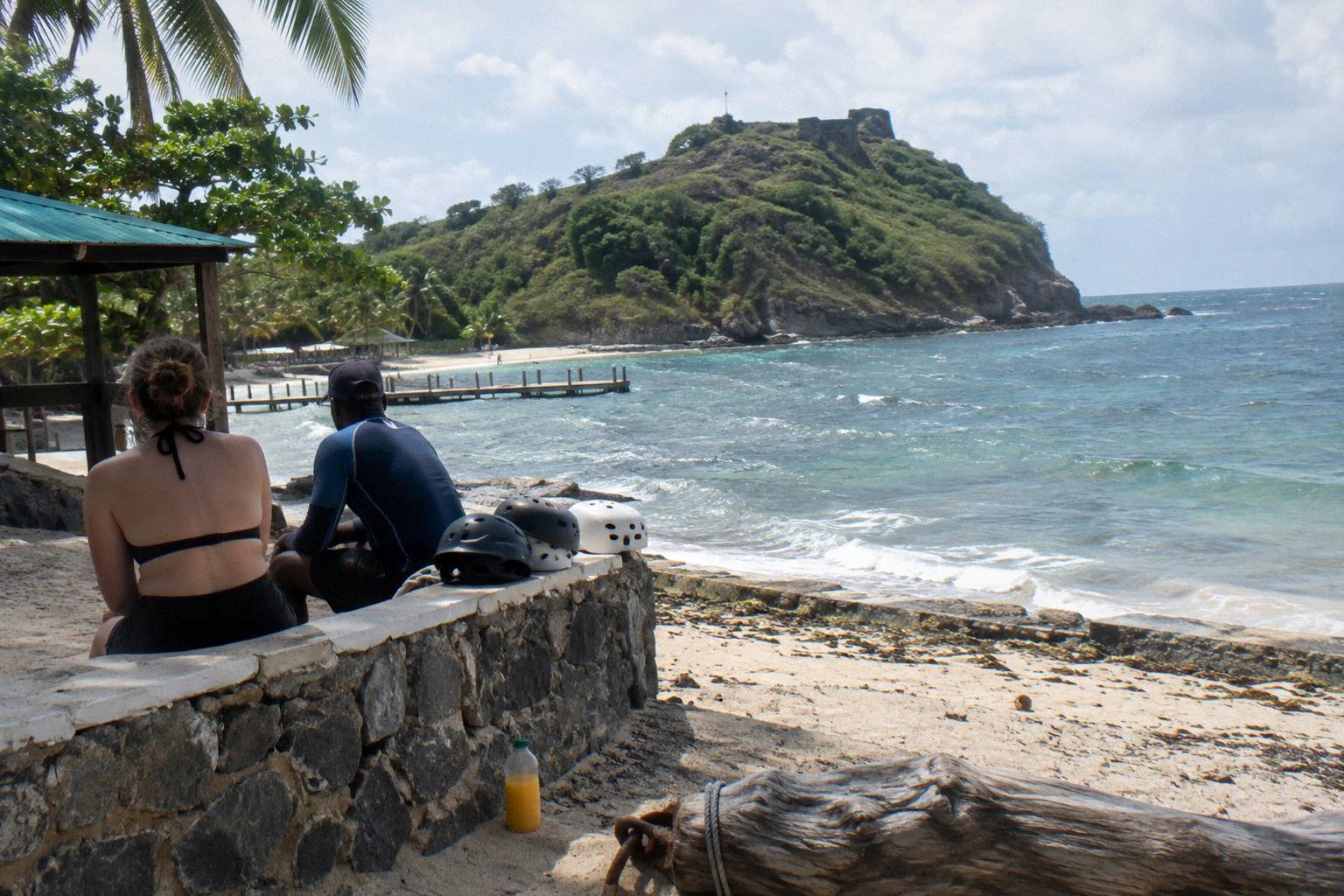
The session structure is the same one the manufacturer's model implies: briefing on land, helmet on at the water, guided descent, a walk on the seabed with trained and certified guides, and a ladder back up. The manufacturer's line about guided walks, certified guides on every tour, is the operator's line too. Guides are also the answer to most hair questions in the moment, since they fit the helmet, control the pace and handle the ascent, and asking them about fit before descent is better than discovering a stray strand at the rim halfway down.
Booking mechanics are simple. The start time is chosen on the booking calendar, the exact meeting point comes on the booking confirmation, and the price varies by date and group with the booking page showing the figure for your date. Anyone arriving by cruise ship should check the pickup question with the operator directly, since hotel pickup in the north is what the product carries. For the wider frame of fitting an underwater session into a port day, a cruise day guide for St Lucia covers the timing logic.
That last tile is the wettest option in the family, a first scuba experience with training, lunch and a boat day from Marigot Bay, and it is here as the comparison's counterweight: some readers will read about dry hair and realize they would rather go all the way under with a tank. For them the helmet's dryness is a limitation, not a feature, and the beginner scuba product, 4.7 from 57 reviews, from US$132 per person, 5 hours, ages 12 and up, is the right door.
What Trips People Up Before You Book
Three mistakes recur: treating dry head as a guarantee rather than a design description, arriving with hair down and no towel, and confusing the helmet session's swimming exemption with the snorkel products' swimming requirement. The manufacturer and operator attribute dryness claims, the sea gets a vote on splash, and the two snorkel lines explicitly need swimming ability, so matching the product to the person matters more than any single spec.
The first mistake is expecting laboratory conditions. The helmet holds its air pocket by physics that works, but boats rock, ladders splash and rain falls in the tropics from June through December. Anyone booking the walk for a wedding-day hairstyle should book it for the day after the wedding instead, or accept the risk knowingly. The second is logistical: bring a towel, a hair tie and reef-safe sunscreen, and check what to wear and bring to a helmet dive rather than guessing.
The third mistake is format confusion. The helmet session says swimming not required, and it means it, ages 8 and up with comfortable walking as the bar. The beach snorkel from the same operator says swimming ability needed, minimum age 6, and the boat snorkel says the same from age 4. Transferring the helmet's exemption onto a snorkel product because they share a beach is how non-swimmers end up in water they cannot manage; the guidance for nervous swimmers is in snorkeling for non-swimmers in St Lucia.
A fourth, smaller trap: the medical advisory on the booking page, not recommended for pregnant travelers, travelers with poor cardiovascular health or spinal injuries, applies to the helmet and SNUBA sessions alike, and it is the operator's own advisory rather than a suggestion. Read it before booking rather than at the dock, and route any question to the operator or a doctor. Booking well inside the 24-hour free-cancellation window, with a check of the live price on the way, covers the rest.
Common Questions About Staying Dry Underwater
Do You Get Your Hair Wet On A Helmet Dive?
Not by design. The manufacturer states the helmet keeps your head and face dry, holding an air pocket like an inverted glass with constant surface-supplied airflow, and the water line sits below the chin. Splashes at the ladder and spray on the boat are the usual exceptions, so bring a tie-back and a towel.
Can You Keep Your Glasses On Inside The Helmet?
Yes. The manufacturer says prescription glasses can stay on because the head stays dry and the helmet needs no suction seal against the skin, unlike a diving mask.
Does Makeup Survive A Helmet Walk?
Inside the helmet, the manufacturer's description keeps the whole face dry, so the underwater portion does not touch it. The entry, exit and boat ride are ordinary splash zones, and waterproof products are a sensible hedge.
Is The Helmet Walk Good For Non-Swimmers?
The St Lucia session lists swimming as not required, with a minimum age of 8 and comfortable walking as the real bar. Guides are trained and certified per the manufacturer, and they control the descent and ascent.
Does SNUBA Keep Your Hair Dry Too?
Mostly. SNUBA breathing happens through a regulator fed from a floating raft while your head stays above water, so hair generally stays dry, but your face and mouth are in the sea whenever you look down, and a mouthpiece is part of the deal.
How Long Is The Underwater Part?
The SeaTrek session runs 1 hour 30 minutes in total, with about 10 minutes of briefing and about 25 minutes walking on the seabed, the rest being beach and boat time.