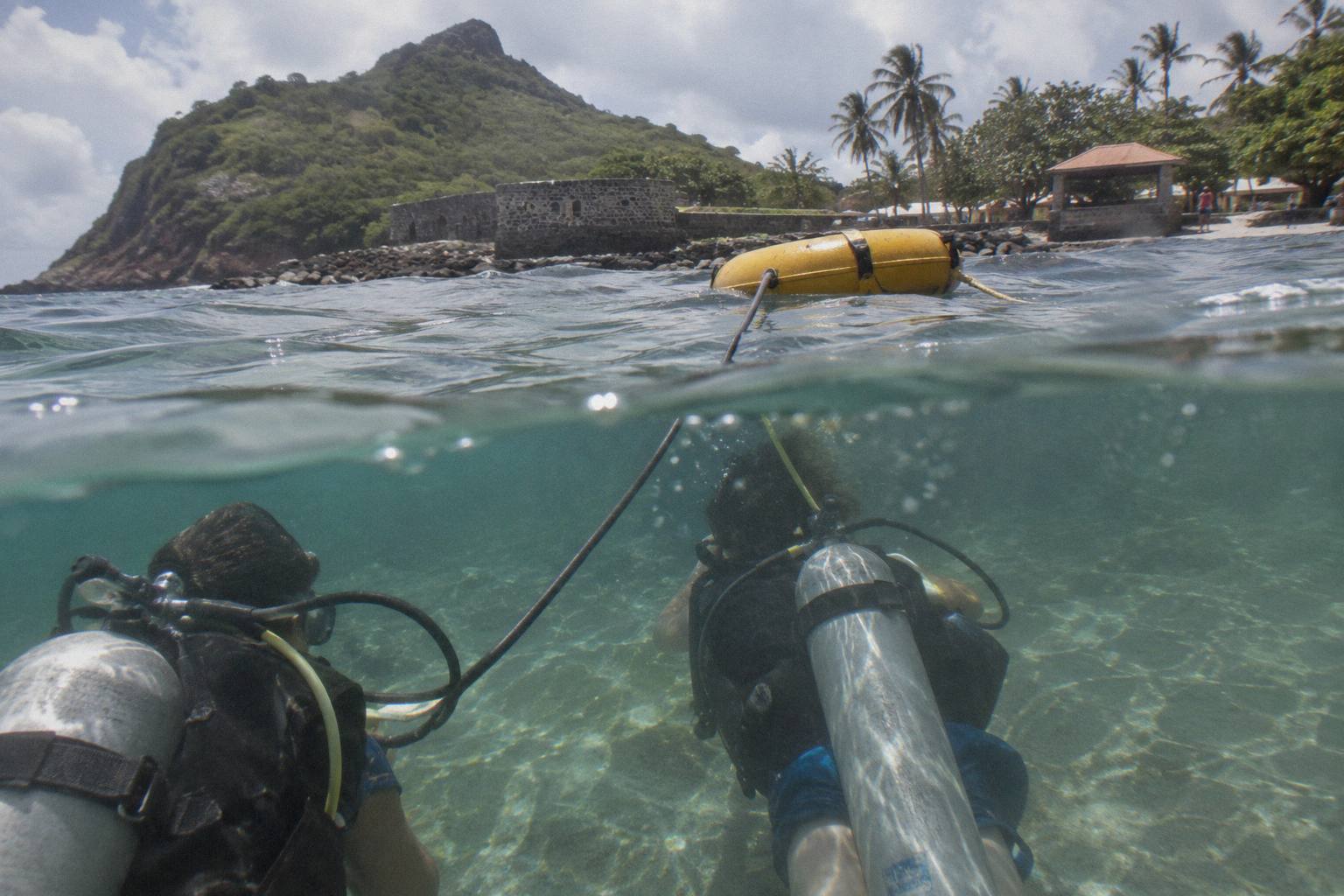
Can You SNUBA While Pregnant?
The Saint Lucia SNUBA operator lists pregnancy in its medical advisory. What the advisory says, what SNUBA involves, and the alternatives on the same beach.
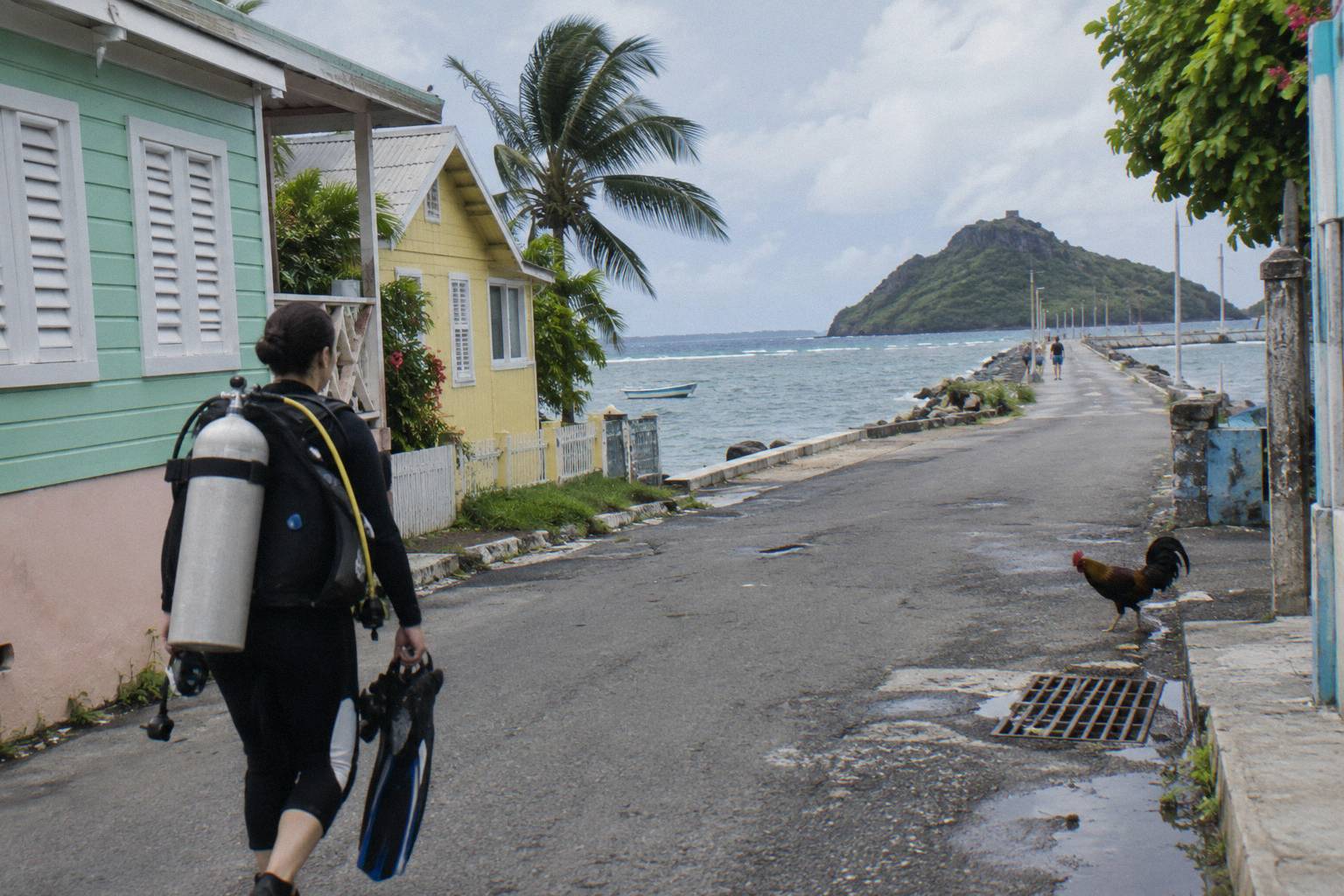
SNUBA is one of the beginner underwater formats grouped under beginner underwater tours in St Lucia: a regulator on a hose fed from a floating raft, no tank on your back, no certification. When the question is pregnancy rather than confidence in the water, the answer comes from the operator's own advisory first, and from the medical clearance practice that surrounds SNUBA generally.
| Fact | Detail |
|---|---|
| Format | SNUBA, a cross between snorkeling and scuba, regulator fed from a floating raft |
| Saint Lucia operator advisory | Not recommended for pregnant travelers, travelers with poor cardiovascular health or spinal injuries |
| General SNUBA practice | Physician clearance required when pregnancy is declared on the participant form |
| Duration | 1 hour 30 minutes |
| Minimum age | 8 |
| Group maximum | 14 travelers |
| Included | Use of all equipment; water provided after the experience |
| Cancellation | Free cancellation up to 24 hours before start |
| Departure point | Pigeon Island, Gros Islet |
No, not on the Saint Lucia product. The booking page for the Pigeon Island SNUBA session carries a medical advisory that names pregnant travelers among those for whom the activity is not recommended, together with travelers with poor cardiovascular health and travelers with spinal injuries. That advisory is the deciding line for the booking itself, and it mirrors standard SNUBA practice elsewhere, which routes any declared pregnancy to a doctor's clearance before participation.
The advisory appears on the operator's own product page for the session, the same page that carries the price and the calendar. It is not a passing mention: pregnancy sits in a named list next to cardiovascular health and spinal injuries, which is how operators flag conditions where the breathing work, the pressure change and the physical demands of the session all interact. Sealife Paradise, the operator running the session from Pigeon Island, keeps the wording on its booking page, and the booking page is what governs.
Beyond the Saint Lucia listing, the wider SNUBA world handles pregnancy the same way. A SNUBA operator requirements page lists pregnancy among the health concerns needing physician clearance before participation, alongside blood pressure, heart or respiratory conditions, seizures and recent surgery. The standard SNUBA participant form asks directly whether you are pregnant or believe you might be, and a yes answer routes to the same clearance step. So the local advisory and the international practice agree.
What none of these documents give is a trimester rule, a depth-based allowance or a medical opinion. There is no SNUBA-specific pregnancy statement from the diving medicine bodies or from the tourism authority, and none should be improvised here. The structure of the answer is simple: the operator says not recommended, the forms say ask a doctor, and everything beyond that is a conversation for you and a physician, not for a travel article. If the question matters for your dates, ask the operator directly before booking.
What The Operator's Advisory Actually Covers
Three groups are named: pregnant travelers, travelers with poor cardiovascular health, and travelers with spinal injuries. The advisory sits on the SNUBA booking page as an operator's caution, not a diagnosis of anyone's fitness, and the same wording appears on the helmet walk product run from the same beach. Reading it as a screening list, rather than a ban with medical reasoning attached, is the accurate way to use it.
The three named groups share something: each involves a condition where breathing under a regulator, moving against water, and the pressure of being underwater could interact with an existing health situation. SNUBA is not scuba, there is no tank and no certification, but you are still breathing compressed air delivered through a hose from a raft on the surface, and you are still descending below the surface to breathe it. That combination is why SNUBA products carry medical questions at all, even though they are marketed at complete beginners.
The right use of the advisory is as a routing step. If nothing on the list applies to you, the booking proceeds normally, minimum age 8, group maximum 14 travelers, all equipment included. If something on the list does apply, the step is a question to the operator or to a doctor, before payment rather than on the beach. The operator's booking page is where the advisory lives, so a message through that page reaches the people who can answer it for your dates.
Why Compressed Air And Pregnancy Get Talked About Together
Scuba medicine treats diving while pregnancy as something to refrain from, and SNUBA involves breathing air from the surface through a regulator, which places it closer to scuba than to holding your breath. The diving medicine bodies have no SNUBA-specific pregnancy statement, so the nearest firm guidance is the scuba one: pregnant women should refrain from compressed air diving and consult a doctor first. Treat that as background rather than a verdict on SNUBA itself.
The reason the topic exists at all is gas. Under water, pressure rises, and breathing air delivered at depth dissolves more nitrogen into the body than breathing at the surface does. In scuba medicine, the question for pregnancy is what those dissolved gases and pressure changes might do over the duration of a dive, and the standing position attributed to DAN is that pregnant women should refrain from diving with compressed air and consult a physician first. That is a scuba position, stated for scuba.
SNUBA occupies a middle band. You breathe through a regulator, like scuba, but the air comes from a raft floating on the surface and the sessions are short and shallow by design. Whether the scuba reasoning transfers, in full or in part, is exactly the question no SNUBA-specific statement answers. That gap is why the operator advisory and the participant form matter so much: they are the documents that actually govern your booking, and they resolve the gap with a simple instruction, not recommended, or ask a doctor.
What A SNUBA Session Involves Physically
The session lasts 1 hour 30 minutes total, and the work in the water is swimming and breathing through a regulator while trailing a hose to a raft above you. There is no tank on the back, no certification and no training course beforehand, and the minimum age of 8 signals how approachable the format is for ordinary swimmers. The picture is moderate swimming effort with a breathing device, in a group of up to 14.
The mechanics come from the operator's own description: SNUBA is a cross between snorkeling and scuba diving, with no tank and no training, breathing through a regulator connected to a floating raft on the surface. You swim out, you descend as far as the hose and your comfort allow, and you move around the reef area with the raft following above. The session price is from US$112 per person, all equipment is included, and water is provided after the experience. Amounts are in US dollars.
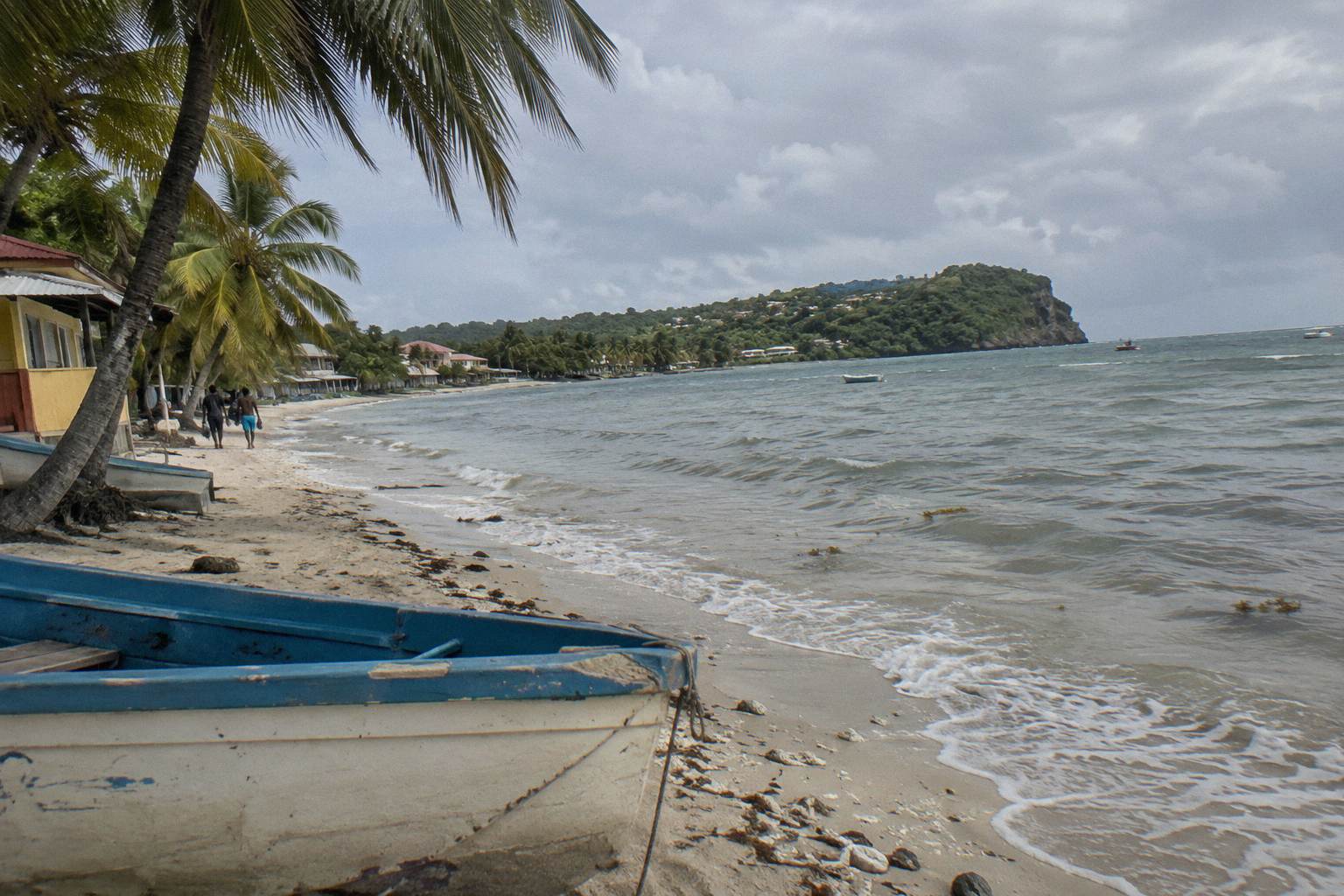
Pigeon Island Beach, where the session runs, is described by the Saint Lucia tourism snorkeling pages as having calm sheltered waters, and sea temperatures across the year sit between 26 and 29 C (79 to 84 F), with mornings generally the calmest and clearest. None of that is a promise about your day; sea state is decided by weather and season. But the physical demands of the format are best understood as continuous swimming with a regulator in your mouth, not standing on a seabed as in the helmet walk.
Alternatives On The Same Beach If You Sit The Session Out
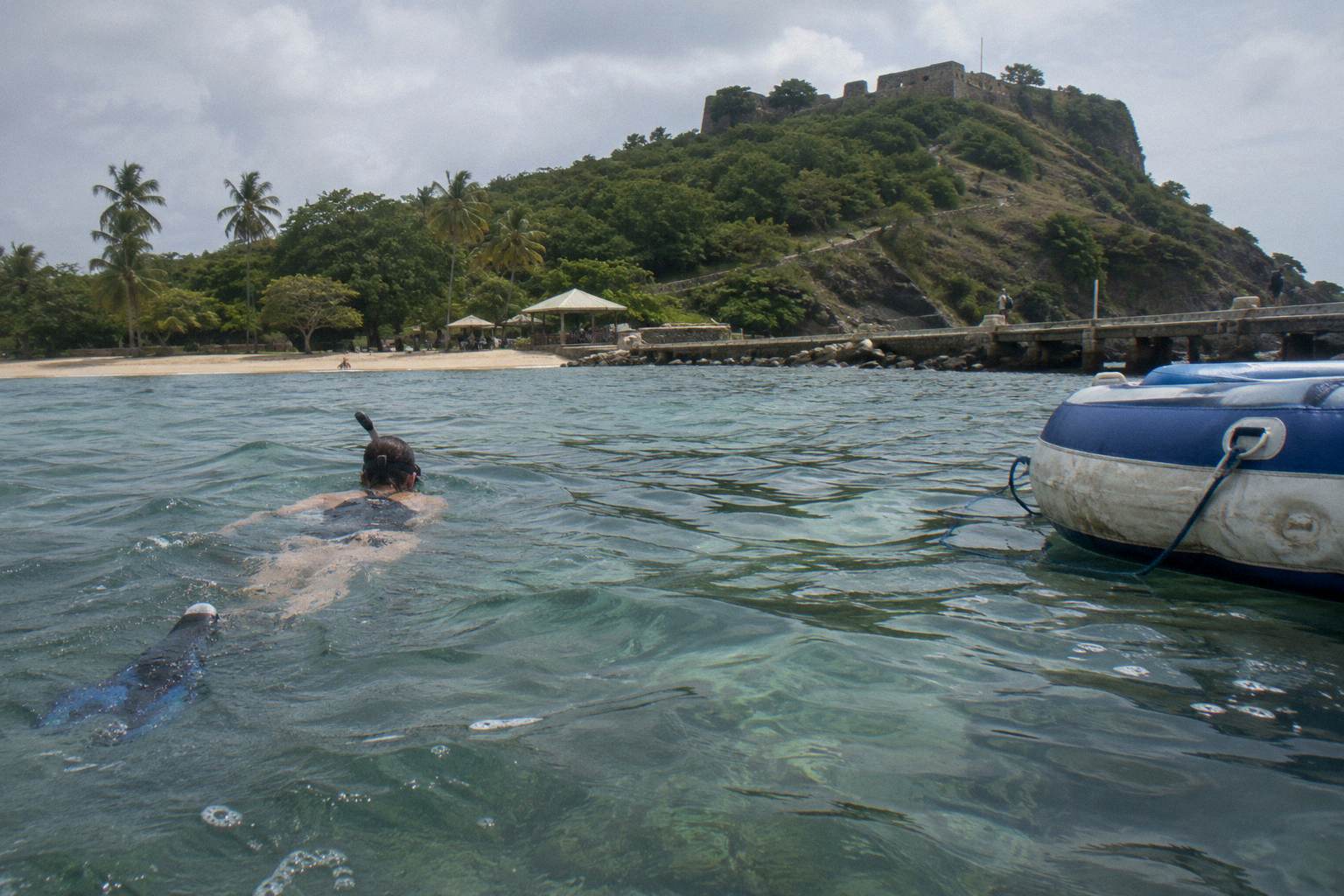
Sitting out SNUBA does not mean sitting out the water. From the same departure point the operator runs a beach snorkeling session from US$70 per person, 1 hour 30 minutes, minimum age 6, equipment and bottled water included, though it needs swimming ability. On land, Pigeon Island National Landmark offers Fort Rodney, Signal Peak, a museum and military ruins across 44 acres, with the beach itself rated for beginner snorkelers.
The beach snorkel is the closest swap. It is the same operator, the same stretch of water, the same 1 hour 30 minute duration, and it carries no printed pregnancy advisory on its product page. It does carry its own requirements: minimum age 6 and swimming ability needed, and pickup is not included for that product, unlike the northern hotel pickup on the SNUBA line. For any health question, including pregnancy, the right step is to ask the operator directly, since no advisory on that page speaks to it. The rest of the planning pages sit on St Lucia Helmet Dive.
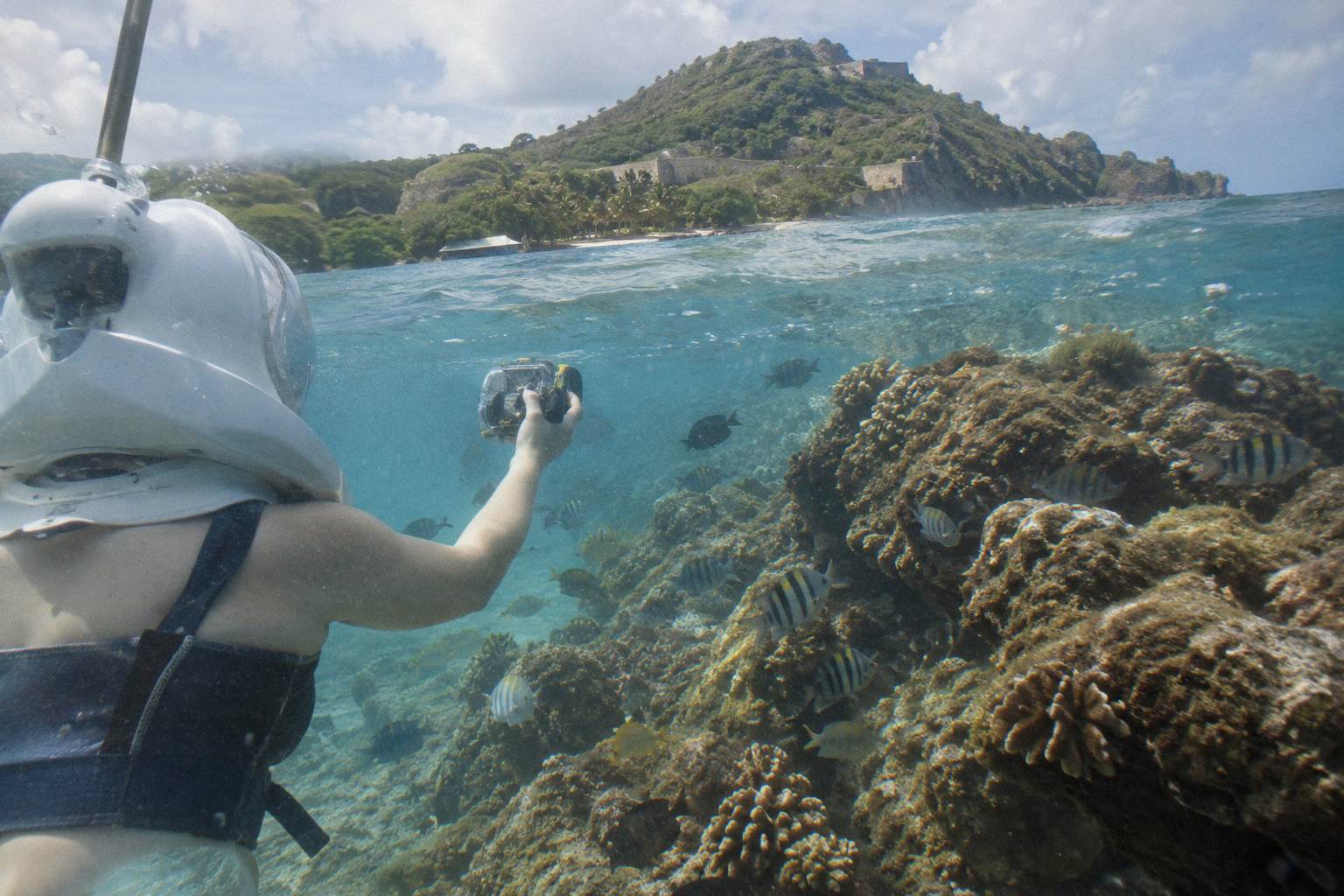
The helmet walk is the other water option from the same departure point, and it is the one format here that asks for no swimming at all. The manufacturer describes the helmet as working like an inverted glass, air held inside as long as the helmet is not turned over, fed by a constant flow of cooled, dried and filtered air through a hose from the surface, head and face staying dry, glasses able to stay on. But note the catch: the operator carries the same medical advisory on the helmet product, naming pregnancy, so the helmet is not a workaround around the advisory, only around the swimming requirement.
On land, the landmark fills a morning easily. Pigeon Island became a National Park in 1979 and a National Landmark in 1992, joined to the mainland by a causeway built in the early 1970s. Fort Rodney dates from the 18th century and looks out over Rodney Bay; Signal Peak is the high point; there is a National Trust museum and the Two-Gun Battery among the military ruins. Non-resident entry is US$10 for adults and US$3 for children 5 to 12, under 5 free, the National Trust's figures, and fees can change; whether any tour covers that entry is a question for the operator.
| Landmark Detail | What Applies |
|---|---|
| Opening hours | Daily, 9:30 am to 5:00 pm, last entry 4:15 pm |
| Closed | December 25; a September closure for maintenance is possible |
| Non-resident entry, adult 13 and over | US$10 |
| Non-resident entry, child 5 to 12 | US$3 |
| Under 5 | Free |
| Size and status | 44 acres; National Park 1979, National Landmark 1992 |
| Access | Joined to the mainland by a causeway built in the early 1970s |
| On site | Fort Rodney, Signal Peak, National Trust museum, Two-Gun Battery, military ruins |
Those hours and fees come from the National Trust as the body that manages the landmark, and they are separate from any tour price: no product page here states whether the entry fee is covered, so treat it as its own line in a day budget. The landmark's land side is the part of the visit that needs no advisory at all, which is what makes it the natural half of a split day when one person is sitting out the water.
Booking, Cancellation And Money Notes
The SNUBA session is from US$112 per person, free cancellation applies up to 24 hours before start, and pickup is included from hotels in the north of the island only, with the exact meeting point sent on the booking confirmation. Group maximum is 14 travelers, equipment is included, and gratuities are not named among the inclusions. Prices vary by date and group, and the booking page shows the price for the date you choose.
The cancellation window is the practical ally of an unresolved medical question. If you are waiting on a doctor's answer or a reply from the operator, a booking made with free cancellation up to 24 hours before start gives you a calendar slot without forcing the decision weeks out. The same 24 hour window applies across the products here, including the beach snorkel and the helmet walk, so a mixed group can hold several sessions on the same terms.
Pickup geography matters in St Lucia. The SNUBA and helmet lines include pickup from hotels in the north of the island only, and the exact meeting point comes with the booking confirmation. From Hewanorra International Airport in the south, the tourism authority gives about 1 hour 40 minutes to Pigeon Island and about 1 hour 30 minutes to Gros Islet. US dollars are widely accepted, with the Eastern Caribbean dollar pegged at EC$2.70 to US$1, and change often comes in EC dollars.
| Format | Minimum Age | Swimming Needed | Duration | From Price Per Person |
|---|---|---|---|---|
| SNUBA Saint Lucia | 8 | Yes, regulator use in open water | 1 hour 30 minutes | US$112 |
| SeaTrek St. Lucia helmet walk | 8 | No | 1 hour 30 minutes | US$118 |
| Snorkeling at Pigeon Island | 6 | Yes | 1 hour 30 minutes | US$70 |
The table shows the real spread of choices at one departure point. All three run from the Pigeon Island area in Gros Islet, all three last 1 hour 30 minutes, and the price steps from US$70 to US$118 per person. The distinguishing columns are age and swimming: the helmet walk is the only line that asks for no swimming skill, the beach snorkel takes the youngest participants at 6, and SNUBA sits at 8 with a regulator in use. Pregnancy is not a column because only the SNUBA and helmet pages carry the advisory naming it.
Season, Sea State And Timing The Question
Sea temperatures hold between 26 and 29 C (79 to 84 F) all year, the dry season runs December to April and is the busiest, and the hurricane season runs June 1 to November 30. None of that changes the medical advisory, but timing does change how easy it is to reschedule, and morning is generally the calmest and clearest part of the day on the water, which matters when a group is splitting activities around one person sitting out.
The seasonal picture comes from the tourism authority's own pages. The driest and busiest stretch is December to April; the rainy season runs June to December with usually brief showers; and the Atlantic hurricane season spans June 1 to November 30. For underwater sessions, the practical notes are that mornings tend to offer the calmest water and clearest visibility, and that the west, Caribbean coast, where Pigeon Island sits, generally offers calmer waters than the Atlantic side.
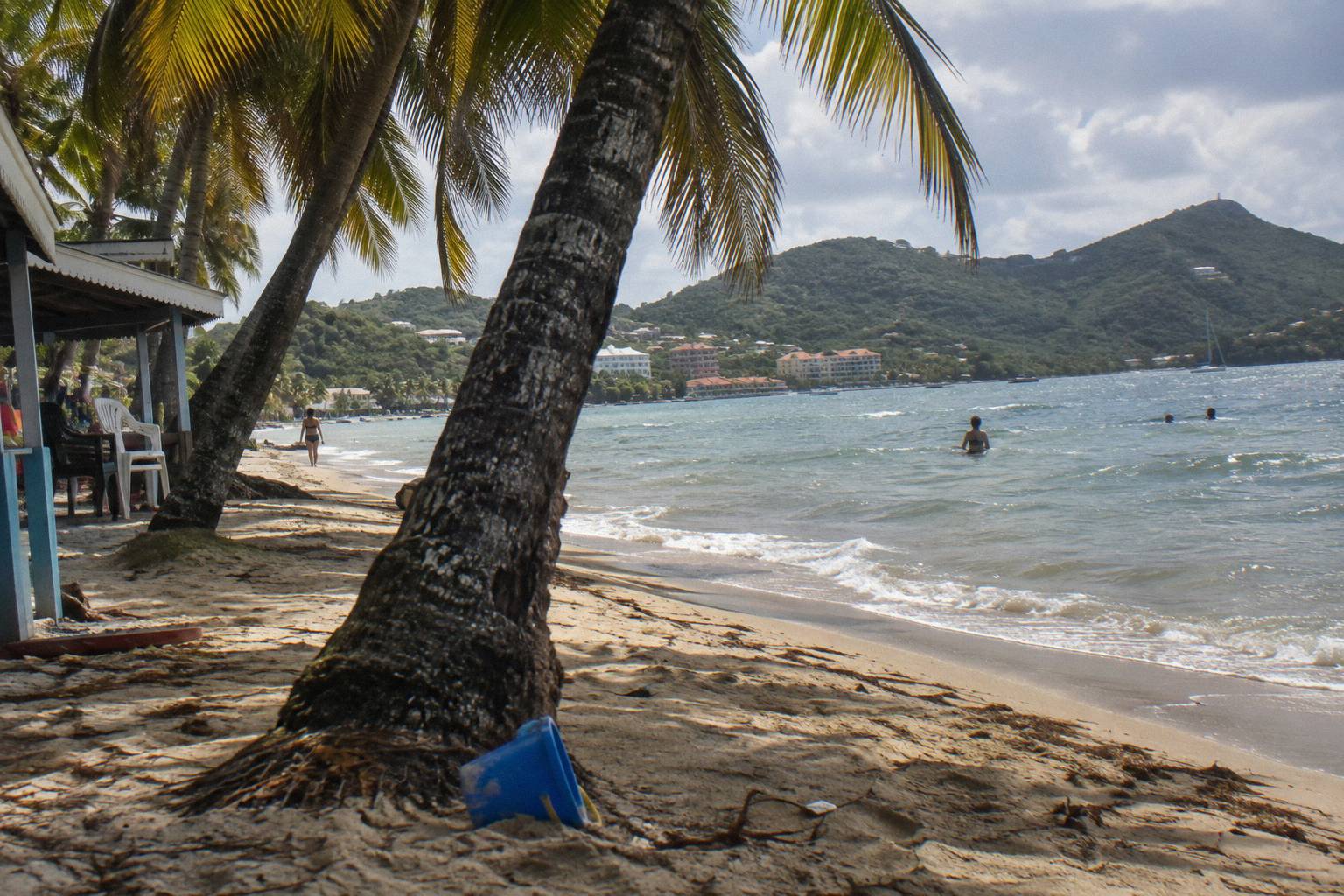
None of this is a promise about any given day, and weather, season and the operator decide what runs. What the season does for a pregnancy question is buying room. A booking made in the shoulder weeks, with the 24 hour free cancellation window on the SNUBA line, can be moved or trimmed without penalty while a medical answer or an operator reply is still pending. The Saint Lucia tourism travel seasons page carries the full month-by-month picture.
For anyone in the water, with or without a regulator, the standing beach safety lines from the tourism authority apply: many beaches have no lifeguards, never snorkel alone, mind boat traffic, use reef-safe sunscreen, and never touch coral or marine life. The Saint Lucia tourism beach safety page is the source for those. They apply to the beach snorkel as much as to any other session off that shore.
What Trips People Up Before You Book
The recurring mistakes are treating SNUBA as just snorkeling with a hose, assuming the helmet walk sidesteps the same advisory, and expecting a trimester rule to exist somewhere in writing. SNUBA is a regulator activity, the helmet product carries the identical medical advisory naming pregnancy, and no diving medicine body or tourism authority publishes a SNUBA-specific pregnancy statement. The booking page advisory plus one question to the operator or a doctor is the whole picture.
The first mistake has real consequences. Because SNUBA is marketed to beginners with no certification needed, it is easy to file it mentally with the beach snorkel rather than with scuba. But a regulator breathing compressed air from a surface supply is the part that triggers medical screening, and the participant forms treat it that way, asking the pregnancy question directly. Booking SNUBA while ignoring the advisory is not a loophole, it is a form you answer falsely.
The second mistake wastes a plan. Some travelers assume that if the swimming requirement is the obstacle, the helmet walk, which needs no swimming at all, is the automatic substitute. For a pregnancy question it is not, because the same operator advisory naming pregnant travelers appears on that product too. The helmet solves the swimming column in the table above, not the medical one. Ask the operator before treating either product as cleared.
The third mistake is searching for a rule that does not exist. There is no trimester statement, no depth allowance, no official yes anywhere in the material governing these sessions, and improvising one from scuba guidance would be medical advice. What exists is clean and usable: an operator advisory that says not recommended, a participant form that routes a yes to physician clearance, a 24 hour free cancellation window, and a same-beach snorkel with its own flags for the day itself. That is enough to plan around.
The wider context for anyone planning around this is laid out in whether SNUBA is safe for beginners, which covers the same medical advisory from the confidence angle, and in medical conditions and the helmet dive for the helmet product's version of the same question. For the water itself, the best St Lucia snorkeling beaches for beginners covers why Pigeon Island Beach earns its beginner reputation. The SNUBA tour page has the live calendar and price for your dates.
Common Questions About SNUBA And Pregnancy
Can You SNUBA While Pregnant?
No, not on the Saint Lucia product. The booking page lists pregnant travelers in its medical advisory as not recommended, alongside travelers with poor cardiovascular health and spinal injuries. Standard SNUBA participant forms also ask whether you are pregnant or believe you might be, with a yes requiring physician clearance. Ask the operator before booking.
Does The Same Advisory Apply To The Helmet Walk?
Yes. The operator carries the same medical advisory, naming pregnancy, cardiovascular health and spinal injuries, on the SeaTrek helmet walk product run from the same departure point. The helmet needs no swimming, but it does not remove the medical advisory.
Is There A Trimester Rule For SNUBA?
No SNUBA-specific pregnancy statement from the diving medicine bodies, SNUBA International or the tourism authority exists, and no trimester guidance is printed anywhere governing these sessions. The only rules in play are the operator advisory and the physician clearance step on the participant form.
Can I Snorkel From The Same Beach Instead?
The beach snorkel runs from US$70 per person, 1 hour 30 minutes, minimum age 6, swimming ability needed, equipment and bottled water included. Its product page carries no pregnancy advisory, and pickup is not included on that line. Ask the operator about any health question before booking it.
Can I Cancel If A Medical Answer Comes Back Late?
Free cancellation applies up to 24 hours before start on the SNUBA session and on the other products here. That window lets you hold a calendar slot while waiting on a doctor or an operator reply without penalty.
Does Flying After SNUBA Need A Wait?
No flying-after-SNUBA rule is published for this product. The DAN preflight surface intervals are scuba guidance, 12 hours after a single no-decompression dive and 18 hours after multiple dives or multiple days. Ask the operator about flight timing after a SNUBA session.