Can You Get Decompression Sickness From SNUBA?
A plain-language look at SNUBA, compressed air, and what dive-medicine guidance actually covers, plus how the St Lucia SNUBA session works and what to ask the operator.
SNUBA sits in the middle of the beginner underwater tours in St Lucia range: more gear than snorkeling, far less commitment than scuba. The question of decompression sickness is a fair one to ask, because a regulator and a hose mean the air is compressed, and compressed gas is exactly where dive medicine directs its attention. The fair framing is that the guidance that exists is written for scuba, attributed to the bodies that wrote it, and that anything specific to SNUBA is a question for the operator running the session.
| Fact | Detail |
|---|---|
| What SNUBA is | A cross between snorkeling and scuba: a regulator fed by hose from a floating raft, no tank on the back, no certification needed |
| St Lucia session | SNUBA Saint Lucia, operator Sealife Paradise, departs Pigeon Island, Gros Islet |
| Duration | 1 hour 30 minutes |
| Minimum age | 8 |
| Group maximum | 14 travelers |
| Price | From US$112 per person |
| Cancellation | Free cancellation up to 24 hours before start |
| Operator advisory | Not recommended for pregnant travelers, travelers with poor cardiovascular health or spinal injuries |
No dive-medicine or training body has published a position on decompression sickness specifically for SNUBA, and no verdict is offered here. DAN, the diver's alert network, defines decompression sickness as resulting from inadequate decompression after exposure to increased pressure while breathing compressed gas, and its preflight guidance is written for recreational scuba. SNUBA involves breathing compressed air from a surface raft, which places the question squarely in territory only the operator and a doctor can settle for an individual.
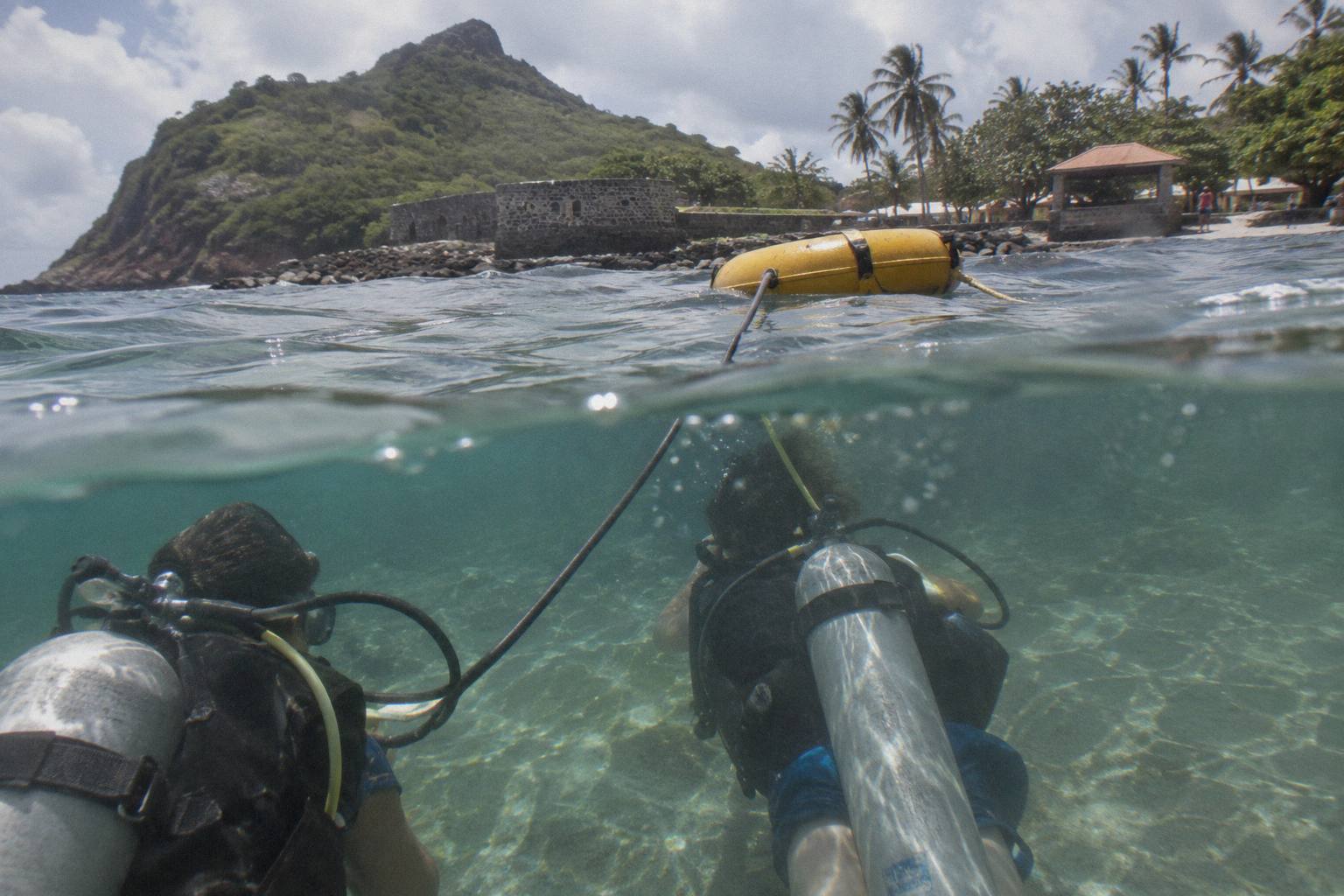
The reason the question comes up at all is the air supply. Snorkelers breathe atmosphere at the surface, full stop. Scuba divers carry compressed gas on their back and descend with it. SNUBA splits the difference: the tank stays on a raft floating above, air travels down a hose, and the participant breathes through a standard regulator while staying in the water column below the raft. The operator, Sealife Paradise, describes it plainly as "a cross between snorkeling and scuba diving. No tank, No training", with no certification needed and ages 8 and up.
DAN's own material frames the mechanism, not the activity. Decompression sickness results from inadequate decompression after exposure to increased pressure while breathing compressed gas, per DAN's decompression-illness pages. What DAN does not publish, and what no PADI or SNUBA International statement in the sourced record addresses, is any ruling on SNUBA itself. So the practical answer for anyone weighing the question is to put it directly to the operator before booking, and to a doctor where personal health is in play. Licensed SNUBA operators do brief one compressed-air rule that carries over from scuba: because the air is compressed, do not hold your breath on ascent, and keep breathing continuously. That briefing point is attributed to the operator and is part of how the session is run.
For anyone who wants the comparison in equipment terms, how a helmet dive works with its air hose covers the third format on the same beach: a helmet fed from the surface, no regulator, head and face dry, no swimming required, per the manufacturer.
How SNUBA Delivers Air Without A Tank
The tank stays on a raft at the surface, and air reaches the diver through a long hose to a regulator in the mouth. That is the whole system: no back-mounted tank, no buoyancy jacket, no certification course beforehand. The operator sets how deep and how long participants go, which is why the depth and time questions belong to the operator's briefing rather than to any general figure.
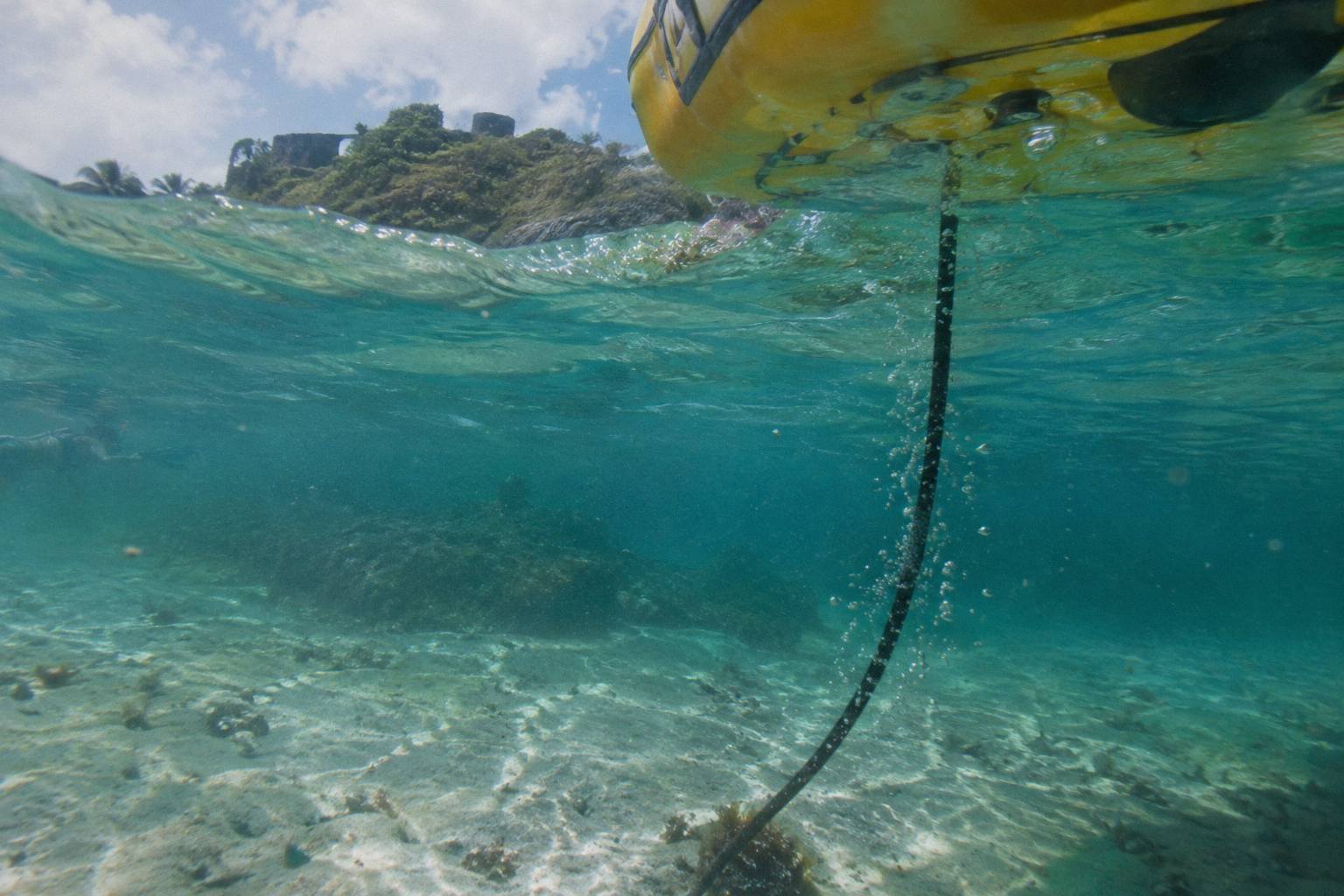
The raft does the carrying. Freed from the tank, the participant moves with fins and a regulator, weighted to stay under, and the raft follows along above. Because the air is surface-supplied and the session is short, the format is pitched at beginners: the operator's own page for the Pigeon Island product lists all equipment in the price and water afterward, from US$112 per person, 1 hour 30 minutes, minimum age 8, maximum 14 travelers.
The helmet walk on the same beach solves the same beginner problem differently, and the contrast is instructive. The manufacturer, SeaTrek, describes the helmet as working "similar to an inverted glass": air stays inside as long as the helmet is not turned over, and a constant flow of cooled, dried and filtered air from an electrically powered surface center keeps it fresh, delivered by hose, with the helmet resting on the shoulders. The manufacturer's phrasing is "just walk and breath", with head and face staying dry, glasses allowed, and no swimming skill required, ages 8 and up, guided by trained and certified guides. The point for the decompression question is that both formats breathe surface-supplied air rather than carrying it, and both are run under an operator's supervision.
Anyone comparing the two formats in St Lucia can read how SNUBA compares with a helmet dive for the full side-by-side, or check dates for either product at Pigeon Island directly.
What DAN Says About Flying After Diving
DAN's guidance, and it is scuba guidance, is a minimum preflight surface interval of 12 hours after a single no-decompression dive, and at least 18 hours after repetitive dives or multiple days of diving. The figures come from DAN's flying-after-diving work at recreational depths and flight cabin altitudes of roughly 2,000 to 8,000 ft. DAN applies them to compressed-gas diving with scuba equipment, and publishes nothing equivalent for SNUBA or surface-supplied helmet walking.
The cabin-altitude detail matters more than it sounds. Commercial aircraft cabins generally sit at 6,000 to 8,000 ft of effective altitude, per DAN, and it is that reduced pressure at altitude that drives the preflight intervals for divers. For a visitor flying out of Hewanorra the day after water activities, the practical reading is: scuba diving carries the DAN numbers, and SNUBA carries a question to put to the operator. No DAN or PADI guidance extends the 12 or 18 hour figures to SNUBA, so ask the operator for its own position. Ask the operator, once, before booking.
The manufacturer's page for the helmet format is the parallel reference point: the manufacturer's SeaTrek page covers ages, guides, and the no-swimming design without publishing any dive-medicine interval either, for the same reason. The full flying question, with the DAN figures laid out, is covered in whether you can SNUBA before flying home.
For scuba divers proper, the DAN reference is the primary source: DAN's flying after diving guidance, which states the 12 and 18 hour minimums and the cabin-altitude context directly.
SNUBA Vs Scuba Vs Helmet Dive At A Glance
The three formats differ mainly in where the air comes from and how long the session runs. SNUBA breathes from a surface raft by regulator, scuba carries its own tank for a longer, deeper, certified or instructed dive, and the helmet walk keeps the head dry with surface-supplied air and no swimming at all. Session lengths in St Lucia run 1 hour 30 minutes for SNUBA and the helmet walk, and 5 hours for the beginner scuba day.
| SNUBA Saint Lucia | SeaTrek St. Lucia | St Lucia Beginner Scuba Diving Tour | |
|---|---|---|---|
| Air supply | Regulator fed by hose from a floating raft | Helmet fed by hose from a surface air center | Tank carried on the back |
| From price | US$112 per person | US$118 per person | US$132 per person |
| Duration | 1 hour 30 minutes | 1 hour 30 minutes | 5 hours |
| Minimum age | 8 | 8 | 12 |
| Swimming needed | Session runs with a raft and guide | No, per the manufacturer | Instruction given before a 1 tank dive |
| Certification | None needed | None needed | None, it is a beginner tour with training before the dive |
| Rating | 4.7 from 166 reviews | 4.8 from 231 reviews | 4.7 from 57 reviews |
| Cancellation | Free up to 24 hours before | Free up to 24 hours before | Free up to 24 hours before |
The dive-based product is worth a sentence of its own here. The beginner scuba tour with Dive Fair Helen from Marigot Bay runs 5 hours, includes lunch, water and juices, tanks and weights, marine fees and an instructor who trains the group before the dive, and it is the product to which DAN's flying-after-diving intervals most obviously speak, since it is an actual compressed-gas dive with a tank. Anyone weighing the formats side by side can go deeper with the four-way comparison of SNUBA, scuba, helmet diving and snorkeling.
Prices vary by date and group, and the booking page shows the price for the date. Amounts in US dollars.
Who The Operator Says Should Skip SNUBA
The operator's own advisory names three groups: pregnant travelers, travelers with poor cardiovascular health, and travelers with spinal injuries. That advisory appears on the operator's booking information for both the SNUBA and helmet products at Pigeon Island. Beyond it, the sensible route for any individual medical question is the operator and a doctor, because no sourced medical text covers SNUBA for every personal situation.
This advisory is not decoration; it is the operator's stated screening, and it is printed as their advisory. The age floor of 8 on both the SNUBA and helmet lines is the other hard screen among the tours on this site, with the snorkeling product from the same operator open to ages 6 and up and the scuba day at 12 and up. Anyone unsure where they fall should ask the operator or a doctor before booking rather than after paying, though free cancellation up to 24 hours before start does give a buffer on all three products. The rest of the planning pages sit on St Lucia Helmet Dive.
The broader health picture around these formats is on the medical conditions and pregnancy page for helmet diving, and specifically for the SNUBA-plus-pregnancy question there is whether you can SNUBA while pregnant, which works through the same advisory from the operator.
What A SNUBA Session At Pigeon Island Involves
The St Lucia session runs 1 hour 30 minutes at Pigeon Island, Gros Islet, in a shared group capped at 14, with all equipment included and water provided after the experience. Pickup is included from hotels in the north of the island only, with the exact meeting point confirmed on booking, and free cancellation applies up to 24 hours before start. The start time is chosen on the booking calendar.
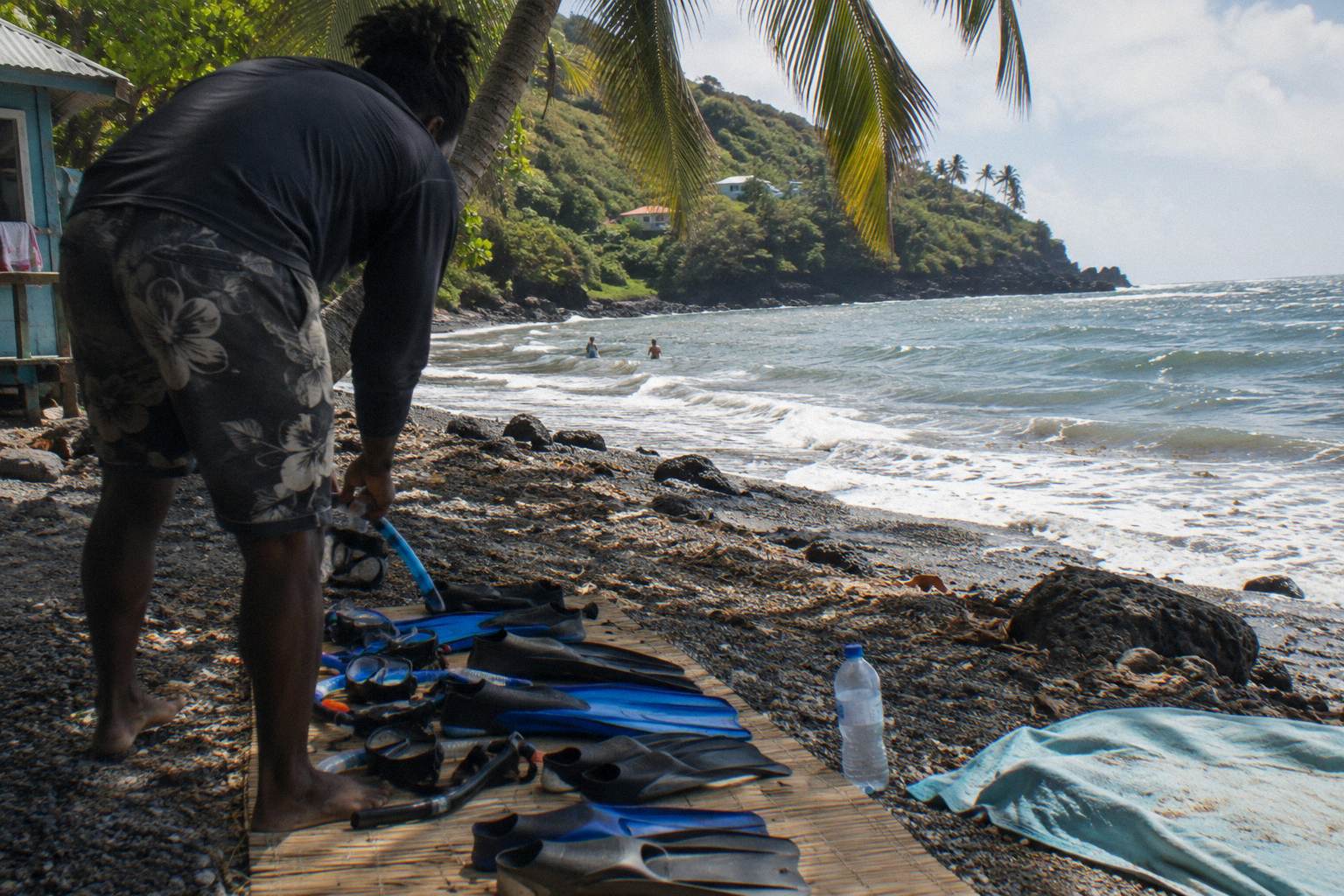
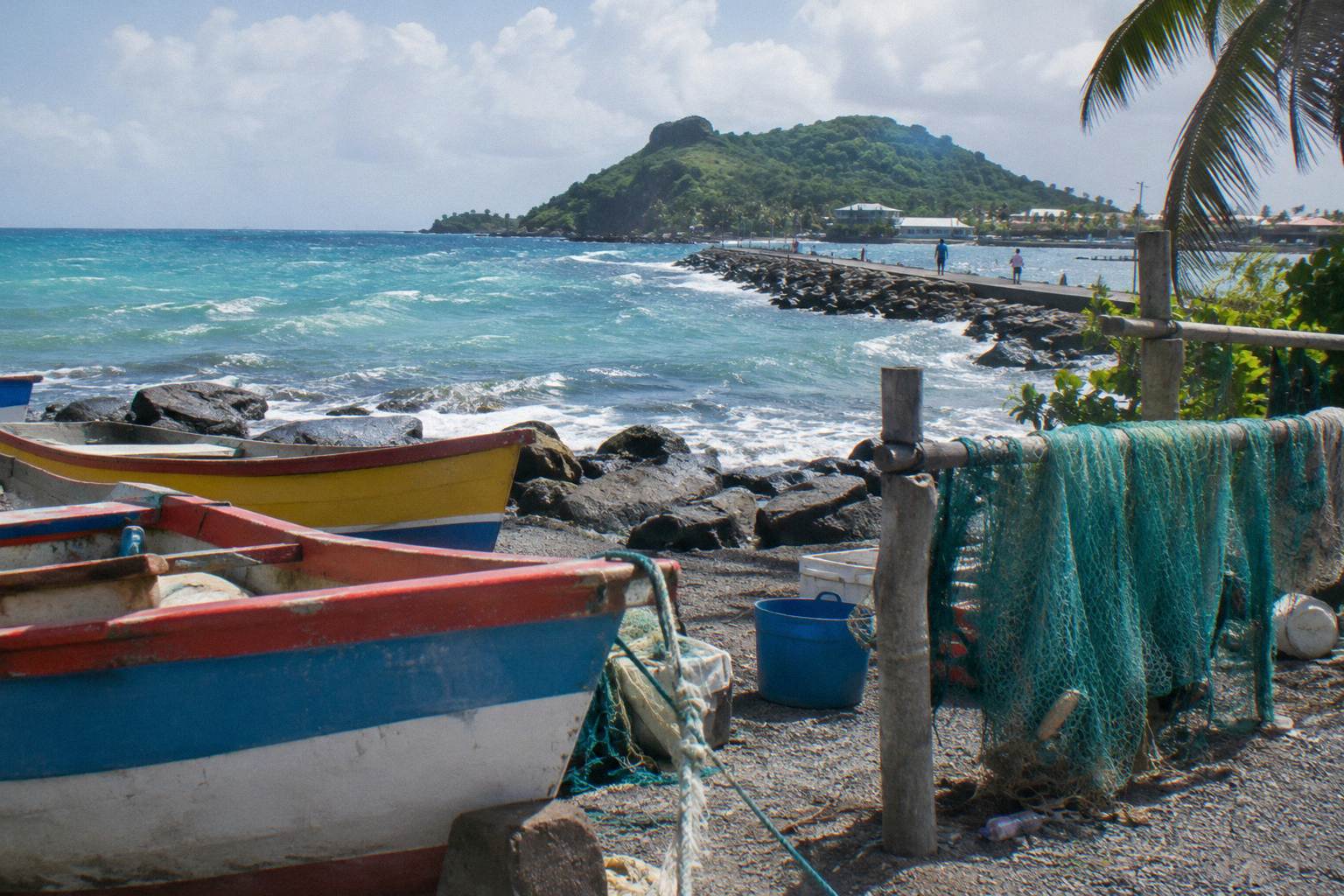
Pigeon Island itself frames the day. It is a 44-acre National Landmark managed by the National Trust, designated a National Park in 1979 and a National Landmark in 1992, joined to the mainland by a causeway built in the early 1970s, with 18th-century Fort Rodney, Signal Peak, a museum and Two-Gun Battery on the land, per the Saint Lucia tourism page for the island. The Saint Lucia tourism Pigeon Island page also gives the drive from Hewanorra International Airport as about 1 hour 40 minutes, with Gros Islet about 1 hour 30 minutes from the same airport.
The tourism authority describes Pigeon Island Beach as having calm, sheltered waters suited to beginner snorkelers, and sea temperatures around the island stay between 26 and 29 C (79 to 84 F) all year, with mornings generally the calmest and clearest, per the authority's snorkeling pages. None of that promises conditions on any given day; weather, season and boat traffic decide, and the operator decides whether a session runs.
For planning around the water itself, the general safety lines from the tourism authority apply to any beach day: the west coast generally offers calmer water, many beaches have no lifeguards, never snorkel alone, mind boat traffic, use reef-safe sunscreen, and never touch coral or marine life. Those sit on the Saint Lucia tourism beach safety page.
How To Plan Around A Flight Home
The scuba rule is DAN's: wait at least 12 hours after a single no-decompression dive, at least 18 after multiple dives or days, before flying. For SNUBA there is no published interval, so the flight question goes to the operator when booking. Practically, anyone with an afternoon flight after a morning SNUBA session should raise it in advance rather than assume anything.
It is worth spelling out why the assumption is tempting and why it should not be closed on the water. Sessions here are short, 1 hour 30 minutes door to door with the in-water portion a fraction of that, and the water is warm, so a morning session and an evening departure can feel compatible. Maybe they are. But the only bodies that publish intervals publish them for scuba, and the operator is the one party that knows how their own SNUBA sessions are profiled. One short question at booking settles it.
| Question To Settle | Where The Answer Comes From |
|---|---|
| Preflight interval after a single scuba dive | DAN: at least 12 hours |
| Preflight interval after multiple dives or days | DAN: at least 18 hours |
| Cabin altitude the DAN figures assume | Roughly 2,000 to 8,000 ft; commercial cabins generally 6,000 to 8,000 ft per DAN |
| Whether the DAN intervals apply to SNUBA | No published DAN or PADI statement; ask the operator |
| Whether they apply to the helmet walk | Same answer: no published statement, ask the operator |
| Breathing rule in the SNUBA briefing | Breathe continuously, do not hold your breath on ascent, per the operator's compressed-air briefing |
Cruise passengers face the same arithmetic on a tighter clock, and the main cruise season, October to April, brings up to five ships into Castries on a single day per the ports authority. The fitting an underwater excursion into a cruise day guide covers that planning in full. A useful companion read on relative risk framing, without verdicts, is whether SNUBA is safer than scuba for beginners.
What Trips People Up Before You Book
Three things catch SNUBA bookers: assuming the DAN flying intervals answer the SNUBA question, skipping the operator's medical advisory, and misreading what the price includes. The 12 and 18 hour DAN figures are scuba guidance. The advisory names pregnancy, cardiovascular health and spinal injuries. And on the St Lucia SNUBA line, equipment and water are included, while the exact meeting point only arrives with the booking confirmation.
The first mistake is the quiet one. People read the DAN numbers, apply them to whatever water activity they have, and move on. The numbers are real and worth knowing, but they were derived for compressed-gas scuba diving, and the actual transfer to SNUBA runs through the operator, not through a paragraph on a website.
The second is booking before checking the advisory against personal health. It costs nothing to ask, and free cancellation up to 24 hours before start is the backstop, not the plan.
The third is logistics. Pickup for the SNUBA and helmet products at Pigeon Island covers hotels in the north of the island only, and the beach snorkel from the same operator includes no pickup at all. The scuba and boat snorkel days from Dive Fair Helen pick up from northern to western locations only, not from Soufriere, Vieux Fort, Micoud or Dennery. Anyone staying in the south should confirm arrangements before booking, and the full detail is in getting to Pigeon Island from Rodney Bay, Castries and the cruise port.
One more, small but real: gratuities are not included on the helmet walk, and the full-day snorkeling line excludes fees and taxes from its listed price, while the boat snorkel with lunch carries a 10 percent government VAT payable at check-in. Reading the inclusions once, on the booking page, avoids all three surprises.
Anyone still weighing whether the format justifies the price can compare helmet diving cost against snorkeling, and the full picture of who each format suits is in the beginner scuba try dive guide.
The helmet walk is the natural fallback for anyone the SNUBA advisory screens out or the swimming element puts off: no swimming required, head and face dry per the manufacturer, ages 8 and up, from US$118 per person, 4.8 from 231 reviews, free cancellation up to 24 hours before start.
For those who decide they want the real thing, the beginner scuba day from Marigot Bay includes training before the dive, lunch, tanks and weights, marine fees and an instructor, from US$132 per person, 4.7 from 57 reviews, 5 hours, ages 12 and up. It is the product where DAN's flying-after-diving intervals directly apply, and the one to book earliest in a trip, not last.
Deciding between them comes down to air supply and comfort: raft and regulator, helmet and dry head, or tank and training. Whichever way it goes, check the live price for the date, since from-prices move with season and group.
Common Questions About SNUBA And Decompression
Can You Get Decompression Sickness From SNUBA?
No dive-medicine body has published a position on decompression sickness specifically for SNUBA, so no verdict is offered. DAN defines decompression sickness as resulting from inadequate decompression after breathing compressed gas under increased pressure, and its published guidance covers scuba. Ask the operator, and a doctor where personal health is in question.
What Does DAN Say About Flying After Any Diving?
DAN's guidance for recreational scuba: a minimum preflight surface interval of 12 hours after a single no-decompression dive, and at least 18 hours after repetitive dives or multiple days of diving, at cabin altitudes of roughly 2,000 to 8,000 ft. Commercial cabins generally sit at 6,000 to 8,000 ft per DAN. For SNUBA and helmet diving, DAN publishes no interval; ask the operator.
Is SNUBA Air Compressed?
Yes, in the sense that matters here: the air reaches the regulator through a hose from a tank on a floating raft, and licensed operators brief the standard compressed-air rule of breathing continuously and not holding the breath on ascent. That is why the decompression question gets asked about SNUBA and not about ordinary snorkeling from the surface.
Who Should Not Do SNUBA?
The operator's advisory says the experience is not recommended for pregnant travelers, travelers with poor cardiovascular health, or travelers with spinal injuries. The minimum age is 8 and the group maximum is 14. Anyone with a medical question should ask the operator or a doctor before booking; free cancellation up to 24 hours before start applies.
How Long Is The SNUBA Session In St Lucia?
SNUBA Saint Lucia runs 1 hour 30 minutes in total, departing Pigeon Island in Gros Islet, from US$112 per person, with all equipment and water after the experience included. Pickup covers hotels in the north of the island only, and the exact meeting point comes with the booking confirmation.
SNUBA Or A Helmet Walk For A Nervous Beginner?
The helmet walk needs no swimming at all: head and face stay dry per the manufacturer, glasses can stay on, and the ages run from 8 up, from US$118 per person, 4.8 from 231 reviews. SNUBA, 4.7 from 166 reviews, from US$112, uses a regulator from a raft and suits anyone comfortable breathing underwater through the mouth. Both run 1 hour 30 minutes from the same beach.